
Lecture
A balance (scale) is a device or instrument for determining the mass of bodies (weighing) from the weight acting on them, taking that weight to be approximately equal to the force of gravity. The weight of a body can be determined either by comparison with the weight of a reference mass (as in lever balances) or by measuring that force through other physical quantities.
This article examines the nature, classification, design features and operating principles of electronic scales as modern means of measuring mass. The main types of electronic scales are analyzed, including retail, household, industrial, laboratory, analytical, jewelry and special-purpose measuring systems. Particular attention is given to the principles by which the mechanical action of a load is converted into an electrical signal using strain-gauge sensors, electromagnetic force compensation and other measuring technologies. The concepts of resolution (scale interval), accuracy, sensitivity, weighing capacity and error are considered. The tare function, which makes it possible to determine the mass of the contents of a container without prior knowledge of the container's own mass, is analyzed separately. It is shown that modern electronic scales are not merely devices for determining mass, but complex measuring systems combining mechanical, electronic and software components.
An electronic scale is a measuring device intended to determine the mass of an object by converting the force created by that mass under the action of the gravitational field into an electrical signal.
In the general case, mass is related to the force of gravity by the expression:
F = mg,
where (F) is the force of gravity, (m) is the mass of the object, and (g) is the acceleration of free fall.
Consequently, an electronic scale responds directly not to mass as an abstract physical quantity, but to the force exerted by the load on the sensitive measuring element. The electronic system converts this action into an electrical signal, after which it computes and displays the corresponding mass value.
The generalized block diagram of an electronic scale can be represented as follows:
load → mechanical assembly → sensor → electrical signal → amplification and conversion → digital processing → display/interface.
Thus, an electronic scale is a measuring system in which mechanical, electrical and computational processes are used simultaneously.
An electronic scale must include the following components:
The block diagram of an electronic scale and the principle of interaction between the individual units are shown in Figure 1.
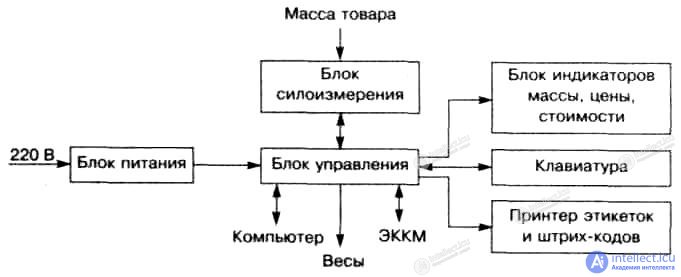
Figure 1 – Block diagram of an electronic scale and the principle of interaction between the individual units
Measuring mass is one of the most widespread measuring tasks in industry, trade, laboratory practice, agriculture, medicine and everyday life. The need to obtain accurate and reproducible results has driven the development of various designs of weighing instruments.
Historically, mass was measured mainly with mechanical balances, whose operating principle was based on comparing the mass of the object under study with reference weights, or on measuring the deformation of an elastic element. The development of electronics led to the creation of electronic scales, in which the mechanical action of the load is converted into an electrical signal, processed by an electronic device and presented to the user in digital form.
The main advantage of electronic scales is the possibility of automating the measurement process, along with high sensitivity, rapid results, digital data processing, the ability to connect to external information systems and the implementation of additional functions.
Modern electronic scales are used across a wide range of measuring tasks — from determining the mass of foodstuffs and cargo to measuring the mass of substances to within fractions of a milligram. The design and operating principle of a particular instrument depend substantially on its intended use, measuring range and required accuracy.
The purpose of this article is to examine the nature of electronic scales, their main types and physical operating principles, and to analyze the factors that determine the accuracy of electronic weighing.
A typical electronic scale design includes several functional units.
The platform is the element that takes up the load directly. Its dimensions and design depend on the intended use of the scale.
In household scales the platform may be made of glass or plastic; in industrial scales it is made of metal and has a considerably larger area.
The sensor is the main sensitive element of an electronic scale. It converts mechanical deformation or force into an electrical signal.
The most common are:
In strain-gauge scales the sensor signal is usually a small change in electrical voltage. For further digital processing it is converted into a digital code by an analog-to-digital converter.
The processor processes the received signal, corrects the result, takes the calibration parameters into account and supports the operation of additional functions.
Depending on the design of the scale, the software processing may include:
The measurement result is shown on a digital display. In modern systems the information can be transmitted to a computer, an industrial controller, a printer or an information network.
As already stated in the introduction, it is necessary to select not a weight sensor but a pressure sensor. Let us calculate the required parameters. First, let us determine the range of the measured pressure. Pressure is the ratio of the applied force to the contact area. In our case the applied force is the force of gravity, calculated by formula (1)
F = mg, (1)
where m is the mass of the object,
g is the acceleration of free fall, equal in our region to 9.8 m/s².
The contact area in our case equals the area of the plate resting on the cushion, i.e. 0.25 m². According to the design specification, the measured mass may lie in the range from 0 to 250 kg, and the pressure accordingly from 0 to 10 kPa. The error must be no more than 0.5 kg, which means 20 Pa. The supply voltage is 5 V.
There are various types of pressure sensors:
In our case an absolute pressure sensor should be selected.
Let us consider the MPX5010 GVP sensor, which has the following characteristics:
This sensor meets all the criteria.
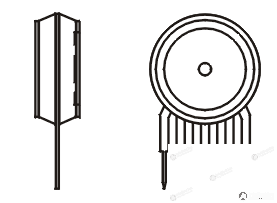
Figure 3 - Appearance of the sensor
The sensor is equipped with an output voltage normalization circuit implemented by a four-stage bipolar linear amplifier using thin-film technology and interactive laser trimming.
According to the design specification, the indicator must display weight values from 0 to 250 kg with an accuracy of 0.5 kg, which means the indicator must have four digits and a decimal point. The input voltage is 5 V. The following types of indicators exist:
Seven-segment indicators - indicators in which each segment is controlled individually:
For an electronic scale a seven-segment indicator with four digits should be selected.
Let us consider the LFD2110-XX indicator, which has the following characteristics:
Let us consider the LFD3162-XX indicator, which has the following characteristics:
Let us consider the LFD3164-XX indicator, which has the following characteristics:
Let us consider the DE-119 indicator, which has the following characteristics:
This indicator meets all the criteria. It is a liquid-crystal display; such indicators are characterized by low power consumption compared with LED ones, but they also have drawbacks: poor visibility in poor lighting and poor operability at low temperatures. The DE-119 indicator looks as follows:
A microcontroller for an electronic scale must have a built-in ten-bit ADC (analog-to-digital converter), four eight-bit input/output ports and a 5 V supply voltage.
There are various types of control microcontrollers. Controllers are classified by word length:
Four-bit - the simplest and cheapest devices, intended to replace simple "hard-wired" logic circuits in low-performance systems. Typical applications are clocks, calculators, toys and simple control devices.
Eight-bit - the most numerous group (the optimal combination of price and capability). This group includes the MCS-51 series microcontrollers (Intel) and those compatible with them: PIC (MicroChip), HC68 (Motorola), Z8 (Zilog) and others.
Sixteen-bit ones - MCS-96 (Intel) and others - offer higher performance, but are more expensive and less widespread.
Thirty-two-bit ones - usually modifications of general-purpose microprocessors, for example the i80186 or the i386EX.
For the electronic scale we will choose an eight-bit microcontroller of the MCS-51 family, since this family is the undisputed champion in terms of the number of variants and the number of companies producing modifications of it.
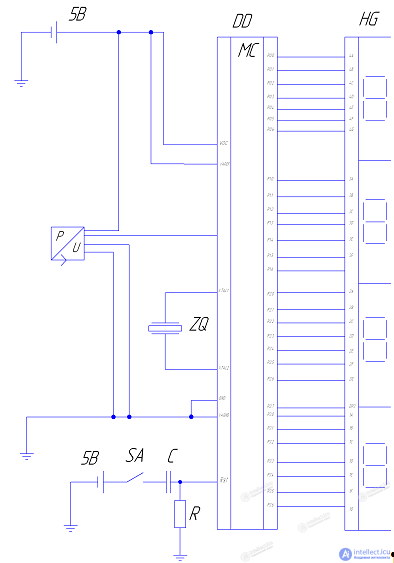
Figure 4 - Schematic diagram of the electronic scale
The operating algorithm of the electronic scale must be as follows:
Preparing the ADC - configuring the ADC (channel number AN1..AN7, operating mode: standard or precise, interrupts), starting the conversion.
Reading the data from the ADC. The converted number is held in the ADDH and ADDL registers (high and low bytes respectively)
Converting the code of the least significant digit into seven-segment display code. Since the specification requires an accuracy of 0.5 kg, the least significant digit (tenths) will take the value “0” or “5”. The code that has to be converted is located in the two least significant bits of ADDL.
Outputting the least significant digit. We output the converted number to port P3, that is, to digit -1 of the display.
Converting the code of the remaining digits into binary-coded decimal. That is, converting an eight-bit binary number into binary-coded decimal (a number in which each decimal digit is represented by four bits).
Converting the code of the remaining digits into seven-segment display code. Each binary-coded decimal digit must be represented by its seven-bit equivalent for subsequent output to the display.
Outputting the remaining digits. Output of digits 2, 1 and 0 to the display.
Now digit -1 of the number has to be converted into seven-segment code and output to P3 (digit -1 is held in the two least significant bits of the low byte of the number)
Table 1 - Conversion table for digit -1.
|
Binary code |
Seven-segment code |
|
00 |
01101101 |
|
01 |
01101101 |
|
10 |
01111110 |
|
11 |
01111110 |
The two high-order bits of the number (held in R2) have to be shifted into R1, and the two low-order bits have to be discarded, since they have already been sent to the display. This can be done by shifting registers R2 and R1 right through the carry flag twice; since the shift operation can only be performed on the accumulator, we first load the contents of registers R2 and R1 into it. The complete algorithm looks as follows:
Now the code of the remaining digits has to be converted into binary-coded decimal, which is done as follows:
After subroutine PR is called, we read the data from the stack and output it to the corresponding port; the decimal point P2.7 also has to be output.
The most widespread operating principle of electronic scales is the use of a strain-gage (piezoresistive) sensor.
A load cell contains an elastic element that is deformed under the action of a load. Strain gages are mounted on this element - components whose electrical resistance changes under mechanical deformation.
When a load is applied, the geometric dimensions of the strain gage change and, accordingly, so does its electrical resistance.
The change in resistance can be expressed in general form as:
Correct notation:
ΔR / R = Kε
where:
To increase sensitivity, several strain gages are combined into a measuring bridge, most often a Wheatstone bridge.
With no load applied, the bridge is in a balanced state. When a load appears, deformation of the sensing element changes the resistances of the strain gages and produces an unbalanced electrical signal.
This signal is proportional to the load within the working range of the sensor. After amplification and analog-to-digital conversion, the microprocessor computes the corresponding mass value.
The principle can thus be represented as follows:
mass → force → deformation → change in resistance → change in voltage → digital signal → mass value.
In high-precision laboratory and analytical balances another principle is widely used — electromagnetic force compensation.
In such a system the load causes a mechanical deflection of the sensing element. A position sensor detects this deflection, after which the electronic system generates an electromagnetic force that compensates for the action of the load.
In the idealized case the following condition holds:
Fload=Fcomp
where:
Since the compensating electromagnetic force is related to the magnitude of the electric current in the coil, the system determines the load by measuring that current.
The advantage of this approach is that it can provide very high sensitivity and good repeatability of results.
This is precisely why electromagnetic systems are widely used in analytical balances intended for laboratory measurements of small masses.
Electronic scales can be classified by purpose, weighing capacity, accuracy, design and operating principle.
These are intended for everyday mass measurements. They include kitchen scales and bathroom scales.
Kitchen models are usually rated for a few kilograms and are used to determine the mass of food.
Bathroom scales are intended for measuring a person's body mass and usually have a higher load limit.
For household tasks, high metrological accuracy is generally not the main characteristic.
These are used in shops, at markets, in catering establishments and other places of trade.
A distinctive feature of retail scales is the presence of functions related to determining the price of the goods. Some models have a display for the seller and the customer, a keypad, price memory and an interface for data transfer.
These are intended for measuring large loads and for operating in production environments.
They include:
Industrial scales must withstand considerable mechanical loads and environmental exposure.
Laboratory balances are used for the accurate measurement of the mass of substances and samples.
They are characterized by a lower weighing capacity than industrial systems, but by substantially higher sensitivity.
Analytical balances are high-precision laboratory measuring instruments.
Modern models can have a readability of the order of 0.1 mg or finer. To protect against air currents, the weighing platform is usually located inside a special draft shield.
The result can be affected by:
For this reason, operating analytical balances requires that special conditions be observed.
These are used to determine the mass of small objects, including precious metals, stones and jewelry.
Depending on the model, the resolution can be 0.01 g, 0.001 g or finer.
One of the most important parameters of electronic scales is the readability of the indication.
For example, if the scale displays:
then its readability is 0.1 g.
If the display shows:
the readability is 0.01 g.
It is necessary, however, to distinguish between readability and accuracy.
A scale with a 0.001 g indication does not necessarily measure mass with an absolute error of ±0.001 g. The latter depends on the design of the sensor, the calibration, the operating conditions and other factors.
For this reason, when selecting measuring equipment it is necessary to take into account at least:
An important function of electronic scales is taring.
The tare is the container or packaging that holds the material being measured. If only the mass of the contents has to be determined, the empty container can be placed on the platform and the zeroing operation performed.
For example, if the mass of the container is 150 g and the mass of the container together with the material is 475 g, then after taring the scale should show the mass of the contents:
mmaterial=mtotal−mtare=475−150=325 g.
The operator does not need to know the mass of the tare in advance.
It should be emphasized that, when taring, electronic scales do not determine which part of the mass is plastic, metal or some other material. They simply compensate for the registered load.
This is of fundamental importance when considering special measurement methods.
Ordinary electronic scales measure the total mechanical load.
If a container holding metal parts is placed on the platform, the scale registers:
m_total = m_tare + m_metal.
For example:
m_tare = 150 g, m_metal = 325 g.
Then:
m_total = 150 + 325 = 475 g.
Without prior taring or an independent determination of the tare mass, ordinary scales cannot establish which part of the total mass belongs specifically to the metal.
For example, if the mass of a closed plastic container with metal parts is 580 g, the scale cannot determine from that measurement alone whether the mass of the metal is 500 g, 550 g or 570 g.
Separating the components requires an additional physical measurement principle.
Such principles may include magnetic, electromagnetic, X-ray, spectrometric and other methods.
Advances in sensor technology have led to devices that exploit not only gravitational force but also additional physical properties of the material under study.
For example, magnetic measuring systems can make use of differences in the magnetic susceptibility of materials. This makes it possible to detect certain metallic inclusions or to assess the characteristics of metal objects.
However, such systems cannot automatically be equated with ordinary scales.
If a device records the magnetic response of an object, the result may be expressed in units related to an equivalent or differential mass, but this does not mean that the actual mass of the metal is measured directly.
When choosing a measuring instrument, it is therefore necessary to determine exactly which physical quantity it measures.
The result of electronic weighing is affected by many factors.
A change in temperature can alter the characteristics of the load cells, the electronic components and the mechanical elements.
Vibration of the base can cause unstable readings, especially when working with high-precision laboratory scales.
For small masses, even moving air can have a substantial effect on the result. Analytical balances are therefore fitted with draft shields.
Electrostatic effects are particularly significant when working with small, lightweight samples.
Placing an object off-center on the platform can introduce an error caused by uneven transfer of the load to the sensor.
To ensure reliable results, the scale must be calibrated correctly. Calibration establishes the correspondence between the signal of the measuring system and a known mass value.
Modern electronic scales are gradually becoming intelligent measuring systems.
Promising directions include:
Particularly promising is the creation of multimodal measuring systems in which mass is determined together with other characteristics of the object. Such a concept can be applied to automatic composition monitoring, material sorting and the non-destructive determination of object characteristics.
Electronic scales are a highly important class of modern measuring instruments designed to determine mass by converting the mechanical action of a load into an electrical signal.
Most electronic scales are based on strain gauge load cells, which convert mechanical deformation into a change in electrical resistance. High-precision laboratory systems also use the principle of electromagnetic force compensation, which provides high measurement sensitivity and stability.
Depending on their purpose, electronic scales are divided into household, retail, industrial, laboratory, analytical, jewelry and specialized systems. They differ substantially in weighing capacity, readability, accuracy, design and operating conditions.
It is especially important to distinguish between the concepts of mass, readability and accuracy. A large number of decimal places on the display does not guarantee correspondingly high metrological accuracy.
The tare function makes it possible to determine the mass of the contents without knowing the mass of the empty container in advance, but it does not provide any physical separation of the masses of different materials. Ordinary electronic scales measure the total load and cannot themselves determine which part of that load comes from, say, the plastic and which from the metal.
To solve problems involving the identification or quantitative determination of individual components of an object, additional physical methods can be used: magnetic, electromagnetic, X-ray, spectrometric and others.
Thus, the further development of electronic scales is linked not only to greater accuracy in measuring mass, but also to the creation of comprehensive intelligent measuring systems capable of simultaneously determining the mass, composition and other physical characteristics of the objects under study.

Comments