
Lecture
Caves remain essentially untouched, just as they were thousands of years ago. It is there that rare minerals and little-studied life forms are still found today, and scientific discoveries are still being made.
Every year, hundreds of kilometers of underground labyrinths are mapped and charted around the planet. Humans continue to venture where no one has ever set foot before. 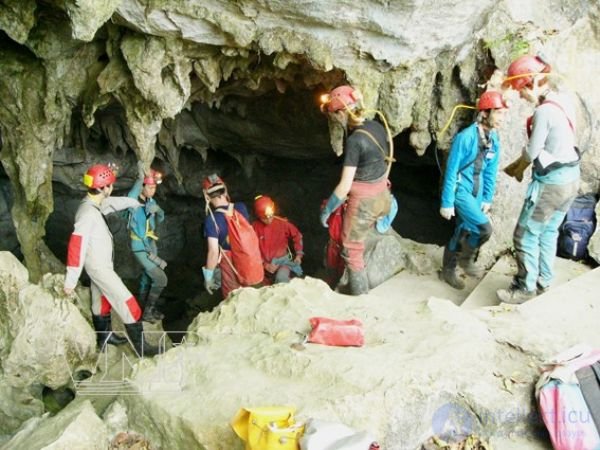
Cave exploration holds many dangers.
Conditions inside caves differ from those found anywhere else on Earth. Work in underground conditions is characterized by a variety of hazardous factors.
The main hazards awaiting speleologists exploring caves:
- Natural cave-ins and rockfalls.
Poor air quality in caves.
Elevated concentrations of various harmful gases have been recorded in practically every cave. Gas concentrations are especially high in poorly ventilated "pockets," dead ends, and blind shafts.
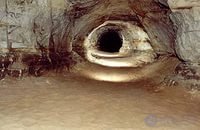
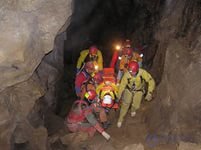
A significant hazard is posed by the natural radioactive gas radon and its decay products. When inhaled, they settle in the lungs and can trigger the development of certain cancers.
Narrow passages.
When squeezing through narrow passages, there is a risk of getting stuck. 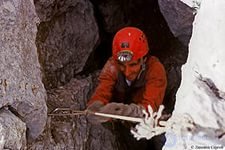
A robot –an automated device that partially or fully replaces a human in performing work under hazardous conditions.
In recent years, thanks to the notable growth in robot capabilities, robots have been introduced into many areas of human activity where robotization was previously unforeseen. As a result, a wide variety of robots have emerged that operate under life-threatening conditions or where a site is relatively inaccessible.
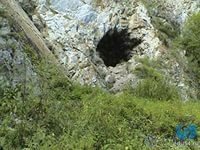
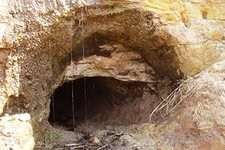
Karst cavities accumulate various mineral resources over the long history of their formation.
Deposits of bauxite and sulfur, manganese and phosphorites, zinc and lead, Iceland spar and gold are often found there.
Robots built for cave exploration can enter narrow passages that are inaccessible to humans; a robot is not hindered by the presence of hazardous gases or high radiation levels.
These robots differ from industrial robots in that each one is a unique design. Each robot is built specifically to carry out a particular task.
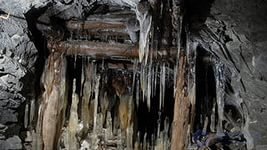
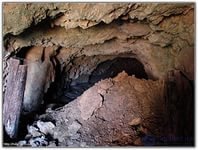
Caves are of interest to specialists from many different fields of science: geologists, miners, biologists, archaeologists, historians, physicians, and others.
Such caving robots can also be used to study other planets.
Martian caves attract scientists for several reasons. Because of the planet's thin atmosphere, its entire surface is bombarded by solar ultraviolet radiation and cosmic charged particles, so the preservation of microbial life or even complex organic compounds is unlikely in the uppermost layers of soil. Beneath the shelter of a cave roof, preservation improves dramatically — even if no living organisms remain, their remnants will last far longer. Besides signs of life, Martian caves may also contain water ice and other compounds too volatile to survive on the open surface.
A team of scientists from the University of Arizona developed a special algorithm called PitScan, which semi-automatically searched for cave pits on the surface of the Moon and found more than two hundred of them. They can be divided into three general groups:
in.
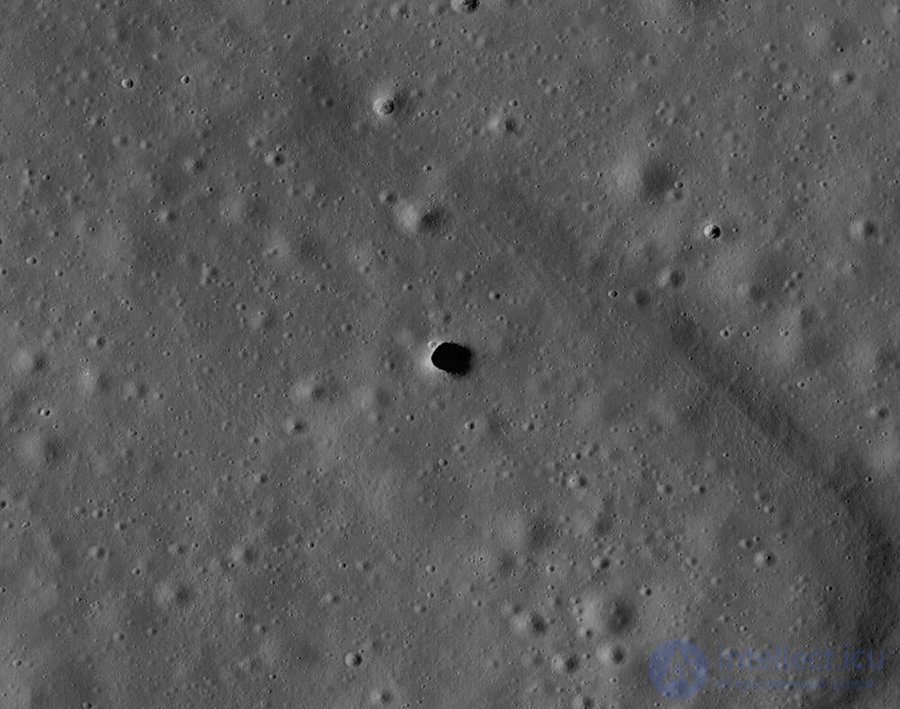
But scientists do not yet know whether a cave system suitable for life actually exists there — that requires studying the caves from the inside. And exploring lava tubes is no simple task. The difficulty is that the most obvious caves have only openings (skylights) for entry — pits discovered by orbiting spacecraft. This means an ordinary rover cannot simply drive into a cave to explore it.
ESA, together with James Madison University (JMU), has presented a prototype spherical robot that will be used to explore caves on the Moon. It is a caving rover called DAEDALUS, about 46 cm in diameter.
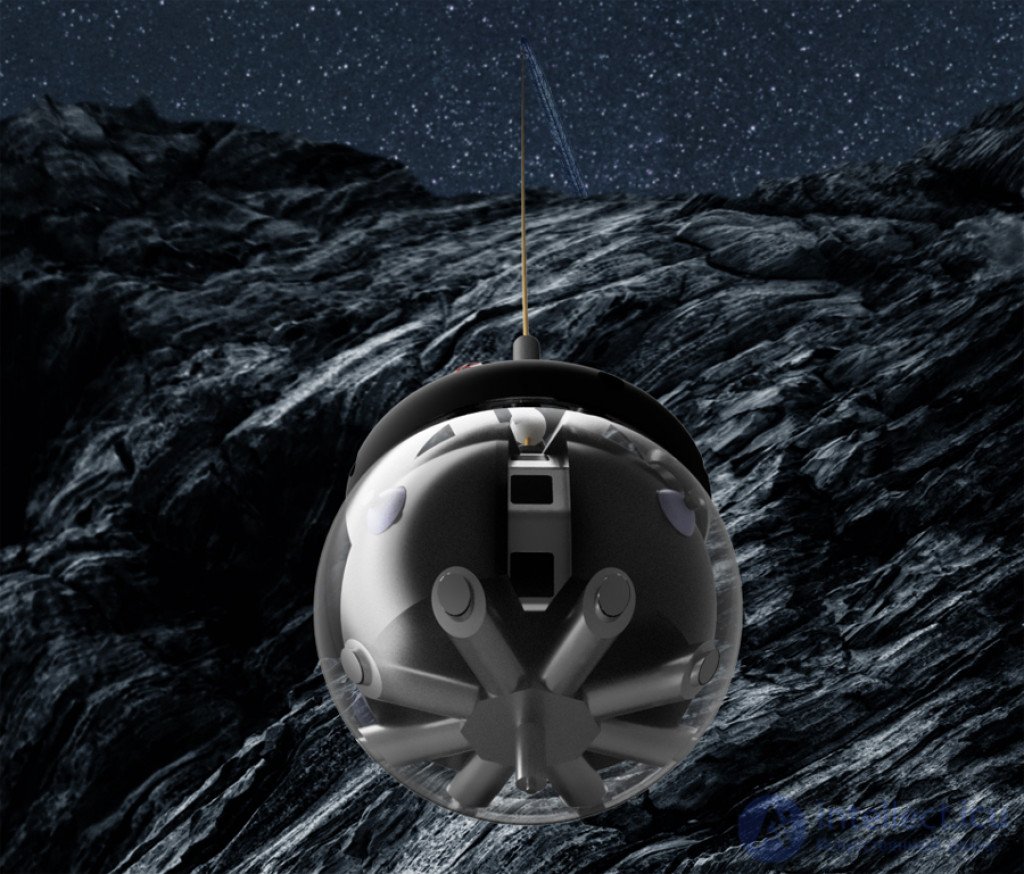
A spherical rover is a unique invention, and its shape is especially well suited to cave exploration. It can observe its surroundings in every direction, including underneath itself, without being blocked by its own body. The caving robot will be lowered into a skylight on a tether, which will also double as a Wi-Fi receiver to maintain communication with Earth.
Once on the surface, the robot detaches and rolls away. It is propelled by extendable rods, which are also used to clear obstacles and analyze the properties of the rock. The robot "views" its surroundings in 3D using lidar and cameras acting as a stereo-vision system, and it also measures temperature and radiation inside the cave. This will not only give scientists a look into the lunar underground world, but can also reveal how stable the walls are and what kind of rock they are made of. The scans will also make it possible to map the cave and determine its volume even in complete darkness.
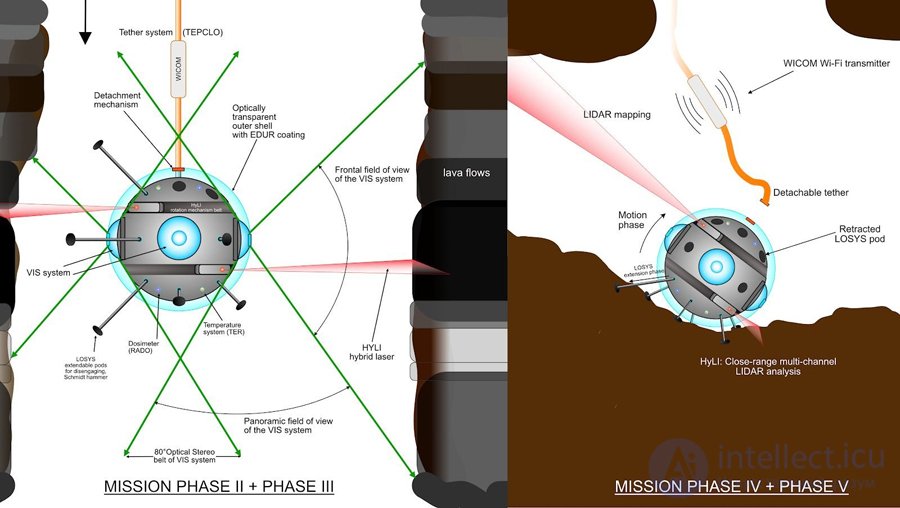
So far, three prototypes of DAEDALUS have been built to test its sensors and locomotion systems. The latest prototype has a high degree of autonomy. The JMU team designed it as part of a major research program for exploring lunar caves. In total, five proposals were submitted for the program, including tethered rovers, robot swarms, and gravimetric surveyors. ESA is now studying only two of these projects. The second solution is a crane that would lower a rover into a cave, tethered to a connecting cable for power and communication with Earth.

Comments