
Lecture
Toxicology (from Greek τοξικος — poison and λογος — science, that is, τοξικολογία — the science of poisons) — a branch of medicine that studies poisonous (toxic) substances, the potential danger of their effects on organisms and ecosystems, the mechanisms of toxic action, as well as methods of diagnosis, prevention and treatment of diseases arising as a result of such exposure .
The leading tasks of toxicology are establishing the toxic doses of substances for various organisms, primarily for humans; uncovering the mechanisms of action of substances at toxic doses, their metabolism, including research into genotoxicity, intentional or unintentional iatrogenic teratogenicity, embryotoxicity, as well as the carcinogenicity of xenobiotics, determining the sources of contamination of various objects with toxins, the toxicological evaluation of new medicinal products, and the study of the toxicokinetics and toxicodynamics of toxins.
The branch of toxicology that addresses the problems of identifying the fundamental laws of the interaction between the organism and poisons, their toxicokinetics and toxicodynamics.Clinical toxicology
The branch of toxicology that studies human diseases arising from the toxic effects of chemical compounds, with the aim of scientifically substantiating methods for the diagnosis, prevention and therapy of poisoning.
The branch of toxicology that studies ways to prevent the potential danger of the effects of toxic substances on living organisms and ecosystems.
The science that studies the effects of toxic substances and the toxic transformation products of other substances on ecosystems and their cycling in the biosphere, and their impact on animal and human organisms, especially in food chains.
Forensic toxicology — a branch of forensic medicine that studies poisonings committed for the purpose of murder or suicide, or arising as a result of accidents at work or at home.
Military toxicology — a field concerned with the study of toxic agents intended for or used in military operations. Its main task — the development of means and methods for protecting humans from combat toxic agents (CTA).

Folio from the Kalpasthana (chapter Dundhubhisvaniya), from the manuscript Sushruta Samhita, Nepal, 878 AD.
The earliest treatise devoted to the general study of plant and animal poisons, including their classification, identification and treatment of their effects, — is the «Kalpasthana», one of the main sections of the «Sushruta Samhita», a Sanskrit work written before approximately 300 AD and possibly in part as early as the 4th century BC. [4] [5] The «Kalpasthana» influenced many later Sanskrit medical treatises and was translated into Arabic and other languages, influencing Southeast Asia, the Middle East, Tibet, and eventually Europe. [6] [7]
Dioscorides, a Greek physician at the court of the Roman emperor Nero, undertook one of the first attempts to classify plants by their toxic and therapeutic action. [8] In a work attributed to the 10th-century author Ibn Wahshiyya, «The Book of Poisons», various toxic substances and poisonous recipes that can be prepared with the help of magic are described. [9] In the 12th century, the Jewish physician Maimonides wrote «Kitab al-Sumum wa-l-Mutaharriz min al-Adwiya al-Qattala» («The Book of Poisons and the Antidote against Lethal Drugs»), which discussed the treatment of poisonings. [10] In a 14th-century poetic work in the Kannada language, attributed to the Jain prince Mangarasa, «Khagendra Mani Darpana», several poisonous plants are described. [11]
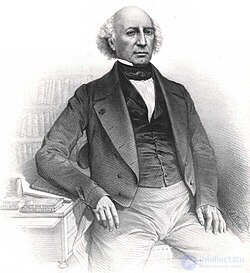
Lithograph of Mathieu Orfila
The 16th-century Swiss physician Paracelsus is considered the «father» of modern toxicology owing to his rigorous (for the time) approach to understanding the effects of substances on the body. [12] He is credited with the classic toxicological principle: «Alle Dinge sind Gift und nichts ist ohne Gift; allein die Dosis macht, dass ein Ding kein Gift ist.», which translates as: «All things are poison, and nothing is without poison; only the dose makes a thing not a poison». This is often shortened to: «The dose makes the poison» or in Latin «Sola dosis facit venenum». [13]: 30
Mathieu Orfila is also considered a modern father of toxicology, having first formally set out the subject in 1813 in his «Treatise on Poisons», also known as «General Toxicology». [14]
In 1850, Jean Servais Stas became the first person to successfully isolate plant poisons from human tissue. This allowed him to identify the use of nicotine as a poison in the Bocarmé murder case, providing the evidence needed to convict the Belgian count Hippolyte Visart de Bocarmé of murdering his brother-in-law. [15]
In the modern era, regulatory oversight in the field of toxicology has passed to specialized government and international bodies, including the U.S. Food and Drug Administration (FDA), the Environmental Protection Agency (EPA) and the World Health Organization (WHO), which enforce standardized protocols for assessing chemical risks in food products, drugs and the environment. Building on Paracelsus's foundational «dose-response» principle, these agencies guide evidence-based safety assessment through multi-tiered toxicity studies and data interpretation. The FDA's «Redbook 2000» is an example of this ongoing evolution, serving as a key guidance document on toxicological principles for evaluating food additives and ingredients, ensuring the protection of public health in line with modern scientific rigor. [16]
The goal of a toxicity assessment — identifying the adverse effects of a substance. [17] Adverse effects depend on two main factors: i) the route of exposure (oral, inhalation or dermal) and ii) the dose (duration and concentration of exposure). To study the dose of a substance, testing is carried out in both acute and chronic models. [18] As a rule, various series of experiments are conducted to determine whether a substance causes cancer, and to study other forms of toxicity. [18]
Factors affecting chemical toxicity: [13]
The discipline of evidence-based toxicology seeks a transparent, consistent and objective assessment of the available scientific data to answer questions of toxicology [19], which studies the adverse effects of chemical, physical or biological agents on living organisms and the environment, including the prevention and mitigation of such effects [20]. Evidence-based toxicology can potentially resolve issues of concern to the toxicological community related to the limitations of existing approaches to assessing the state of the science [21] [22]. These include issues related to the transparency of decision-making, the synthesis of different types of evidence, and the assessment of bias and reliability [23] [24] [25]. Evidence-based toxicology has its roots in the broader movement toward evidence-based practice.
Experiments to study toxicity can be conducted in vivo (using a whole animal) or in vitro (testing on isolated cells or tissues), or in silico (in computer simulation). [26]
The classical experimental tool of toxicology is animal testing. [13] Examples of model organisms include Galleria mellonella [27], which can replace small mammals, zebrafish (Danio rerio), which allow toxicology to be studied in lower vertebrates in vivo [28] [29], and Caenorhabditis elegans [30]. As of 2014, such animal testing provides information not otherwise available about how substances function in a living organism. [31] The use of animals for toxicological research is opposed by some animal-welfare organizations, and in some regions it is restricted or prohibited under certain circumstances, for example, cosmetics testing in the European Union. [32]
Although testing on animal models remains a method for assessing effects on humans, there are both ethical and technical problems associated with animal testing. [33]
Since the late 1950s, toxicology has sought to reduce or completely eliminate animal testing within the framework of the «three Rs» concept: reduce the number of animal experiments to the minimum necessary; refine experiments so that they cause less suffering, and replace in vivo experiments with other types or use simpler life forms where possible. [34] [35] The historical development of alternative testing methods in toxicology was published by Balls. [36]
Computer simulation is an example of an alternative in vitro toxicological testing method; using computer models of chemicals and proteins, one can determine structure-activity relationships and identify chemical structures likely to bind to and interact with proteins that perform important functions. [37] This work requires expert knowledge in molecular modeling and statistics, as well as expert review in chemistry, biology and toxicology. [37]
In 2007, the American non-governmental organization the National Academy of Sciences published a report titled «Toxicity Testing in the 21st Century: A Vision and a Strategy», which opened with the statement: «Change is often linked to a pivotal event that builds on previous history and opens the door to a new era. Pivotal events in science include the discovery of penicillin, the deciphering of the double helix of DNA, and the development of computers. ... Toxicity testing is approaching such a scientific turning point. It is poised to take advantage of the revolutions in biology and biotechnology. Advances in toxicogenomics, bioinformatics, systems biology, epigenetics and computational toxicology could transform toxicity testing from a system based on testing whole animals to one based mainly on in vitro methods that assess changes in biological processes using cells, cell lines or cellular components, preferably of human origin». [38] As of 2014, this vision had still not been realized. [31] [39]
The U.S. Environmental Protection Agency, under its ToxCast program (part of the CompTox Chemicals Dashboard), studied 1065 chemicals and drugs using silicon-based modeling and an assay based on human pluripotent stem cells to predict in vivo intoxication based on changes in cell metabolism after exposure to chemicals. The main findings of the analysis of the ToxCast_STM dataset, published in 2020, include: (1) 19% of the 1065 chemicals produced a prediction of developmental toxicity, (2) the performance of the assay reached an accuracy of 79–82% with high specificity (> 84%) but moderate sensitivity (< 67%) compared with in vivo animal models of human prenatal developmental toxicity, (3) sensitivity improved as more stringent weight-of-evidence requirements were applied to animal studies, and (4) statistical analysis of the most effective chemicals acting on specific biochemical targets in ToxCast revealed positive and negative associations with the STM response, providing insight into the mechanistic basis of the target endpoint and its biological domain. [40]
In some cases, moving away from animal testing has been mandated by law or regulation; the European Union (EU) banned the use of animal testing for cosmetics in 2013. [41]
Most chemicals exhibit a classical dose-response curve – at a low dose (below a threshold value) no effect is observed. [13]: 80 Some exhibit a phenomenon known as sufficient challenge – a small exposure causes animals to «grow faster, have a better general appearance and coat quality, have fewer tumors, and live longer than control animals». [42] For some chemicals there is no clearly defined safe level of exposure. These are treated with particular caution. Some chemicals are prone to bioaccumulation, since they are stored in the body rather than being excreted; [13]: 85–90 they too receive special attention.
Various indicators are commonly used to describe toxic doses depending on the degree of exposure to an organism or population, some of which are defined by specific laws or organizational standards. These include:
A toxicologist is a scientist or medical professional who specializes in studying chemicals in order to determine their harmfulness to living organisms. [54] They may analyze the symptoms, mechanisms, treatments and detection of poisons and toxins, especially poisonings of humans. There are several types of toxicologists, including medical, academic and non-profit. [55] [56]
To work as a toxicologist one must obtain a degree in toxicology or a related field, such as biology, chemistry, pharmacology or biochemistry. [57] [54] [58] Undergraduate programs in toxicology cover the chemical composition of toxins and their effects on biochemistry, physiology and ecology. After completing introductory courses in the biological sciences, students typically enroll in laboratories and apply the principles of toxicology in research and other fields. Upper-level students delve into specific sectors, such as the pharmaceutical industry or law enforcement, that apply toxicology methods in their work. The Society of Toxicology (SOT) recommends that students at institutions of higher education that do not offer a bachelor's degree in toxicology consider obtaining a degree in biology or chemistry. In addition, SOT advises future toxicologists to take courses in statistics and mathematics, and to gain laboratory experience through laboratory classes, student research projects and internships. In the U.S., medical toxicologists complete a residency in fields such as emergency medicine, pediatrics or internal medicine, then a fellowship in medical toxicology, and ultimately obtain certification from the American College of Medical Toxicology (ACMT). [59]
Toxicologists perform many different duties, including research in academic, non-profit and industrial settings, product safety assessment, consulting, government service and regulatory work. To research and assess the effects of chemicals, toxicologists conduct carefully planned studies and experiments. These experiments help determine the specific amount of a chemical that can cause harm, and the potential risks associated with being near or using products containing certain chemicals. Research projects can range from assessing the impact of toxic pollutants on the environment to evaluating the human immune system's response to chemical compounds in pharmaceuticals. Although the main duties of toxicologists are to determine the effects of chemicals on organisms and their environment, specific job duties may vary depending on the industry and occupation. For example, forensic toxicologists may search for toxic substances at a crime scene, while aquatic toxicologists may analyze the toxicity levels of bodies of water. [60] [61] [62]
Salaries in the field of toxicology depend on several factors, including level of education, specialization and experience. The U.S. Bureau of Labor Statistics (BLS) noted that the number of jobs for biologists, a category that typically includes toxicologists, was expected to increase by 21% between 2008 and 2018; the BLS noted that this increase may be linked to growth in biotechnology research and development, as well as an increased budget for basic and medical research in the biological sciences. [63]

Comments