
Lecture
3.1. ADAPTATION AND HABITUATION OF THE BODY TO INDUSTRIAL POISONS
With repeated exposure of biological objects to harmful substances, the body adjusts to changing environmental conditions. In this process, two processes occur simultaneously – adaptation and cumulation. If the process occurs without irreversible disturbances to the biological system, it is called adaptation.
The capacity for adaptation is inherent in all living things. Adaptation can develop over very different periods of time, from fractions of a second to decades. For example, adaptation of the sense organs occurs very quickly, whereas genetic shifts proceed extremely slowly.
In industrial production, the term habituation is often used to denote the body's adjustment to periodic
exposure to harmful substances. This refers to a decrease in the body's sensitivity to a chemical agent, occurring under the influence of the repeated, prolonged action of the poison. Habituation may manifest as the weakening and disappearance of unfavorable symptoms that appeared at the beginning of contact with the harmful substance.
The phenomenon of habituation to poisons has been known for a very long time. Habituation of microbes to antibiotics, sulfonamides, and other chemotherapeutic agents has been described. In humans, the phenomenon of habituation upon exposure to irritant gases and vapors has long been known. It has been established that this phenomenon, under appropriate conditions, arises to some extent for almost any harmful substance, with the exception of poisons having teratogenic, carcinogenic, and mutagenic action. For habituation to the chronic action of a poison to develop, its concentration (dose) must be sufficient to evoke an adaptive response, but not excessive, which would lead to rapid and serious damage to the body. Signs of habituation to a
chemical agent are seen in the activity of the central nervous system (CNS), the endocrine glands, immunobiological activity, the circulatory, respiratory, and blood systems, the reticuloendothelial system, liver function, enzymatic activity, and other indicators of the functional state of the body. During habituation, restoration of disturbed functions and altered morphological structures may occur.
Habituation to a poison can be specific and nonspecific. Specific signs of habituation include an increase in threshold concentrations or doses, and the absence of death or a sharp decrease in the death of animals after exposure to lethal concentrations. Nonspecific signs of habituation are the restoration of integral indicators of the animals' condition that were significantly altered at the beginning of exposure, and the normalization of responses to extreme exposures.
When exposed to one or another environmental factor, the state of the body plays a significant role. If the exposure is unusual only in its intensity (for example, carbon dioxide at high concentrations), the body quickly sets in motion adaptive mechanisms commensurate with the acting factor. If the factor is qualitatively new and acts intensively, requiring new adjustments from the body, then new adequate adaptation mechanisms are developed. Over time, the operation, first of the nerve centers and then of other systems of the body involved in these processes, becomes trained, more orderly, and the entire adaptation mechanism is quickly set in motion under the influence of other similar or even unusual factors.
Prolonged exposure to small doses or concentrations of harmful chemical agents causes complex reactions in most physiological systems. Schematically, the body's response to the chronic action of industrial poisons is divided into three phases:
-the phase of primary reactions;
-the phase of habituation development;
-the phase of habituation breakdown and pronounced intensification. It should be noted that this last phase may not occur.
The phase of primary reactions is the search for ways for the body to adapt to the changed
environmental conditions. In the initial period of exposure, the developing shifts are inconsistent and often difficult to detect. In the phase of primary reactions, the functional activity of the systems carrying out biotransformation of the poison occurs, and the activity of the nervous system increases. Primary reactions are characterized by instability, their boundaries are very vague, and they can extend over several years.
The second phase, the development of habituation, is characterized by a decrease in the response to external exposure. Outwardly, this is a phase of the body's well-being. During its course, training of the most adequate adaptive mechanisms, selected during the first phase, takes place. In this phase, the maximum habituation of the body to the external exposure occurs. Thereafter, its stability either remains at this level or has a wavelike character without significant declines.
The duration of the habituation phase can vary. It is shortest in acute and subacute poisoning. In chronic poisoning, the state of habituation can last for years. The duration of such habituation depends on the following factors:
1.The nature of the poison's action (specific or nonspecific), the characteristics of the organs most sensitive to its action, the metabolism of the poison, the toxicity of the transformation products, and so on.
2.The exposure regimen of the poison (constant or increasing concentrations in the air of production premises), the duration of stay in the work area, or a periodic work regimen.
3.Combined exposure to environmental factors.
4.The possibility of various routes of entry of poisons into the body.
5.Individual characteristics of the person (age, sex, past or existing illnesses,
social and living conditions).
Under certain conditions, the duration of the habituation phase to industrial poisons, that is,
the state of not developing an occupational disease, can extend over many years, right up to the cessation of work due to age.
The third phase is not obligatory. It is associated with a breakdown of habituation, which is preceded by a period of tension in the adaptive processes. Breakdown of habituation leads to pathology, and the reduced sensitivity to the poison intensifies.
It should be noted that the habituation phase to industrial poisons, in the course of life, is, as a rule, interrupted by episodes of intoxication. This is due to the weakening of the body's defense mechanisms as a result of its overexertion. Breakdown of habituation may be associated with an increase in the intensity of exposure to the poison, illness, or overexertion of the person. Over time, episodes of intoxication recur more frequently and become more prolonged, and finally end in a complete transition to the third phase – intoxication.
3.2. CHANGES OCCURRING IN THE BODY DURING HABITUATION TO A POISON
The changes occurring in human organs are related to the selectivity of the poison. This is expressed as a decrease in sensitivity and a reduction in the reactivity of organs and systems to the toxic substance during prolonged exposure to it.
Habituation to poisons, especially substances with a nonspecific (predominantly narcotic) action, is accompanied by a decrease in the reactivity of the central nervous system. At the same time, the excitability of the subcortical regions of the brain increases, and the relationship between the strength of the stimulus and the reflex intensifies. The deeper the habituation, the higher the degree of excitability of the subcortical regions of the brain and the better the ability of the nervous system for the combined action of subthreshold impulses. However, these positive phenomena may also be combined with disturbances of the functions of the nervous system (in particular, its higher regions) – with a slowing of the development of conditioned reflexes and disruption of conditioned reflex activity.
During habituation to poisons that have a narcotic action, a change also occurs in the endocrine glands. This is caused by disturbances on the part of a number of pituitary hormones and is associated with a shift in the reactivity of the central nervous system toward the poison. The state of the endocrine glands changes during the process of intoxication. The initial response has an indefinite character and depends on the individual characteristics of the body, the initial state of the glands themselves and the regulatory systems, and the capacity to accumulate the poison. In the habituation phase, the activity of the adrenal cortex periodically changes. It weakens as the degree of habituation increases and rises upon transition to the third phase.
The state of the sex glands also changes during habituation to industrial poisons. During periodic medical examinations of women working in the chemical industry, changes in the reproductive sphere were noted with chronic exposure to styrene, carbon disulfide, and gasoline. Menstrual disorders that arose at the start of work with chemical agents disappeared over time, despite continued contact with the poison.
The capacity for habituation to poisons depends on the age of the body. The responses of a fully formed (adult) organism to the action of environmental factors are determined by the nature of the poison, the exposure regimen, and the state of the body. For a growing organism, the degree of functional readiness of various organs and systems to maintain homeostasis is also important. During puberty, the homeostatic capabilities of the body are not yet sufficient, and the regulatory mechanisms are labile. A young, not yet fully formed organism does not possess the necessary level of functional readiness for the action of many environmental factors, which predetermines its greater vulnerability.
In adolescence, in most cases, sensitivity to the action of toxic industrial substances is observed to be 2-10 times greater than in adults.
In old age, the adaptive capacity again deteriorates. Elderly people show a significant impairment of compensatory-adaptive processes, the regenerative capacity of tissues, the ability to mobilize reserves under stress, and immunological reactions. However, the decline in adaptive capacity with the onset of old age occurs gradually, and the higher the level of development of adaptive mechanisms in previous years of life, the slower this decline is. Adaptation to the action of new factors is difficult during this period of life, but resistance to the action of those poisons to which habituation had already developed earlier can persist for quite a long time.
3.3. HABITUATION UNDER VARIOUS REGIMENS OF EXPOSURE TO INDUSTRIAL POISONS
The action of any chemical agent depends on its dose, the rate at which the substance enters the body, and the physicochemical properties of the poison. For compounds entering by the inhalation route, the effective dose is determined by the concentration of the substance in the air, its ratio to body weight, the duration of exposure, and the rate of accumulation of the poison in the body.
To determine the degree of the body's habituation to the action of poisons, the concept of exposure regimen is used. This includes the repetition of poison dose administration and the duration of exposure to the body (exposure time). For many harmful substances, the dose of poison accumulating in the body is proportional to the exposure time. Thus, for narcotics of the first type, the capacity of the blood flowing through the lungs and the capacity of the moist mucous membranes of the upper respiratory tract are very large. Therefore, practically all the ethyl alcohol that enters the respiratory tract is absorbed by the body.
The accumulation of narcotics of the second type, which have low blood-air partition coefficients, proceeds quite differently. For such substances, the capacity of the blood is small, and they dissolve even less in water than in blood. Equilibrium between the concentration of such a poison in the air and in the arterial blood of a mammal is established more quickly the greater the ratio of pulmonary ventilation to body weight. For example, when octane enters the body, equilibrium is reached within a few minutes, after which its accumulation proceeds very slowly, since only adipose tissue continues to absorb the narcotic. After exposure to the narcotic ceases, the arterial blood is rapidly freed of the poison, while the adipose tissue is freed slowly, because of its poor blood supply.
A possible mechanism of habituation to poisons with an irritant action is a decrease in the permeability of tissue barriers. For example, during inhalation of irritant gases (ozone, sulfur dioxide, nitrogen dioxide), in parallel with the development of habituation, an inflammatory-edematous reaction of the pulmonary septa arises, protecting the capillaries (without significant disruption of the diffusion of oxygen and carbon dioxide) from the destructive action of the poison.
During the body's habituation to arsenic that has entered the body through the mouth, local inflammatory changes of the digestive tract also reduce the resorption of the poison.
Thus, the process of adaptation is accompanied by significant restructuring of metabolism. The cellular mechanism of adaptation is of greatest importance in the early stages of evolution, while in higher organisms the mechanisms of adaptation depend primarily on regulatory systems based on the action of the central nervous system.
The processes of habituation to poisons on the part of the nervous system are related to the state of hormonal mechanisms, which are subordinate to nerve impulses. Under conditions of exposure to a chemical agent, a shift in humoral-chemical processes may occur, and the very activity of the nervous system may change.
In addition to the mechanisms listed above for the development of adaptive processes under exposure to industrial poisons, there are others (hormonal, immunological). However, at present none of them is considered the priority one.
3.4. CUMULATION OF HARMFUL SUBSTANCES IN THE ORGANISM
The phenomenon of accumulation of a harmful substance in the organism under repeated exposures is called cumulation. In cumulation, the intake of substances into the organism exceeds their elimination from the organism. This is how the accumulation of radioactive strontium in the bones, iodine in the thyroid gland, and heavy metals in the kidneys occurs.
The study of cumulative action is especially necessary when solving problems of environmental protection, since negligibly small (trace) quantities of substances can act over a long period of time, sometimes over the lifetime of one or several generations, accumulating or being concentrated in trophic chains.
Cumulation is characterized by the cumulation coefficient, which is equal to the ratio of the total dose of a substance, administered repeatedly in fractions, causing the death of 50% of the test
|
animals, to the dose causing the same effect with a single administration. |
LD50 |
|
|
CC = -------- |
(11) |
|
|
LD50 |
|
|
If CC approaches 1, then a sharply pronounced cumulative action is manifested; if CC 5, then it is said to indicate weak cumulative action.
3.5.COMBINED, COMPLEX AND CONCURRENT ACTION OF POISONS
Under real environmental conditions, several substances act on one and the same biological organism at once. In this regard, combined, complex and concurrent
action are distinguished.
Combined action is the simultaneous or sequential action on the organism of several substances via one and the same route of entry. Figure 8 shows three cases of manifestation of the combined action of harmful substances. Summation (1) - a simple addition of the action of poisons; synergism (2) – an enhancement of the effect of action; antagonism (3) – an effect less than expected, compared with the first case.
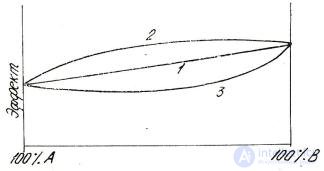 Fig. 8 Combined action can occur both with a single (acute) exposure and with
chronic exposure to poisons. With a single exposure, an additive effect is observed for substances with a narcotic action and for irritant gases:
Cl2 + NOX NOX +SO2 SO2 +H2SO4
With synergism, one substance may inhibit the biotransformation or metabolism of another substance. Thus, an enhancement of the toxic effect occurs with the combined exposure to certain organophosphorus preparations.
The phenomenon of antagonism is known for a large number of harmful substances: methane and carbon monoxide (II), styrene and formaldehyde, carbon monoxide and toluene. Antagonism can manifest itself with the combined exposure to harmful substances that are of the same type in their mechanism of action. Thus, high concentrations of ethyl alcohol reduce the toxicological effect of methyl alcohol due to competition between these alcohols during their metabolism in the organism.
For chronic exposure to substances, the phenomenon of synergism of poisons occurs less frequently. It manifests itself to a greater degree in the specific action of chemical substances. With chronic exposure to harmful substances, antagonism is most often manifested (Table 6).
Table 6. Combined action of carbon monoxide (II) and toluene under chronic 30-day
|
|
exposure on test animals |
|
|
|||
|
Name of substance |
|
Concentration, |
Died |
|
Survived |
Mortality |
|
|
|
mg/kg |
|
|
|
% |
|
Carbon monoxide (II) |
|
0,05 |
1 |
|
24 |
4 |
|
Toluene |
|
0,6 |
24 |
|
1 |
96 |
|
Carbon monoxide + toluene |
|
0,05 + 0,6 |
13 |
|
12 |
52 |
The table shows that the combined action of carbon monoxide and toluene leads to a decrease in mortality of the test animals by almost half.
Complex action of substances is of great importance in the field of environmental protection. This is especially important in the case where substances enter the organism simultaneously but by different routes (through the respiratory tract, the stomach with food and water, and the skin). In this case, complex hygienic standardization is carried out. It consists in the simultaneous establishment of hygienic standards for the content of harmful substances in food products, water, and atmospheric air.
In the combined action of harmful substances, their standardization is carried out according to the formula: n CI
|
|
------- 1 (12) |
|
i=1 |
MACi |
This formula corresponds only to the case of additivity. If, upon exposure to harmful substances, the phenomenon of synergism arises, then a correction factor is introduced into the formula, taking into account the enhancement of the effect of exposure on the biological organism:
|
n |
|
CiYi |
|
|
---------- 1 (13) |
|
|
i= |
1 |
MACi |
Concurrent action is the simultaneous or sequential action on the organism of chemical, biological, and physical factors. An increase or decrease in temperature enhances the toxic effect of exposure to substances, although not in all cases. Increased air humidity enhances the effect of a number of substances due to the formation of aerosols and the occurrence of hydrolysis, and it contributes to the disruption of heat transfer, increasing sensitivity to exposure to harmful substances. An additive effect on biological organisms of noise and a number of chemical substances is known, as well as the mutual enhancement of vibration and toxic substances.

Comments