
Lecture
Environmental toxicology is a new branch of science that arose at the intersection of two fundamental sciences, ecology and toxicology. It determines the potential hazard of contact between living organisms and harmful chemical substances foreign to the body, and develops ways to prevent the effects of these substances on animals, plants, and humans. The nature of the action and the hazard of a chemical substance for an ecological system are assessed not only by the disruption of the vital activity of its individual populations, but also by the depth of disruption of ecological equilibrium. Thus, environmental toxicology must assess the entire complex of intricate interactions in the system: toxic agent – environment – organism. Assessment of the state of the external environment (environmental monitoring) and assessment of the state of public health (health monitoring) complement one another, making it possible to give a scientifically grounded forecast of the consequences of chemical contamination of the environment, and to determine ways to reduce or completely eliminate the adverse effect of chemical pollution on humans and the ecological system.
It has now been proven that pollutants in air, water, and soil have a negative effect on public health. A huge number of new synthetic substances have been created worldwide that are foreign to the natural environment or to human and animal metabolism. Their effect on the body often exceeds its adaptive capacity. Diseases arise that are caused by a breakdown of the adaptation mechanism: allergic conditions, decreased immunological defense, disorders of reproductive function, developmental defects, and tumor diseases.
The most important indicator reflecting the influence of the complex of environmental factors on health is the morbidity rate of the child population. Having reduced adaptive capacities, children react quickly to any change in the quality of the environment. On the other hand, the response to such exposure can determine the state of health in subsequent age periods. This makes it possible to regard the health of the child population as an indicator of the ecological situation.
A correlation analysis of morbidity in the child population and atmospheric air pollutants revealed a direct, strong relationship with a high degree of reliability between:
Rail transport has many locomotive and rail-car depots and other units that house metallurgical, metalworking, machine-building, and woodworking divisions, and where welding work is also carried out. In the process, many pollutants are released into the environment: industrial dust, compounds of lead, mercury, and manganese, aromatic hydrocarbons and their derivatives, amino- and nitro-derivatives, and pesticides. The main physicochemical and toxicological properties of the compounds most widely used, as well as those formed in production processes in rail transport, are given in Appendices 2 - 5. These harmful compounds can cause various diseases, the main ones of which are discussed below.
Industrial dust is one of the adverse factors affecting human health. Under production conditions, dust enters the human body through the respiratory
tract, and accumulates in the lungs, leading to a disease called pneumoconiosis.
Depending on the type of dust that caused the development of pneumoconiosis, several types of it are distinguished:
Pneumoconioses form in the upper respiratory tract from inhaling mixed dusts containing varying amounts of free silicon dioxide (from 10% and above) and organic dust. .Pneumoconioses are divided into rapidly and slowly progressive forms and late-onset forms. Complications of this disease include tuberculosis, pneumonia, bronchial asthma, and various neoplasms. The frequency of complications and their form depend on the composition of the inhaled dust, as well as concurrent adverse environmental factors.
In the rapidly progressive form of pneumoconiosis, the disease is detected 3 – 5 years after starting work in contact with dust. The slowly progressive form appears after 1015 years. Pneumoconioses that develop several years after contact with dust has ceased are called late-onset. When a working person's contact with dust ceases, partial elimination of dust from the lungs usually occurs.
The main measure for preventing the development of dust-related lung diseases is maximum dust suppression of the air environment in industrial premises. For this purpose, depending on the nature of the production process, the following technological measures are carried out: mechanization, sealing of dust-generating production processes, introduction of remote control, dust settling with the aid of wetting agents, installation of effective local and general ventilation, as well as dust collection. In addition, personal protective equipment (respirators, special helmets) should be used, especially in industries where general dust-suppression measures are insufficiently effective owing to the specific features of production.
Lead and many of its compounds are used in industry for the manufacture of certain alloys (babbitt, brass), batteries, solder, protective equipment against ionizing radiation, in the production of crystal glass, as well as paints (lead white, red lead), glazes for pottery, and others.
Poisoning with lead occurs mainly under industrial conditions. However, cases of lead poisoning occur at home from consuming food products that have been stored for a long time in ceramic dishware coated on the inside with lead glaze.
Among inorganic lead compounds, the most toxic are those that readily dissolve in the body's biological media. These include lead acetates Pb(CH3COO)2 · 3H2O and Pb(CH3COO)2Pb(OH)2, basic lead carbonate (lead white) 2PbCO3Pb(OH)2, lead chloride PbCI2, lead nitrate Pb(NO3)2 and tetraethyl lead [Pb(C2H5)4].
Depending on their physical state and the nature of contact with them, lead and its compounds can enter the body through the respiratory tract, the gastrointestinal tract, and partly through the skin. Under industrial conditions, they most often enter the body in the form of dust, aerosol, and vapors. Lead and its compounds enter the gastrointestinal tract mainly in cases of household poisoning, and less often in industries where personal hygiene rules are not observed.
Lead and its compounds entering the body through the respiratory tract pass directly into the blood. When entering through the gastrointestinal tract, lead and its compounds undergo a series of changes. In the stomach, reacting with hydrochloric acid, they partly form a soluble compound – lead chloride. In the small intestine, under the influence of the alkaline environment and fatty acids, fatty-acid lead is formed, which is converted into an emulsion in the presence of bile. The smallest particles of lead are absorbed by the intestinal mucosa, and then, through the capillaries of the portal vein and the intestinal lymphatic pathways, enter the
general bloodstream. Lead that enters the liver is absorbed by its cells and gradually excreted with the bile.
In the blood, lead circulates in the form of a highly dispersed colloid of lead phosphates and albuminates, which are formed by the interaction of lead with inorganic phosphates and sulfur-containing proteins of erythrocytes and blood plasma. Lead is one of the poisons with a cumulative effect. Upon entering the body, it is deposited in many organs in the form of insoluble tribasic lead phosphate. Most of the lead is deposited in the bones, displacing calcium salts from bone tissue. In addition, lead is deposited in the muscles, liver, and kidneys. Small amounts of it are found in the spleen, brain, myocardium, and lymph nodes.
Lead is usually released from the depots slowly, sometimes over several years after contact with it ceases. Under the influence of various factors (alcohol consumption, trauma, overheating, physiotherapy procedures, changes in diet, acid-base status, etc.), intensive release of lead from the depots can occur through its conversion from an insoluble form into soluble compounds. In such cases, acute poisoning occurs.
Lead is excreted from the body mainly through the intestines and kidneys. A small amount of it is excreted with sweat and saliva, as well as with milk.
Depending on the severity of lead poisoning, the body suffers damage to the blood, the nervous system, the gastrointestinal tract, and the liver. The most characteristic and earliest signs of poisoning are pathological changes in the blood and impaired function of the nervous system.
When working with leaded gasoline, which contains tetraethyl lead, lead poisoning is also possible. Upon entering the body, tetraethyl lead circulates
in the blood, unchanged. It is subsequently decomposed with the release of lead, part of which is excreted in the urine and feces, while another part is deposited in the brain, leading to the development of mental disorders.
As a preventive measure for persons working with lead and its compounds, it is advisable to take pectins, which are natural complexing agents. Such compounds are able to form chelate bonds with cations of polyvalent metals, including lead. When pectins interact with lead, the latter replaces the calcium atom in them, forming a low-toxicity lead-containing complex that is quickly excreted from the body. Pectins are found in apples, fruits, and root vegetables. Various synthetic chelating agents for removing heavy metals from the human body are based on this same principle.
Aromatic hydrocarbons: benzene and its homologs and derivatives, including halogeno-, nitro- and amino compounds are used as solvents for paints and varnishes, in bonding insulating materials, and elsewhere. Their effect on humans causes damage to various organs and systems: the bone marrow, peripheral blood, central nervous system, skin, the mucous membranes of the eyes and respiratory tract, the liver, and the organ of vision.
The nature of the toxic action of aromatic hydrocarbons on particular organs and systems largely depends on the chemical structure and the presence in the benzene ring of such elements and groups as – CI, - CH3, - NO2, -NH2.. Thus, for example, benzene and its homologs, by their toxic action, belong to the poisons that mainly suppress the processes of hematopoiesis. Halogen derivatives of benzene cause sharp irritation of the mucous membranes of the eyes and respiratory tract. Among the amino- and nitro compounds of benzene there are substances that cause liver damage, the development of cataracts, and the formation of tumors. The nature of the toxic action depends on the number of amino- and nitro groups included in the molecule. The more of them are included in the molecule, the more toxic these substances are. Binuclear compounds of benzene (benzidine, -naphthylamine) have a carcinogenic effect and can cause the development of bladder cancer.
Under industrial conditions, benzene and many of its compounds can enter the human body through the lungs in the form of vapors and through intact skin. Depending on the concentration and duration of contact, both acute and chronic intoxications can develop. Acute poisonings arise from brief inhalation of high concentrations of benzene when it is spilled indoors or during work in confined spaces (cleaning tanks that held benzene, etc.). Chronic poisonings develop with prolonged inhalation of low concentrations of benzene vapors and its derivatives, or with systematic contact of it with the skin.
In acute poisonings, benzene and its derivatives concentrate in the blood, brain, liver, and adrenal glands, whereas in chronic poisonings most of them are distributed in adipose tissue and bone marrow. A significant portion of benzene and its homologs is rapidly excreted from the body unchanged with the exhaled air and urine. Another portion of benzene is oxidized to form phenol and diphenols (hydroquinone, pyrocatechol, oxyhydroquinone), which are excreted in the urine as glucuronic acid and sulfur compounds. Amino- and nitro compounds of benzene that enter the body form a temporary depot in the subcutaneous tissue. A hot bath or shower can accelerate the release of large amounts of these compounds from the depot into the peripheral blood, intensifying poisoning of the body. Organic substances of this kind that enter the body are converted into amino- and nitrophenols and are excreted in the urine.
Acute intoxication with benzene is divided into three degrees: mild, moderate, and severe. In mild-degree benzene poisoning, victims are in a state of euphoria. General weakness, dizziness, tinnitus, headache, nausea, and vomiting appear. All these symptoms are transient and disappear completely within a few hours, without causing any disorders in other organs. In moderate-severity poisoning, general weakness and headache intensify, pallor of the skin appears, body temperature decreases, and blood pressure drops. In these patients, complete recovery may occur after some time, but sometimes persistent disorders of the nervous system remain. Severe-degree poisoning with benzene and its homologs is characterized by almost instantaneous loss of consciousness, development of toxic coma, and respiratory arrest. Death usually occurs in such conditions.
Chronic intoxication with benzene and its homologs leads to damage to bone-marrow hematopoiesis. It usually develops slowly and imperceptibly to the person, and only through careful examination with targeted blood tests can the initial signs of the disease be detected. Signs of this disease are general malaise, rapid fatigability, headache without a definite location, dizziness, disturbed sleep rhythm, and increased irritability. In chronic poisoning, changes occur in certain organs and systems (the liver, the major digestive glands, the cardiovascular system, and the female reproductive sphere).
Acute poisonings by amino and nitro compounds lead to damage to the central nervous system and a decrease in oxygen transport in the body's tissues, while chronic poisonings lead to damage to the liver, urinary organs, the organ of vision, and the nervous system.
The main sanitary and hygienic measures aimed at preventing poisoning by benzene and its derivatives are well-functioning supply-and-exhaust ventilation, sealing of equipment, and elimination of manual operations.
Carbon oxide (carbon monoxide) is formed as a result of technological processes that are associated with the incomplete combustion of carbon-containing substances. The release of carbon oxide occurs mainly in blast-furnace, open-hearth, foundry, and gas-generator shops, during blasting operations, and also in insufficiently ventilated premises (garages, boiler rooms, diesel locomotive cabs, etc.).
Carbon oxide (CO) enters the body through the respiratory organs and then penetrates into the blood through the pulmonary membrane. Therefore, the development and severity of the intoxication largely depend on the diffusing capacity of the lungs. In addition, the content of carbon monoxide in the air, the duration of its exposure, the state of blood circulation and pulmonary ventilation, and the oxygen content of the inhaled air are also significant. Carbon oxide is excreted from the body unchanged with the exhaled air.
In terms of its toxic action, CO belongs to the group of blood poisons. In the blood, it readily combines with the iron of hemoglobin, forming carbonylhemoglobin (HbCO). This is a stable compound, with a stability constant approximately 200 times greater than that of oxyhemoglobin (HbO2). Therefore, carbon monoxide poisoning disrupts the process of oxygen transport to human organs. Signs of hypoxia – oxygen deficiency – appear. This primarily affects the enzyme systems of nerve tissues involved in oxidation-reduction processes.
Carbon oxide poisoning can be acute or chronic. In acute CO intoxication, three degrees of severity are distinguished: mild, moderate, and severe.
In the mild degree, general weakness, pain in the temples and forehead, dizziness, a feeling of heaviness in the head, tinnitus, sometimes nausea and vomiting, and drowsiness are observed. The blood content of carbonylhemoglobin reaches 20 – 30% at a normal level of 5%.
In the moderate degree, severe headache, dizziness, nausea, vomiting, and palpitations are observed. Subsequently, a brief loss of consciousness occurs, and involuntary motor disorders and convulsions appear. The skin and visible mucous membranes acquire a raspberry-red hue. The HbCO content in the blood reaches 35 –40%.
The severe degree is characterized by sudden, prolonged loss of consciousness, rapid breathing, and a sharp drop in blood pressure. The blood level of carbonylhemoglobin exceeds 50%. A fatal outcome is possible.
The course of acute CO poisoning depends on the severity of the disease and the degree of damage to the nervous system. In mild and moderate intoxication, complete recovery is usually observed. In persons who have suffered severe intoxication, residual effects often persist in the long term.
Chronic intoxication develops with prolonged exposure to low concentrations of CO. In the initial stages, the main signs of chronic intoxication are functional disorders of the CNS. Irritability, rapid fatigability, disturbed sleep, and impaired memory appear, and blood pressure periodically rises. The rapid development of chronic CO intoxication is promoted by significant physical exertion and elevated air temperature, since in such cases pulmonary ventilation increases.
The main measures for preventing the development of CO intoxication are sealing of processes associated with gas formation and preventing its possible penetration into the work area. Monitoring of the proper functioning of ventilation systems is necessary, as well as the use of automatic alarm systems to detect a hazardous concentration of CO in the air of the working zone.
Mercury - a liquid metal, is widely used in various instruments (thermometers, manometers, hydrometers), rectifiers, mercury and quartz lamps. Industry uses metallic mercury and its compounds: mercuric chloride (corrosive sublimate), mercury nitrate, calomel, and mercury fulminate.
When it evaporates, mercury turns into a colorless vapor without any odor. Therefore, its presence in the air is not detected, and persons working with mercury develop a false impression that it is absent. The concentration of mercury in a room depends on the evaporation surface, the air temperature in the room, and the effectiveness of ventilation. Mercury vapors readily spread through the air and penetrate porous materials: paper, wood, fabric, and plaster. Mercury can get into cracks and settle on the floor and walls, contaminating the room, in which high concentrations of it are often created. The maximum allowable concentration of mercury in the air of the working zone is 0,01 mg/m3.
Mercury enters the body mainly through the respiratory organs. Mercury may also enter through the gastrointestinal tract (mercury being brought to the mouth by contaminated hands). However, ingestion of metallic mercury through the digestive tract is harmless, since it is almost completely eliminated from the body with the feces. Cases of mercury intoxication resulting from rubbing mercury ointment into the skin are known. Mercury is excreted in the urine, feces, saliva and in the milk of a nursing woman. Mercury is capable of accumulating in the liver, lungs and bones.
Mercury belongs to the group of thiol poisons. Upon entering the body, in particular the bloodstream, mercury combines with proteins. By blocking the sulfhydryl groups of protein compounds, mercury disrupts protein metabolism and the course of enzymatic processes. All this leads to profound disturbances of CNS function, especially of its higher divisions.
Acute and chronic forms of mercury intoxication are distinguished. Acute poisoning is rare under industrial conditions. Chronic poisoning is more common.
Chronic intoxication occurs in people working under conditions of prolonged contact with mercury. Three stages of chronic poisoning are distinguished: the initial stage, the stage of moderately pronounced changes, and the stage of pronounced changes.
At the initial stage general malaise, headache, memory impairment, and sleep disturbance are noted. With timely removal from work with mercury and treatment, all signs of the disease completely disappear and working capacity is not impaired.
The stage of moderately pronounced changes usually develops in persons with long work experience in contact with mercury. These people develop severe weakness, persistent headaches, insomnia, and increased irritability. Certain psychopathological symptoms are noted: shyness, self-doubt at work, facial flushing, sweating, and hand tremor. With timely treatment, as well as removal from work with mercury, recovery is possible.
At the stage of pronounced changes persistent headaches without clear localization appear, along with constant insomnia, gait disturbance, and weakness in the legs. A state of fear, depression, and decline of memory and intellect are observed.
The main task in carrying out preventive measures is to replace mercury with less harmful substances or to reduce the concentration of its vapors in the air of work premises. For this purpose, automation and sealing of production processes are carried out. Premises where work with mercury is performed must be equipped with walls and floors impermeable to mercury and provided with effective ventilation. The surfaces of tables and cabinets are made smooth, with a slope for mercury to drain into a vessel of water. The air temperature in work premises should not
exceed 10 °C. Persons working with mercury are supplied with special clothing made of dense fabric. Poisoning by inorganic mercury compounds differs little from intoxication by metallic mercury vapors.
Tosubstances with irritant action include: chlorine, hydrogen chloride, hydrogen sulfide, sulfur dioxide, and nitrogen oxides. They are used in various branches of industry: machine-building, metallurgical, oil-refining, and others. They may enter the working-zone air as irritant gases: chlorine, hydrogen chloride, hydrogen sulfide, sulfur dioxide, nitrogen oxides, and ammonia. In rail transport, sulfur dioxide and nitrogen oxides are formed during the operation of diesel locomotives and during the repair of rolling stock in car and locomotive depots.
All these gases have the same mechanism of action, manifested in irritation and cauterization of the mucous membranes of the upper respiratory tract and eyes. The difference lies only in the fact that substances more soluble in water are retained more quickly on the mucous membranes of the upper respiratory tract; less soluble substances (nitrogen oxides) are able to penetrate into deeper parts of the lungs (bronchi, alveoli) and cause the development of pulmonary edema.
Chlorine (Cl2) is a greenish-yellow gas with a pungent odor, 2.5 times heavier than air, and a strong oxidizing agent. When dissolved in water, it forms hydrochloric (HCl) and hypochlorous (HClO) acids.
Chlorine poisoning leads to irritation of the upper respiratory tract, bronchial spasms, and altered cardiac activity. Signs of irritation of the respiratory and vasomotor centers are also observed.
Chlorine poisoning is possible in various industries: pulp-and-paper, textile, as well as in the production of bleaching lime and the chlorination of water. Both acute and chronic poisoning are possible in this case.
When chlorine is inhaled, the symptoms of acute poisoning appear immediately. Exposure to low and medium concentrations causes irritation of the mucous membranes of the upper respiratory tract and eyes. Sharp pain in the eyes, lacrimation, dryness and burning in the nose and throat, hoarseness of voice, and a feeling of tightness and pain in the chest are noted. By the end of the first day, the intensity of the inflammatory phenomena increases: the nasal mucosa swells, breathing through the nose becomes difficult and increases to 20–24 per minute. Usually the acute inflammatory processes subside after
5–7 days.
Chronic poisoning develops only with prolonged exposure to chlorine at low concentrations. It manifests as chronic bronchitis. Subsequently, bronchial asthma and pulmonary-cardiac insufficiency may develop.
Hydrogen sulfide (H2S) is a colorless gas with the smell of rotten eggs. At high concentrations of hydrogen sulfide, the smell is not perceived. This gas is somewhat heavier than air and therefore accumulates in low-lying places: pits, trenches, wells, etc. Hydrogen sulfide may be present in the wastewater of various industries and in the sewer network, from where it enters the atmospheric air. The main route of entry into the body is the respiratory organs. In the event of an accident or a disruption of the process, a large amount of hydrogen sulfide may enter the body and acute poisoning will occur. The danger of such poisoning is increased by the loss of the sense of smell at high concentrations of hydrogen sulfide.
During intoxication, irritation of the mucous membranes of the upper respiratory tract and eyes occurs. The affected persons experience burning and sharp pain in the eyes, lacrimation, photophobia, dry cough, chest pain, and possible asthmatic bronchitis. With timely emergency care, complete recovery occurs.
Sulfur dioxide (SO2) is a colorless gas with a sharp irritating odor. It is highly soluble in water, ethyl and methyl alcohols. The main route of entry into the body is through the respiratory organs. It can be detected in the blood. Sulfur dioxide has an irritant effect on the mucous membranes of the eyes and upper respiratory tract, and can subsequently affect the lungs. It also has a resorptive property, disrupting metabolic processes.
Poisoning by sulfur dioxide causes irritation of the mucous membranes and upper respiratory tract. Lacrimation, hoarseness of voice, and dry cough appear. With timely emergency care, complete recovery occurs.
Nitrogen oxides are gases of a yellowish-brown color, representing a mixture of various oxides, of which nitrogen dioxide (NO2) is of the greatest significance under industrial conditions. In rail transport these gases are formed during the operation of diesel locomotives and internal combustion engines, as well as during gas welding, gas cutting, and electric welding.
Poisoning by nitrogen oxides is characterized by the development of mild irritation of the mucous membranes of the eyes and upper respiratory tract. Lacrimation, runny nose, cough, and general malaise appear. All this may quickly disappear, but toxic pulmonary edema subsequently develops.
Individual protective equipment is used as a preventive measure against intoxication by irritant substances. Sealing of equipment and production processes, ventilation, and monitoring of toxic substance concentrations in the air of work premises are carried out.
Smoking (of tobacco) is the most widespread harmful habit, which forms as a result of the action of the main substance in tobacco — nicotine, which has a stimulating effect. It creates the impression that nicotine has a tonic effect and enhances intellectual activity, but this state is not physiological and leads to exhaustion of the nervous system. Acute nicotine poisoning (headache, dry mouth, insomnia) often develops during smoking; with prolonged smoking, the smoker develops a craving for smoking, i.e., physical dependence.
When tobacco burns, toxic substances are formed: carbon monoxide, carbon dioxide, nicotine, acetone, benzene, hydrazine, acrolein, and others. In addition, metallic components are formed: potassium, sodium, zinc, lead, strontium, polonium, benzpyrene, DDT, and others. When 20 grams of tobacco burn, more than 1 g of tobacco tar is formed. Passive and active smoking are distinguished. The inhaled dose of various substances during active and passive smoking, when smoking one cigarette over one hour, is (in mg):
|
|
Active smoking |
Passive smoking |
|
Carbon monoxide |
18,4 |
9,2 |
|
Nitrogen oxide |
0,3 |
0,2 |
|
Aldehydes |
0,8 |
0,2 |
|
Cyanide |
0,2 |
0,005 |
|
Acrolein |
0,1 |
0,01 |
|
Solid and liquid substances |
25,3 |
2,3 |
|
Nicotine |
2,1 |
0,04
|
Smokers are more prone to infectious diseases, diseases of the respiratory organs, the gastrointestinal tract, and the genitourinary system, as well as to oncological diseases.
Russia ranks second in the number of smokers, with China in first place.
Substance abuse (toxicomania) is the general name for diseases caused by the abuse of various substances that cause states of intoxication (euphoria); they manifest as a craving for the continued intake of increasing amounts of these substances due to the development of persistent physical and psychological dependence on them; this leads to profound changes in personality, mental disorders, and disturbances of internal organ function. Substance abuse includes alcoholism, drug addiction, and others; some are considered independent diseases. In a narrower sense, substance abuse (toxicomania) refers to a pathological craving for substances that are not classified as narcotics (hypnotics, tranquilizers — sedative agents, household chemicals).
Alcohol intoxication is caused by the intake of ethyl alcohol or various alcoholic beverages with an ethyl alcohol content of more than 12%. Ethyl alcohol is a colorless liquid, molecular mass 46,07, boiling point - 78,4°C, miscible with water in all proportions. Upon entering the body, ethanol undergoes two phases of distribution - absorption and elimination. Alcohol is absorbed 20% in the stomach and 80% in the small intestine.
In the liver, 90% of the ingested ethanol undergoes oxidation with the participation of the enzyme alcohol dehydrogenase according to the scheme: ethanol-acetaldehyde-acetic acid-carbon dioxide and water
(C2H5OH - CH3CHO - CH3COOH -CO2+H2O).
1-2% of ethanol is oxidized in the muscles, about 10% of the absorbed ethanol is excreted unchanged through the lungs and in the urine within 7-12 hours. Ethanol has a psychotropic effect associated with a narcotic effect on the CNS. The lethal dose of ethanol on average is 300 mL of 96% ethanol.
The toxic danger of alcohol surrogates is significantly higher. The most common alcohol surrogates are hydrolysis alcohol, denatured alcohol, colognes and lotions, BF glue, methyl alcohol, methanol, and wood alcohol.
Methanol is rapidly absorbed in the stomach and small intestine, and is metabolized mainly in the liver by alcohol dehydrogenase enzymes to form formaldehyde and formic acid, which account for the high toxicity of methanol. The lethal dose when taken orally
100 mL (without prior intake of methanol).
At present, acute poisoning by poisons of plant origin is a common type of food poisoning. These poisonings occur mainly in the warm season, more often among tourists who eat unfamiliar plants and mushrooms. Self-treatment — the independent use of tinctures and decoctions of herbs — can be a cause of poisoning by plant poisons. Among three hundred thousand plants, more than 700 can cause severe poisoning. The active toxic principle of poisonous plants consists of various chemical compounds, belonging mainly to alkaloids and glycosides, plant soaps (saponins), and acids (hydrocyanic, oxalic acids).
By selective toxicity, plant poisons can be divided into poisons affecting the central nervous system (aconite, henbane, belladonna, spotted hemlock, celandine and others), the liver (heliotrope, ragwort), the skin (hogweed, nettle), the gastrointestinal tract (wolfsbane, spurge, nightshade), and the heart (hellebore, lily of the valley).
Poisonous mushrooms are found everywhere. In Russia, poisoning is caused by 20-25 species of poisonous mushrooms. The most poisonous are the fly agaric and the death cap, with the green and white death caps being the most toxic. The cap of the mushroom contains more toxic substances than the stem. The toxic substances in the death cap (phalloidin, phalloin, phallisin, phallin, alpha-, beta-, gamma-amanitins, amanullin) are not destroyed by heat treatment and can persist for many years. Practically a single mushroom is enough to cause fatal poisoning of an adult.
Toxins are rapidly absorbed in the gastrointestinal tract, and are deposited in the liver - 57%, in the kidneys - 2.7%.
Animal poisons are distinguished by great diversity. An active method of exposure is the injection of venom into the body by means of poisonous teeth (snakes), a poisonous sting (spiders, wasps, bees), or poisonous fin spines (fish). A passive method is the accumulation of poison in certain organs and tissues, the consumption of which as food causes poisoning.
First aid for a bite by poisonous animals is squeezing out the first drops of blood and sucking the venom out of the wound. Applying a tourniquet and making incisions in the skin at the site of the bite are strictly contraindicated; specific treatment is carried out in a hospital.
In accordance with HN 1.1.029-95, a list has been established of substances and products of the production
process, household and natural factors that are carcinogenic to humans, and a list has been established of compounds and products, carcinogenic and probably carcinogenic to humans, for which MACs have been set (Appendix 7).
Diagnosis of poisoning is aimed at establishing the chemical etiology of the disease that develops as a result of exposure to foreign toxic substances. It consists of three main types of diagnostic measures:
In the event of (acute) poisonings, medical care must be provided immediately with the aim of stopping further entry of toxic substances into the body and saving the patient from severe fatal injury. First aid must be provided above all as self-help and mutual aid.
The problem of the growing number of acute poisonings set health services a task for whose solution a new organizational form of specialized inpatient care gradually took shape - the center for the treatment of acute poisonings. The first specialized clinical department for the treatment of patients with poisoning was established in 1949 in Copenhagen. In Russia, the first toxicological team was created at the Moscow ambulance station in 1961.
The main tasks of the departments for the treatment of acute poisonings are: carrying out measures for the treatment and prevention of acute poisonings, providing consultative assistance to medical and preventive institutions, as well as organizational and methodological guidance for them.
During the treatment of poisonings, etiological, pathogenetic, and symptomatic treatment of poisonings are distinguished. Etiological treatment includes carrying out the following measures:
Antidote therapy retains its effectiveness only in the initial toxicogenic phase of acute poisoning, which is distinguished by high specificity. Two groups of antidotes are distinguished. The first group includes complexing compounds - salts of alkyl polycarboxylic acids, effective in poisoning by lead, manganese, cadmium, etc. The second group includes numerous medicinal agents widely used for general detoxification
therapy. Thus, courses of treatment with ascorbic acid reduce the manifestations of the toxic action of certain metals - lead, chromium, vanadium, and others.
4. Treatment in specialized hospital departments.
Chronic poisonings are predominantly occupational in nature and belong to occupational pathology.
The most important links in the prevention of chronic poisonings are:
Proper training of workers, and the rules and techniques of safe
work with toxic substances, and strict monitoring of compliance with safety measures are also of great importance.
Therapeutic measures aimed at stopping the action of toxic substances and removing them from the body in the toxicogenic phase of poisoning are divided into groups: methods of enhancing natural cleansing processes, and methods of antidote detoxification of the body (Fig. 9).
Water, soil, air, food products and food raw materials must be safe for living organisms in terms of chemical, biological and radiation safety indicators of the content of harmful substances (MAC), which are regulated by the sanitary norms and rules currently in force.
Main methods of detoxification of the body.
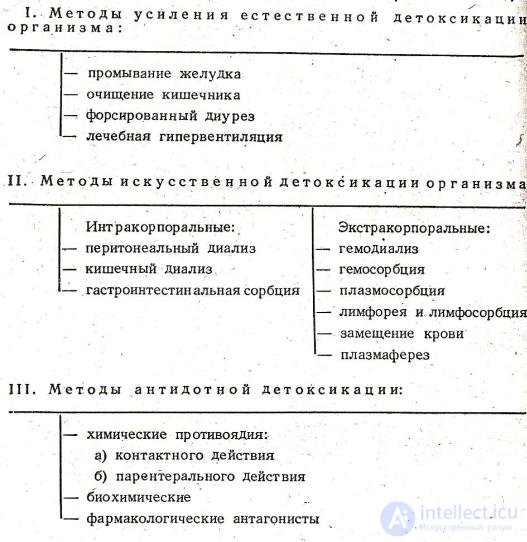
Fig. 9.

Comments