
Lecture
A harmful substance (according to GOST 12.007-76) is understood to be a substance that, upon contact with the human body, in the event of a violation of safety requirements, can cause occupational injuries, occupational diseases or deviations in health status detectable by modern methods, both in the course of work and at remote periods of the present and subsequent
generations.
Exposure to harmful substances causes various disturbances of the normal vital activity of the organism. If the disturbances caused in vital processes become sufficiently persistent, they are called occupational poisonings. Occupational poisonings can be acute and chronic. Poisonings arising from exposure to industrial harmful substances are studied by industrial toxicology.
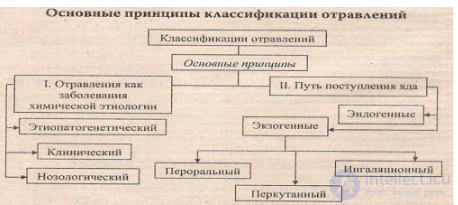
Diagram 3 presents the main principles of the classification of poisonings.
Diagram 3.
The system of principles and methods used to determine the toxicity of harmful substances is called toxicometry. The main concepts of toxicometry:
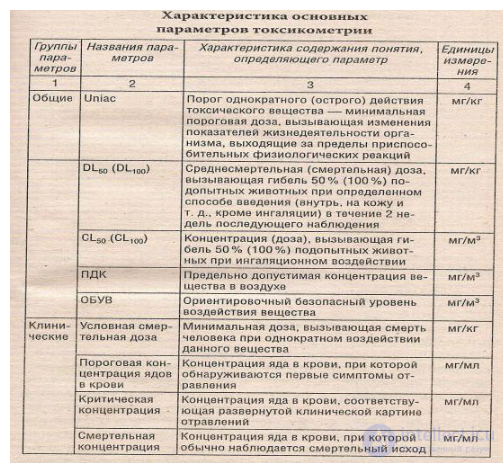
Limac – the threshold of single (acute) action of a toxic substance – the minimum threshold dose causing changes in indicators of the vital activity of the organism that go beyond the limits of adaptive physiological reactions:
DL50 (DL100) – the mean lethal (lethal) dose causing the death of 50% (100%) of the experimental animals with a certain method of administration (into the stomach, on the skin, etc., except inhalation) and a two-week period of subsequent observation. Expressed in milligrams of substance per 1 kg of animal body weight (mg/kg);
CL50 (CL100) – this is the concentration (dose) causing the death of 50% (100%) of the experimental animals upon inhalation exposure, expressed in milligrams per 1 cubic meter of air;
MAC – the maximum allowable concentration of a substance in the air, expressed in milligrams per 1 cubic meter of air, in foodstuffs and food raw materials in mg/kg, in water in mg/L, in soil in mg/kg.
Maximum allowable concentrations (MAC) of harmful substances are regulated by the sanitary norms and rules currently in effect.
TSEL – the tentative safe exposure level of a substance, expressed in milligrams per 1 cubic meter of air.
Toxicity is the biological effect that occurs after a harmful substance has entered the organism. The degree of toxicity (poisonousness) is measured by its absolute amount causing a certain biological effect. The toxicity of a substance is greater the smaller its amount (dose) that causes a disorder of the living organism.
Table 2 shows the characteristics of the main parameters of toxicometry.
Table 2.
Of several substances, those that cause the same poisoning at a lower dose or concentration are more toxic. The dose received by the organism per unit of time is called the dose level. The death of the organism is assessed by the lethal DL (lethal dose LD) or concentration CL (LC). Functional changes in the organism are characterized by effective threshold or non-effective doses (concentrations).
Lethal doses or concentrations can cause isolated cases of death in test animals. They are called the minimum lethal doses LDmin(LCmin). If death occurs in all test animals, then they are called the maximum or hundred-percent lethal doses or concentrations and are denoted respectively LDmax(LD100) and LCmax(LC100). Since the values of LDmin and LDmax vary within wide limits due to the individual sensitivity of the animals and the conditions and methodology of the tests, statistically reliable values are usually used – the mean lethal doses and concentrations LD50 and LC50. The toxicity of substances is greater the smaller LD50 and LC50 are.
The dose is expressed in units of mass or volume of the harmful substance per unit of mass of the animal's body (mg/kg). The concentration of a harmful substance is usually expressed in the following units: mg/m3, mg/L, mg/kg, %, in parts per million (ppm). The dose and concentration of the poison are often expressed as fractions of the lethal dose (concentration), for example ½ LD50, 1/20 LD50, and so on. The toxicity of a harmful substance is denoted
as 1/LD50 and 1/LC50.
Two types of poisoning: acute and chronic.
In the event of accidents, violations of safety procedures or of equipment operating regulations, a sharp, sudden increase in the content of harmful substances is possible. In this case, acute poisoning can occur. It arises after a single exposure and can lead to death, although not immediately after the poisoning. For example, nitrogen oxides can lead to such an outcome a week or more after acute poisoning.
Chronic poisoning – is a disease that develops as a result of systematic exposure to such doses of a harmful substance which, upon a single entry into the organism, do
not cause noticeable poisoning. The action of many industrial poisons is associated precisely with chronic poisoning, since under ordinary production conditions, as a rule, concentrations of harmful substances capable of causing acute poisoning are not created. This applies, for example, to compounds of lead, manganese and mercury vapors.
Acute and chronic poisoning of the organism by poisons is assessed from the point of view of the hazard of the substance. This indicator is assessed by the probability of harmful substances entering the organism. The hazard of harmful substances entering the organism is determined on the basis of early functional changes in biological organisms. The degree of hazard of chemical poisonings is established according to the so-called zones of acute and chronic action. In this, the effective doses and concentrations causing poisoning of the organism, as well as the threshold values, are determined. Under the term
threshold nature of the action are understood statistically reliable physiological changes in the organism of experimental animals. Determining the thresholds of acute and chronic action makes it possible to establish the zones of acute and chronic action and to find the maximum allowable concentrations of harmful substances.
The threshold of acute action is the minimum concentration of a harmful substance causing a change in biological indicators, which is determined by the change in adaptive physiological reactions.
The threshold of chronic action is the minimum concentration of a harmful substance causing a harmful effect in a chronic experiment of 4 hours, 5 times a week, for at least 4 months.
To justify the standards for pollutants in the environment, not one but two values of threshold concentrations are established: for the single-exposure Kmin. ac.(LIMAc) and the chronic Kmin. chr.(LIMCh) (from the Latin limit – boundary, limit; acute – acute; chronic – chronic, prolonged).
For certain substances, the hazard of the substance is also influenced by the threshold of specific (selective action) LimCP. This is the minimum concentration (dose) causing a change in the biological functions of individual organs and systems of the organism that go beyond the limits of adaptive physiological reactions.
A more complete characterization of the poisoning of living organisms is determined by the following indicators:
The zone of acute toxic action is called (ZAC) the ratio of the mean lethal dose concentration (DL50) to the threshold of acute action (LIMAC).
ZAC = DL50/LIMAC (1)
The greater this value, the safer the substance.
This ratio characterizes the interval of concentrations that have an effect on the organism upon a single entry, from the initial to the most unfavorable (the largest).
The zone of chronic action ZCh is the ratio of the threshold of acute action LIMAC to the threshold of chronic action LIMCh .
|
ZCh = LimAC/LimCh |
(2) |
This ratio shows the magnitude of the gap between the concentrations causing the initial phenomenon of intoxication upon single and prolonged entry of the poison into the organism. The smaller the zone of acute action, the more dangerous the substance, since even a small excess of the threshold concentration can cause death. Such a substance is dangerous from the point of view of the possible development of severe forms of poisoning. The wider the zone of chronic action, the more dangerous the substance, since chronic action then begins to predominate. Chronic poisonings develop covertly and imperceptibly and intensify as the harmful substance accumulates in the organism.
The identification of the hazard of substances by indicators of the selectivity of the effect caused – allergenic, blastomogenic, irritant, and so on – is of great importance. The corresponding zones of specific action ZSP are determined by the ratio of the threshold of acute action according to integral indicators to the corresponding threshold of specific action LimSP.
|
LimAC(integ) |
|
|
ZSP = ----------------- |
(3) |
|
LimSP
|
The hazard of inhalation poisoning in industry is determined by the volatility of the substance, that is, its ability to form a gas phase. To assess this hazard, a coefficient was introduced
of the possibility of inhalation poisoning (KVIO), which is defined as the ratio of the maximum allowable concentration (saturated concentration) C(MAX)20 in air at a temperature of 200C to the mean lethal concentration LC50 for white mice at a two-hour exposure:
KVIO = C(MAX)20/LC50 (4)
The minimum concentration of vapors of a harmful substance is determined by the formula: C(MAX)20 = (16MP20)/T (5),
where M – the molar mass of the substance, g/mol; P20 – the saturated vapor pressure at 200C (mm of mercury);
T – the boiling point of the substance on the absolute scale, K.
On the basis of toxicity indicators, substances are divided into classes. The classification of harmful substances by degree of toxicity is presented in Table 3.
|
|
|
|
|
|
Table 3. |
|
|
Classification of harmful substances by degree of toxicity and hazard |
||||||
|
Indicators |
|
Toxicity classes |
|
|
||
|
|
|
1 |
11 |
111 |
1V |
|
|
|
|
extremely |
highly |
moderately |
slightly |
|
|
|
|
toxic |
toxic |
toxic |
toxic |
|
|
LD50, mg/kg, oral |
15 |
15 –150 |
150 -1500 |
1500 |
|
|
|
LD50, mg/kg, dermal |
100 |
100 -500 |
5012500 |
2500 |
|
|
|
LC50, mg/kg |
0,5 |
0,5 – 5 |
5,1 -50 |
50 |
|
|
|
LCmin, mg/L |
0,01 |
0,01 – 0,1 |
0,11 –1,0 |
1,0 |
|
|
|
Zac. |
6 |
6 – 18 |
18,1 - 54 |
54 |
|
|
|
Zchr. |
10 |
10 – 5 |
4,9 – 2,5 |
2,5 |
|
|
|
KVIO |
300 |
300 -30 |
30 - 3 |
3 |
|
The first four indicators in the table characterize the degree of toxicity, while the last three characterize the degree of hazard of the substance.
The practical determination of the thresholds of harmful action of substances requires in-depth research. The concentration characterizing the threshold of harmful action of substances is the basis for establishing the maximum allowable concentrations (MAC) of harmful substances in various media.
The maximum allowable concentration of a chemical substance in the ambient environment characterizes the concentration at which exposure of the human body, periodically or over the course of a whole lifetime, does not cause somatic (bodily) or mental illnesses, including latent ones, or changes in health status going beyond adaptive physiological reactions detectable by modern research methods. The MAC of harmful substances is established according to the limiting indicator, that is, one of the indicators of chemical contamination of atmospheric air, water and soil that determines the predominant adverse effect and is characterized by the lowest effective concentration value.
When establishing the MAC value of harmful substances, it is necessary to reduce the concentration known to be toxic, which is determined by the safety factor KS. It is set for each substance taking into account the quantitative and qualitative features of its action and is characterized by the lowest value of the effective (that is, causing a defined effect) concentration obtained in chronic studies. The safety factor increases with an increase in absolute toxicity, a decrease in the zone of acute action, an increase in cumulative (accumulation) properties, and also with variation in the sensitivity of experimental animals. Numerically, the safety factor
lies within the range: 3 KS 20.
The parameters considered above are arranged in toxicology by levels of biological action in Figure 1.
Levels of biological action of the main parameters in toxicology.
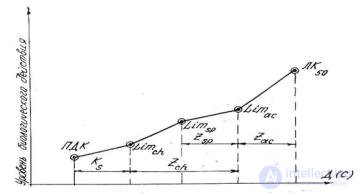 Fig. 1.
The dependence of the effect of substances on biological objects on concentration (dose) can be shown graphically in dose-effect coordinates, which is presented in Figure 2.
The dose-effect relationship in toxicology.
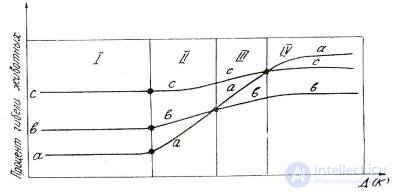 Fig. 2.
If harmful substances a, b and c are arranged in order of increasing effect, then in different zones of the dose-effect curve this order will differ from one to another. The curves contain various sections in which small changes in the concentration (dose) of a substance cause either a significant increase in the effect, or lead only to a weak change in the effect. Therefore, the toxicity of substances a, b and c can differ depending on which zone of the curve their analysis is carried out in.

Comments