
Lecture
Substances entering the body with food, medicinal substances, and other
compounds undergo various transformations under the influence of enzymes.
The process of transformation of substances that have entered the body is called metabolism, or biotransformation, and the substances formed as a result of these transformations are called metabolites.
Proteins, fats, carbohydrates, hormones, vitamins, and some other substances
that enter the body are substances proper to the organism. They serve as a source of energy or
structural elements for building cells, and so on. Substances proper to the organism
that ensure the organism's vital functions undergo metabolism with the help of specific enzyme systems.
In addition to substances proper to the organism, it may also receive
drugs, food additives, chemical plant-protection agents, household
chemical products, and many other substances not proper to the organism. They do not
provide the organism with the energy needed for all forms of vital activity, and are not converted into components of cells and tissues. Under certain conditions
these substances can disturb the normal metabolic processes of proteins,
fats, and other substances proper to the organism, causing poisoning and even
death. Such substances are called foreign substances or xenobiotics.
The overwhelming majority of metabolites are less toxic than the foreign substances from which they were formed. Metabolites are readily eliminated from the body.
Therefore, the metabolism of drugs, and especially of poisons, is one of the pathways
of detoxification.
The physical and chemical properties of most metabolites differ from
the properties of the foreign compounds from which they were formed. Therefore, the methods
of isolating foreign substances from biological material, used in chemical-toxicological analysis, are in many cases unsuitable
for isolating their metabolites
For a more complete picture of the amount of poison that caused
the poisoning, during chemical-toxicological analysis it is necessary to identify and quantitatively determine not only the toxic substance itself but also its metabolites. However, the methods for detecting and quantitatively determining many metabolites, as well as the metabolism of most drugs and poisons, have not yet been studied, or have been studied insufficiently.
The development of methods for analyzing metabolites for the determination of poisons is of theoretical and practical significance, but is associated with certain difficulties.
The main difficulties in the study of metabolites consist in the fact that
metabolites are contained in biological material in small quantities, and their
analysis requires special methods. Therefore, from objects of biological origin containing substances that differ in chemical composition and properties
(proteins, their breakdown products, and so on), it is difficult to isolate metabolites quantitatively.
To isolate metabolites from biological material, one must use
methods involving complex and sometimes laborious
operations, during which a certain amount of these substances may be lost.
Metabolites isolated from biological material should be investigated with
the help of characteristic reactions and methods, and the results of the investigations
should be compared with the results of investigations of the presumed compounds. Such compounds are in most cases unavailable in chemical laboratories. They must be obtained
synthetically, and the synthesis of presumed metabolites is, as a rule, quite
complex. Therefore, questions of metabolite research must be resolved
jointly by analytical chemists and synthetic chemists.
The metabolism of foreign compounds (drugs, poisons, and the like) in the body of humans and animals occurs under the influence of enzyme systems.
Most poisons are metabolized in the liver, which produces a significant amount
of enzymes. These enzymes are localized in the mitochondria, microsomes, and lysosomes of liver cells. Metabolites formed in the liver pass into
the bile, then into the intestines and are excreted with the feces, or pass into the kidneys and are excreted with the urine. The metabolism of foreign compounds partly occurs in the
kidneys, lungs, esophagus, skin, and so on.
Metabolism is one of the ways of deactivating (detoxifying) foreign compounds in the body.
But in some cases metabolites can be more toxic
than the foreign compounds from which they were formed. It is known that hexamethylenetetramine has no antibacterial activity, whereas its metabolite formaldehyde exhibits such activity and is toxic. Methyl alcohol has
a significantly lower toxicity than formaldehyde, which is a metabolite of this
alcohol. During metabolism, codeine can be converted into the more toxic morphine. Chloral hydrate exerts its hypnotic action only after being converted into a more toxic metabolite – trichloroethanol. The metabolite of phenacetin is paracetamol, which has a more pronounced pharmacological effect
on the body than phenacetin. Many such examples of the formation of metabolites more
toxic than the foreign compounds themselves can be given.
More toxic than the parent substances are the products of lethal synthesis. During lethal synthesis, more complex compounds possessing toxic action are formed in the body from simple foreign compounds
that arise; this can
be shown by the following example: nontoxic fluoroacetic acid F—CH2—COOH is converted in the body into toxic fluorocitric acid:

(1.4)
into
The metabolism of foreign compounds is influenced by various factors. The metabolism of the same foreign compounds in the body of humans may
proceed differently than in the body of certain animals. Changes in the metabolism of foreign compounds may depend on age, sex, nutrition, various diseases, stress conditions, and the presence of other foreign compounds in the body.
In the first phase of metabolism, under the influence of enzyme systems, foreign compounds may be oxidized, reduced, hydrolyzed,
subjected to deamination, dealkylation, desulfuration, and other transformations.
During oxidation, under the influence of enzymes, many foreign compounds are converted into their metabolites containing hydroxyl (alcohol, phenolic) groups. Therefore, such oxidation reactions are called hydroxylation reactions. During the oxidation
of certain foreign compounds containing nitrogen and sulfur,
oxides and other compounds are formed.
During the oxidation of benzene in the body, phenol is formed under the influence of enzymes, while upon oxidation
of naphthalene, naphthols are formed.
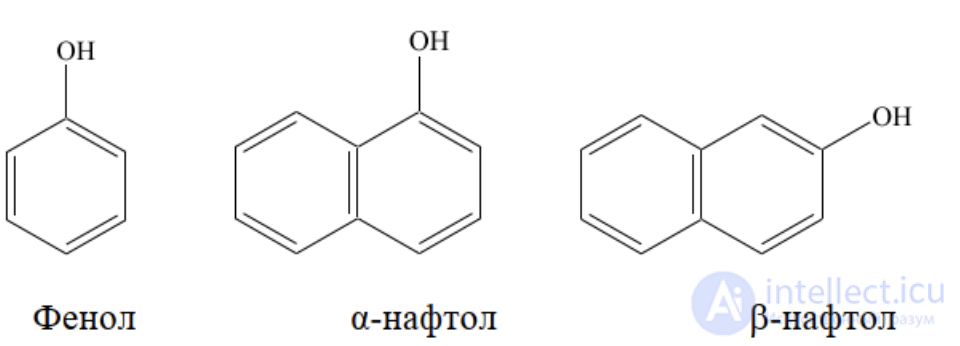
The oxidation (hydroxylation) products of benzene and naphthalene (phenol and
naphthols) are eliminated from the body by various pathways.
In alkyl derivatives of benzene, the alkyl group is oxidized
first of all. Thus, toluene (methylbenzene) is oxidized to benzyl alcohol, upon
further oxidation of which benzoic acid is formed, which
is eliminated from the body by means of conjugates.
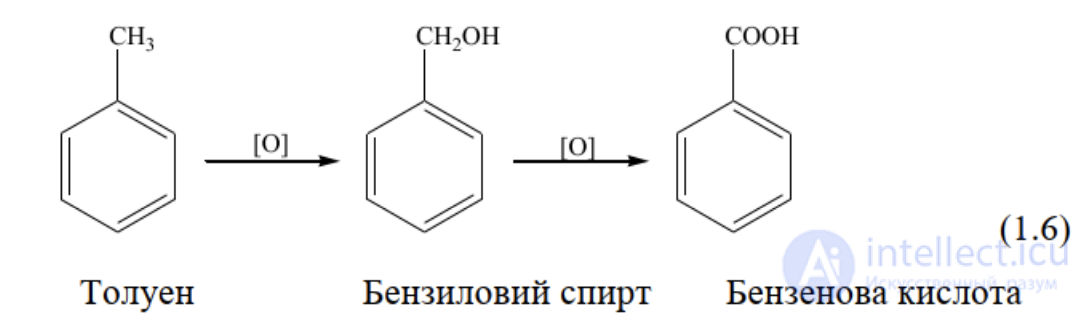 (1 6)
(1 6)
When there are several carbon atoms in the side alkyl chain
of benzene derivatives, hydroxylation can occur at different atoms
of that chain.
Alicyclic compounds are those containing rings of carbon atoms (except for benzene and its
derivatives).
In the body, alicyclic substances are hydroxylated with the formation
of the corresponding alcohols. Cyclohexane is metabolized into cyclohexanol and cyclohexanediol-1,2.
If a compound contains both alicyclic and aromatic rings, then the saturated
(alicyclic) ring is hydroxylated more readily than the aromatic one.
Aniline is an amino derivative of benzene. In the body, under the influence of enzymes, aniline is hydroxylated with the formation of o-, m-, and n-aminophenols.
Aniline can also be oxidized at the amino group. In this case, phenylhydroxylamine or nitrosobenzene is formed as a metabolite.
This metabolic process belongs to what is called N-hydroxylation:
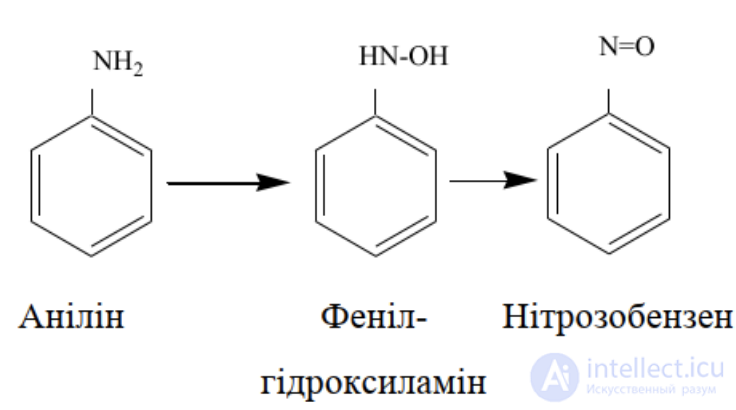 1 7
1 7
Compounds in whose molecules there is a nitrogen or sulfur atom,
under the influence of enzymes, can be oxidized in the body with the formation of N-oxides, sulfoxides, or sulfones. Depending on which atoms are oxidized, the metabolic process is divided into N-oxidation and S-oxidation.
Oxidation of alcohols and aldehydes. Primary alcohols (ethyl, butyl,
benzyl, and the like), with the help of the enzyme alcohol dehydrogenase, localized in the liver, kidneys, and lungs, are oxidized to the corresponding aldehydes.
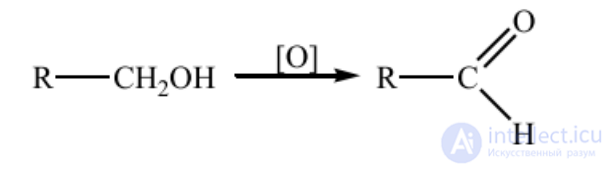 1 8
1 8
Mammalian alcohol dehydrogenase has little effect on methyl
alcohol, which is metabolized mainly with the help of xanthine oxidase and
catalase. Under the influence of these enzymes, methyl alcohol is converted into
formaldehyde.
Secondary alcohols are oxidized in the body to ketones with the help of
alcohol dehydrogenase. However, the rate of oxidation of these alcohols in the body
is significantly lower than that of primary alcohols. Higher secondary and tertiary alcohols
are oxidized in the body slowly.
Aldehydes of the aromatic and aliphatic series are oxidized, under the influence of enzymes, to the corresponding carboxylic acids. Benzaldehyde, under the influence of aldehyde oxidase, is converted into
benzoic acid. Chloral hydrate, under the influence of aldehyde dehydrogenase, is metabolized with the formation of trichloroacetic acid.
In addition to oxidative enzyme
systems, the liver, kidneys, and blood contain enzyme systems that bring about the reduction of foreign compounds in the body. These enzyme systems
catalyze the reduction of aromatic nitro compounds to amines.
With the help of enzymes (reductases), nitrobenzene is reduced to aniline, n-nitrobenzoic acid, n-aminobenzoic acid, and so on.
The reduction of nitro compounds to amines occurs through the formation of a series
of intermediate products. This can be shown using the example of the reduction of dinitrobenzene:
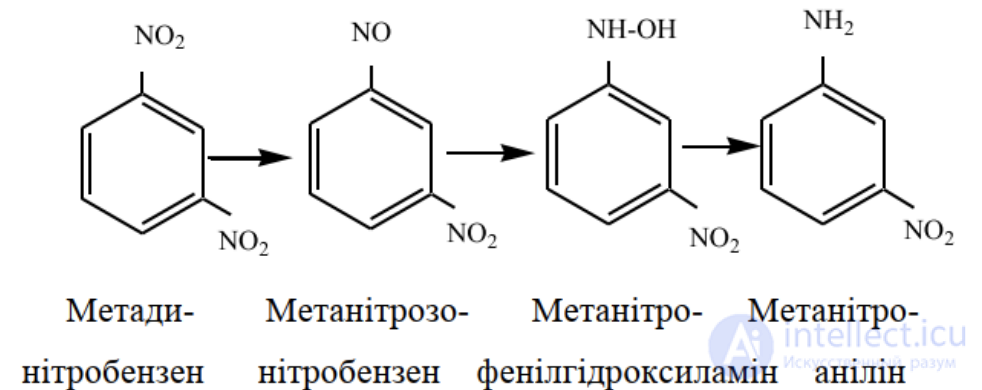 1 9
1 9
Under the influence of the corresponding enzymes, the body reduces disulfides, sulfoxides, N-oxides, hydroxamic acids, and a number of
other foreign compounds.
In the body, a number of foreign compounds, to
which esters, amides, hydroxamic acids, carbamates, nitriles, and
other substances belong, undergo hydrolysis under the influence of enzyme systems.
Under the influence of hydrolytic enzymes contained in blood plasma,
hydrolysis of esters and amides occurs. Under the influence of esterase, esters
are broken down into the corresponding acids and alcohols. In the body of humans and animals, hydrolytic enzymes located in various tissues and biological
fluids may act differently. Evidence of this is that in the blood plasma
of rabbits, atropine and novocaine are rapidly hydrolyzed, whereas in human blood plasma
they are not hydrolyzed at all.
In the body, amides are hydrolyzed under the influence of enzymes (amidases).
However, the hydrolytic cleavage of amides occurs more slowly than
the cleavage of esters under the influence of esterases.
A number of foreign compounds in the body, under the influence of the corresponding enzyme
systems, undergo deamination, dealkylation, and desulfurization.
Dealkylation. During dealkylation, alkyl groups located in the molecules of foreign compounds are cleaved off. Most often, alkyl compounds undergo dealkylation of
groups at atoms of oxygen, nitrogen, and sulfur. Depending on this, the processes of cleaving alkyl groups from the molecules of organic compounds are divided into O-, N-, and S-dealkylation. Dealkylation of these compounds produces the corresponding phenols, amines, and thiols (thiophenols and thioalcohols).
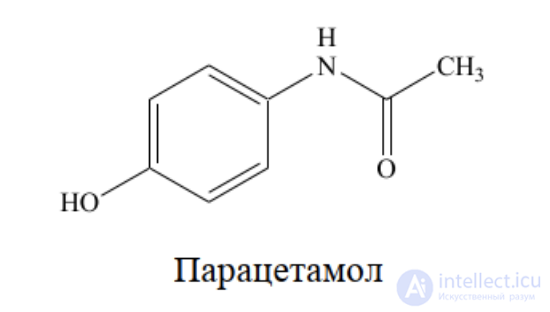
The process of O-dealkylation can be shown using
phenacetin as an example. During O-dealkylation of phenacetin,
paracetamidophenol (paracetamol) and acetaldehyde are formed.
 1 10
1 10
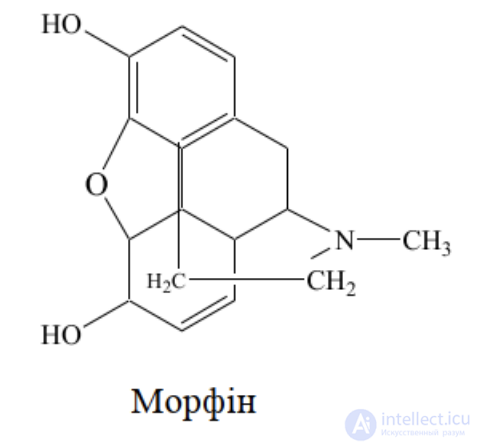
Through O-dealkylation, codeine is converted into morphine in the body.
 1 11
1 11
Foreign compounds that are secondary and tertiary amines undergo N-dealkylation in the body. As a result of this,
the corresponding amines and aldehydes are formed. Thus, dimethylaniline is metabolized to form methylaniline, which is converted into aniline and
formaldehyde.
In the body, morphine and its derivatives undergo N-dealkylation.
Under the influence of the corresponding enzymes, thioesters undergo S-dealkylation to form thioalcohols and aldehydes. Deamination. A number of foreign compounds containing primary amino groups, under
the influence of enzymes, undergo deamination. As a result of this, the amino group is cleaved from the substance's molecule in the form of ammonia. One of
the drugs subject to deamination is phenamine, which, under the influence of liver enzymes
is converted into phenylacetone and ammonia. Many other foreign compounds containing a primary amino group are also deaminated in
the body.
Some foreign compounds containing sulfur atoms (insecticides, thiobarbiturates, phenylthiourea derivatives, etc.) are converted by enzymes into the corresponding oxygen-containing analogs. In such compounds, sulfur atoms are replaced by oxygen atoms.

Comments