Radio electronics tests are an important tool for assessing knowledge and skills in the field of radio engineering. They make it possible to check understanding of basic concepts, the operating principles of devices, and the ability to apply them in practice. Such tests are widely used in educational institutions, in professional examinations, and in the training of radio amateurs and specialists in radio electronics.
Radio electronics tests usually cover a range of topics, from the fundamentals of electrical engineering and electronics to more specific areas such as radio communication, radio receivers, transmitters, antennas, circuit design, and others. They may contain questions of varying difficulty, from simple definitions and conceptual questions to problems requiring the practical application of knowledge.
The purpose of radio electronics tests is to determine participants' level of knowledge and skills. This test helps identify gaps in knowledge and focus on the aspects that require further study. It also makes it possible to assess your level of preparation and determine whether a candidate meets the requirements of a profession or educational program.
The radio electronics tests on intellect.icu are presented with a choice of one correct answer. It is important to note that radio electronics tests not only help assess knowledge and skills, but also encourage active study of the material. They motivate students and specialists to study the topic in depth and improve their professional competence.
Choose one correct answer from those offered. Remember that the time to complete the test is not limited, but for your own sake you should answer everything as quickly and correctly as possible
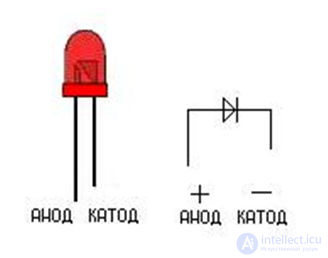
1. What is shown in the diagram?
- a) transistor
- b) indicator
- c) LED *
- d) photodiode
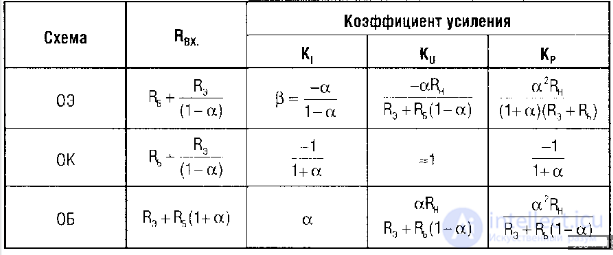
2. Which of these parameters are characteristics of a transistor?
- a) transistor resistance
- b) transistor gain (amplification factor) *
- c) transistor capacitance
- d) transistor inductance
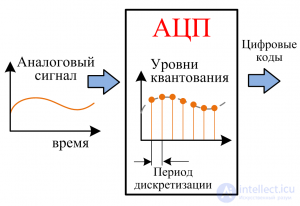
3. What device is used to convert an analog signal into a digital one?
- a) differential amplifier
- b) analog-to-digital converter
- c) digital-to-analog converter
- d) low-pass filter
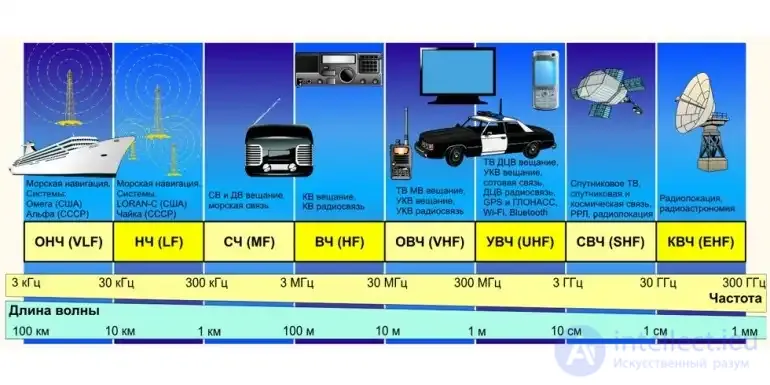
4.. What is radio frequency?
- a) an electromagnetic wave with a frequency below 20 kHz
- b) an electromagnetic wave with a frequency from 20 Hz to 20 kHz
- c) an electromagnetic wave with a frequency below 300 GHz
- d) an electromagnetic wave with a frequency above 300 GHz
5. What device is used to increase signal amplitude?
- a) differential amplifier
- b) operational amplifier
- c) transistor amplifier
- d) integrated amplifier
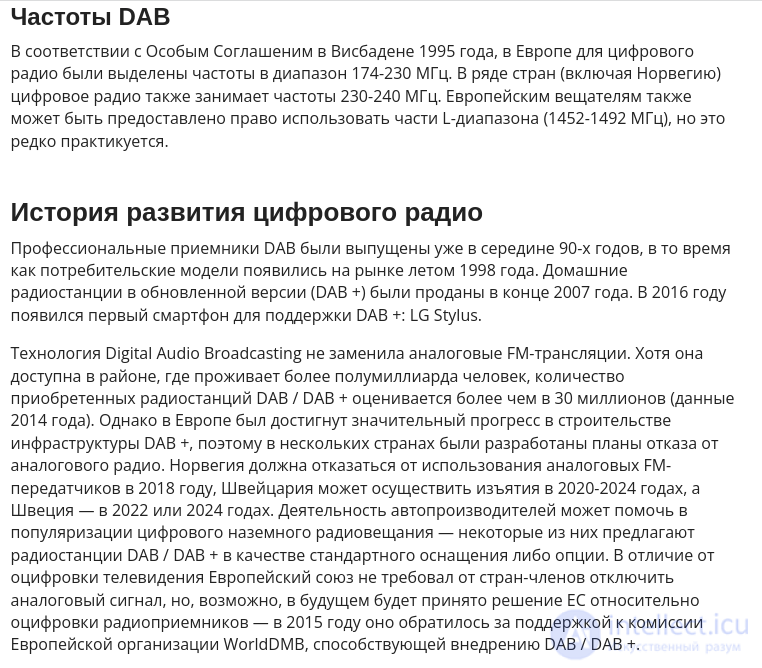
6. Which type of signal is used only in digital communication?
- a) NTSC
- b) DAB
- c) BM signal
- d) AM signal
- e) SSB signal
- f) UM signal
- g) SOM signal
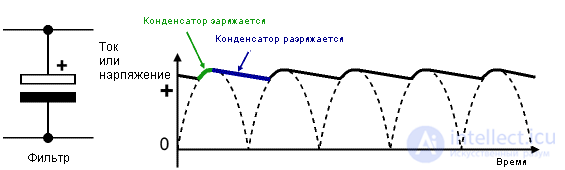
7. Which electronic component is more often used for signal filtering?
- a) operational amplifier
- b) resistor
- c) capacitor
- d) choke
8. What is an antenna?
- a) a device for generating and transmitting electrical signals
- b) a device for receiving and transmitting electrical signals
- c) a device for amplifying and receiving electrical signals
- d) a device for modulating and generating electrical signals
9. What is a microcontroller?
- a) a device for amplifying electrical signals
- b) a device for processing signals
- c) a device for storing information
- d) a device for controlling devices based on program code
10. Which device is used to generate high-frequency signals?
- a) based on a varicap
- b) stabilized by a crystal (quartz) resonator
- c) using a tunnel diode
- d) using an amplifier
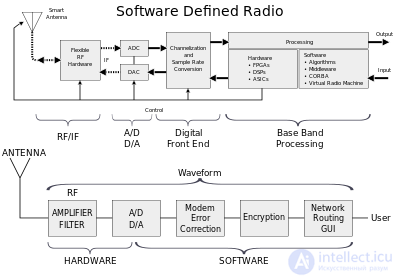
11. What is SDR?
- a) a radio transmitter and/or radio receiver that uses technology enabling software to set or change operating radio-frequency parameters, including, in particular, the frequency range, modulation type, or output power, excluding changes to operating parameters used during normal predefined operation with radio device presets, in accordance with one specification or system or another.
- b) the application of digital technologies to form an optimal radio signal spectrum when transmitting audio information, as well as to process the received signal at the receiving end. These technologies are designed to replace less efficient broadcasting systems based on amplitude or frequency modulation.
- c) it is a type of modulation
- d) it is a type of signal generation
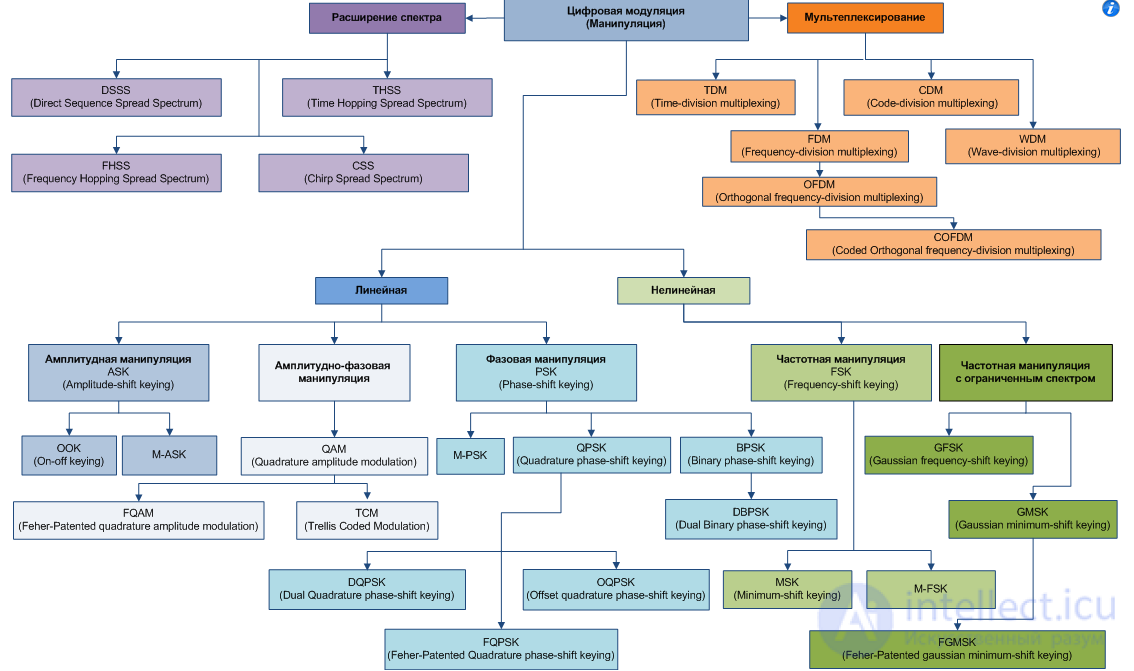
12. Which type of modulation does not exist?
- a) Amplitude
- b) Frequency
- c) Aperture
- d) Phase
- e) Quadrature amplitude (amplitude-phase)
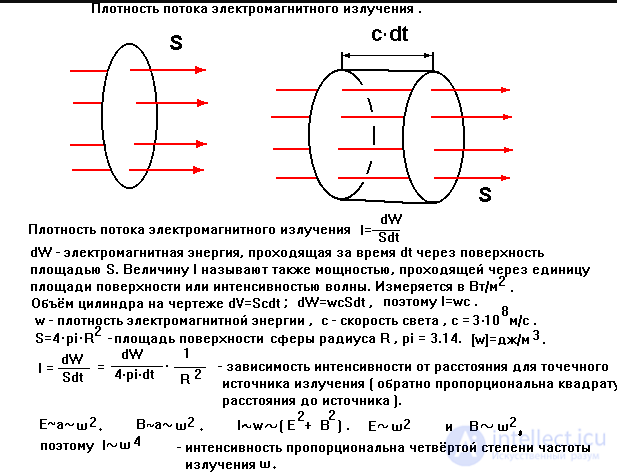
13. Radiant flux is
- a) Characterizes the power carried by optical radiation through a given surface
- b) a reduced photometric quantity, derived from a radiometric (energetic photometric) quantity by means of a relative spectral sensitivity of a special kind — the relative spectral luminous efficiency of monochromatic radiation for daytime (photopic) vision
- c) a physical quantity characterizing the amount of «luminous» power in the corresponding flux of radiation, where luminous power is understood as the luminous energy transferred by the radiation through a given surface per unit time
- d) a physical quantity, one of the radiometric (energetic photometric) quantities. It characterizes the surface power density of radiation incident on a surface.
14. In the middle of which century was the science of radio electronics formulated?
- a) VII
- b) VIII
- c) IX
- d) XX
15. As a result of the merging of which sciences was radio electronics formulated?
- a) radio engineering and electronics
- b) electrophysics and engineering
- c) electronics and mathematics
- d) mathematics and physics
16. Which science studies the interaction of electrons and electromagnetic fields, which form the physical basis for the operation of electron-vacuum devices?
- a) electronics
- b) engineering
- c) radio electronics
- d) radio engineering
17. What symbol denotes electric current?
18. Which science studies electromagnetic wave oscillations?
- a) radio engineering
- b) electronics
- c) engineering
- d) radio electronics
19. What symbol denotes resistance?
20. The number of complete oscillations per period of 2π is called?
- a) angular frequency
- b) triangular frequency
- c) ellipsoidal frequency

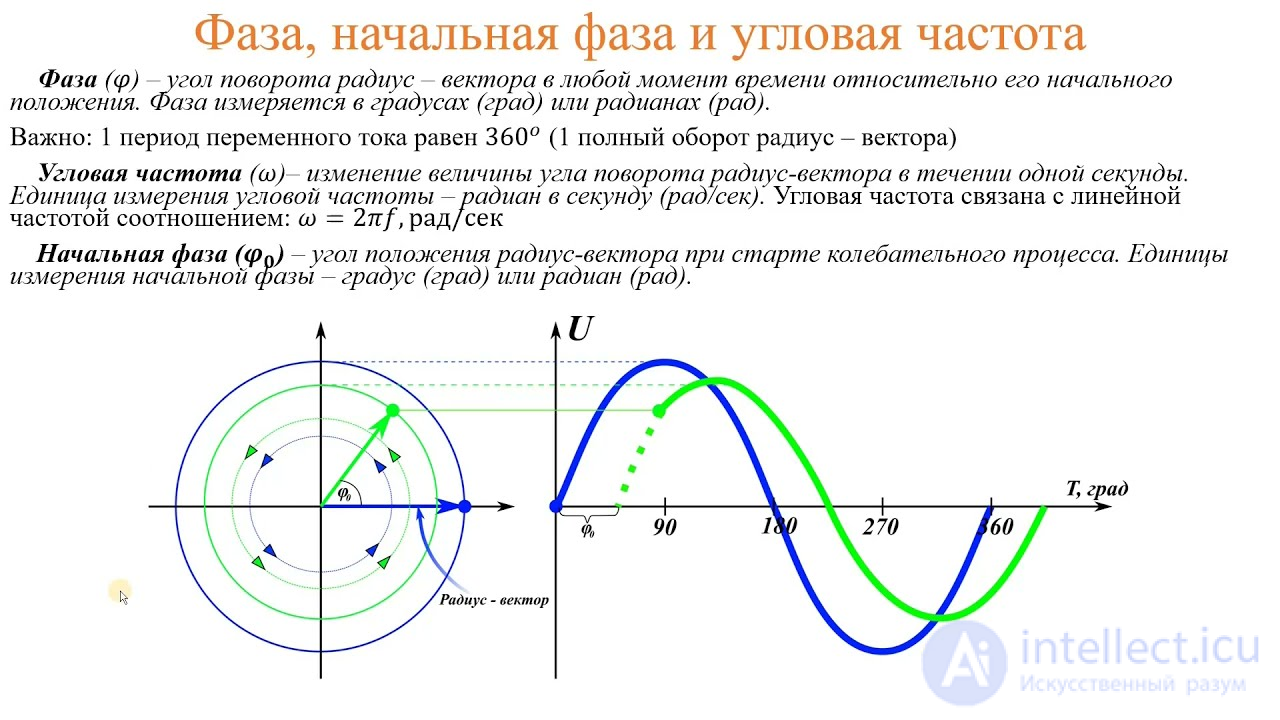
21. What stores magnetic energy?
- a) inductance
- b) phase shift
- c) resistance
- d) transistor
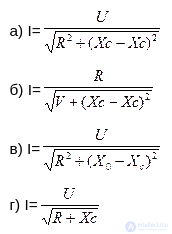
22. Which formula corresponds to Ohm's law for a complete circuit?
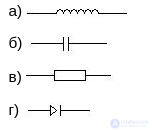
23. How is inductance symbolically represented?
24. What does VAC stand for?
- a) voltage-current (volt-ampere) characteristic*
- b) watt-ampere characteristic
- c) magnitude of atomic characteristics
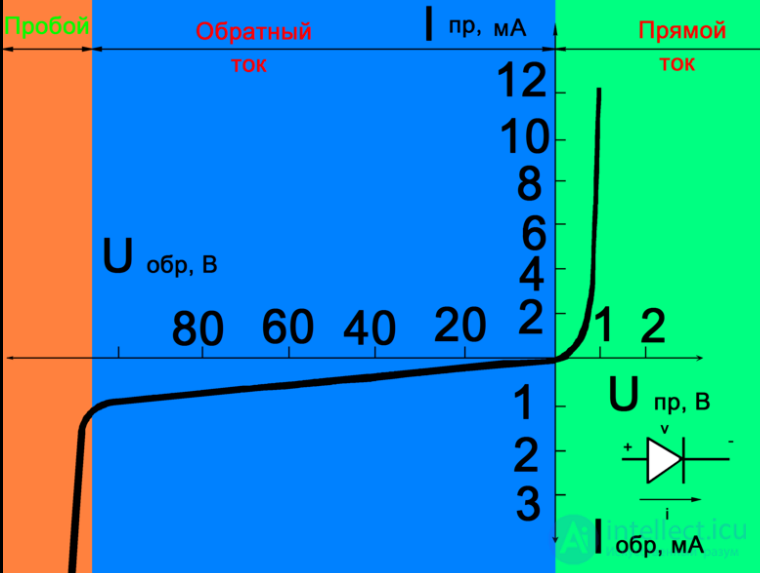
25. At elevated temperature, the risk of thermal increases
- a) breakdown *
- b) interruption
- c) binge
- d) over-binge
26. A sharp change in the operating mode of a diode under reverse voltage is called?
- a) breakdown
- b) transition
- c) ionization
- d) distillarization
27. Can the current increase during breakdown while the reverse voltage remains unchanged or even decreases (in magnitude)?
- a) it can
- b) it cannot
- c) not always
- d) it can, depending on the current strength
28. A semiconductor diode that operates in electrical breakdown mode is called a
- a) zener diode
- b) stabilizer
- c) transistor
- d) resistor
29. What stabilizes current?
- a) stabistor
- b) stabilator
- c) stabilizer
- d) stabitator
30. A semiconductor diode whose voltage depends little on current is called a
- a) stagistor
- b) stabistor
- c) stagilistor
- d) stabitor
31. What does a zener diode regulate?
- a) voltage
- b) current strength
- c) resistance
- d) power
32. A semiconductor diode that operates in tunnel breakdown mode when forward-biased is called a
- a) tunnel diode
- b) stabilizer diode
- c) double diode
- d) electron diode
33. A semiconductor diode whose physical phenomena are similar to those in a tunnel diode is called a
- a) backward diode
- b) reverse diode
- c) electron diode
- d) tunnel diode
34. The electron-hole junction between the base and the emitter is called…
- a) emitter junction
- b) elitter junction
- c) bipolar junction
- d) structural junction
35. The electron-hole junction between the base and the collector is called…
- a) collector junction
- b) emitter junction
- c) bipolar junction
- d) bio-collector junction
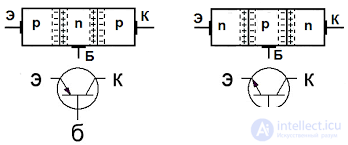
36. The common point between the emitter and collector of the circuit is connected to a point called…
- a) the base
- b) the center
- c) the middle
- d) the common point
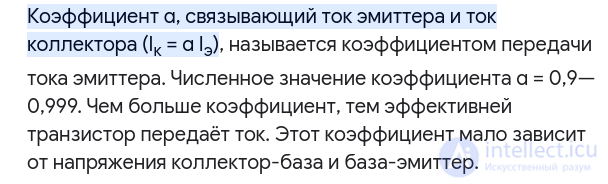
37. The emitter current transfer ratio is-
- a) coefficient of proportionality
- b) coefficient of inverse proportionality
- c) coefficient of agreement
- d) Pearson coefficient
38. In active mode, a transistor is used to amplify signals with
- a) low distortion*
- b) small dimensions
- c) non-standard circuits
- d) low performance indicators
In active mode, a transistor operates as an amplifier, providing a linear conversion of the input signal into the output signal. The main goal is to obtain gain in power, voltage, or current with minimal distortion of the signal waveform. Compared to the other operating modes of the transistor (saturation, cutoff, inverse).
39. The formula Φe= Q/T is:
- a) average energetic flux *
- b) first energetic flux
- c) large energ. flux
- d) last energ. flux
The formula F e = Q T describes the ratio of the amount of energy Q to the time T. This is precisely the average energetic flux, that is, the power — how much energy is transferred or converted per unit of time.
40. The spatial density of the radiant flux is:
- a) radiant intensity
- b) energetic flux
- c) particle flux
- d) energetic absorption intensity
41. two types of transistor are distinguished:
- 1) with a control junction
- 2) with…
- a) an insulated junction
- b) a control gate
- c) an insulated collector
- d) a control emitter
42. Radiant flux is
- a) the sum of absorbed and reflected radiant energy
- b) the difference between absorbed and reflected radiant energy
- c) the sum of emitted and refracted radiant energy
- d) the difference between emitted and reflected radiant energy.
43. A semiconductor diode operating in electrical breakdown mode is called…
- a) zener diode
- b) stabilizer
- c) transistor
- d) resistor
44. How many characteristics exist for field-effect transistors?
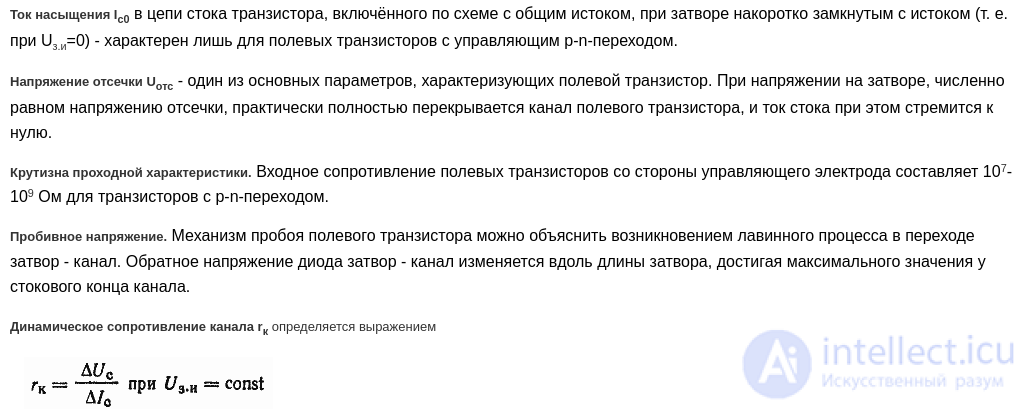
45. Where are field-effect transistors used?
- a) in computing technology
- b) in specialized laboratories
- c) in mathematics
- d) in physics
46. The advantage of field-effect transistors is that they…
- a) are power-independent
- b) are power-dependent
- c) do not break down
- d) are inexpensive
47. If alpha is not equal to zero and alpha is not equal to ninety degrees, the electron's trajectory becomes
- a) helical
- b) chaotic
- c) zigzag
- d) circular
48. Thermionic emission occurs when heating
- a) the cathode surface
- b) the anode surface
- c) electrons
- d) the cathode rod
48. Which type of characteristic is the spectral composition of radiation?
- a) qualitative
- b) quantitative
- c) optical
- d) electrical
49. In a tube (diode), the anode voltage produces anode current in the presence of…
- a) electron emission
- b) positive charge
- c) negative charge
- d) good conditions
50. If the anode is “-“ and the cathode is “+” – the diode current…
- a) does not pass
- b) disappears
- c) transfers to another source
- d) does not arise
51. In what unit is electric current measured?
- a) ampere
- b) volt
- c) watt
- d) ohm
52. Can the current increase during breakdown while the reverse voltage remains unchanged or even decreases?
- a) it can
- b) it cannot
- c) not always
- d) it can, depending on the current strength
53. How many Kirchhoff's laws are there:
- A. one
- B. two
- C. three
- D. four
54. A point where at least three wires are connected:
- A. material
- B. node
- C. answers A and B
- D. none of the answers is correct
55. The law «The sum of currents entering a node equals the sum of currents leaving the node» is the law of:
- A. Coulomb
- B. Kirchhoff's 1st law
- C. Kirchhoff's 2nd law
- D. Ohm
56. How is Kirchhoff's 1st law written as a formula:
- A. I=I1+I2
- B. I=U*R
- C. I=(I1)/(I2)
- D. I=I1-I2
57. The law «The sum of EMFs in a loop equals the sum of voltage drops in that loop» is the law of:
- A. Coulomb
- B. Kirchhoff's 1st law
- C. Kirchhoff's 2nd law
- D. Ohm
58. How is Kirchhoff's 2nd law written as a formula:
- A. E=I1*R1
- B. E=U*R
- C. E=(I1)/(I2)
- D. I=I1-I2
59. Any current that changes over time is:
- A. constant
- B. alternating
- C. dependent
- D. independent
60. Harmonic alternating current is current that changes according to the law:
- A. Sin
- B. tg
- C. cos
- D. ctg
61. In the formula i= Im*cos(wt), i – is:
- A. the instantaneous value of the current
- B. the amplitude value
- C. the harmonic law
- D. the angular frequency
62. In the formula i= Im*cos(wt), Im – is:
- A. the instantaneous value of the current
- B. the amplitude value
- C. the harmonic law
- D. the angular frequency
63. In the formula i= Im*cos(wt), cos(wt) – is:
- A. the instantaneous value of the current
- B. the amplitude value
- C. the harmonic law
- D. the angular frequency
64. In the formula i= Im*cos(wt), w – is:
- A. the instantaneous value of the current
- B. the amplitude value
- C. the harmonic law
- D. the angular frequency
65. In the formula i= Im*cos(wt), t – is:
- A. the instantaneous value of the current
- B. time
- C. the harmonic law
- D. the angular frequency
66. The maximum value of the current is:
- A. the instantaneous value of the current
- B. the amplitude value
- C. the harmonic law
- D. the angular frequency
67. How is the amplitude value of the current denoted:
- A. Im
- B. cos(wt)
- C. i
- D. Ia
68. To determine how quickly the current changes over time, i.e., how often the current's direction reverses, the following parameters are used:
- A. Period
- B. Angular frequency
- C. frequency
- D. current strength
69. How is the period denoted:
70. How is frequency denoted:
71. How is angular frequency denoted:
72. The time during which one complete oscillation occurs is:
- A. period
- B. frequency
- C. Angular frequency
- D. Current strength
73. The number of oscillations in 1 second is:
- A. period
- B. frequency
- C. Angular frequency
- D. Current strength
74. The number of complete current oscillations during a time of 2 Pi is:
- A. period
- B. frequency
- C. Angular frequency
- D. Current strength
75. Angular frequency is determined by the formula:
- A. w= Im*cos(wt),
- B. w =(I1)/(I2)
- C. w=2πf
- D. w=2*f
See also
- antennas
- signal reception and processing devices
- [[b11921]]
- [[b4636]]
- [[b7354]]
- [[b9879]]
See also


Comments