
Lecture
AIS (Automatic Identification System, (English: AIS Automatic Identification System) — a system used in shipping to identify vessels, their dimensions, course and other data by means of VHF-band radio waves (frequencies 161.975 MHz and 162.025 MHz) .
Recently there has been a tendency to interpret AIS as Automatic Information System (English: AIS Automatic Information System), reflecting the expansion of the system's functionality beyond the ordinary task of vessel identification.
In accordance with the SOLAS 74/88 Convention, AIS is mandatory for vessels with a gross tonnage over 300 making international voyages, vessels with a gross tonnage of 500 or more not making international voyages, and all passenger vessels. Vessels and yachts of smaller displacement may be equipped with a Class B unit. Data is transmitted on the international AIS 1 and AIS 2 communication channels using the SOTDMA protocol (Self-Organising Time Division Multiple Access). Frequency modulation with GMSK keying is used.
AIS is designed to improve the level of navigational safety, the efficiency of vessel operation and of the Vessel Traffic Control Center (VTS), and environmental protection, providing the following functions:
An AIS system includes the following components:
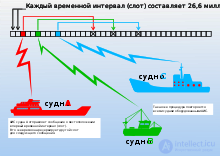
AIS operation is based on receiving and transmitting messages in the VHF band. The AIS transmitter operates on longer wavelengths than radars, which allows information exchange not only over direct line-of-sight distances, but also across terrain with obstacles in the form of not-too-large objects, and in poor weather conditions. Although a single radio channel is sufficient, some AIS systems transmit and receive on two radio channels in order to avoid interference problems and not disrupt the communication of other objects.
AIS messages may contain:
Provision is made for transmitting additional text information between AIS terminals (paging). Such information can be transmitted either to all terminals within range, or to one specific terminal.
For the purposes of unification and standardization, the International Radio Regulations designate two channels for AIS use: AIS-1 (87B — 161.975 MHz) and AIS-2 (88B — 162.025 MHz), which are to be used universally, except in regions with special frequency regulation.
The data transmission rate in the AIS channel is set to 9600 bit/s.
The operation of each AIS station (mobile or base) is rigidly synchronized to UTC time with an accuracy of no more than 10 µs, using the built-in GNSS receiver (in Russia, using signals from a combined GLONASS/GPS receiver). Information is transmitted using continuously repeating frames lasting 1 minute, which are divided into 2250 slots (time intervals) of 26.67 ms each.
6-bit ASCII codes are used for text.
Modern AIS units can display information about the surrounding situation in 2 modes — either as text, in the form of a table listing nearby vessels and their data, or as a simplified schematic map showing the relative positions of vessels and the distances to them (calculated automatically from the geographic coordinates they transmit). AIS is included in the list of equipment that must be provided with an uninterruptible battery power supply.
Data is transmitted every 6 minutes
and other information from repeaters and sensors of electro-radio-navigation instruments and systems
The throughput of each channel is up to 2000 messages per minute.
| Type of information | Transmission interval |
|---|---|
| Static information | Every 6 minutes, upon data change, and on request |
| Dynamic information | According to the table below, depending on the navigation mode and changes in speed and course. |
| Voyage information | Every 6 minutes, upon data change, and on request |
| Messages related to navigational safety | As needed |
| Vessel at anchor or maneuvering alongside, moving at a speed of no more than 3 knots | 3 minutes |
| Vessel at anchor or maneuvering alongside, moving at a speed of more than 3 knots | 10 seconds |
| Vessels underway at speeds up to 14 knots | 3 — 10 seconds |
| from 14 to 23 knots | 2 — 6 seconds |
| over 23 knots | 2 seconds |
| Sport craft | 30 seconds |
Developed to prevent collisions between commercial vessels, AIS (Automatic Identification System) is now a universal system for navigation and watchkeeping, used by both professional and recreational vessels alike.
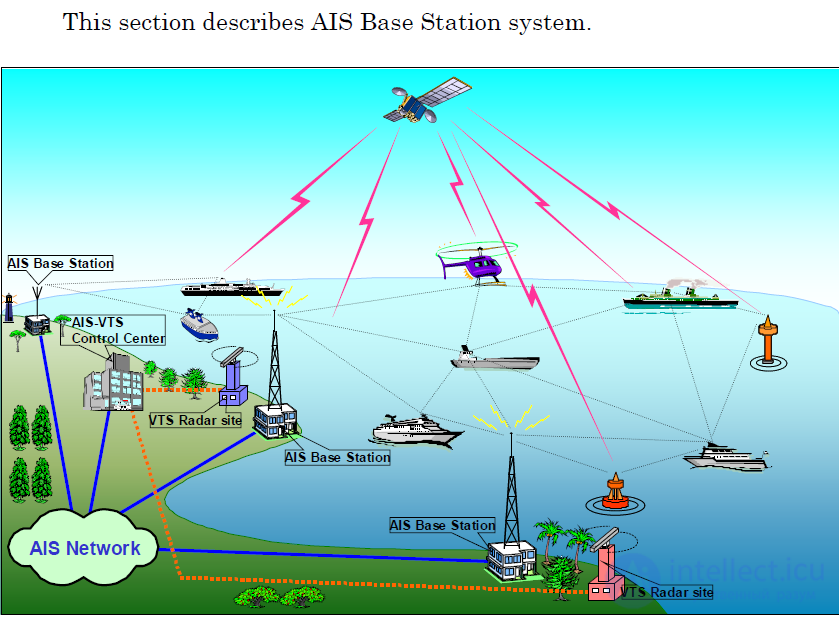
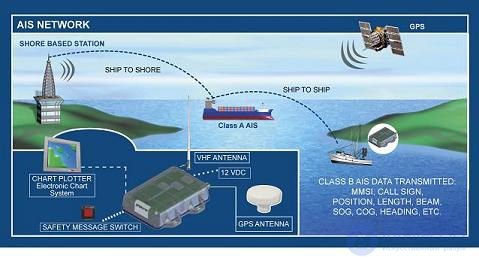
Although AIS technology is capable of providing a wide range of information, it is most often used to obtain data about nearby vessels, which helps avoid collisions with them. The principle of operation of the system is quite simple: onboard, the AIS transponder broadcasts the vessel's displacement, course and position information obtained from an internal GPS device, along with the vessel's unique MMSI number. Information is transmitted over dedicated VHF channels, while the AIS transponder can also monitor incoming signals from other vessels. Correctly programmed MMSI numbers allow mariners to call another vessel directly. Information from AIS is integrated with electronic navigation charts, providing a more accurate and broader picture of the surrounding waters. Many shipping companies share AIS transponders and radar stations to extend their navigation network.
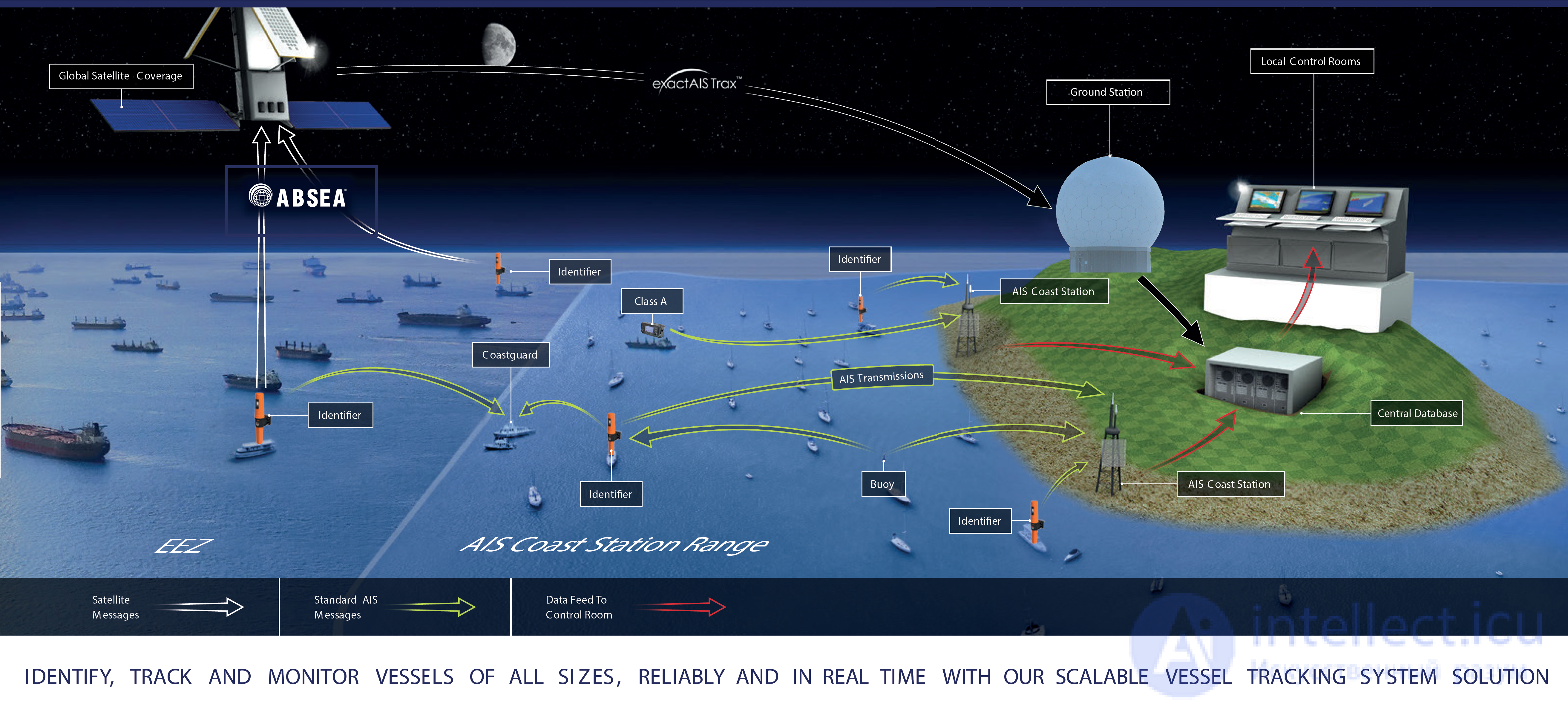
At present there are two classes of AIS available to mariners: A and B. All their differences have already been described in the previous article. The main difference between the classes lies in the objects they are intended for. Class A AIS is typically used by commercial vessels or fast-moving pleasure craft. Its transmission power is 12.5 W. Class B AIS is aimed primarily at recreational sea-going vessels. This class of system can reach the end user in one of two variants:
The difference between the two schemes lies in the different monitoring interval of the assigned frequencies: unlike the first scheme, CSTDMA carries out continuous monitoring. At present the AIS system is actively used not only by sailors and aviators, but also by coast guard services, which is why manufacturers have paid close attention to the system.
While major manufacturers of marine electronics (Furuno, Garmin, B&G and Raymarine) have been supplying Class A and B AIS to the market for many years now, other players are only just beginning to produce AIS-compatible equipment. For example, Standard Horizon recently released a VHF radio with support for this system (B & G, Garmin, Icom and Raymarine are also developing similar radios). Companies such as ACR Electronics, McMurdo and NKE are also keeping up with their competitors and have already presented the public with a range of innovative AIS products that even include protective features such as «man overboard».
As the technology continues to develop, mariners will undoubtedly find many other ways of using AIS to obtain the most detailed information possible about an area of interest and the objects located within it.
A vessel monitoring system can be built on VHF waves using the Automatic Identification System (AIS).
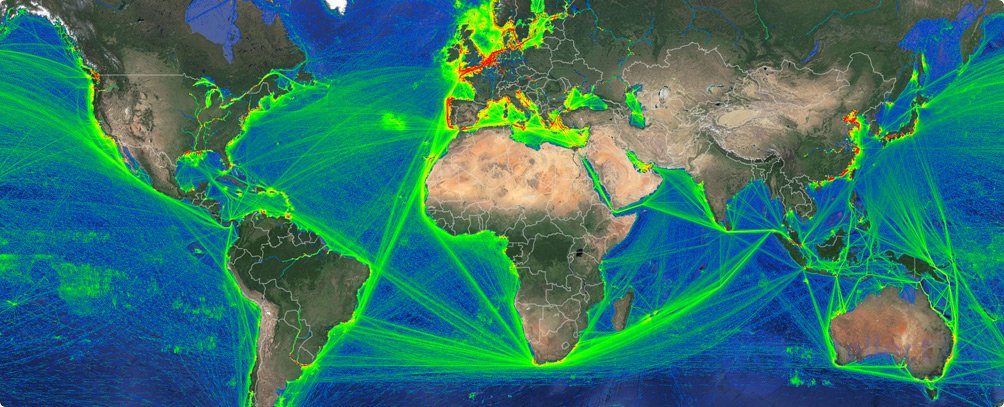
The Automatic Identification System (AIS) is used to transmit data about a vessel to other vessels and to shore services. The broad functional set of the Automatic Identification System makes it possible to track and monitor vessels.
The functions of the Automatic Identification System include:
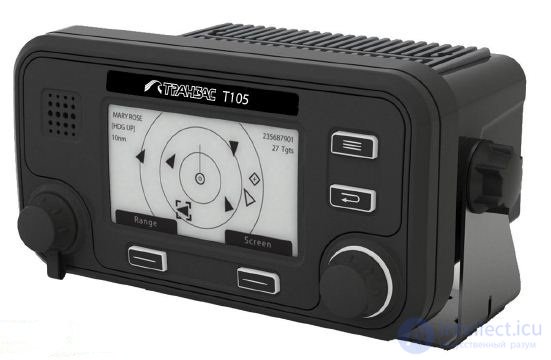
The Automatic Identification System is built on the basis of shipboard transponders, which exchange data on their current location, identification, heading, speed, cargo type, etc. with one another and with base shore stations in the VHF radio frequency band. Data transmission uses the SOTDMA protocol – self-organizing time division multiple access – on two frequencies: AIS-1 (161.975 MHz) and AIS-2 (162.025 MHz). On board the vessel, AIS data (such as the ship's identifier, its location, heading, speed) is displayed on the transponder's screen or, if compatible equipment is available, on radar screens and electronic chart systems.
The range of a shore station is around 30-50 km, so in order to cover the entire required area of water, a network of AIS stations generally needs to be built. This makes it possible to monitor vessels as effectively as possible.
Vessel monitoring via the Automatic Identification System requires the following hardware and software:
The shipowner's costs here are minimal: the corresponding equipment only needs to be purchased and installed on the vessel once, with no subsequent recurring payments required, unlike monitoring systems for sea and river vessels based on satellite communication networks. This system significantly improves shipping safety even in areas without base station coverage, thanks to the ability of vessels to automatically identify one another. Vessel monitoring using VHF communication channels is widely used on the inland waterways of the Russian Federation.
|
Advantages |
Disadvantages |
|
|
|

Comments