
Lecture
Electronic warfare (EW, radio warfare) — a form of armed struggle in which radio emissions (radio jamming) are used against the enemy's electronic control, communication and reconnaissance systems in order to degrade the quality of the military information circulating within them, to protect one's own systems from similar effects, and to change the conditions (properties of the medium) of radio wave propagation.
In modern warfare, in which a significant role is assigned to the transmission of information via the propagation of electromagnetic waves, EW assets play a crucial role in ensuring the high combat effectiveness of armed forces.
The professional holiday of the electronic warfare specialist has its own date in different countries.
The objects of exposure in the course of EW are important electronic objects (elements of troop, force and weapon control systems that use radio equipment), the disruption or breakdown of which will reduce the effectiveness of the enemy's use of its weapons.
The targets of radio jamming are communication, control, guidance and navigation radio links. Jamming primarily affects the receiving part of radio equipment. Active and passive means are used to create radio jamming. Active means include those that use the principle of generation to form emissions (for example, transmitters, jamming stations). Passive means use the principle of reflection (re-radiation) (for example, dipole and corner reflectors, etc.).
At present, EW represents a set of coordinated measures and actions by troops carried out for the purposes of:
These objectives are achieved by defeating the enemy's troop and weapon control, communication and reconnaissance systems through changing the quality of the information circulating within them, the speed of information processes, and the parameters and characteristics of electronic equipment; by protecting one's own control, communication and reconnaissance systems from being defeated, as well as protecting classified information about weapons, military equipment, military facilities and troop actions from the enemy's (foreign states') technical reconnaissance means, through ensuring the required standards for information and information processes in automated control, communication and reconnaissance systems, as well as the properties of electronic equipment.
In the course of EW: destruction is achieved through the deliberate use of various types of emissions against electronic equipment and channels for obtaining and transmitting information, and through special software and hardware effects on the enemy's computing equipment; one's own control, communication and reconnaissance systems are protected from similar enemy effects, as well as from unintentional effects of emissions arising from the joint use of electronic equipment; the protection of classified information is achieved by concealing it and/or misleading the enemy as to its true content. The objects of EW are information carriers (fields and waves of various nature, streams of charged particles), the medium of their propagation, and electronic equipment and systems. Thus, EW is an integral part and the technical basis of information warfare.
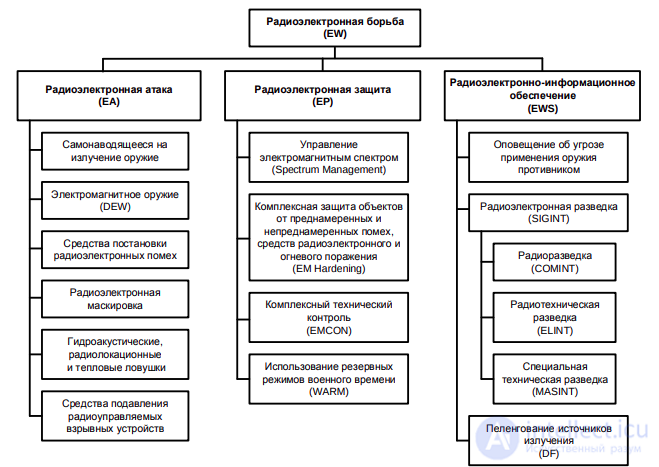
Fig. 1.1. Classification of EW in the US Armed Forces
Electronic warfare in the US Armed Forces is divided into the following activities (Fig. 1.1):
Electronic attack – offensive actions involving the use of electromagnetic energy and other types of directed energy, and/or weapons that home in on electromagnetic radiation, for the purposeful engagement
of control systems, personnel, facilities and combat equipment with the aim of disorganizing,
neutralizing or reducing the enemy's ability to make effective use
of its electronic systems at various levels of armed forces command and control [2, 8].
Electronic attack is carried out using:
− electronic countermeasures and electronic disinformation assets;
− ordnance that homes in on emissions from various electronic
devices (for example, emissions from radio-electronic equipment, vehicle ignition systems, armored personnel carriers, tanks, gun electric drives, etc.);
− control of the emission modes of electromagnetic and directed energy;
− control of the false operation of radio-electronic equipment, simulation of its operation and the staging of demonstrative actions;
− guided weapons with radio, radar, infrared, laser,
hydroacoustic and other types of homing heads;
− infrasonic, radio-frequency, laser, particle-beam and other types of directed-energy
weapons.
Electronic protection includes a wide range of passive and active
measures and special equipment ensuring the protection of one's own troop groupings, personnel, combat equipment, weapon systems, facilities and individual electronic assets from any enemy action and its EW assets. In addition, this type of protection
provides for the necessary measures and methods for countering the enemy's technical reconnaissance assets, monitoring the emissions of one's own electronic equipment, and ensuring control of their
modes and electromagnetic compatibility.
According to the provisions of the Joint Chiefs of Staff (JCS)
manual JP 3–13 and field manual FM 3–36, electronic protection provides for:
− control of the use of the electromagnetic frequency spectrum, ensuring
the free use of one's own electronic equipment within it, including the reprogramming of forces,
assets, tasks and methods of EW;
− strengthening the protective properties of objects (targets), in particular the creation of special
circuits, shields, shelters, and technical protective equipment (primarily referring to physical and technical means of protection against the effects of electromagnetic emissions from the electronic equipment
of one's own forces or enemy forces);
− monitoring of any emissions in the electromagnetic frequency spectrum.
Electronic warfare support of an information operation includes measures and assets that provide timely support to the intelligence needs of command staffs
for detecting and warning of threats, promptly identifying them, assessing
the operational and electronic situation, making timely operational decisions, planning operations, and also generating the data needed for targeting
weapons and effects in the interests of electronic attack and protection.
In effect, electronic warfare support consists of actions aimed at detecting, identifying and locating the enemy's electronic equipment, which can serve both as a source of obtaining intelligence data and as a source of information threats.
The components of EW are electronic suppression and electronic protection.
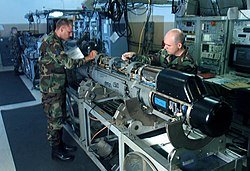
Electronic suppression — a set of measures and actions aimed at disrupting (impairing) the operation or reducing the combat effectiveness of an adversary's electronic systems and equipment by acting on their receiving devices with electronic jamming. It includes radio, radar, electro-optical and hydroacoustic suppression. Electronic suppression is achieved by generating active and passive jamming, using decoys, traps and other methods.
Electronic protection — an integral part of electronic warfare aimed at ensuring the stable operation of electronic equipment (EE) under conditions of exposure to the adversary's deliberate radio jamming, electromagnetic radiation from functional-kill weapons, and electromagnetic and ionizing radiation arising from the use of nuclear weapons, as well as under conditions of exposure to unintentional radio interference. Electronic protection is based on: ensuring the electromagnetic compatibility (EMC) of EE — a set of organizational and technical measures aimed at ensuring the noise immunity of EE under exposure to unintentional interference; protection of EE from deliberate jamming — a set of organizational and technical measures aimed at ensuring the jam resistance of EE under exposure to deliberate jamming; protection of EE from electromagnetic and ionizing radiation — a set of organizational and technical measures to ensure the reliable functioning of EE under exposure to radiation causing functional damage to the component base; protection against false signals — a set of organizational and technical measures aimed at denying the adversary the ability to inject false information (messages) into systems and equipment when transmitting false signals.
Electronic reconnaissance — the collection of intelligence information based on the reception and analysis of electromagnetic radiation. Electronic reconnaissance uses both intercepted signals from communication channels between people and technical equipment, and signals from operating radars, communication stations, jamming stations and other electronic equipment.
Integrated technical monitoring — monitoring of the operational status of one's own electronic equipment and its protection against the adversary's technical reconnaissance means. Carried out in the interests of electronic protection. It includes radio, radar, photographic and visual-optical monitoring, as well as monitoring the effectiveness of protecting information from leakage through technical channels during the operation of information transmission and processing equipment.
An electromagnetic effect (pulse) that disables the adversary's electronic, communication and power equipment. The kill effect is achieved through the induction of eddy currents. It was first observed during nuclear explosions in the atmosphere.
Magnetrons are currently used to generate the kill pulse. Electromagnetic kill systems are in service in the USA and other NATO countries .
Under MODERN conditions, electronic warfare (EW) is an integral part of an operation (battle). The share of EW forces and assets [ used in wars and armed conflicts is constantly increasing due to the ever-growing role of electronic equipment (EE) in enhancing the combat capabilities of troops. This entails the continuous expansion of the arsenal of organizational and technical measures that determine the effectiveness of using EE in the course of combat operations. As a result, the content and forms of electronic warfare, especially over the last few decades, have changed radically. Let us analyze them, starting with the content, as being more receptive to the «electronization» of weapons and military equipment, as well as to changes in the content, forms and methods of combat operations.
Content is a coherent, ordered set of elements forming the subject area of any phenomenon or process. As applied to EW, it is revealed by examining the goals and the set of interrelated EW elements together with their characteristics. It is known that electronic warfare is based on exploiting such a property of electronic equipment (EE) as openness (unlike wired communication) to receiving both wanted and unwanted signal carriers of information. As early as 1903, A.S. Popov suggested the possibility of using this property for conducting reconnaissance and jamming radio communication equipment, and two years later such techniques as jamming radio communications, establishing a mode of temporary radio silence, and monitoring and eavesdropping on radio traffic were tested.
Experience from the very first years of using EE in combat operations made it possible to identify, first, the goals of EW (gaining an advantage or denying it to the adversary), and second, the elements forming the content of EW (disrupting radio exchange between EE by jamming, protecting one's own EE from such jamming, and providing support for jamming and protection actions).
The main element of EW content is disrupting radio exchange between EE by jamming. Up until the start of the Second World War, this was carried out against individual information-transmitting EE by means of masking jamming. To counter the first EE for information extraction (radar stations), effective techniques were developed for deploying passive jamming that simulated real objects and helped feed false information to the adversary. As EW equipment developed and improved, prospects opened up for affecting EE with disinforming active jamming, and even if it proves possible to filter true information from false,
the presence of the latter sometimes significantly complicates assessment of the situation during combat operations. In addition, action against a modern electronic system that includes a computer can be carried out by injecting, via a radio channel, plausible information messages containing computer viruses that penetrate the computer network, reaching all the way up to the highest levels of troop and weapon control. Along with this, massed use of jamming equipment in a local area leads to the isolation of such EE from others. Finally, modern EW equipment, using not only masking but also distorting, disinforming and blocking jamming, makes it possible to disorganize the functioning of EE on a global scale, and the implementation of organizational and technical measures for deploying various types of jamming contributes to disrupting the functioning of both local EE groupings and large-scale electronic systems.
Another element of EW content is protecting EE from jamming. Initially it was implemented only through technical measures based on using the selective properties of radio receiving equipment. The expanding scale of EE use was accompanied by organizational measures for protection from jamming through maneuvering redundant EE assets and their operating modes. Further improvement of signal analysis methods subsequently made it possible to increase selection efficiency through interference compensation. The introduction of computing equipment into EE opened up the possibility of using complex redundant signal structures and corresponding processing algorithms. As a result, modern EE can remain operational even when jamming power at the receiver input exceeds the wanted signal by hundreds of times or more.
The third element of EW content is providing support for jamming and protection actions. It is implemented through a set of measures including forming the necessary forces and assets, equipping deployment areas with electronic equipment, providing information support for EW, and concealing important information about one's own EE from the adversary. In peacetime these measures form the basis of EW, while in wartime they mainly perform supporting functions. The greatest progress in EW information support has been achieved through the development of electronic (signals) reconnaissance (ESR) equipment. Thus, the width of the instantaneously monitored frequency band has increased a thousandfold compared with the Second World War period, reconnaissance from space, starting in the 1960s, has ensured its global reach, and the introduction of high-speed computers into reconnaissance systems has made it possible to process reconnaissance information practically in real time. Conducting ESR significantly restricts and constrains the actions of the opposing side both in peacetime and in wartime.
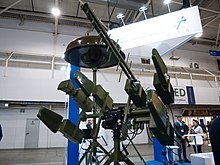
Training of civilian EW specialists

Comments