
Lecture
In the first part of this chapter we pointed out that the cause of neuroses
is the effect of psychic trauma, understood as the blocking of a need that is significant for the person. But is this alone sufficient for a neurosis to form?
Although neuroses can arise in people with any type of temperament and character, there exist types of temperament and character traits that are particularly favorable to the formation of neuroses – that serve as fertile ground for their occurrence. As we already know from
Chapter 7, temperament and character are personality structures that differ greatly in their characteristics. Whereas temperament is the physiological framework of the personality and is therefore
an unchanging formation over the course of life (based on unconditioned reflexes), character is a property acquired in the course of life – that is, it represents a conditioned-reflex formation. It is entirely natural that the properties subject to the greatest correction are those that are acquired – that is, those pertaining to character. Properties dictated by temperament, on the other hand, can only be compensated for by experience and by a person's
character – that is, they become manageable, but they cannot disappear!
In discussing the question of predisposition to the appearance of neuroses, it is necessary to clarify the concepts of situational neurosis and character neurosis, which were used by the psychoanalyst K. Horney. Situational neuroses arise in normal (not previously neuroticized)
people and represent only a brief absence of adaptation to a difficult
life situation after an experienced psychotrauma, whereas character neuroses have a long history of formation – having arisen in childhood or adolescence, they cause serious
deformations of character that interfere with an adequate perception of reality and prevent
the person from freeing themselves from the pathogenic conditioned reflexes formed in those years, when
the person was unable to correctly process the psychotraumatizing information. In these individuals, a given psychotrauma merely reveals a neurosis that was already present.
Certain individual-typological personality traits are especially predisposing to neuroses: heightened sensitivity, or sensitivity (Lat. sensitivus – sensitive), suspiciousness, sluggishness of nervous processes, or inertness (Lat.
inertis – inactive, immobile), demonstrativeness (Lat. demonstratio –
showing), egocentrism (Lat. ego – I + centrum – center). It is important to know that
one trait or another contributes to the appearance of a strictly defined form of neurosis
(neurasthenia, hysteria, obsessive-compulsive neurosis), which will be discussed separately when
these forms of neurosis are examined.
Being in a state of neurosis makes a person more sensitive to new psychotraumatizing influences: problems that were previously solved now appear
to the person to be completely insurmountable, and stimuli that previously did not evoke any noticeable negative reaction now evoke severe experiences, sometimes bearing the character
of affect.
The state of the nervous system at the time the psychic trauma acts plays a large
role in the onset of the illness (Dubois P., 1911; Myasishchev V.N., 1955, 1956; Myager V.K.,
1956; Svyadoshch A.M., 1971, 1982) – the occurrence of neuroses is favored by everything that weakens
(asthenizes) the nervous system (as a result of which the sensitivity threshold to
psychotraumas is lowered).
It is interesting that neuroses in a person may not arise immediately, but some time
after the psychic trauma that caused them – under the influence of subsequent psychic processing of the psychotraumatizing events, a gradual realization of the significance of what occurred
(Svyadoshch A.M., 1971, 1982); the condition may be aggravated by additional stimuli
that reinforce the pathogenic action of the first ones. Experiences that have left a trace can often be disinhibited several years after exposure to the psychotraumatizing stimulus –
under the influence of new conditioned-reflex stimuli similar in action to the original one.
The insidiousness of neuroses lies in the fact that they are accompanied by various deviations in the functioning of internal organs, which have come to be called psychosomatic disorders
(«neuroses of the organs»).
V.A. Ponomarenko (2006) reports that individuals selected under the 1st group of psychological
selection and health, compared with the 3rd group, make 2–3 times fewer errors in flight,
serve 5–7 years longer, and are grounded due to illness 30–40% less often. In individuals of the 2nd and 3rd groups, somatic illnesses are up to 40% linked to a psychogenic origin – due to a mismatch with flight abilities and the demands of the flying profession (that is, they are in fact not
somatic but psychosomatic). Recently there has been a trend of increase
in the number of disqualifications of flight personnel due to neuroses and borderline neuropsychiatric disorders, reaching 10%. The discharge rate of officers, including pilots, on psychiatric grounds (depressive-aggressive states, states of
hypochondria (an inadequate pessimistic assessment of one's health, a painfully anxious,
heightened attention to one's health, constant preoccupation with it), loss of faith, loss of social bearings, disability of social origin) has risen by almost 40% (Ponomarenko
V.A., 2006). The leading role among the causes of occupationally conditioned psychosomatic illnesses is played not only by occupational working conditions but also by the mismatch between flying
abilities and the demands placed by flying work. Thus, pilots who frequently made
errors in flight fell ill with functional disorders of the nervous system 2–3 years later with a probability of 0.25, while pilots who experienced insecurity and a fear of flying fell ill with a probability of 0.57 (Ponomarenko V.A., 2006).
V.N. Myasishchev (1959, 1960, 1966) proposed calling «neuroses of the organs» caused by
psychic trauma «systemic neuroses» (systemic neurosis of the heart, of the stomach) – in
order to emphasize that this is not a matter of a «neurosis of the organ» but of a disturbance in the functioning
of an entire system – from the cortical representation of the organ down to its tissues. The terms neurosis of the stomach, neurosis of the intestine, neurosis of the heart have become firmly established in the vocabulary of medical publications
(Daikhovsky Ya.I., 1952; Strukovskaya M.V., Topolyansky V.D., 1980). At the same time, one should not
forget that «systemic neuroses» (in other words – psychosomatic disorders) are
a manifestation of a general neurosis that arose under the influence of psychotraumatizing effects.
As A.M. Svyadoshch (1966) points out, a psychogenic disturbance of the function of an internal organ
may sometimes bear a relatively isolated character – not being accompanied by general
disturbances of nervous activity. As an example, the author cites the following
symptomatology: a woman over 40 years old suffered from a fear of bird feathers. The fear arose
after, as a child, she was frightened by a shuttlecock made of bird feathers that unexpectedly hit her in the face while playing badminton. This woman, as the author emphasizes, endured the horrors of the Warsaw ghetto and a number of other blows of fate with exceptional courage, and afterward was able to successfully complete an institute by correspondence. She showed no signs of any general disturbances of nervous activity; however, it was enough for her to see an approaching hen or to have a bird feather brought near her for her to experience a strong
feeling of fear, accompanied by a violent vegetative reaction. Psychogenic disturbances of the
functions of internal organs may bear a more or less localized character, but they do not
form any particular nosological form of neurosis (Svyadoshch A.M., 1966).
In their most vivid form, psychosomatic disorders in pilots manifest themselves after
one aviation incident or another, which is often expressed in pilots ending up hospitalized in a clinic with myocardial infarction, hypertension, or ulcers
of the gastrointestinal tract.
Speaking of psychosomatic illnesses, one cannot fail to consider neurotic headaches
– one of the most widespread psychosomatic disorders. B.D. Karvasarsky (1969) devoted
his work to this problem. Among the neurotics observed by the author, headaches
occurred in 58% (the total number observed – 147 people). In the course of observing
patients with neuroses, the following clinico-pathogenetic types of headache
were established.
1. Neurotic headache with predominant involvement of neurovascular mechanisms.
2. Neurotic headache with predominant involvement of neuromuscular mechanisms.
3. Neurotic headache without significantly pronounced neurovascular and neuromuscular disturbances.
The first group of patients included 53 of the 147 neurotics (36%). The headache did not arise
immediately, but several months after the development of the neurotic state. From the moment it appeared it usually became constant, showing a clear dependence on the
dynamics of the psychotraumatizing situation: the pain sharply intensified during an exacerbation of a conflict
situation. Most often the headache was pulsating in nature. The localization of the pain was
varied, but most often – in the temporal regions; less often in the occipital, frontal, or parietal regions,
or it was perceived as diffuse. A significant intensification of the headache was observed after conversations with patients in which circumstances related to the psychogeny were touched upon. A vivid, exaggerated description of the headache was observed mainly in patients with hysteria. B.D. Karvasarsky (1969) draws attention to the criteria by which a headache with predominant involvement of neurovascular mechanisms can be distinguished from migraine
(Gr. hemikrania – half of the skull). In neurotic vascular headache, situational conditioning is always revealed, both of the illness as a whole and of the symptom (headache) in
particular: for example, the headache arose after conversations in which psychotraumatizing circumstances were touched upon. As the author notes, psychogenic factors often contribute to the occurrence of migraine attacks as well, but a constant connection is nevertheless absent.
The second group of patients included 75 of the 147 neurotics (51%). Among the patients of this group
phobic syndromes were often observed (in 45 of the 75 patients) – usually these were fears of impending insanity, cerebral hemorrhage, or brain tumor. In patients' descriptions of headache with predominant involvement of neuromuscular mechanisms there is much in common:
sensations of external pressure, tightening, tension («a helmet», «a cap», «a helm», «a hoop»,
«a corseted neck»). The localization of the pain varied. Usually the pain was constant, with periodic intensifications. A distinct connection was observed between the exacerbation of pain and the onset
or intensification of fear, between the headache and emotional tension (for example, in connection with conversations touching on psychotraumatizing situations). B.D. Karvasarsky
(1969) emphasizes that neurotic muscular headache should be distinguished from secondary muscular headache occurring in other conditions – diseases of the eyes, paranasal sinuses
of the nose, cervical vertebrae, or states following head injuries, in which secondary muscular contractions contribute to an intensification of already existing pain in the head area. Neurotic headache is always connected with psychotraumatizing situations and changes under psychotherapeutic influence.
The third group of patients included 19 of the 147 neurotics (13%). In them no
pathophysiological or biochemical correlates of headache were found, including significant
changes in the vascular and muscular systems of the head. These patients experienced difficulty describing the character of the headache and often could not precisely localize it. External signs of experiencing pain were absent. The intensity of the pain did not change upon taking
various analgesics. Situational conditioning of the symptom is characteristic of this type
of neurotic headache as well, and this is a sign of psychogenic origin.
According to B.D. Karvasarsky and V.F. Prostomolotov (1988), the clinical picture of neurotic disturbances of cardiovascular activity is represented in the form of three main
syndromes – cardialgic, cardiac rhythm disturbance, and vascular dystonia (in the form of
arterial hypertension and hypotension).
Cardialgias include painful sensations in the region of the heart that do not have the features of classical angina pectoris (Gr. stenos – narrow, tight + kardia – heart): [angina pectoris is a form
of coronary insufficiency, in particular of ischemic heart disease, characterized by
attacks of pain behind the sternum resulting from acute myocardial ischemia (an attack of angina
is initiated by spasm, narrowing of the coronary arteries, for example due to their atherosclerosis); as A.M. Svyadoshch (1982, 1997) points out, if the pain is relieved by validol, this indicates the neurotic character of the pain, whereas if it is relieved by nitroglycerin, this indicates angina pectoris].
The painful sensations may be aching, stabbing, piercing, burning, pressing,
constricting, or pulsating. In the cardialgic syndrome the painful sensations are most often localized
in the region of the apex of the heart, the left nipple, and the precordial area. In
a number of cases the pain spreads to the left hypochondrium and left axillary region, radiating to the left shoulder, under the shoulder blade, into the arm, or the leg (a sensation of numbness in them often occurs). The pain arises in connection with emotional tension and an awkward, sharp movement
involving the cervicothoracic spine, the ribs, and the abdominal muscles.
Functional disturbances of cardiac rhythm in neuroses manifest as its
acceleration, slowing, and extrasystole (Lat. extra – beyond + Gr. systole – contraction) –
a premature contraction of the whole heart or of parts of it. Objectively established tachycardia (Gr. tachys – fast + kardia – heart) corresponds to the most common symptom – rapid heartbeat – in only 50% of cases. In the remaining cases
the sensation of heartbeat is not accompanied by an increased pulse rate or other objectively registered changes in cardiac rhythm (Karvasarsky B.D., Prostomolotov V.F.,
1988). In neurotic tachycardia the number of heartbeats per minute, as a rule,
does not exceed 110–120 and is linked to emotional rather than physical strain. Accelerated heartbeat may be of a permanent (Lat. permanentis – constant), or continuous, and paroxysmal (Gr. paroxysmos – irritation), or acute, character. A slowing of the rate of heart contractions (fewer than 60 per minute) is rare in neuroses (it too may manifest permanently or paroxysmally). It is combined, as a rule, with other symptoms of vagotonia (nervus vagus – vagus nerve): a lowering of arterial
pressure, dizziness, increased salivation (Lat. saliva – saliva) and intestinal peristalsis, reddening of the skin and a sensation of heat, and persistent red dermographism. Cardiac arrhythmia in the form of extrasystole is manifested in patients' sensations of interruptions,
jolts in the chest, slight dizziness, and shortness of breath followed by a rush of blood to the head. More often extrasystole appears in a sitting or lying position, while motor
activity usually leads to the disappearance of the extrasystoles. Only in a number of cases are extrasystoles found on the electrocardiogram – usually solitary ventricular ones, without
signs of organic damage to the myocardium (the myocardium – the muscular layer of the heart, formed by cardiac striated muscle tissue and constituting the main
mass of the heart).
As B.D. Karvasarsky and V.F. Prostomolotov (1988) point out, vascular dystonia
(Gr. dys – disorder + tonos – tension) in the form of arterial hypertension in
neuroses is characterized by an instability of the elevation in pressure (mainly systolic) in connection with psychotraumatizing situations, poor amenability to treatment with traditional antihypertensive agents, and good amenability to treatment with tranquilizers and
psychotherapy, and the absence of changes characteristic of hypertensive disease in the
fundus of the eye and on the electrocardiogram. Systolic and diastolic pressure rarely exceed values of 150–160 and 90–95 mm Hg respectively. Characteristic symptoms are irritability, fatigability, general weakness, sleep disturbance, headache,
pain in the region of the heart of the cardialgic type, and disturbances of cardiac rhythm (most often – tachycardia).
Characteristic of neurotic arterial hypertension is a combination of various
functional cardiovascular disturbances accompanied by phobic and hypochondriacal syndromes. Arterial hypotension in neuroses manifests as a persistent
decrease in arterial pressure to 105–90/60–50 mm Hg. In doing so a certain lability (variability) is noted in the arterial pressure and pulse readings, as well as in other
vegetative manifestations depending on the time of day, ambient temperature, body
position, and emotional state. The asthenic and hypochondriacal syndromes in neurotic hypotension reflect a high degree of anxiety, suggestibility and self-suggestibility in patients, and a great susceptibility to iatrogenies – illnesses caused by the negative
influence of medical personnel on the patient.
Above, a description was given of the three main syndromes without indicating the peculiarities of their course in each of the three forms of neurosis – neurasthenia, hysteria, and obsessive-compulsive neurosis.
The cardialgic syndrome in hysteria is characterized by an abundance of sensory changes – paresthesias (Gr. para – near, along + aisthesis – sensation): «pins and needles in the arm»,
«burning under the shoulder blade», «a red-hot nail in the left half of the chest». Vegetative crises in hysteria often act as a kind of equivalent of a convulsive fit, accompanied by «shaking» of the body, usually with a slight rise in arterial
pressure and an increased pulse. Patients with hysteria complain of «terrible palpitations» with a normal or even slowed heart rhythm. In patients with hysteria, vascular dystonia of the hypotonic type manifests as a tendency to frequent
semi-fainting (but not fainting) states, which are interpreted as «heart attacks» or «cerebral vascular spasms», which patients often use with success
as a means of achieving a goal (manipulation via the mechanism of secondary
gain). This category of patients is characterized by demonstrative shortness of breath, numb and
often cramp-contracted hands, tremor of the whole body, and loud moaning about unbearable pain in
the heart (Karvasarsky B.D., Prostomolotov V.F., 1988).
In neurasthenia, cardiovascular disorders appear against a characteristic background of asthenic symptoms: increased fatigability, sleep disturbance, and emotional lability with a predominance of lowered mood. For the cardialgic syndrome in neurasthenia, a simplified character of pain is typical, localized in the region of the left nipple or
the precordial area; prolonged pressing-aching or brief stabbing pain, sometimes radiating to the shoulder blade or arm. Objectively detectable disturbances of cardiac
rhythm: tachycardia, bradycardia, extrasystole, as well as fluctuations in pressure in arterial hypertension and hypotension, are usually more significant than in the other forms of neurosis –
hysteria and obsessive-compulsive neurosis. Sensations of shortness of breath during the
cardialgic syndrome and vegetative crises are less pronounced (Karvasarsky B.D., Prostomolotov V.F.,
1988).
Cardiovascular dysfunctions in obsessive-compulsive neurosis are characterized by
intensive framing with phobic and hypochondriacal manifestations. As a rule,
following the onset of cardiophobic or thanatophobic syndromes, secondary fears develop over time
– especially the fear of enclosed and open spaces – claustro- and agoraphobia. Patients are afraid of staying home alone, of using the elevator, of walking on the
streets. Once in a hospital's therapeutic ward, they visibly «come alive», especially in
wards for mildly ill patients. At the same time they are in no hurry to be discharged, often demanding
a thorough examination (Karvasarsky B.D., Prostomolotov V.F., 1988).
A widespread psychosomatic disorder is vegetative-vascular (Lat.
vegetativus – vegetative) dystonia. Vegetative-vascular dystonia manifests as sympathicotonia and parasympathicotonia (vagotonia). In sympathicotonia, patients with neuroses show: an increased pulse rate, elevated arterial pressure, pallor and dryness of the
skin, decreased salivation, dry mouth, an increased pilomotor reflex («goose bumps»), a tendency toward elevated body temperature, cold extremities, and white dermographism. In parasympathicotonia (vegetative-vascular dystonia with a predominance of the
tone of the parasympathetic division of the autonomic nervous system), which occurs in neuroses much less often than sympathicotonia, the following are characteristic: a slowed pulse, lowered arterial pressure, increased salivation, increased intestinal peristalsis, reddening of the skin, and pronounced persistent red dermographism (Karvasarsky B.D., 1990).
As B.D. Karvasarsky (1980, 1990) notes, patients with neuroses often exhibit vegetative crises – paroxysms – against the background of manifestations of vegetative (vegetative-vascular) dystonia. The onset of crises is linked to emotional tension. Vegetative
crises can be:
1) sympathetic-adrenal, expressed in an increased pulse rate, the appearance of pain and unpleasant sensations in the region of the heart, headaches, dry mouth, elevated arterial pressure, pallor of the skin, numbness and coldness of the extremities, chills, polyuria (Gr. poly – much + uron – urine) – excessive excretion of urine;
2) vago-insular, expressed by pain and «sinking» sensations in the region of the heart, sensations of «interruptions», a feeling of pressure in the chest, a sensation of insufficient
air, dizziness, sometimes suffocation, unpleasant sensations in the epigastric
region, increased peristalsis, nausea, increased salivation, lowered
arterial pressure, hyperemia of the skin, sweating, and polyuria;
3) mixed.
Permanent-paroxysmal vegetative disturbances, predominantly of the sympathetic-adrenal type, are more typical of patients with neuroses, followed by mixed disturbances, and
only in 10–20% of cases are vago-insular paroxysms registered. Significantly pronounced dystonia and vegetative crises occur in patients with all three forms of neurosis – neurasthenia, hysteria, and obsessive-compulsive neurosis (Karvasarsky B.D., 1990).
A.M. Svyadoshch (1971, 1982) divided psychosomatic illnesses in neurasthenia into
the following groups.
I. Disturbances arising as concomitant manifestations of general disturbances of nervous activity caused by psychic traumatization. They may manifest in
the form of vegetative-vascular dystonia, hypertension, interruptions in cardiac function (tachy- or bradycardia), and painful sensations in its region. To illustrate the group of disturbances under consideration, let us cite a case of hypertension arising as a result of psychic traumatization (Svyadoshch A.M., 1982). Patient L., a 43-year-old institute lecturer, self-loving, vain, pedantic, and long remembering grievances by character, entered into a conflict with
his superior. The latter cast doubt on the scientific value of L.'s work. At the cost of great internal tension, L. did not express his indignation, suppressing it. After further unpleasantness, L. developed hypertension, which persisted for 5 months –
until the superior left for another job.
The case of hypertension described by A.M. Svyadoshch, like other cases of hypertension of psychogenic (informational) origin, requires clarification regarding the mechanism by which the psychotrauma triggers the process of raised arterial pressure. Psychotrauma, being a reflection of the smallest values of the probability of satisfying a significant
need, is naturally accompanied by the most significant negative emotions, which create a focus of excitation in the brain that seeks discharge. In
the event that, for one reason or another, the discharge is delayed (that is, the emotion is not acted out but suppressed), the focus of excitation persists and generates nerve impulses. These
nerve impulses from the brain reach the muscular walls of the vessels via the nerves, causing them to contract, as a result of which the lumen of the vessels narrows, naturally leading
to a rise in arterial pressure. Do not forget that the psyche is connected via the nervous
system to every organ, so one should not be surprised that changes in the psyche provoke changes in the organs.
Given the wide prevalence of elevated arterial pressure, or arterial hypertension (Gr. hyper – over + Lat. tensio – tension), specialists in aerospace medicine at the State Scientific Center of the Russian Federation – the Institute of Biomedical Problems of the Russian Academy of Sciences, together with the Central
Medical Flight Expert Commission of the GSGA of the Russian Federation, have developed the research program
ALARM – antihypertensive treatment in Russian aviation medicine. The aim of this study – to examine the efficacy and safety of using modern antihypertensive drugs in pilots cleared for flight duty. This program and the problem of elevated arterial pressure among flight personnel are reported on in the work of Yu.I. Voronkov et al. (2001). On the basis of comparing a number of statistical data, the authors suggested that among all pilots over the age of 50 cleared for flight duty, more than
55% conceal arterial hypertension and engage in self-treatment. Already from
the authors' own data (Yu.I. Voronkov et al., 2001), when examining pilots in the post-flight
period, the highest levels of arterial pressure were recorded, not registered in
these same individuals on non-flying days and sometimes reaching a systolic pressure level of 200 mm
Hg and a diastolic level of 110 mm Hg. It should certainly be noted that the
ALARM program, despite its very noble intent, is once again a symptomatic rather than
an etiological treatment of arterial hypertension. It is quite clear that not everyone suffering from elevated arterial pressure is a psychosomatic patient, and consequently, for those in whom arterial hypertension is of a somatic nature, or was once produced by a psychic trauma and then became a chronic
illness, when there is nothing left to do but administer symptomatic treatment,
the implementation of this program is more than justified.
In addition to the cardiovascular disorders listed above, digestive disorders arise in neuroses (decreased appetite, increased gastric acidity,
diarrhea, vomiting, dyskinesias (Gr. dys – disorder + kinesis – movement) of the bile ducts, peptic ulcer disease). Thus, in patient L., 40 years old, a gastric ulcer developed
2 months after her husband left her. She suffered greatly but continued to work
and tried outwardly not to show her feelings. Along with dietary and medicinal treatment, psychotherapy was carried out aimed at making the patient aware of the connection between her illness and the psychotrauma she had experienced, and at restructuring her attitude toward what had happened. After
1.5 months the ulcer healed; the patient recovered (Svyadoshch A.M., 1971, 1982). We observed another case (Evstigneev D.A., Karnaukhov V.A., 2005). An ulcer formed in a
man after he was dismissed from work under pressure from the work collective for various financial machinations.
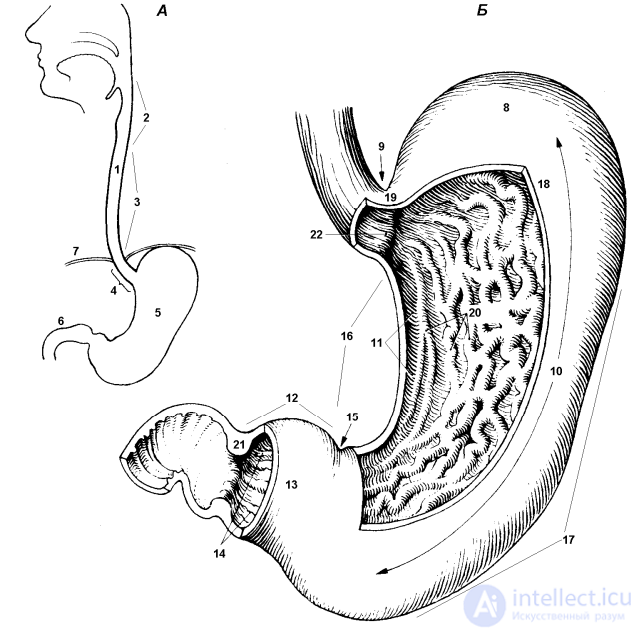
Fig. 9.1. Anatomy of the esophagus (Gr. oesophagus) and stomach (Gr. gaster, Lat. ventriculus)
(after: Fenisch H., 1996)
A – general view of the esophagus and stomach. B – the stomach with the anterior wall opened. 1 – esophagus, 2 – cervical
part of the esophagus, 3 – thoracic part of the esophagus, 4 – abdominal part of the esophagus, 5 – stomach, 6 – duodenum, 7 – diaphragm, 8 – fundus of the stomach, 9 – cardiac notch, 10 – body of the stomach, 11 – canal
of the stomach (a passage along the lesser curvature of the stomach, formed by longitudinal folds of the mucous membrane), 12 – pyloric part of the stomach, located between the angular notch and the pylorus, 13 – pyloric antrum (the initial part of the pyloric portion, located near the
angular notch), 14 – pyloric canal (the terminal part of the pyloric portion, 2–3 cm long), 15 – angular notch, 16 – lesser curvature of the stomach, 17 – greater curvature of the stomach, 18 – anterior wall of the stomach,
19 – cardiac part of the stomach (the part of the stomach adjoining the cardiac orifice), 20 – folds
of the stomach, oriented mainly in the longitudinal direction, 21 – pyloric sphincter
(a thickening of the circular layer of muscles of the pylorus), 22 – cardiac orifice (cardia) – the site where the esophagus enters the stomach
In studying the motor function of the stomach by the X-ray method, assistant E.V. Neshel (Istmanova T.S., 1956) found functional disturbances in the form of unevenness and irregularity of emptying, and a tendency toward
pyloric spasms, in the majority of patients with neurasthenia she observed (fig. 9.1). The same disturbances of motor function were found
on the part of the intestine – in the form of dystonia, dyskinesia (disturbance of motor function), and a tendency toward spasms. Changes in the functional state of the gastrointestinal tract
are often accompanied by dyskinesias of the gallbladder and bile ducts, leading to stasis of bile, an increase in its concentration, and pain.
According to the research of P. Dubois (1904, 1912), «90 out of 100 dyspeptics are neuropaths
[neurotics] and need neither a restricted regimen nor gastric treatment». P. Dubois (1904, 1911, 1912), on the basis of his experience as a practicing physician and certain
propositions formulated by Pinel, developed a method of rational psychotherapy and successfully applied it in treating all categories of neurotics, including those suffering from digestive disorders. Let us dwell in detail on the description of three cases (two men and one woman) of the cure of patients with gastrointestinal disorders, achieved by P. Dubois (1904, 1912) through the application of psychotherapy.
P. Dubois describes the symptoms of the illness of a 36-year-old man as follows: «Complete anorexia, a coated tongue, and the patient tolerates no food at all. Even in small
doses milk causes pain in the stomach, and despite a rest in the countryside and treatment by a specialist in
stomach diseases, the patient's condition keeps worsening. His weight has fallen to 64 kg, that is,
approximately 30 kg below normal. The physician who was treating him, in despair, sends him to me,
remarking that he had never seen such a stubborn case or such an obstinate patient».
The patient came to P. Dubois 4 days before his vacation and asked him to begin treatment, while
knowing about the doctor's imminent time off, said that during that period another doctor should replace him.
P. Dubois agrees: «In that case, the psychic cure must be complete in 4 days,
for my colleague, though an excellent physician, will probably not have such an influence on you;
you must at once, so to speak, become a believer. So, you will immediately begin the milk treatment».
After this remark, the following dialogue took place between P. Dubois and the patient.
Patient: «But, doctor, I cannot tolerate milk, and it has already been 6 weeks since I gave it up entirely».
P. Dubois: «And you want to keep on doing so? Surely not? And since milk
– is the lightest food for the stomach, that is what we must start with».
Already the next day the patient announced that he had drunk milk and tolerated it excellently. On the 4th
day, on the eve of his departure, P. Dubois told him: «So keep taking milk in increasing
doses up to the 7th day; then you will eat 3 times a day whatever is given to you, without discrimination, and besides
that, milk between meals».
Patient: «But, doctor, do take into account that I haven't tolerated anything for a long time now».
P. Dubois: «Well, I repeat to you that if you want to come out of your terrible situation, eat everything, I tell you! You protested against the milk in the same way, yet
you tolerate it excellently. So, remember my advice: 3 hearty meals a day, and milk in between!».
When P. Dubois returned, the colleague who had replaced him reported that the patient, without the slightest
compulsion, had adhered to the prescribed regimen and had gained 12.5 kg over 5 weeks.
The medical history of the second man was as follows. A 58-year-old man consulted him regarding
chronic diarrhea, which had stubbornly failed to yield to any of the remedies prescribed
by an extremely knowledgeable and careful physician. P. Dubois writes: «He truly did everything possible, and by sending the patient to me, put me in a rather difficult position, since he himself had unsuccessfully tried every possible remedy. On the first examination I found no obvious signs of neurosis in the patient, apart from a certain sensitivity and a manner of speaking with tears in his voice. Suspecting catarrh or even the possibility of a tumor, I prescribed an appropriate regimen and medicinal treatment. Discouraged by failure, I put my patient on an abundant and varied diet, since
this remedy has often given me excellent results even in cases of enteritis of tuberculous
origin. The diarrhea only intensified, and I no longer knew which saint to pray to. However,
gradually the spiritual makeup of my subject began to become clear to me; noticing his
hypochondriac mood and tendency to think only of himself, one fine morning I
addressed him good-naturedly, though somewhat bluntly, with the following speech: “Listen, my dear sir, I am beginning to think that your diarrhea may indeed have been caused at first by some real cause, but now it drags on so stubbornly only because you
constantly think about your bowels. Kindly forget about yourself a little and think of those around you; your culinary demands are simply poisoning their lives. Your wife no
longer knows what to cook for her tyrant!”».
Caught somewhat off guard, the patient admitted that he was forever preoccupied with the thought of diarrhea and
that, even before touching his food, he would already predict that it would give him diarrhea. P. Dubois had no difficulty in showing the patient what role these perpetual fears played in his illness. He then continued the intensive feeding, which led to a gain in weight, and the diarrhea stopped after a few days. As the author notes, observation of the patient over
several years after the treatment showed that the patient was healthy; he retained
only a certain sensitivity of the bowels to deviations from his usual regimen.
The third case history concerns a woman – a governess, who had long suffered from dyspepsia (Gr. dyspepsia – indigestion) and anorexia (Gr. an – negation +
orexis – desire to eat, appetite). Over the course of a few months she lost 10 kg. P. Dubois
insisted on the necessity of intensive nutrition and prescribed an abundant meal 3 times a day, as
well as milk at 10, 4, and 9 o'clock.
Noticing the patient's impressionability and sad mood, P. Dubois asked her
whether she was satisfied with the position she held. After this question the following dialogue took place between them.
Patient: «No, she answers, in this family I have had to endure many unpleasantnesses, and this has upset my nerves».
P. Dubois: «But could you not change your position and find another, more suitable one?».
Patient: «I would not want to. This position is very advantageous financially,
and besides, we spend winters in the south and summer in the countryside, and in this respect it is hard
to find anything better».
P. Dubois: «Madam, one must never sit between two chairs, but should always try to sit on the best one. If a person is dissatisfied with their position, they should change
it, if possible. If this is not possible, especially if one is held there, as you are, by such solid reasons, then one must remain, but then one should no longer whine, but should maintain a good state of mind. Understand me, I am not recommending to you a sullen resignation to fate, for that is a vice, but rather adaptation to the conditions of life».
The advice given by P. Dubois in this single, but lengthy, conversation very quickly led to a positive result. The patient managed to force herself to eat intensively and regained her former weight. Since then she has accepted life as it is, and no
longer had cause to complain of neurosis (Dubois P., 1904, 1912).
II. Disturbances caused by the pathogenic effect of words, changing the activity of one internal organ or another, or a vegetative function, through the mechanism of
suggestion and self-suggestion. An example of this kind of disturbance is iatrogenies (Gr.
iatros – physician + genos – origin) – illnesses arising in people after a carelessly (or more precisely,
irresponsibly) spoken word about the state of the patient's health. A.M. Svyadoshch (1971, 1982)
gives the following example of iatrogeny. Patient L., 26 years old, somewhat suspicious and impressionable by character, caught a cold at the funeral of an acquaintance who had died of a myocardial infarction. The doctor found tonsillitis and said: «And your little heart is also playing up a bit. You need to
take care of yourself, or you won't be long in following your acquaintance». From that time on, L. began to fix her attention on the workings of her heart, to watch how it beats when she climbs
stairs, to place her hand on her chest and check her «heartbeat». She read up on the signs
of angina pectoris and myocardial infarction. Soon she began to feel palpitations and shortness of breath, and a feeling of heaviness appeared in the left side of her chest. An authoritative internist assured her that her heart
was healthy and that she needed to treat her nerves, not her heart, and prescribed sedative and tonic remedies. After undergoing psychotherapy, the unpleasant sensations in the region of the
heart disappeared.
K.K. Platonov and L.M. Shvarts (1948) describe another case of iatrogeny: a pilot,
who had good high-altitude training but had a minor heart defect (which did not interfere with high-altitude flights), was authoritatively (but essentially groundlessly) told by a consultant professor: «Yes, with a heart like that you cannot fly above 1,000 m!». From that moment on, this pilot, who had previously tolerated altitude excellently both in flight and in the pressure chamber, began, already at an altitude of 1,100 m,
to experience rapid heartbeat and a sharp deterioration in his condition, and moreover this all took
place only when the pilot knew what the current altitude was! The same authors described a case of
a pilot developing an illness after a remark addressed to him by a flying-technique inspector: «You cannot fly, you are ill, go see a doctor». This case belongs not to iatrogenies but to what are called didactogenies (Gr. didaktikos – instructive + genos – origin) – psychogenic illnesses caused by mentors.
III. Disturbances caused by the mechanism of the conditioned reflex. Any stimulus that
coincides in time with a psychotraumatizing situation may subsequently evoke unpleasant sensations (up to and including deviations in the functioning of internal organs – nausea, vomiting, disturbances of respiratory rhythm and heart rate, sweating) by itself alone. A.M. Svyadoshch (1982) gives the following case. A young woman,
during an attack of abdominal pain caused by food poisoning, learned that she had been
deceived by her husband. Six months later, when her husband was delayed at work, she developed ideas of jealousy, and the attack of abdominal pain recurred. From that time on, the pain began to recur every time
her husband was delayed at work or she received unpleasant news.
A second example of how an ailment can arise through the mechanism of a conditioned reflex
is the occurrence of psychogenic vomiting in a 19-year-old female student, which was described by A.M.
Svyadoshch (1959, 1971, 1982). Trembling, a feeling of fear, and vomiting arose in the young woman whenever
her fiancé began to embrace her, and this despite the fact that she liked him. This symptomatology threatened her upcoming marriage, which prompted her to seek help from a psychotherapist. After explaining to the patient the essence of certain conditioned-reflex
reactions, she was told the following: «Your fiancé's embraces can cause you fear
and vomiting only for as long as you do not know what they are actually a signal of for you, for as long as you do not know with what disgusting, vomiting-inducing event
and images they are connected in you. Try to recall all the events of your
life that can be connected with representations of disgust». Over the course of three
conversations, during which the patient spoke about various events in her life, it was not possible to establish the origin of the vomiting. During the fourth conversation she was asked to sit calmly in an
armchair and recall and say whatever came into her head. The patient talked for a long time and suddenly
fell silent, blushing slightly. When persistently asked to tell what she had just
been thinking about, the patient recalled her older sister's fiancé, but said that this, in her opinion, was not
important and she did not want to speak of it. After a repeated request, the patient reported that at the
age of 8 she had once accidentally witnessed a sexual scene between her sister and her fiancé that had seemed disgusting to her. This shook her greatly and soon afterward she vomited.
The patient understood how her ailment had formed: «Now I understand: when my fiancé embraces me, kisses me, this apparently reminds me of that event and therefore causes vomiting.
But he is a good man!». A complete recovery followed.
Speaking of the phenomenon of the occurrence of neurotic symptoms through the mechanism of the conditioned reflex, they occur within all three forms of neurosis (neurasthenia, hysteria, obsessive-compulsive neurosis), and recognizing the neurotic origin of one symptom or another proves quite difficult. Thus, an allergy to plant pollen appeared in a
patient at the moment when, after a week of serious distress accompanied by
crying, he went outside during a period of intense flowering of plants. The mucous membrane of the mouth,
throat, and nose was naturally inflamed from the almost continuous crying, and it was precisely the contact of pollen with this inflamed mucous membrane that made the formation of the allergy possible!
Certain types of bronchial asthma form in a similar way: a change in breathing
during fright (affect) against a background of bronchitis can give rise to attacks of suffocation. I would
like to caution that bronchial asthma can also arise through the mechanism of secondary gain (that is, have a hysterical nature), in this case acting as a self-punishment illness: a person, having attributed responsibility to themselves for a tragic event that occurred and, understanding the impossibility of atoning for their guilt (for example, in a case where someone died through the person's fault), atones for it through their own illness. The remaining variants of hysterical symptomatology will be discussed when hysteria is examined.
I would like to emphasize that regarding the occurrence of organ lesions after
psychic traumatization as something fantastical is more than incorrect. An adequate perception of this information is hindered by the fact that most people forget that the psyche is connected
to every organ of our body by way of the nervous system. It is precisely this connection that makes the occurrence of psychosomatic illnesses possible: signals coming from the brain
(the substrate of the psyche) through the spinal cord, as well as through the spinal (thirty-one pairs) and cranial (twelve pairs) nerves, reach any innervated organ. In this connection it can be said without exaggeration that the psyche
is omnipresent!
To illustrate what has been said above, let us cite the results of an experimental study of the occurrence of gastric and duodenal ulcers in monkeys (Brady J.V., 1958). Two
adult monkeys were placed side by side on special chairs that restricted movement
(they could move their limbs and head). In front of each monkey was a lever. They simultaneously received a brief electric shock regularly every 20 seconds.
The monkeys could avoid the shock if the first of them (the "executive" one) pressed the lever (for
the second, the lever was not connected to the circuit). The executive monkey learned to press the lever, while
the second paid no attention to it. During the period when the current was applied, a red lamp lit up, and this was noticed by the executive monkey, so that it did not press the lever when the lamp was not lit. After 23 days on a schedule of «6 hours of current exposure – 6 hours of rest», the executive monkey died of a duodenal ulcer. By this time
no obvious signs of ill health had been found in the second monkey, although it received the same number of shocks as the first. Autopsy of the second monkey revealed no disturbances on the part of the gastrointestinal tract, nor of other organs. The experiments
were repeated on other monkeys. The results proved similar: in the executive monkey,
in addition to the duodenal ulcer, there was also a gastric ulcer.
The main clinical manifestations of gastrointestinal disorders in neuroses in
humans are presented in Table 9.1.
Experiments conducted on animals made it possible to clarify many questions, in
particular – the conditions for the occurrence of death following a psychogenic effect. In the experiments conducted by C.P. Richter (1957), the following was found: when tamed rats
were lowered into a cylinder of water from which they could not escape, they remained alive for
about 60 hours, whereas wild rats under the same conditions died within a few minutes (many of them also died when they were caught or carried). If, however,
the state of «hopelessness» was weakened (wild rats were caught several times and immediately released, placed in water for a short time), tame and wild rats showed a similar capacity for preserving life (Richter C.P., 1957).
Let us explain C.P. Richter's experiments in terms of changes in the probabilities of satisfying needs: the more rapid death of wild rats compared with tame ones occurred for the reason that the probability of satisfying important needs (including the need for self-preservation) was assessed by them as extremely low – up to the point of a representation of the complete blocking of the need, which is a psychotrauma. It was enough to give the rats
information that the probability of satisfying needs important to them was far from
zero (which was achieved by showing them that, if they were caught or placed in water, this did not mean they would die, did not mean their lives were in any way threatened) for them to react adequately to the situation of being placed in the cylinder of water.
Table 9.1
Main clinical manifestations of gastrointestinal disturbances in neuroses
(after: Karvasarsky B.D., Prostomolotov V.F., 1988)
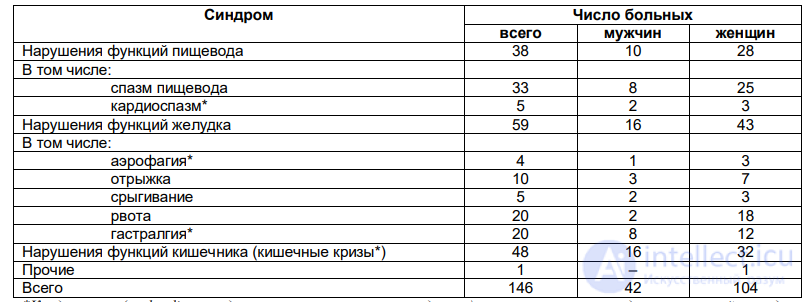
*Cardiospasm (Gr. kardia – heart + spasma – tonic spasm) – a spasm of the part of the esophagus adjoining the cardiac orifice (fig. 9.1); aerophagia (Gr. aer – air + phagos – devouring) – the swallowing of air with its subsequent release from the stomach in the form of belching, which relieves the discomfort; gastralgia (Gr.
gaster – stomach + algos – pain) – stomach pains; intestinal crises – peristaltic disturbance of the intestine
(peristalsis being wave-like contractions of the intestine), manifested by loud rumbling, flatulence,
and pain sensations
Thus, neuroses form an etiologically homogeneous group, which includes illnesses caused by some psychotrauma (representing the blocking of some significant need) and often accompanied by deviations in the functioning of internal
organs.
The main forms of neurosis are neurasthenia, hysteria, and obsessive-compulsive neurosis.
According to G.M. Beard (1869), who was the first to describe the symptomatology of neurasthenia (Gr.
neuron – sinew, nerve + astheneia – weakness, powerlessness), the main cause of the illness lies in prolonged emotional tension, leading to exhaustion of the nervous system. Following the work of A.M. Svyadoshch (1971, 1982), neurasthenia includes illnesses caused by psychic traumas, as well as by prolonged lack of sleep, and prolonged mental or physical strain associated with psychic influences that cause anxiety and the need to overcome the resulting feeling of
fatigue.
Neurasthenia is the most widespread form of neurosis: as B.D. Karvasarsky
(1980, 1990) reports, 64.1% of neurosis patients treated in the clinic during the period from 1960 to 1976 were diagnosed with neurasthenia.
Neurasthenia develops most often under the influence of more or less prolonged
psychic traumatization, leading to emotional tension and lack of sleep, which often arise during a prolonged stay in an unfavorable family or
work environment, as well as during a prolonged state of anxiety or great mental and physical strain associated with excessive demands being placed on the individual (Svyadoshch A.M., 1971, 1982).
Patients with neurasthenia are aware that they are unwell and often seek help from doctors, striving to recover. Usually they do not try to display their illness but, on the contrary,
conceal it from those around them. Sometimes the illness seems severe to them and gives rise to a number of
hypochondriacal notions.
The course of neurasthenia depends on whether the causes that gave rise to it continue to act. The illness can become protracted and proceed with periodic exacerbations if
the cause is not eliminated. When the unfavorable situation ceases to act, rapid recovery follows.
One of the psychosomatic disorders we have observed in neurasthenia is
indistinct perception of moving objects (Evstigneev D.A., Karnaukhov V.A., 2005). Neurasthenia in the patient with this symptomatology arose in connection with complications at his main
job and the performance of a large volume of mental workload (he had to be at
work for 12 hours daily; this in addition to the entirely necessary preparation at home for
the next day).
As one more example of a psychosomatic disorder accompanying
neurasthenia, let us cite angioedema (Quincke's edema), which began to appear in a woman after the death of her
husband (Evstigneev D.A., 2010, a). This example is unique not only in that neurosis can cause the most unthinkable lesions of any organs, but also in that, after 10 years (during
which the edema appeared periodically), when it had already not made itself
known for a long time (remarriage became the decisive factor in eliminating the symptom), a relapse occurred, and
when the woman's new partner saw what this Quincke's edema looked like, he was so struck (the face swells so much that it increases several times in size) that, through the mechanism of emotional contagion, he developed similar symptoms himself! This example
makes it very clear that although the symptom, in both the woman and her new partner, is identical, the
causes underlying the formation of the symptom are completely different! In connection with
this it must be understood that treatment for the same symptoms will be different in each individual
case – treating an illness by its symptom contradicts common sense and is contraindicated! Resorting to symptomatic treatment, based on suppressing the symptom, is advisable only in those exceptional cases where the cause of the illness cannot
be eliminated (for example, painkillers for the metastases and pain accompanying oncological illnesses).
A neurosis is a pathogenic conditioned reflex that arises under the influence of a psychotrauma, and it is precisely understanding which psychotrauma served as the trigger mechanism
of the illness (the cause of the illness) that will allow us to get rid of the symptom. In other words, it will allow us to implement the etiological principle of treating the illness. This is why, in
treating neuroses, as will be discussed later, one proceeds from the history of the formation of the illness, that
is, the history of the formation of pathogenic conditioned reflexes. Let us recall – the content
of our psyche consists predominantly of conditioned reflexes formed during our lifetime.
A neurosis is an informational (psychogenic) disorder!
According to B.D. Karvasarsky (1980, 1990), practically obligate (Lat. obligatus –
mandatory) symptoms of neurasthenia should be considered to be vegetative disturbances, manifesting as coldness of the extremities, general and distal hyperhidrosis (Gr. hyper –
over + hydor – water), lability (variability) of the pulse, more often with a tendency toward tachycardia – an increase in heart rate. Frequent symptoms are a uniform increase in tendon reflexes, trembling of the eyelids and fingers of outstretched hands, muscle
pain, and heightened, painful sensitivity, or hyperesthesia (Gr. hyper – over +
aisthesis – sensation), of individual areas of the skin.
The psychosomatic manifestations of neurasthenia are various unpleasant
sensations in different parts of the body (headache, dizziness, ringing in the ears, changes in
sensitivity, distressing sensations in the region of the heart or stomach). Falling asleep is often difficult. Patients' sleep is disturbed: not sufficiently deep, anxious, with an abundance of dreams. At
the same time, patients wake easily under the influence of insignificant external stimuli.
After sleep there is no feeling of freshness or vigor but, on the contrary, a feeling of
being worn out and drowsy appears (Svyadoshch A.M., 1971, 1982).
At the very beginning of the second part of this chapter we indicated that the formation of one
form of neurosis or another requires corresponding personality traits. Among the personality traits which, in the event of psychic traumatization, will contribute to the development of neurasthenia are:
1) easy fatigability;
2) suspiciousness;
3) pedantry, meticulousness;
4) a pronounced sense of duty, pronounced responsibility;
5) a tendency toward doubt;
6) great depth of feelings;
7) weakness and inertness of nervous processes;
8) a tendency, when significant needs are blocked, to display more often the
emotion of suffering rather than anger;
9) a tendency to place others' interests above one's own, which is connected with a feeling of defenselessness, dependence on others, and a notion of one's own
needs being of lesser significance (this is dictated by the person's conscious or unconscious idea that they are somehow worse than others).
As B.D. Karvasarsky and V.F. Prostomolotov (1988) point out, a personality trait
that contributes in large measure to the development of neurasthenia is a striving toward excessive efforts, exceeding real capabilities, in one's main activities. These traits more often form in conditions where an unhealthy striving toward
success is constantly stimulated without any real regard for the individual's strength and capabilities. The conflictual pathogenic situation most typical for neurasthenia represents a contradiction between the individual's capabilities, on the one hand, and their inflated demands on themselves and aspirations
– on the other.
Neurasthenia, as a rule, develops gradually. The main symptom is irritable weakness – heightened excitability and easy exhaustibility of patients
(Svyadoshch A.M., 1971, 1982). Patients are quick-tempered, becoming irritated over
продолжение следует...
Часть 1 9.2. THE PHENOMENOLOGY OF NEUROSES: MECHANISMS OF OCCURRENCE, FORMS, AND TREATMENT IN AVIATION SPECIALISTS
Часть 2 - 9.2. THE PHENOMENOLOGY OF NEUROSES: MECHANISMS OF OCCURRENCE, FORMS,
Часть 3 - 9.2. THE PHENOMENOLOGY OF NEUROSES: MECHANISMS OF OCCURRENCE, FORMS,
Часть 4 - 9.2. THE PHENOMENOLOGY OF NEUROSES: MECHANISMS OF OCCURRENCE, FORMS,

Comments