
Lecture
The study of flight crew fatigue as one of the dangerous psychophysiological factors of flight has the longest history of research. As N.I. Frolov,
V.F. Tokarev, and V.A. Sergeev (1992) point out, it was precisely aviation occurrences related to fatigue and
nervous strain that prompted the introduction of medical selection of flight personnel (in Russia – since 1911) and the further development of methods of aeromedical examination.
To present a typical picture of fatigue associated with performing a flight, let us turn to a study by G.A. Akimov, V.S. Videnin, and M.M. Odinak (1981), in which, using neurological methods and psychophysiological tests, 40 pilots were examined,
observed before flights, after landing, and then every 2 hours over
the course of a day. Immediately after landing, no significant deviations in neurological status were found relative to baseline data, and some indicators even increased (muscle strength – in 30% of cases). But already 1–2 hours after landing, all pilots
showed the first signs of asthenic (Gr. astheneia – weakness, powerlessness) syndrome,
which was nonspecific in character and was subjectively manifested as a feeling of fatigue,
tiredness. Neurological examination revealed impaired ability
to identify numbers, letters, and words traced on the skin – dermolexia (Gr. derma – skin + lexis –
word), increased sensitivity thresholds in the distal (farthest from the shoulder joint) parts of the arms, and increased tendon and periosteal (Gr. peri – around + osteon –
bone) reflexes. Already at this stage, a deterioration of psychophysiological indicators characteristic of asthenic syndromes was observed. In 20% of those examined,
symptoms of oral automatism, impaired fine coordination of movements, and
instability in the Romberg position (standing with feet together, arms extended forward, and eyes closed) were observed. In 44% of cases, reflex asymmetries occurred – increased tendon and periosteal reflexes on the right with decreased abdominal reflexes on the same side (the so-called interhemispheric asymmetry syndrome,
first described in the literature on the neurology of flight work by A.G. Pavlov and
N.I. Komandenko in 1965). All the symptoms identified were reversible in nature and
faded within the first day after landing.
The most pronounced functional shifts during mental fatigue occur in
the nervous system, which can be clearly observed by analyzing the electroencephalogram (Gr. elektron – resin, amber + enkephalos – brain + gramma – recording) – a recording of the brain's electrical
activity (potentials). Four main types of oscillations are distinguished in the human electroencephalogram (Fig. 6.1). These are the alpha (a–rhythm), beta (b–rhythm), theta (q–rhythm), and delta
(D–rhythm) rhythms. The alpha rhythm is a rhythmic sinusoidal oscillation with a frequency of 8–13 Hz and an amplitude of 50 µV. This rhythm is recorded in a lying
or sitting position with eyes closed under conditions of physical and mental rest. As a rule,
the rhythm is best recorded in the occipital and parietal regions. The beta rhythm has a frequency above 13 Hz and an amplitude of 20–25 µV. This rhythm is more pronounced in the frontal and parietal
lobes. The beta rhythm replaces the alpha rhythm in the occipital region upon exposure to light stimuli, intense mental work, and emotions. Proprioceptive stimuli associated with contraction of the limb musculature
have a particularly strong effect in this regard. The theta rhythm has a frequency of 4–8 Hz and an amplitude of 100–150 µV. This rhythm is mainly
recorded during sleep, oxygen deprivation, or hypoxia (Gr. hypo – under + Lat.
ox[ygenium] oxygen), and shallow anesthesia (Korobkov A.V., Bashkirov A.A., Vetchinkina
K.T., 1980). Thus, while the theta rhythm is only slightly pronounced in a healthy person, under flight g-loads, complex maneuvers, significant fatigue, and emotional strain this rhythm becomes distinct (Frolov N.I., Tokarev V.F., Sergeev V.A., 1992). The delta rhythm has a frequency of 0.5–3.5 Hz and an amplitude of 200–300 µV. It is recorded during sleep, hypoxia, and deep anesthesia (Korobkov A.V., Bashkirov A.A., Vetchinkina K.T., 1980).
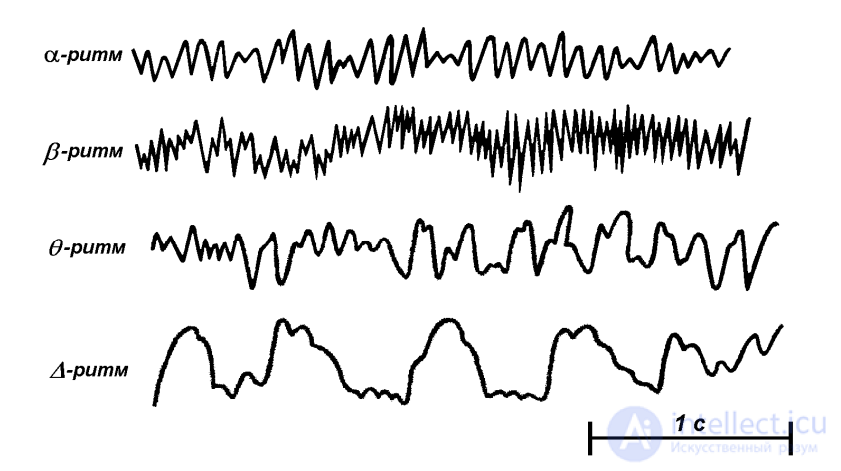
Fig. 6.1. The main rhythms of the electroencephalogram
(after: Korobkov A.V., Bashkirov A.A., Vetchinkina K.T., 1980)
It is important to note that during fatigue, periods of partial,
local sleep periodically occur: the brain as a whole remains in a state of wakefulness, but individual groups of neurons rest, which is precisely what is manifested by the appearance of slow (theta and delta) rhythms on the electroencephalogram – the so-called «tension rhythms». As fatigue
increases, periods of local sleep, which are outwardly imperceptible to the person, transition
into an outwardly noticeable state of drowsiness, which is among the extremely dangerous psychophysiological factors of flight.
The most adequate way to define the phenomenon of fatigue is through the concept of performance capacity, one of the constituent parts of which is fatigue itself. Performance capacity –
the ability to keep the body in working condition, which is manifested in maintaining a given level of activity over a certain period of time. Performance capacity consists of several successive phases: warm-up, compensation (Lat.
compensare – to compensate), or stable performance, subcompensation (Lat. sub –
under + compensare), or unstable performance, and fatigue (Fig. 6.2).
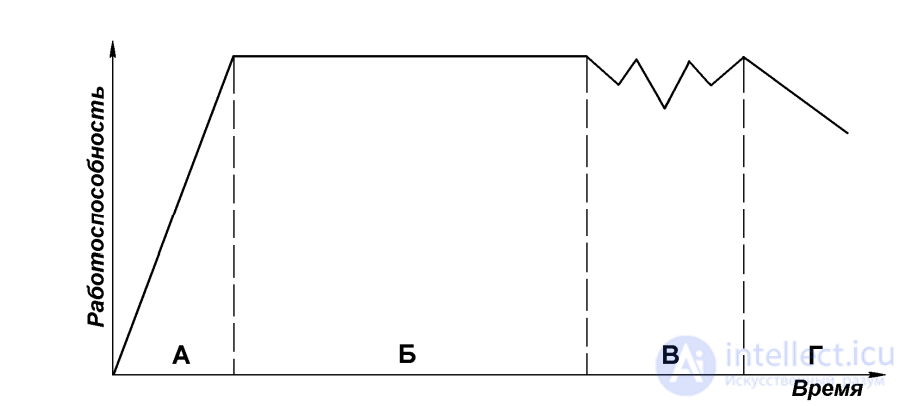
Fig. 6.2. Phases of performance capacity:
A – warm-up; B – compensation (stable performance); C – subcompensation; D – fatigue (after: Kolosov V.A., 1993)
During the warm-up phase, mobilization of the body's functional activity occurs, the psyche is saturated with specific operational information, and adaptation to the work rhythm takes place.
The duration of the warm-up phase depends on the person's preceding state (how ready they are to carry out the activity). The compensation phase is characterized by a stable work regime with optimal energy expenditure. The subcompensation phase is characterized by periodic decreases in functional activity and quality of work. The fatigue
phase is distinguished by the fact that the body's compensatory mechanisms are no longer able to restore an optimal level of performance capacity.
Fig. 6.3 shows that the state of fatigue is characterized by an extremely high physiological cost of working movements – performing them requires
greater effort.
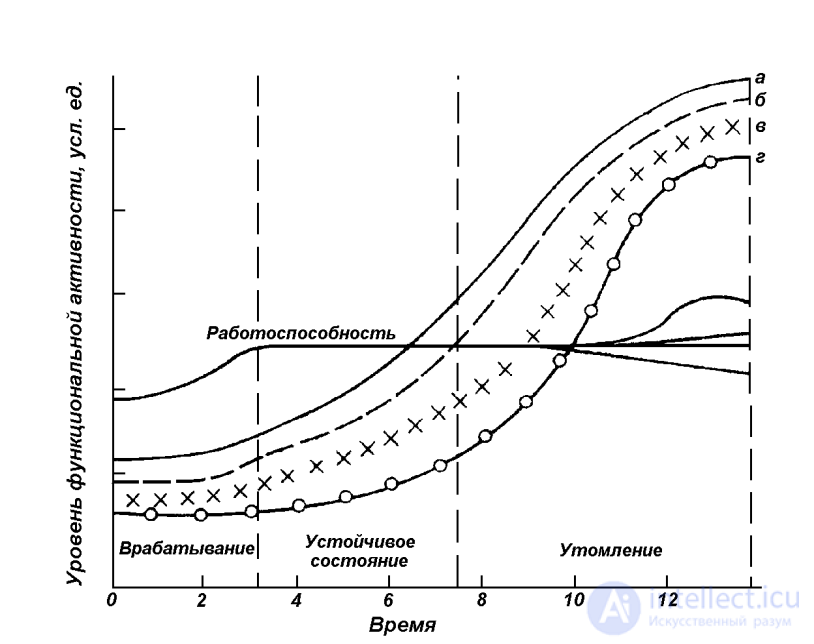
Fig. 6.3. Schematic representation of the change in performance capacity and
functional activity of body systems during fatigue
(after: Zakharyants Yu.Z., Kurpyakov V.F., 1987):
a – physiological cost of working movements; b – total bioelectrical activity of the muscles; c –
tension of body functions; d – volitional effort
Fatigue – is a temporary imbalance of the body's functional systems (especially the neurons of the cerebral cortex), leading to a decrease in a person's reserve capacities and performance capacity. Fatigue is a natural process of reversible decline in the body's performance capacity, signaling to the person the
depletion of the body's resources and promoting the cessation of activity and a transition to
rest, which will allow the restoration of expended energy reserves. Thus,
fatigue is one of the body's protective, defensive reactions, allowing it to preserve its integrity.
Fatigue can become so severe that a pilot will disregard all safety
norms, with the sole priority being to stop the activity, protecting the body from
exhaustion. An example of this is an episode described by B.S. Alyakrinsky (1985). In a state of
fatigue after several flights performed in a row, a pilot made a landing under a series of red flares. Only by a lucky chance was a crash avoided. Interestingly, the pilot saw the flare signals and understood that landing was prohibited, but «his hands and feet, as if automatically, brought the landing to completion by themselves». This example clearly demonstrates that
the body, having exhausted its psychophysiological resources while fatigued, refuses to further prolong the period of work, protecting and defending the body from exhaustion and going against
demands that contradict this.
In a state of fatigue, the number of radio exchanges decreases, the number
of errors in the perception and transmission of speech messages increases, vocabulary becomes impoverished, clarity of articulation and speech tempo decrease, omissions of information are observed, and there is an inability
to concentrate on performing a particular task.
Table 6.1 Degrees of overfatigue in flight personnel (after: Platonov K., Schwartz L., 1948)
| Symptoms |
Degree of overfatigue I — beginning |
Degree of overfatigue II — mild |
Degree of overfatigue III — pronounced |
Degree of overfatigue IV — severe |
|---|---|---|---|---|
| Onset of tiredness under load | Under increased load | Under a lighter load | Under normal load | Without any load |
| Effect on task performance | Unnoticeable | Slight | Noticeable | Sharp |
| Compensation by volitional effort | Easily, almost automatically | Requires effort | Requires considerable effort | Not possible |
| Emotional shifts | Loss of interest, lowered mood | Irritability, fatigability | Depression, apathy | Emotional breakdowns |
| Sleep disturbances | Shallow sleep, difficulty falling asleep | Frequent awakenings, dreams | Insomnia | Complete absence of sleep |
| Autonomic manifestations | Sweating, tachycardia | Heart pain, headaches | Blood pressure fluctuations, heart pain | Cardiac rhythm disturbances |
| Fitness for physical loads | Fit without restrictions | Fit with restrictions | Temporarily unfit | Temporarily unfit |
| Recommended measures | Rest, change of activity, physical exercise | Rest, regimen, vitamins | Medicinal treatment | Inpatient treatment |
Periodically recurring tiredness has the property of accumulating, adding up, and
turning into a state of overfatigue. Overfatigue – is a condition bordering on pathology that arises in the course of work and is characterized by a decrease in performance capacity along with
a qualitative change in physiological, biochemical, and psychological indicators, such
that standard rest does not bring recovery of strength. Overfatigue can be regarded as a mismatch between the severity of the work performed and the duration of rest. A distinguishing feature of overfatigue is the persistence of signs of tiredness and exhaustion
after rest. Overfatigue is characterized by: sleep disturbance, rapid fatigability, increased irritability, headaches and dizziness, and a feeling of weakness. All of this
leads to decreased noise immunity, an increased number of errors, emotional disturbances, memory impairment, reduced attention span, and disturbances of mental
activity. In a number of cases, overfatigue can lead to neuroses (most often – neurasthenia), a detailed description of which is provided in Chapter 9.
Table 6.2
Signs of various degrees of overfatigue in flight and air traffic control personnel
(after: Kolosov V.A., 1993)
| Symptoms | Degree of overfatigue I — initial | II — mild | III — pronounced | IV — severe |
|---|---|---|---|---|
| Decline in performance capacity | Insignificant | Moderate | Significant | Sharp |
| Manifestation of overfatigue under light load | Absent | Appears | Clearly expressed | Constantly present |
| Mood change | Decreased interest | Irritability | Apathy | Emotional breakdowns |
| Sleep disturbances | Difficulty falling asleep | Frequent awakenings | Insomnia | Complete absence of sleep |
| Prevention methods | Rest, change of activity | Work-rest regimen, vitamins | Medicinal treatment | Inpatient treatment |
K. Platonov and L. Schwartz (1948) proposed dividing overfatigue in flight personnel into
four degrees (Table 6.1).
Based on the symptoms found in a state of overfatigue, V.A. Kolosov
(1993) identified four degrees of overfatigue in flight and air traffic control personnel (Table 6.2).
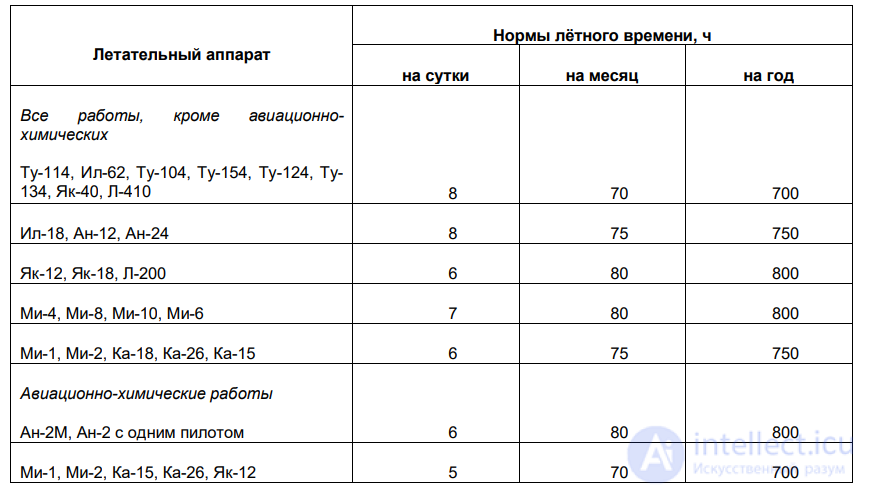
To avoid overfatigue in flight personnel, scientifically substantiated flight workload norms were developed depending on the type of aircraft (Denisov V.G.,
Onishchenko V.F., Skripets A.V., 1983), which are reflected in Table 6.3.
Table 6.3
Dependence of flight time norms for crews on aircraft types
(after: Denisov V.G., Onishchenko V.F., Skripets A.V., 1983)
A large number of aviation occurrences have happened because of overfatigue. One
of such occurrences (a crash) took place on May 10, 1975. On May 9, 1975, at 21:20
a «Piper» aircraft, operating as an air taxi, departed from Rochester (New
York State) on a route to Cleveland with intermediate landings scheduled in the
cities of Buffalo, Pittsburgh, and Columbus (Ohio). On board was a cargo weighing 136 kg and
one passenger. On May 10 at 1:12, the Cleveland en-route air traffic control
center handed the aircraft off to the Cleveland airport approach controller. At night, the weather in the landing area was clear, visibility – about 15 miles (27.75 km), with a
complete calm. The approach controller monitored the progress of the flight until the aircraft
passed the outer marker beacon. He then switched his attention to other aircraft in the air. He assumed that the pilot had switched to communication with the landing control point. The landing controller testified that the aircraft never made contact with him. He was not even warned that the aircraft had entered the airport boundaries with the intent to land.
The aircraft crashed approximately 4.82 km from the outer marker beacon and 2.41 km
to the left of the extended runway centerline. There were no witnesses to this event.
The passenger, who survived, reported that he had been asleep in the front seat
and had no idea what had happened. On impact he was thrown from the aircraft, sought help on his own, and was taken to a police station, from which he reported the crash to Cleveland airport air traffic controllers. For nearly five hours the air traffic control service personnel knew nothing about the crash that had occurred.
The pilot's flight experience amounted to nearly 7,000 flight hours, of which almost 900 hours were as chief pilot of the «Piper» aircraft. About a month before the crash, another pilot had flown route flights with him to gain experience. He reported that the deceased pilot had told him
about progressively increasing fatigue toward the end of each week due to the routine of night flights, and about
how he often dozed off in snatches during flight but woke up upon hearing his call sign on the radio.
Although the aircraft was severely destroyed on impact, it was established that the right main landing gear strut had been retracted and was locked up, and the flaps were in the retracted position.
The Flight Accident Investigation Bureau determined that the nature of the propeller damage and the breaking of several trees indicated that both engines were developing thrust. Nor was any confirmation found that a failure of the aircraft's flight controls was one of the causes of the crash.
According to the Bureau's conclusions, the pilot knew nothing about the progress of the aircraft's flight or
its trajectory because he was either incapacitated or
asleep. Autopsy results and toxicology tests did not confirm the likelihood that the
pilot had been rendered incapacitated. There are indications that he may have dozed off after
receiving clearance from the approach controller to descend from 7,000 to 4,000 feet (from
2,100 to 1,200 m) and to intercept the instrument landing system (ILS) course. Up to that point he had reacted quickly to the air traffic controller's instructions, but about 3 minutes after being
cleared to fly the ILS approach and to contact the landing control point, he did not
respond until the controller called him again. In addition, he did not read back the frequency
of the landing control point, as he had done after receiving previous clearances. From the
foregoing it follows that the pilot knew nothing about the progress of the aircraft's flight and its trajectory
because he had fallen asleep (Quin D.C., 1978).
One of the common factors contributing to the onset of fatigue is desynchronosis (Lat. de – cancellation
+ Gr. syn – together + chronos – time), caused by flying across several time zones, representing
a discrepancy between a person's endogenous (Gr. endon – internal, inside) biorhythms and exogenous (Gr. exo – external, outside) geophysical and social time cues, and manifesting itself in
a disruption of the synchronous functioning of the body's functional systems. The sleep-wake rhythm is disrupted earlier than others.
Desynchronosis manifests itself as insomnia, poor well-being, decreased performance capacity, earlier onset of fatigue, and disturbance of higher nervous (mental) activity.
The study of the effects of transmeridian (Lat. trans – across + meridianus – midday), meridian, and night flights is the subject of aviation biorhythmology (Gr. bios –
life + rhythmos – alternation, regularity), which develops preventive measures
against the adverse effects of the aforementioned types of flights on the health
of crew members and their performance capacity.
Aviation biorhythmology focuses primarily on two adaptive biorhythms –
the circadian (approximately daily) and the seasonal (approximately annual). Adaptive rhythms are linked
to geophysical cycles: the circadian rhythm – to the alternation of day and night, and the seasonal rhythm – to the changing
of the seasons. The significance of adaptive rhythms lies in the fact that they:
1) coordinate physiological processes in time and preserve the body's temporal structure;
2) schedule the activity of body systems for the most favorable time
of day and anticipate changes in the environment;
3) make it possible to determine intervals of time.
Circadian rhythms have three properties: – free-running of the rhythms when time
cues are excluded (under isolation from time); – phase shift of the rhythms after moving along the
time scale; – «entrainment», the assimilation of an imposed period of oscillation.
Free-running endogenous rhythms in humans have a period of 25±0.5 h. A phase shift
of the rhythm occurs when flying from West to East and back. During the transition period, for some time the rhythms become free-running, people's need for
sleep increases, and sleep lengthens. If the free-running rhythms are longer than 24 hours, a flight to the West is tolerated more easily, while with a shorter rhythm – a flight to the East is tolerated more easily (Razsolov N.A., 2006).
When flying across 6–10 time zones, the state of circadian desynchronosis lasts 3–5 days. During this period the biorhythms become free-running, the need for sleep increases, digestive disorders are often observed, and performance capacity decreases. Circadian desynchronosis ends with the «entrainment» (assimilation) of the new exogenous rhythm.
The time difference between each meridian is 4 minutes. A zone of 15 meridians constitutes one time zone. There are 24 such zones in total. Most people adapt to
the new daily regimen at a rate of 1 h/day (Denisov V.G., Onishchenko V.F., Skripets
A.V., 1983).
According to their biorhythmological characteristics, all people belong to «larks», «owls», and
«arrhythmics». In larks, the acrophase (Gr. akron – peak + phasis – manifestation) of the circadian rhythms is shifted to earlier hours, so they tolerate eastward flights better; in owls – the acrophase is shifted to a later time, and they adapt more easily to westward flights. Arrhythmics adapt equally well to both eastward and westward flights.
The seasonal biorhythm – is predominantly endocrine, reaches its maximum in the spring–summer period, and is linked to the reproductive stage of the body's life activity. This
rhythm has become phylogenetically fixed and contributes to better survival of offspring. The seasonal rhythm is also linked to the body's adaptation to high temperature (in the spring–summer
period) or to low temperature (in the autumn–winter period). During meridian (trans-latitudinal) flights, conditions arise for the overstraining of the body's adaptive capacities and a breakdown of adaptation in the form of overheating or a cold, and exacerbation of a number of illnesses. The complex of changes in the body's functioning after meridian flights described above
has been named seasonal desynchronosis.
An illustration of just how dangerous desynchronosis is in itself, along with incorrect actions
by pilots when it occurs, is the crash of the Challenger-604
aircraft (Bombardier CL600-2B16, Series 604), which occurred on January 4, 2002 in England
(Birmingham). This crash occurred due to several causes:
the pilots' disregard of frost present on the aircraft's wing; imperfections in governing
documents; desynchronosis caused by a transmeridian flight; fatigue
resulting from the desynchronosis; and the pilots' use of over-the-counter sleeping medication without a prescription or
consultation with medical personnel. Of all the causes identified, it was
desynchronosis that was the root cause of the crash.
After boarding the aircraft to proceed to Bangor, the aircraft commander helped the copilot
program the flight management system, since
difficulties had arisen in starting it up. Immediately before takeoff, the aircraft commander
noticed frost on the leading edge of the wing (the aircraft
had stood on the apron of Birmingham airport all night after a transatlantic flight
from the US – West Palm Beach), but did not give the copilot any instructions
to take this into account during takeoff. Immediately after leaving the runway, the left wing
dropped sharply; the wingtip touched the runway. The aircraft rolled over several times
and was completely destroyed (all five people on board were killed). Thus, due to fatigue and imperfections in the governing documents, the pilots did not attach sufficient importance to icing. The investigation commission concluded that it was precisely the presence of frost that led to a
flow separation on the left wing immediately after takeoff, caused by icing. The aircraft stalled at such a
small angle of attack that the stall warning system did not even activate (Tabletki…,
2004).
The United Kingdom Air Accidents Investigation Branch recommended
that the Federal Aviation Administration remove from the Federal Aviation Regulations, FAR.135.227, the item stating: «Takeoff may be conducted with frost present on the wing
surface, stabilizing and control surfaces, if the frost has been polished to a smooth
condition» (Tabletki…, 2004). The Committee strongly recommends that before departure
all frost and ice be removed from the aerodynamic surfaces. As already noted, yet
another factor contributing to the crash was the pilots' fatigue, as they had crossed several time zones the day
before the fatal flight. The crew's workload began the day before the crash. After a working day lasting 12.5 hours, the crew
was able to go to rest only at 21:30 Greenwich (local) time. The
copilot, who was flying the aircraft, had slept very little during the two nights
preceding the last flight. Sleeping
medication was found in the pilots' bodies after the crash.
Desynchronosis is a frequent phenomenon, so it is extremely important to know the basic principles
of regulating flight activity in connection with this dangerous psychophysiological factor of flight. It is precisely the issue of ensuring the performance capacity of flight crews when performing transmeridian flights that is addressed in one of the sections of a work by V.V. Kozlov and others
(2000). The authors identified the basic principles for regulating flight work, rest, and nutrition when performing transcontinental and transmeridian flights:
- the principle of asynchrony: during a flight and in preparation for it, both on the day of departure and
the day before, each crew member individually regulates their own work, rest, and
nutrition regimen so as to avoid a simultaneous decline in performance capacity of the whole crew;
- the principle of coordination: the work, rest, and nutrition regimen of crew members is coordinated taking into account the schedule of upcoming activity and crew composition (augmented, without augmentation);
- the principle of biological expediency: regulation of the work, rest, and
nutrition regimen is carried out in accordance with the psychophysiological regularities of the functioning of the body's systems and the dynamics of performance capacity in flight.
When regulating the work, rest, and nutrition regimen of pilots at the home airfield and at the destination (relay) airport after performing transcontinental and transmeridian flights, it is recommended to take into account such factors as (Kozlov V.V. et al., 2000):
- at the home airfield: departure time (morning, evening); crew composition (without augmentation, augmented);
- during the flight: crew composition (without augmentation, augmented); time of day;
- at the relay airport: departure time from the home airfield (morning, afternoon, evening); direction of flight (from east to west or from west to east); the difference from home
time (more or less than 4 hours); time spent at the destination airport (less or
more than 48 hours); return departure time (morning, afternoon, evening).
The authors then provide very detailed recommendations on how to take these factors into account under specific flight conditions.
In addition to desynchronosis, faster fatigue (overfatigue) is promoted by emotional strain, disruptions in the planning of flight workload, and disruptions of the rest and nutrition regimen. Unfortunately, crew workload norms are still being violated. In particular, at a whole number of airlines it has become customary that when the monthly sanitary norm of flight hours is exceeded, the excess flight hours are carried over to
the next month.
Important information regarding the duration of crew working time is provided
by Yu.D. Zheleznyakov and others (2001). In their work, the authors use materials from the European
Transport Safety Council (ETSC). As the authors write, state regulations (in particular, those establishing working time norms) tend
to change very slowly, whereas the operational environment in aviation is far more dynamic. Distinguishing two types of fatigue (transient, or acute, fatigue, caused by a period of work, and cumulative, or accumulated,
fatigue, arising from delayed or incomplete rest for restoring the normal working state), the authors formulated the most general ways of preventing these
two conditions.
1. Reducing the amount of excessive workload (prohibiting excessive duration of duty flight time or reducing the maximum duration of flight time during night hours).
2. Precisely defining a rest period of sufficient duration for restoring performance capacity after the previous workload before a new period of duty
workload (increasing the duration of normal rest or including a habitual period of
sleep).
The authors (Zheleznyakov Yu.D. et al., 2001) then turn to an analysis of the work and
workload factors taken into account by 11 countries of the European Union (Table
6.4).
133
Table 6.4
Work and workload factors taken into account in European Union countries:
I – Belgium; II – Denmark; III – Spain; IV – France; V – Germany; VI – Greece;
VII – Ireland; VIII – Italy; IX – Netherlands; X – Portugal; XI – United Kingdom;
* – during the duty period; ** – excluding night flights;
*** – excluding resting (off-duty) pilots
(after: Zheleznyakov Yu.D. et al., 2001)
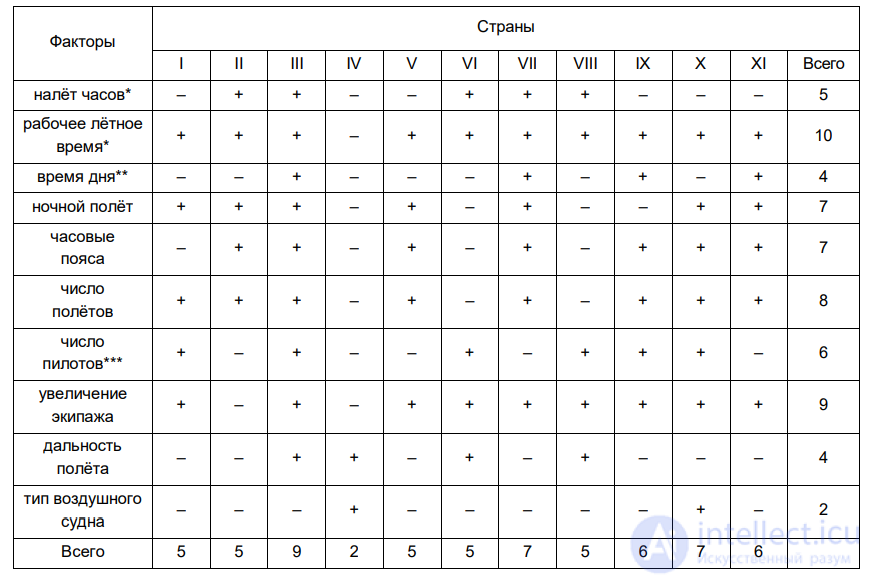
Although there is a consensus regarding the need to limit the duration of duty flight
time (the performance of duty duties associated with flight work),
this factor gives rise to various interpretations. Some countries distinguish only flight time (duration of the flight), whereas others consider either flight time and duty time, or only duty time alone.
Duty flight time includes both flight time and the time of pre-flight preparation on the ground, post-flight activity, and the time between flight sectors. For
assessing fatigue, duty flight time is a more adequate measure than absolute flight time, since the onset of crew fatigue is influenced not
only by the flight itself, but by absolutely all factors associated with flight activity.
Regarding limitations on short-term work (flight/working time relating to a single flight – flight assignment), the authors (Zheleznyakov Yu.D. et al., 2001) note that most countries of the European Union recognize the need to establish limits on the maximum permissible or duty time within a single day. In
setting a «normal» duty time duration of 12 hours, it should be taken into
account that crew members often spend a considerable amount of time (a little over two hours)
getting from their home to work and back. This fact requires an adjustment in the
determination of duty time duration. There is fairly good agreement
among various countries on the question of limiting the maximum number of working hours for a minimum crew complement, as well as for an augmented crew.
It is accepted that 14 hours is the longest period satisfactorily tolerated
by a minimum crew, and 18 hours – in most cases with one or more relief crew members. There is also agreement that under unfavorable flight
operating conditions, the maximum permissible flight time for the primary crew should be
reduced to 9–11 hours.
Unlike daily limits, long-term limits are given in flight hours (hours of flight time) rather than in hours of working time. Long-term time limits are established to minimize cumulative (Lat. cumulatio – accumulation) fatigue (overfatigue). The authors (Zheleznyakov Yu.D. et al., 2001) then discuss the requirements
of European Union countries regarding crew rest time duration. Minimum rest duration values are 8–12 hours, and maximum – 13–18 hours. In some
countries, instead of fixed rest hours, a more flexible (floating) assessment system is used
(2 or 4 times the amount of duty or flight time). In some countries, provision is made for rest during nighttime – as the time of the most complete sleep. Several countries practice providing an extended rest period regularly once a week. This period must be a continuous interval of time from 24
to 36 hours. A number of provisions also require the inclusion of two consecutive nights within this period.
Two consecutive nights are the minimum requirement for stabilizing sleep structure
and restoring normal awakening from sleep and a state of alertness to a normal
level.
The problem of flight crew fatigue and the competent distribution of flight and duty time became the subject of research by D. Wells (2004), chairman of
the flight safety committee of the company «FedEx» and a member of the committee of the U.S. Air Line Pilots Association. The author notes that current rules for distributing
flight and duty time, applied in cargo air transport, are a motley mixture of regulations from domestic airlines, national air carriers, and «supplemental» U.S. airlines, the development of which took more than 50 years. In 2004 the U.S. National Transportation Safety Board declared its intent to establish limits on the working hours of flight crews. For pilots working for U.S. domestic airlines, the maximum flight time limit over 7 days is 30 hours, for pilots
of national airlines – 32 hours. Pilots of «supplemental» airlines, however, may
work up to 48 hours over 6 days – 60% more than pilots employed on domestic
airlines. According to statistical data from the Federal Aviation Administration,
reports submitted through the flight safety reporting system in which the
problem of fatigue is noted account for 21%. And this despite the extensive history of studying the problem of fatigue and developing flight and duty time norms. A strict and unified regulation of pilots' work at airlines of various statuses still
does not exist, in connection with which the U.S. Air Line Pilots Association has appealed to the Federal Aviation Administration and recommended that it carry out the following measures, the implementation of which would raise the level of safety of all cargo
and passenger airlines that perform cargo transport.
1. Establish a maximum weekly flight time limit for domestic cargo crews consistent with the rules for domestic passenger airline pilots.
2. Require that pilots performing cargo flights have a mandatory
pre-flight rest under rules consistent with those for domestic passenger airline pilots.
3. Require that cargo airline pilots on duty as part of reserve crews and obligated to report to work when needed
(reserve duty) remain in that status no more than 16 hours a day.
4. Reduce the number of hours of daily flight and duty time when
pilots work during the time period from midnight onward.
5. Reduce the number of hours of flight and duty time when a pilot
crosses six or more time zones daily.
6. Develop a harmonization policy regarding the establishment of a limit on the maximum number of weekly flight hours for pilots of «supplemental» airlines
who have minimal rest time before a flight and before performing reserve duty.
At Tallahassee airport (Tallahassee, Florida, USA) on July 26, 2002, an
aviation occurrence took place involving a Boeing 727-232F aircraft of «Federal Express», the cause of which was fatigue of the captain and copilot resulting from improper planning of flight workload. The state of fatigue prevented the aircraft from being brought onto the calculated
glide path and maintained on it under visual approach conditions – the crew descended below the calculated glide path, struck trees, and then the ground. The aircraft was
completely destroyed, and the aircraft commander, copilot, and flight engineer sustained serious injuries. Thus, the crew was unable to adequately assess the aircraft's spatial position. The aircraft commander did not have enough time to get sufficient sleep
before departure; the copilot's work schedule was arranged such that he
suffered from frequent changes in his rest regimen (Ustalost…, 2004). The emergency situation
was also contributed to by a color-vision defect in the copilot, which affected his ability
to react correctly to the lighting system.
Due to exceeding working time norms, on August 26, 1988, a crash of an
L-410 aircraft occurred in Irkutsk. The crew was flying a route «Batagay – Magadan –
Lensk – Kirensk – Irkutsk». The crew made an unjustified decision to proceed from Kirensk to Irkutsk (there was insufficient working time to complete the flight). On approach to
landing in Irkutsk, working time exceeded 15 hours. A state of drowsiness overcame
all crew members. During the transition to the descent level the crew did not set the Irkutsk airfield pressure, as a result of which the aircraft struck the ground, and everyone on board was killed.
Among the crashes that caused a major worldwide stir due to fatigue is the crash of a Yak-42D aircraft (of the airline «Ukraine Mediterranean Airlines»),
which occurred on May 26, 2003 in the vicinity of Trabzon airport. The flight was operated on the
route «Bishkek (Kyrgyzstan) – Trabzon (Turkey) – Zaragoza (Spain)». On board the aircraft were 62 Spanish servicemen returning from Afghanistan, as well as a crew of
12 people and a flight manager. The crew had been without rest for 23 hours 26 minutes, while
under Ukrainian law the maximum working time for a flight crew was
18 hours. On approach after a go-around, the aircraft struck high ground; everyone on board was killed. In addition, the aircraft was not equipped
with a ground proximity warning system (GPWS), and the crew had not been trained under the «Crew Resource Management» program (Zheleznyakov Yu.D., Kofman V.D., 2005).
In their voluntary reports, crew members quite often describe situations in which all crew members fell asleep simultaneously for several minutes. Such
situations are most often noted when performing flight assignments with a clear excess of
the maximum permissible workload (including due to flight delays), and with improperly used rest time. Recommendations for the actions of
crew members in such situations come down to the fact that in cases of acute need for
sleep, each crew member may sleep, but only under the mandatory supervision of the other awake crew members and with the exclusion of the possibility of the entire crew falling asleep
simultaneously. The consequences of fatigue are especially dangerous during approach and landing.
Let us examine the factors that determine the onset of psychoemotional strain
and fatigue in air traffic controllers. According to N.I. Frolov, V.F. Tokarev, and V.A. Sergeev
(1992), these include:
1) high intensity and unevenness of information flows in the ATC system,
which causes strain on perceptual (Lat. perceptio – perception) processes, or processes of information perception;
2) an abundance of potentially conflicting and critical situations in the ATC zone, a state of
constant readiness for situations to arise in the external environment, and the diversity
of their manifestation on technical information display equipment;
3) the need to recode large flows of information under a strict time regime;
4) the perception by analyzers of information flows not only directly from the external environment, but also indirectly from radio engineering equipment;
5) the need to continuously and rapidly process information on the state of the air traffic situation, re-encoding it into speech form as control
commands for crews;
6) a shortage of time for making a decision and implementing it in the form of control commands;
7) the intensity of reliance on long-term memory and constant overload of working memory;
8) the intensity of the load on the attention function.
It has been established that dangerous aircraft proximities are in 65% of cases the result of untimely,
suboptimal, or erroneous actions by air traffic controllers, in most cases caused by fatigue (Frolov N.I., Tokarev V.F., Sergeev V.A., 1992).
Let us examine what changes in psychophysiological functions occur over the course of a work shift in air traffic
controllers at aerodrome control towers (ACT) and area control centers (ATC). Among tower controllers, 3.5 hours after the start of an 8-hour shift, delays in decision-making, erroneous commands, and misinterpretation of events were noted (Frolov N.I., Tokarev V.F., Sergeev V.A., 1992). After 4 hours of continuous
work, the time to process each message increased by 25%, and the time to issue commands increased by 21%. Even under air traffic conditions of average complexity, controllers' heart rate increased by 30% or more, and when the situation became more complex – by 50–70%. After 5–6 hours of work, visual analyzer lability decreased on average by 5.6%, and the
time of a simple sensorimotor reaction to a light stimulus increased by 13.1%. On the following day after a duty shift, only some controllers had their functional state fully
recovered. In controllers over 45 years of age or those with cardiovascular or
nervous system diseases, residual (trace) reactions were noted a day after the duty shift
(Frolov N.I., Tokarev V.F., Sergeev V.A., 1992).
Among area control center controllers, signs of change in psychophysiological
indicators were revealed after 4–5 hours of work: when a static test muscular load was applied, heart rate increased by 7.8%, and the time of a simple sensorimotor reaction to sound increased by 10.9%. In the middle of the shift, pronounced
psychophysiological shifts occur: the number of errors and omissions increases on average by 29.3%
when differentiating verbal stimuli at a forced fast pace. At the same time,
the quality of professional activity does not noticeably decline. By the end of the shift, changes in
psychophysiological indicators became more pronounced: some controllers showed disturbances in the heart's bioelectrical activity (Frolov N.I., Tokarev
V.F., Sergeev V.A., 1992).
Studies of humoral-hormonal processes in air traffic controllers across various shifts
(the first (8:00–14:00), the second (14:00–20:00), and the night shift (20:00–8:00)) showed that no significant
changes occur over the course of a work shift with air traffic intensity of up to 10 aircraft per hour. An increase in air traffic intensity to 20 aircraft per
hour led to a twofold increase in the secretion of adrenaline and noradrenaline. At an air traffic intensity of 30 aircraft per hour, changes in humoral-hormonal indicators
took on a pronounced generalized character. In particular, the secretion of adrenaline and noradrenaline increased many times over (Frolov N.I., Tokarev V.F., Sergeev V.A., 1992).
The prevention of fatigue is based on identifying the specific factor causing the state of fatigue: – excessive workload beyond the norm; – improperly planned flights for crew members (shift disruptions for air traffic controllers); – trans-latitudinal and transmeridian flights; – night flights; – emotional strain; – unfavorable work or domestic environment; – improper use of the time provided for
rest (both during working periods and vacation periods); – poor professional training and
the resulting higher physiological cost of activity; – illiterate and uncontrolled use of medications; – consumption a few days before
flights (before going on shift, for controllers) of alcoholic beverages; – inadequate
nutrition (a small amount of food containing vitamins and proteins); – sleep disturbances. Only
after the cause of fatigue has been determined can measures to prevent fatigue in the future be provided
– by eliminating the factor that caused this condition.
1. Can fatigue be defined as a decline in the body's functional capacities, caused by some activity, manifested in an increase in the physiological cost of work?
2. Determine the duration characteristic for you of each of the phases of performance capacity; which factors have the greatest effect on your performance capacity?
3. How would the course of the work curve (see Fig. 6.2) change if a person, during the warm-up phase, were
in a state of fatigue, overfatigue, or emotional strain?
4. Give examples of aviation occurrences in which fatigue acted as the primary and as a contributing
cause.
5. Describe your own sensations in a state of fatigue and identify the typical errors made in this
state
продолжение следует...
Часть 1 6 FATIGUE AND OVERFATIGUE IN FLIGHT AND AIR TRAFFIC CONTROL PERSONNEL

Comments