
Lecture
We have already mentioned that being away from the ground determines the unusual nature and complexity of the professional activity of crew members. Indeed, the number of factors that negatively affect the performance of crew members is considerable. According to the document on the sanitary-hygienic characteristics of the work of civil aviation crew members in Russia (1997), the entire set of adverse effects influencing crew performance is, for convenience, divided into several components: 1) harmful factors in the work of civil aviation aircraft crew members; 2) dangerous factors in the work of civil aviation aircraft crew members; 3) psychophysiological features of the work of civil aviation aircraft crew members; 4) severity of the work of civil aviation aircraft crew members.
Characteristics of harmful factors in crew members' work. The harmful factors in crew members' work that cause adverse changes affecting health, professional performance, and flight safety include:
• high levels of aviation noise;
• elevated levels of vibration;
• fluctuations in atmospheric pressure during takeoff, landing, climb, and descent;
• reduced partial pressure of oxygen in cabins, and, as a consequence, hypoxia;
• temperature discomfort in cabins;
• unsatisfactory physical and chemical composition of the inhaled air;
• increased radiation exposure;
• increased electromagnetic radiation;
• turbulence in the air environment;
• exposure to alternating-sign g-loads;
• microwave radiation from ground and onboard equipment.
Aviation noise has an intense harmful effect on the body of crew members. It is important that no reliable means of protection against aviation noise exists, and the need to maintain constant radio communication only intensifies its effect. Systematic exposure to aviation noise exceeding the permissible level by 1.3–1.7
times leads to the development of an occupational hearing disease – cochlear (Gr. cochlea
– snail shell) neuritis (Gr. neuron – sinew, nerve) – inflammation of the VIII cranial nerve pair, or inflammation of the vestibulocochlear nerve. Exposure to aviation noise also causes headaches, sleep disturbance, elevated blood pressure,
fatigue, and other symptoms that significantly affect professional performance in flight.
Aviation noise is a multitude of different sounds occurring simultaneously without a defined periodicity or exact frequency. Depending on spectral composition, low-frequency (up to 400 Hz), mid-frequency (up to 800 Hz), and high-frequency (above 800 Hz) noises are distinguished. Noise negatively affects the state of the nervous system and creates serious interference in the perception and transmission of information. The degree
of the negative effect of noise is determined by its intensity, spectral composition, duration, suddenness, and repetition frequency. Prolonged exposure to noise contributes to the development of occupational hearing loss and deafness.
V.G. Denisov, V.F. Onishchenko, and A.V. Skripets (1983) provide the following data on the change in pilots' hearing depending on the number of flight hours (Table 2.2).
Table 2.2
Change in pilots' hearing (in percent) depending on flight time
(after: Denisov V.G., Onishchenko V.F., Skripets A.V., 1983)
| Group | Total flight time by group, hours | up to 500 | up to 1,000 | up to 1,500 | up to 2,000 | up to 2,300 |
|---|---|---|---|---|---|---|
| With normal hearing | 80 | 63 | 45 | 35 | — | |
| Grade 1 hearing loss (hearing loss of 20 to 40 dB) | 12 | 32 | 27 | 29 | 17 | |
| Grade 2 hearing loss (hearing loss of 10 to 60 dB) | 5 | 7 | 22 | 7 | 33 | |
| Grade 3 hearing loss (hearing loss of more than 60 dB) | 2 | 2.3 | 5.7 | 28.5 | 50 |
As the authors note, even brief exposure to low- and mid-frequency noise at 70–90 dB lowers the auditory sensitivity threshold by 4–7
dB, while noise at 110–120 dB lowers it by 12–15 dB. After 1 hour of exposure to noise
at 120 dB, 5 hours are required to return to the initial hearing acuity. A two-minute
burst of noise at 140 dB intensity causes hearing loss for 2 hours, with full recovery occurring after 24 hours (Denisov V.G., Onishchenko V.F., Skripets A.V., 1983).
Vibration (Lat. vibratio – trembling) is the oscillation of objects perceived by mechanoreceptors and causing a sensation of shaking. Vibration causes a decline in vision, precision of controlling movements, quality of operational information processing, and indicators
of attention and a number of other psychophysiological functions. Vibration impairs spatial orientation, hampers speech, and contributes to the development of fatigue and overexertion,
thereby directly affecting the professional performance of crew members.
The crew members most exposed to vibration are those of light aircraft aviation,
in whom, after 10 or more years of flight experience, changes in sensitivity occur (paresthesia in the arms and legs), trophic changes in the skin of the feet and ankle
joints, irritability, quick temper, sleep disturbances, headaches, and dizziness. When the permissible limit is exceeded by 1.2–1.5 times, the identified changes
occur 2–6 times more often in them than in flight personnel with up to 5 years of experience (Sanitary-Hygienic..., 1997). A study of blood pressure indicators reveals increased vascular tone in 50% of crew members. A prevalence of emotional instability, lumbosacral radiculitis, and asthenic conditions has been noted among them, as
well as frequent diagnosis of chronic gastritis and peptic ulcer disease with reduced
gastric secretory function.
Changes in atmospheric pressure for crew members in non-pressurized cabins
are determined by flight altitude. In pressurized cabins, the pressure corresponds to an altitude level of 1,000–3,000 m with a partial oxygen pressure of 111 to 125 mm Hg, which indicates the presence of hypoxia – oxygen deprivation (under normal ground conditions,
of the total barometric pressure of 760 mm Hg, oxygen accounts for 159.6
mm Hg). The presence of hypoxia causes lethargy, fatigue, overexertion, a decline in the precision of controlling movements and the quality of operational information processing, as well as
an increased probability of errors due to reduced professional performance. Changes in atmospheric pressure and partial oxygen pressure occurring with increasing altitude are shown in Table 2.3.
The partial pressure of oxygen in the air decreases with increasing altitude in proportion to the decrease in total atmospheric pressure (while the percentage content of oxygen in the air remains unchanged) and can be calculated using the formula:
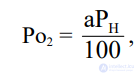
where Po2 – is the partial pressure of oxygen, a – the percentage content of oxygen in the air
(21%), PH – atmospheric pressure (mm Hg).
The partial pressure of oxygen decreases with increasing altitude both overall and in the alveolar air in particular. Alveoli (Lat. alveolus – small cavity) are pulmonary sacs in which gas exchange occurs: the transfer of oxygen from the alveolar air into the capillary blood and of carbon dioxide in the opposite direction. A decrease in the partial pressure of oxygen naturally leads to oxygen deprivation – hypoxia (Gr. hypo – under + Lat.
ox[ygenium] oxygen) of the body's cells, especially the neurons of the cerebral cortex –
cells with a very high level of metabolic activity. At an altitude of 1,500–2,000 m, hypoxia does not yet manifest itself in a state of relative rest, but already during active muscular work
the increased need for oxygen is met through intensified breathing – hyperventilation (Gr. hyper – over + Lat. ventilatio – airing) of the lungs (Grabchak P.T., 1975).
In turn, hyperventilation of the lungs leads to increased washout of carbon dioxide from the blood – hypocapnia occurs (Gr. hypo – little + kapnos – smoke), or a reduced
tension of carbon dioxide in the arterial blood, as a result of which the excitability of the respiratory center, whose natural stimulus is an increased concentration
of carbon dioxide, decreases. Increased breathing begins at an altitude of 2,000 m (Po2 = 110 mm
Hg) and becomes pronounced at an altitude of 4,000 m. After being at an altitude of 4,000–4,500
m for 6 hours, the partial pressure of carbon dioxide in the alveolar air decreases
to 5.8 mm Hg (Grabchak P.T., 1975) and exerts a depressing effect on the respiratory center, located in the medulla oblongata – the bulbus (Lat. bulbus – bulb).
Table 2.3
Relationship between altitude, atmospheric pressure, and
partial pressure of oxygen
(after: Grabchak P.T., 1975)
| Altitude, km | Atmospheric pressure, mm Hg | Partial pressure of O₂, mm Hg | Partial pressure of O₂ in alveolar air, mm Hg |
|---|---|---|---|
| 0 | 760 | 159 | 105 |
| 3 | 526 | 110 | 58.4 |
| 5 | 405 | 85 | 33.6 |
| 9 | 230 | 48 | 0.7 |
| 10 | 198 | 41 | 0 |
| 12 | 145 | 30 | — |
| 15 | 90 | 18.9 | — |
Under hypoxia, drowsiness and fatigue are observed, and headaches are possible. Mental
functions are seriously affected by hypoxia – thoughts become unclear, and mental sluggishness is observed. An illustration of just how serious the consequences of crew members being in a state of hypoxia can be is the aviation event that occurred on February 22, 1986, involving an An-12 aircraft. As a result of a depressurization that occurred, the crew was unconscious for 1 hour 13 minutes (Collection of Informational..., 1988). The first to regain consciousness was the co-pilot, upon whom the entire burden of controlling the aircraft fell. The radio exchange between the crew of the An-12 aircraft and air traffic controllers is given in Appendix 1.
Crew members often find themselves in conditions where the analyzer systems are forced
to function beyond their capabilities. A sharp pressure drop on a
Boeing 727 (American Airlines), caused by the failure of an air compressor, caused unbearable pain in the ears of the crew and passengers, resulting in
a crash in which 37 of 88 people died (Aircraft accident…, 1976). The crash occurred on April 27, 1976, at Harry S. Truman Airport in the Virgin Islands
(Virgin Islands). Prior to that, the captain had performed 154 landings at this airport. Sharp pain in the
ears occurred three minutes before impact with the ground. As S.N. Roscoe (1986) notes,
severe irritation of the inner ear receptors caused an accommodative spasm of the eyes
(Clark B., Randle R.J., Stewart J.D., 1975) and prevented an accurate assessment of the distance to
the ground. If a pressure change is directed toward an increase, it is referred to as a compression
(Lat. compressio – compression) differential; if directed toward a decrease in pressure, it is referred to as a decompression (Lat. de – cancellation + compressio) differential. Crew members are exposed to decompression when climbing to altitude, in the event of an emergency loss of cabin pressurization,
and in the event of an engine failure (when cabin pressurization ceases), while they are exposed to compression –
during descent (Lavnikov A.A., 1975). Fluctuations in barometric pressure are accompanied by changes in pressure in the middle ear cavity and the paranasal (accessory) sinuses – air-containing cavities in the bones of the facial and cranial skeleton that communicate with
the nasal cavity (the maxillary, or Highmore's, frontal, and sphenoid sinuses are distinguished,
as well as the ethmoid air cells). They communicate with the surrounding atmosphere through narrow channels, so the process of pressure equalization may be delayed. This causes painful sensations in the area of the middle ear, the base of the nose, the brow ridges, and the eye sockets. Painful sensations more often occur with compression pressure differentials.
Temperature discomfort negatively affects the body of crew members in the form of
low temperatures in cabins in winter, especially when working in northern regions, as well as high temperatures (from +40 to +45 ºC). In addition, there is a significant
temperature difference between different zones of the cabin. For example, during long-duration flights
(up to 8–10 hours or more), in the Il-62 cabin, in the crew's work zone, the air temperature ranges
from +10 °C along the fuselage wall to +25 … +28 °C in the center of the cabin. The permissible level is exceeded by 2–4 times (Sanitary-Hygienic..., 1997).
On flights lasting more than 3–4 hours, dry air has a harmful effect on the bodies of crew members. The level of relative humidity in the cabin decreases to 5–10% after 2.5–3
hours of flight. An analysis of the results of studies of the chemical composition of the air inhaled by crew members in aircraft cabins proves the presence of harmful chemical substances of various hazard classes. It has been established that the permissible concentration limit is exceeded: for ozone by 5 times, for acrolein – by 3 times, for lubricating oil aerosol – by 6
times, and occasionally for formaldehyde, phenol, and nitrogen oxides. The total contamination
of cabin air in many flights exceeds permissible values by 5 times. Toluene, sulfur dioxide, acetaldehyde, acetone, and
propionaldehyde have additionally been detected in cabin air (Sanitary-Hygienic..., 1997).
Thus, the chemical composition of the air in cabin work zones repeatedly exceeds permissible values: many of the substances listed, even in microdoses, have carcinogenic and mutagenic effects on humans and cause the development of intoxications, allergies, and oncological diseases (Sanitary-Hygienic..., 1997).
Radiation (background) exposure of crew members is one of the most dangerous factors of flight work for health. The results of studies of the radiation background
of aircraft cabins under in-flight conditions, conducted by specialists of the State Research Institute of Civil Aviation (GosNII GA), as
well as by American radiobiologists between 1988 and 1993, showed that the radiation doses received by crew members are, at altitudes: 9,000 m – 226.8 µR/h; 10,000 m –
307 µR/h; 11,000 m – 351 µR/h; 12,000 m – 404 µR/h. The radiation level at ground level and up to an altitude of
1,000 m is 9.99 µR/h. Thus, the radiation doses received by aircraft
crew members at altitudes from 9,000 to 12,000 m exceed the natural background radiation level at the ground:
at an altitude of 9,000 m – by 31 times; at an altitude of 11,000 m – by 35 times; at an altitude of 12,000 m – by 41 times. Increased radiation exposure, which begins at an altitude of 6,000 m, leads to a weakening of the immune system and to carcinogenic (Lat. cancer – cancer) and mutagenic (Lat. mutatio –
change) effects and, as a consequence, to oncological diseases (Sanitary-Hygienic..., 1997). Mortality from the latter among crew members reaches 60 cases per 1,000 examined (with 960 flight hours per year and 20 years of flight experience).
Pilots experienced particularly strong carcinogenic and mutagenic effects of radiation in the mid-20th century, when nuclear weapons were being developed and tested. They were not informed of the danger of transporting nuclear weapons (some pilots
slept right next to missiles emitting radiation). As a result, changes occurred in
their chromosomal apparatus, causing their children and grandchildren to have serious health problems.
In accordance with the recommendations of the International Commission on International Units, aircraft crew members must be regarded as professionals
working under conditions of ionizing radiation comparable to the doses received by
workers in the nuclear industry (Sanitary-Hygienic..., 1997).
Characteristics of dangerous factors in crew members' work. These work factors
are related to human activity in an environment unnatural to humans. The factors identified include the occurrence of emergency or catastrophic situations resulting from: –
errors made by either the crew members themselves or personnel of other services; – failures of aviation equipment; –
air piracy; – the occurrence of fire; – cabin depressurization; – destruction
of the aircraft structure; – lightning strikes on the aircraft; – poisoning by agrochemicals when working in agriculture. The sense of constant danger inevitably affects crew members, manifesting itself in the emergence of emotional tension, fatigue, and overexertion.
Characteristics of the psychophysiological features of crew members' work. First
and foremost among these are constant shifts in time zones and climatic
zones (long-haul aircraft crews perform non-stop flights lasting more than 13 hours with total working time exceeding 16 hours; on medium- and short-haul aircraft, flights are shorter but with more frequent landings,
with total working time of up to 14 hours per day (flight time in this case can reach 10 hours)). Transmeridian and translatitudinal flights, night flights, early departures, and late arrivals lead to serious disruptions of biological rhythms, manifesting in the phenomenon of desynchronosis, described in detail in Chapter 6.
The influence of time pressure and stressful situations on the body is increasing more and more as aviation equipment becomes more complex.
A study of the dynamics of cardiovascular system indicators
at various stages of flight showed that at the moment of liftoff (or touchdown) in normally completed flights, heart rate rises to 150–160 bpm. In
cases of aviation equipment failure, heart rate reaches 180–200 bpm.
Blood pressure in most healthy crew members rises by 30–45% from
baseline values. The tension of psychophysiological functions, including nonspecific adaptive defense systems, is indicated by increased excretion of catecholamines in
urine during flight (especially at night and during flight delays). The highest concentration of catecholamines (biologically active substances that function as chemical messengers and neurohormones; they participate in mobilizing the body's systems
to sustain active activity under stressful conditions) is observed after
takeoff and landing, as well as when mastering new aviation equipment. Cortisol levels (one of
the corticosteroids (hormones of the adrenal cortex) that regulates protein,
fat, and carbohydrate metabolism; belongs to the glucocorticoid group) in the blood during flights exceed the norm in 42.5% of crew members; thyroxine levels (one of the thyroid hormones, produced
by follicular cells and affecting the intensity of
metabolism and energy: it has a calorigenic effect, enhances cellular oxygen uptake, stimulates glycogen breakdown, and increases the sensitivity of receptors
of the cardiovascular system to catecholamines, resulting in an
increase in heart rate) – in 47.4% of crew members; insulin levels (one of
the pancreatic hormones, produced by the β-cells of the islets of Langerhans and regulating protein, fat, and carbohydrate metabolism; it ensures the conversion of the monosaccharide
glucose into the storage polysaccharide glycogen, deposited in the muscles and liver) – in 13%
of crew members; and aldosterone levels (one of the corticosteroids, regulating water-salt metabolism; belongs to the mineralocorticoid group) – in 7.5% of crew members (Sanitary-Hygienic..., 1997).
The outcome of excessive hormone secretion, neuro-emotional tension, fatigue, and insufficient rest periods is a loss of professional performance, manifesting as vegetative-vascular dystonia (a disorder of vascular tone), hypertension, neuroses, atherosclerosis, and other diseases (Sanitary-Hygienic..., 1997).
Conducting flights during night hours (when the body's functions are inhibited) is a serious risk factor contributing to an increase in erroneous actions by crew
members. Studies show that the number of deviations from set parameters in
successfully completed long-duration night flights is 4 times higher than during daytime flights, amounting to 20% and 5% respectively. After long-duration flights (especially at night), the following are observed: an increase in reaction time to a light
stimulus by an average of 19–25%, a decrease in maximum muscular strength by 8%, and also a decline in well-being indicators. The greatest decline in the adaptive capacity of the visual analyzer is observed among navigators and individuals with hyperopic refraction (Sanitary-Hygienic..., 1997).
The aforementioned hyperopic refraction of the eye is nothing other than farsightedness, or
hyperopia (Gr. hyper – over + métron – measure + ops – eye). The latter is a visual impairment in which the refraction of light rays, or refraction (Lat. refractio –
bending), changes such that light rays from a distant object are focused not on the retina, but behind it (Fig. 2.15). A farsighted eye cannot bring parallel rays to a single point on its retina, let alone diverging rays coming from nearby objects. It
can only bring converging rays into focus on the retina. To make parallel rays
converging, biconvex lenses are used. Biconvex lenses are called converging, or positive, lenses – denoted by the sign «+». According to severity, farsightedness is divided into mild (below 3 diopters), moderate (from 3 to 6 diopters), and high (above 6 diopters)
(Plitas P.S., 1981). One diopter is taken to be the refractive power of a lens with a focal length of 1 m. The value expressing refraction in diopters (D) is inversely proportional to
the focal length (F), expressed in meters: .
 = Thus, the focal length of a lens of 1 diopter is 1 m, of 2 diopters – 0.5 m, of 4 diopters – 0.25 m, and so on.
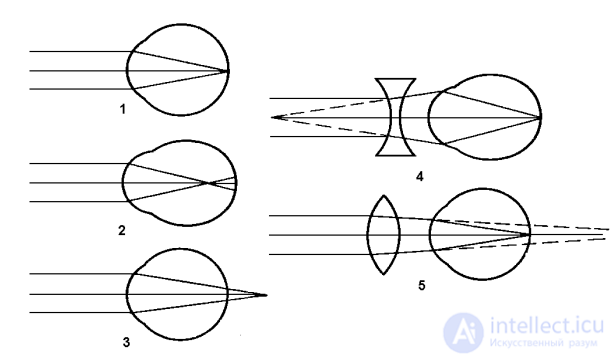
Fig. 2.15. Refractive anomalies and their correction
(after: Korobkov A.V., Bashkirov A.A., Vetchinkina K.T., 1980)
Path of rays in the normal – emmetropic (Gr. émmetros – proportionate + ops – eye) eye (1), in the case of myopia (2) and hyperopia (3). Correction of myopia (4) and farsightedness (5)
The opposite of farsightedness is nearsightedness – myopia (Gr. myops – nearsighted). In
this case, rays from a distant object are focused not on the retina, but in front of it – in the vitreous body (Fig. 2.15). The position of the focus in front of the retina causes the formation on the
fundus of large circles of light scattering, which determine reduced central vision.
The size and shape of the circles of light scattering largely depend on the diameter of the pupil. Partial closure of the eyelids (nearsighted people squint) leads to a reduction in the area of the
pupil, as a result of which the circles of light scattering decrease (Sergienko N.M., 1982). Thus,
myopia is a change in refraction in which parallel rays converge in front of the retina. Only diverging rays can converge on the retina of a nearsighted eye,
that is, rays from nearby objects. For a nearsighted person to be able to see distant
objects (from which parallel rays enter the eye), a concave lens must be placed in front of the eyes to convert the parallel rays into diverging ones. Biconcave lenses
are called diverging, or negative, lenses – denoted by the sign «–». According to severity, nearsightedness is divided into mild (below 3 diopters), moderate (from 3 to 6 diopters), and high
(above 6 diopters) (Plitas P.S., 1981).
Factors that negatively affect professional performance include the emotional tension created by the complexity of aircraft control, as
well as unproductive losses of time due to organizational, meteorological, technical, and other causes. Disorientation, flight illusions, monotony (Gr. monos – one + tonos – tension), and
hypokinesia (Gr. hypo – under + kinesis – movement) also have an unfavorable effect on the condition of crew members. These factors lead to the depletion of psychophysiological reserves and an increased probability of signs of psychosomatic health disorders (Sanitary-Hygienic..., 1997). It has been established that
a decline in functional reserves is observed during single flights in 73.7% of pilots; over the dynamics of weekly and monthly cycles – in 40%; and over the dynamics of annual cycles – in 66.7
% of pilots. Every quarter, up to 55% of flight personnel are found to have pre-pathological depletion of functional reserves. Full recovery of the identified shifts
in healthy pilots is observed 66 hours after the completion of a flight, while in those with pre-existing conditions it takes 1.5 times longer. Given the combination of dangerous factors, the intensity of
work, and the flight assignments performed, civil aviation aircraft
crew members can, in peacetime, be equated to the flight personnel of military transport and
strategic aviation (Sanitary-Hygienic..., 1997).
Characteristics of the psychophysiological features of crew members' work. Civil aviation aircraft crew members belong to a category with severe
working conditions. The severity of the work is determined by the energy expenditure during the work
process. Depending on energy expenditure, the working-age population is divided into
five groups (Table 2.4). The daily energy expenditure of a healthy person consists of several components (Agadzhanyan N.A. et al., 2005):
1) basal metabolism, understood as the minimum energy expenditure of a waking
organism, determined under strictly controlled standard conditions (at a temperature of 18–20 °C, which does not cause a sensation of cold or heat; on an empty stomach, that is, 12–16 hours after eating; in a state of mental (emotional) and physical (muscular) rest, lying down);
2) energy expenditure associated with performing a particular type of work;
3) the specific dynamic action of food – the effect of food intake, which increases metabolism and energy expenditure.
Table 2.4
Energy expenditure depending on the characteristics of the profession
(after: Pokrovsky V.M. et al., 2001)
| Group | Characteristics of the profession | Physical activity coefficient* | Total daily energy expenditure, kJ (kcal)** |
|---|---|---|---|
| First | Workers engaged predominantly in mental labor | 1.4 | 9,799 – 10,265 (2,100 – 2,450) |
| Second | Workers engaged in light physical labor | 1.6 | 10,475 – 11,732 (2,500 – 2,800) |
| Third | Workers engaged in moderately heavy physical labor | 1.9 | 12,360 – 13,827 (2,950 – 3,300) |
| Fourth | Workers engaged in heavy physical labor | 2.2 | 14,246 – 16,131 (3,400 – 3,850) |
| Fifth | Workers engaged in especially heavy physical labor | 2.5 | 16,131 – 17,598 (3,850 – 4,200) |
* Physical activity coefficient – the ratio of total energy expenditure for all types of activity per day to
the value of basal metabolism.
** 1 cal = 4.1868 J; the calorie (Lat. calor – heat) is a non-SI unit of heat quantity (a calorie is the amount of heat required to raise the temperature of 1 g of water by 1 °C; a kilocalorie (kcal) is the amount of heat
required to raise the temperature of 1 kg of water by 1 °C).
The energy expenditure of crew members on flying days amounts to 3,400–3,600 kcal
(Sanitary-Hygienic..., 1997), which corresponds to the energy expenditure of the fourth group.
1. What components make up the piloting process?
2. How do you currently define your image of flight for yourself?
3. What problems in determining the distance to objects outside the cabin have you encountered in flight?
4. Recall as many situations as possible in which your image of flight changed very significantly, and
under the influence of exactly what new information this occurred.
5. Define the following terms: otolithic membrane, vestibular apparatus, cristae, maculae,
vibration, direct indication, emmetropic eye, hypocapnia, organ of Corti, dynamic depth perception.
6. In what flight situations have you had problems reading information from instruments, and what were they
related to?

Comments