
Lecture
Monitoring health status and physical fitness is a critically important part of the educational and training process. It allows timely detection of changes in the body, adjustment of training loads, and evaluation of the effectiveness of sessions. This article examines the main monitoring methods used in educational and sports practice.
Medical monitoring
Regular examinations by a doctor.
Measurement of blood pressure, pulse, body weight, body mass index (BMI).
Laboratory tests (blood and urine analysis).
Self-monitoring
Keeping a well-being diary.
Assessing sleep quality, level of fatigue, and mood.
Monitoring heart rate (HR) at rest and after exertion.
Instrumental methods
Electrocardiography (ECG).
Spirometry (assessment of respiratory function).
Use of fitness trackers and smartwatches to monitor activity.
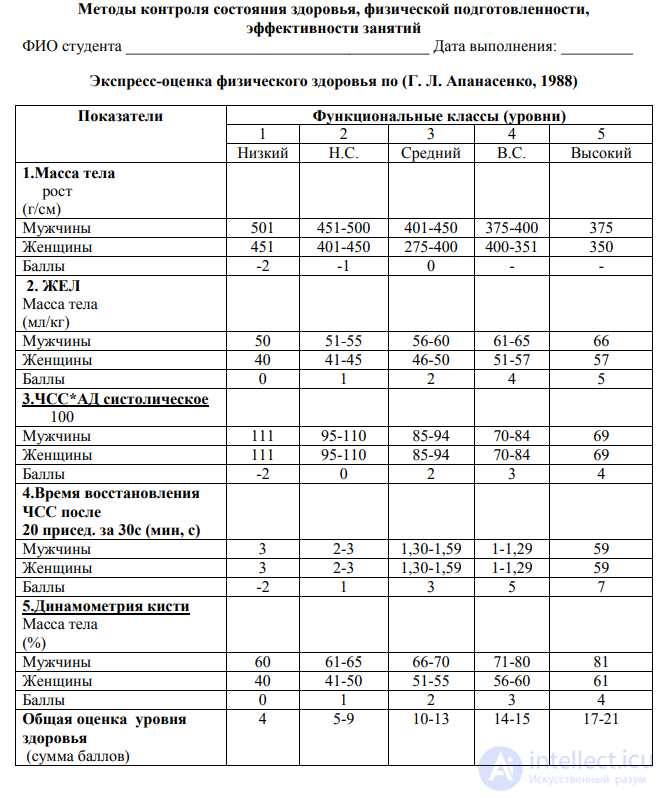
Endurance tests
Middle- and long-distance running.
The Cooper test (distance covered in 12 minutes).
Strength and speed tests
Number of pull-ups, push-ups.
Standing long jump.
30–60 m sprint.
Flexibility and coordination tests
Seated forward bend.
Balancing on one leg.
Composite indicators
Ruffier index (assessment of cardiac response to exertion).
Harvard Step Test (assessment of overall endurance).
Quantitative indicators
Improvement in test results (speed, strength, endurance).
Reduced recovery time after exertion.
Qualitative indicators
Increased motivation and interest in training.
Improved technique in performing exercises.
Stability of emotional state.
Long-term criteria
Reduced incidence of illness and injury.
Formation of a stable habit of regular physical activity.
Growth in overall working capacity and the body's adaptation.
Effective monitoring of health and physical fitness requires an integrated approach: a combination of medical examinations, testing of physical qualities, and analysis of training dynamics. Such systematic monitoring not only improves training effectiveness but also strengthens health, which is the main goal of physical education.

Comments