
Lecture
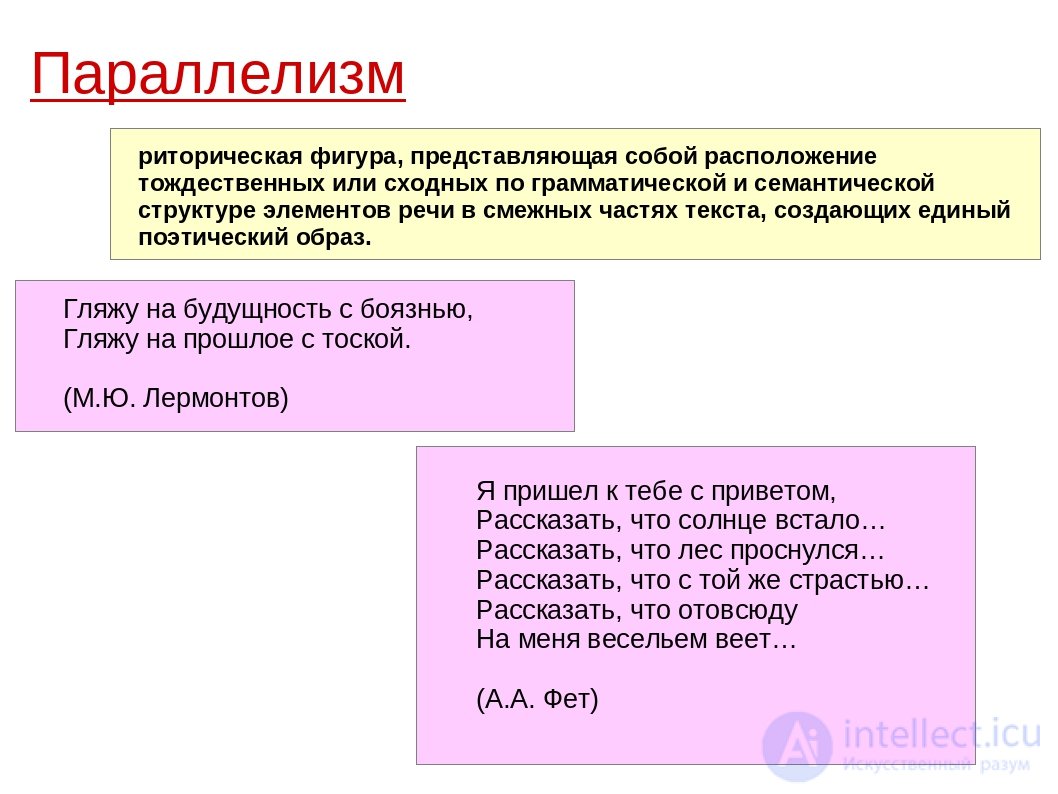
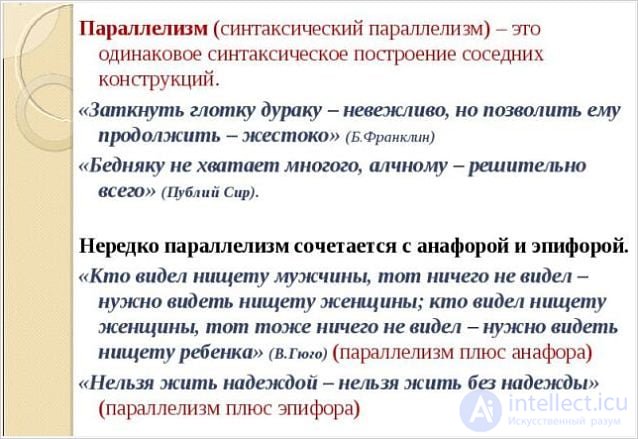
Parallelism (Ancient Greek παραλληλισμός — a placing side by side, juxtaposition) — a rhetorical figure consisting in the arrangement, in adjacent parts of a text, of elements of speech that are identical or similar in grammatical and semantic structure. The parallel elements may be sentences, parts of sentences, phrases, or words. For example:
Shall I see your bright gaze again?
Shall I hear your tender voice again?
— Pushkin, A. S. Ruslan and Lyudmila
Your mind is deep, like the sea,
Your spirit is lofty, like the mountains
— Bryusov, V. Chinese Poems
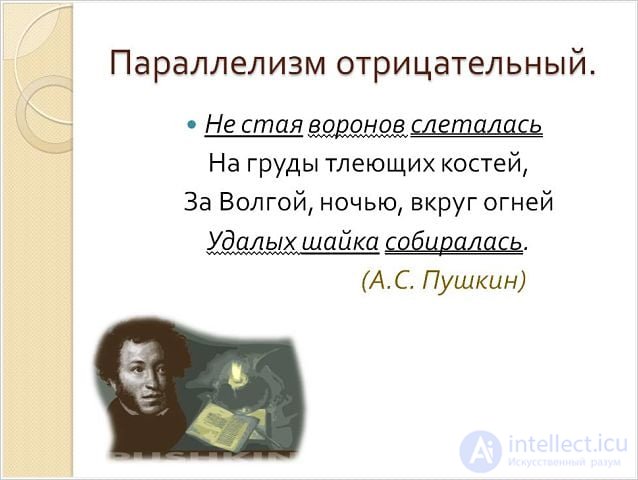
negative parallelism
| Figures of Speech | |
|---|---|
| Figures |
Adynaton • Allusion • Amplification • Anadiplosis • Anacoluthon • Anaphora • Antithesis • Antitheton • Apocope • Apostrophe • Attraction • Asyndeton • Hyperbaton •Homoeoteleuton • Gradation (Climax, Anticlimax) • Distinctio • Zeugma • Isocolon • Nominative of theme • Inversion • Correctio • Mesarchia •Polyptoton • Polysyndeton • Oxymoron • Parallelism • Paronomasia • Parcellation • Periphrasis • Pleonasm • Prolepsis • Retardation •Rhetorical question • Rhetorical exclamation • Rhetorical address • Symploce • Solecism • Tautology • Exact repetition • Aposiopesis • Chiasmus • Exergasia •Ellipsis • Emphasis • Epiphora |
| Tropes |
Allegory • Antiphrasis • Asteism • Antonomasia • Hyperbole • Dysphemism • Irony • Pun • Catachresis • Litotes • Meiosis • Metaphor • Metonymy • Personification •Pathos • Periphrasis • Sarcasm • Synecdoche • Simile • Euphemism • Epithet |

Comments