
Lecture
An electrical circuit with an external periodic excitation is the name given to an electrical circuit in which at least one input variable (the driving voltage or current) is a periodic function of time, while the others are either also periodic functions of time or constant quantities.
The mathematical model of such a circuit is a normal system of first-order ordinary differential equations, which in matrix form has the following form:
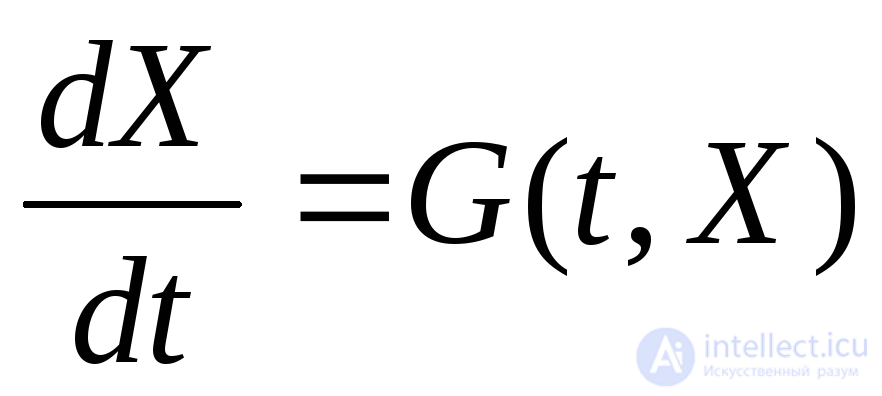
 (2.12)
where  -is a one-column matrix (vector) of state variables;
 - n-dimensional periodic vector function;T -is the period of the external excitation.
For linear electrical circuits with constant lumped parameters, the mathematical model (2.1) can be represented in the form:
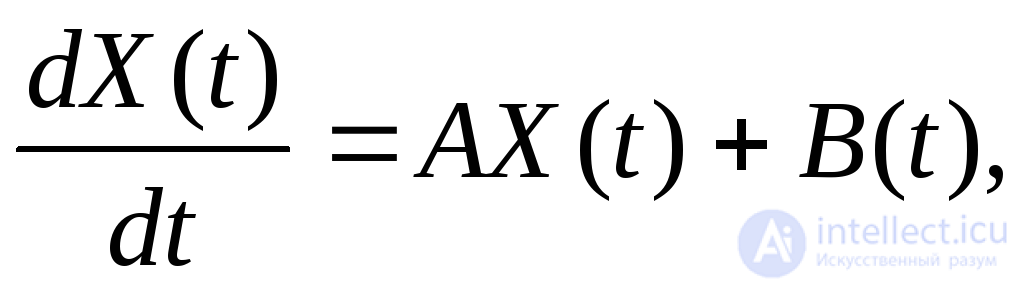
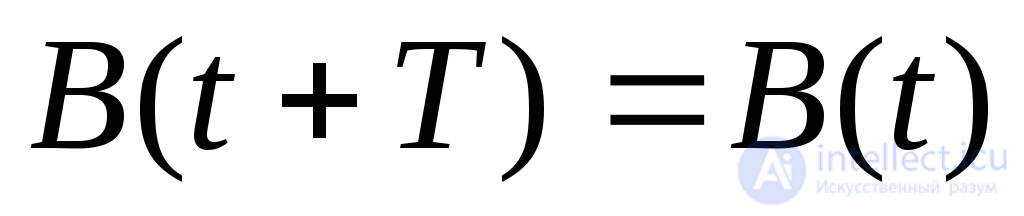
where is an n-dimensional periodic vector function of the external excitations;A -is a square matrix ofn-thorder of the constant coefficients of the differential equations.
In the mathematical modelling of electrical circuits, the concepts of instantaneous and dynamic states of an electrical circuit are often used. By instantaneous state of an electrical circuit is meant the set of values of all state variables at an arbitrary fixed moment in time. By dynamic state (motion, dynamics)is meant the behavior of the state variables over some time interval, in particular, an arbitrarily large one. Depending on the nature of the change in the state variables, the motions of electrical circuits are divided into stationary and non-stationary.In stationary dynamics the state variables either do not change over time (stationary states of the static type) or change periodically (stationary states of the periodic type). All other dynamic states are classified as non-stationary. Among these, in turn, are distinguished transient states (transient processes) and stochastic (chaotic)states. Transient states are those non-stationary states that, at some point in time, culminate in the establishment of stationary dynamics. If, on the other hand, the state variables change randomly (chaotically) and no stationary state is established, then such dynamics is called stochastic (chaotic).
For linear electrical circuits with constant lumped parameters, the presence of a single stationary state, often called the steady state, is characteristic. In the case of circuits with an external constant excitation, this stationary state is of the static type, while for circuits with an external periodic excitation - the stationary state is of the periodic type, whose period coincides with the period of the external excitation.
The concept of the ripple factor.Let the function of timef(t) be periodic with period T and satisfy the Dirichlet conditions. In this case, the given function can be represented as a Fourier series:
 or
or
 (2.13)
where 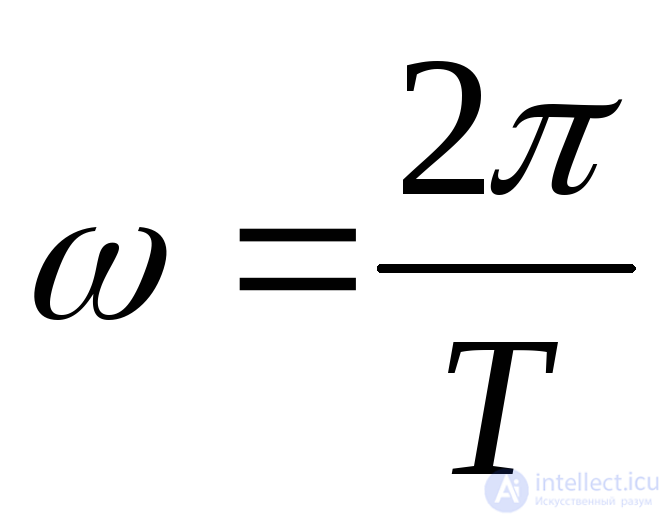 - is the angular frequency;
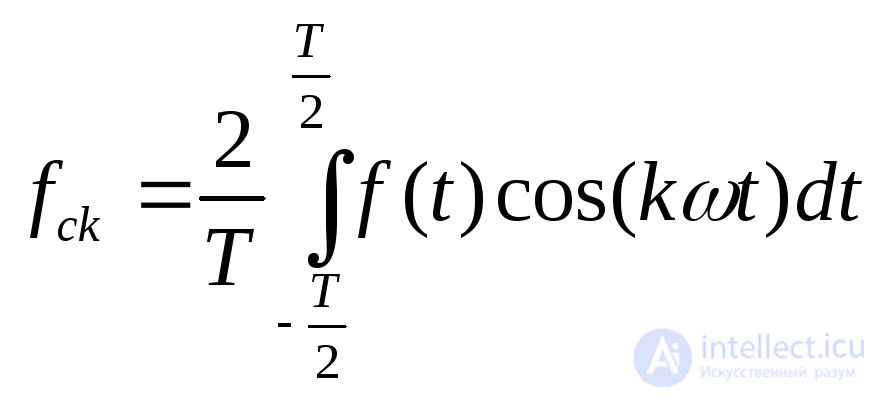 ,
,
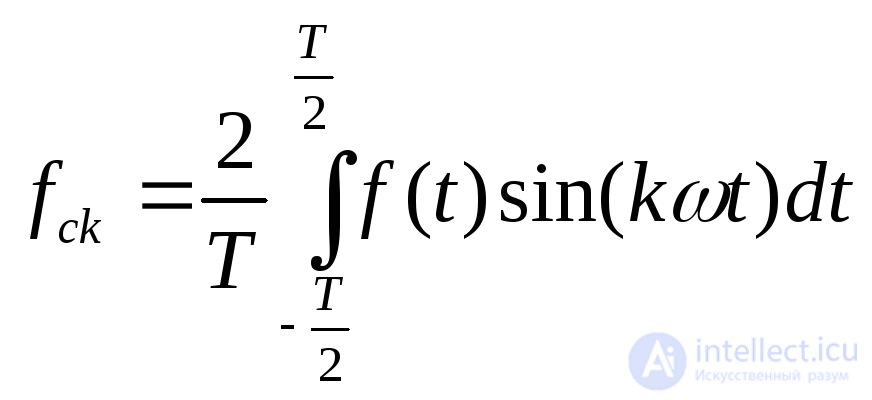 - are the expansion coefficients of the function
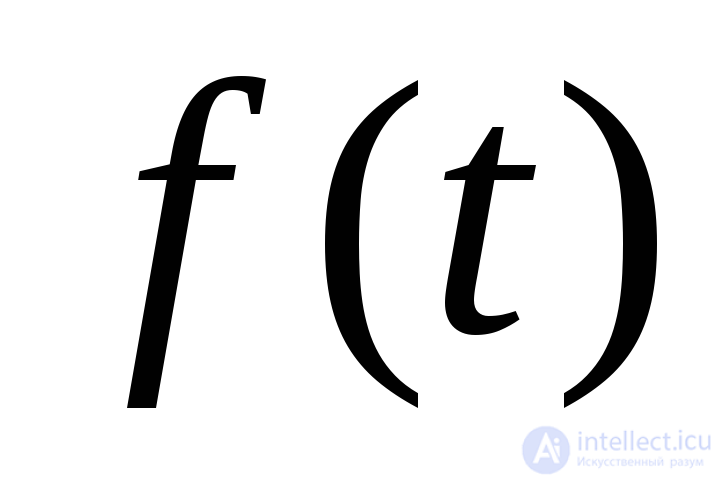 in a Fourier series;k -is the ordinal number of the harmonic component;F0 -is the constant component;Fk- is the amplitude of thek-thharmonic component;
 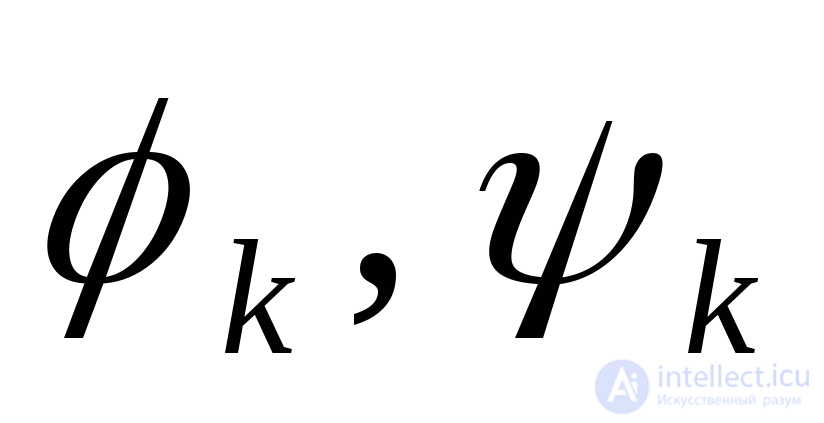 -are the initial phases of the k-th harmonic component;

The ripple factor for the k-th harmonic is the name given to the quantity equal to the ratio of the amplitude of the k-th harmonic to the constant component:
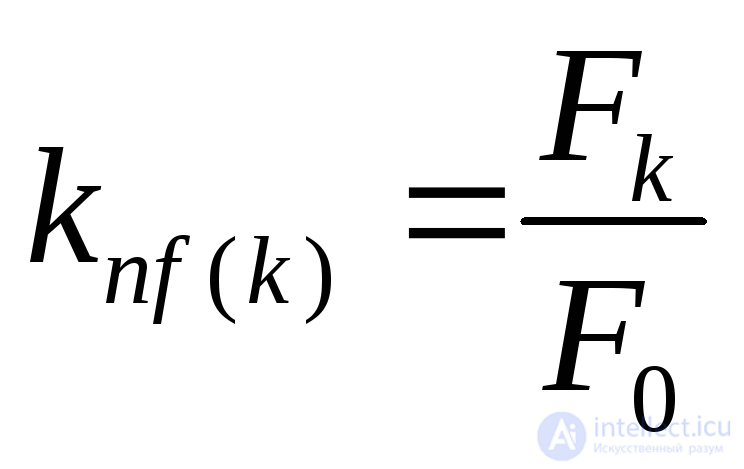 (2.14)
As the ordinal number increases, the amplitudes of the harmonic components decrease. In many cases this makes it possible to represent the periodic function, with a sufficient degree of accuracy, as the sum of the constant and first harmonic components. Because of this, when characterizing periodic functions, the ripple factor for the first harmonic is used more often than others.
+The ripple factor of a periodic function for the first harmonic is often calculated without resorting to expanding the function in a Fourier series, using the formula
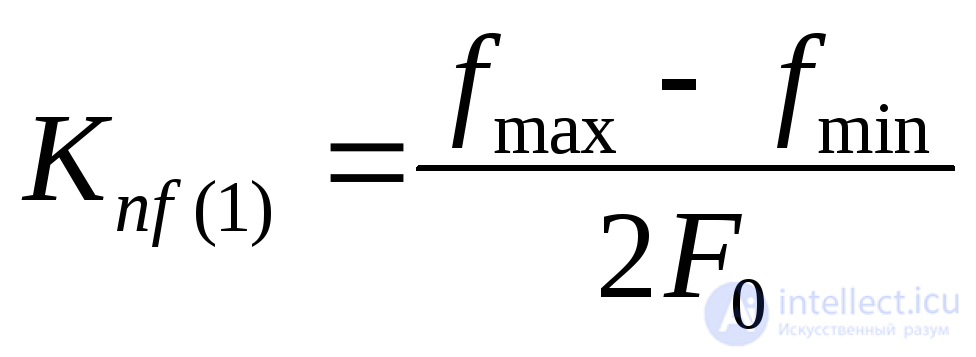 (2.15)
where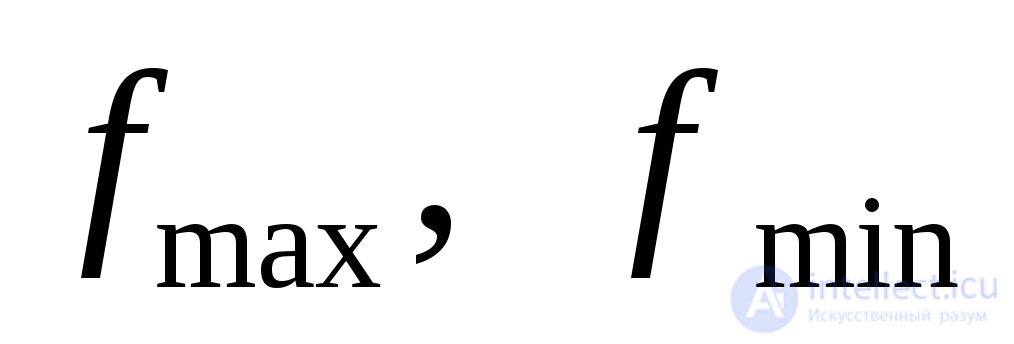 are respectively the maximum and minimum values of the functionf (t)over the period. If the functionf(t)is calculated at discrete moments in time, then the average value can be computed approximately using the formula
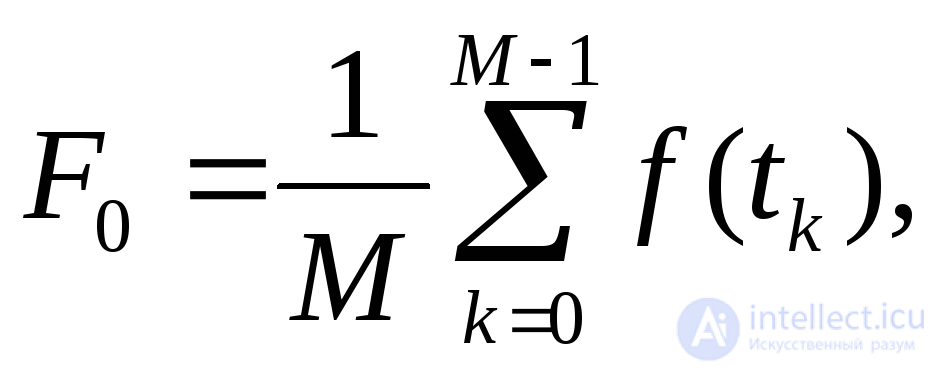 (2.16)
where M- is the number of sampling points of the functionf(t)over the period.

Comments