Digital marketing (digital marketing) — a general term used to refer to targeted and interactive marketing of goods and services that uses digital technologies to attract potential customers and retain them as consumers. The main goals of digital marketing are brand promotion and increasing sales through various methods. Digital marketing includes a large selection of marketing tactics for promoting products, services, and brands. In addition to mobile technologies and traditional TV and radio, digital marketing methods use the internet as the primary communication medium.
The main activities of digital marketing are: search engine optimization (SEO), search engine marketing (SEM), content marketing, influencer marketing, content-creation automation, e-commerce marketing, social media marketing (SMM), direct mailings, contextual advertising, and advertising in e-books, apps, games, and other forms of digital products. Channels not directly related to the internet are also used: mobile phones (SMS and MMS), call-back services, and hold-music/ringback tones. The fundamental concept of digital marketing lies in a customer-oriented approach.
Digital marketing — is the totality of methods, using digital channels, for promoting and selling goods and services.
History
The term "digital marketing" began to be used in the 1990s. By 2010, the complexity of digital marketing tools had grown considerably as a set of instruments for effectively creating deep and relevant relationships with consumers. Before the 1990s, the term "digital marketing" is not mentioned, but it traces its roots back to the mid-1980s, when the company SoftAd Group (now ChannelNet) developed an advertising campaign for several automakers: in response to a reply card inserted in a magazine, one could receive a diskette with multimedia content promoting various car brands and offering free test drives.
The rapid development of digital media has created new opportunities for marketing and advertising. The widespread adoption of mobile devices with access to digital channels has led to exponential growth in digital advertising.
At present, digital marketing continues to actively develop.
The growth of digital media is measured at 4.5 trillion online advertising messages annually. In order to target advertising at internet users, companies have begun actively using the analysis of consumer behavior online (Online Behavioural Advertising, OBA). The analysis of online behavior, using innovative methods, raises concerns regarding the security of consumers' personal data, which is an important factor in building trustworthy relationships. Digital marketing is often called online marketing, internet marketing, or web marketing. Over time, the term "digital marketing" has gained wide popularity in many countries. In the US, the term "digital marketing" is used; in Italy, "web marketing"; in France, "web marketing" or "digital marketing"; in the UK, Russia, and many other countries, the term "digital marketing" is widely used.
Recent Developments and Strategies
Digital marketing is based on constantly growing and rapidly changing technologies. The same characteristics can be expected of digital marketing developments and strategies. Below are the most significant points.
- Segmentation: interest in the possibilities of digital marketing for market segmentation with the aim of identifying target markets in B2B, B2C, and also P2P (the possibility of using crowdsourcing tools).
- Influencer marketing: communities or people capable of influencing consumer behavior are called opinion leaders. They formed the basis of the concept of digital targeting. It became possible to influence opinion leaders through paid advertising, such as Facebook Advertising, Google Adwords, MyTarget, and other RTB platforms, through sophisticated sCRM systems (social CRM), such as SAP C4C, Microsoft Dynamics, Sage CRM, and Salesforce CRM. Influencers are very popular on social networks, for example on Instagram. Many institutions currently devote attention in their master's programs to strategies for engaging opinion leaders. The core idea of the approach is that it is easier to deliver advertising content to the consumer who is actively searching for it than to the one to whom content reaches by chance.
- Analysis of internet user behavior (Online Behavioural Advertising, OBA): consists in collecting information about users' online activity across various devices and websites in order to deliver advertising messages in line with the interests, preferences, and needs of the recipients.
- Collaboration: may be established between organizations, technical service providers, and digital agencies in order to optimize efforts and share resources. Currently, an important factor in building a marketing strategy is the personalization of advertising space using digital tools.[10]
- Remarketing: plays a leading role in digital marketing. This tactic allows marketers to place targeted advertising, i.e., to show an advertising message to a specific audience whose members are continually searching for certain information online, in particular information about products and services, or visiting sites for other specific purposes.
- In-game advertising: the most common examples of its use are billboards in sports games; in-game advertising can also appear in the form of branding of in-game objects such as weapons, cars, and clothing.
Digital Marketing Channels
The main task of a marketer is to find channels that allow for reliable two-way communication and the best return on investment (ROI) for the firm. Frequently used digital marketing communication channels include:
- Affiliate marketing
- Display advertising
- Email marketing
- Search marketing
- Internet advertising
- Contextual advertising
- Banner advertising
- Teaser advertising
- Social networks
- Video advertising
- In-game advertising
- Infographics
These technologies are often used together.
Digital Marketing Tools
To the most popular digital marketing tools belong:
- Social media (SMM) and blogs
- Banner advertising
- Video advertising
- E-mail marketing
- Search engine optimization (SEO)
- Content marketing
- Teaser advertising
- Affiliate programs
- Push notifications
- Press releases in online media
- Co-creation
- Collaboration with bloggers and opinion leaders
Recommendations of International Rules (ICC Code)
The international "ICC Advertising and Marketing Communications Code" contains the following recommendations for activity in the field of digital marketing[11]:
- The use of clear and transparent mechanisms allowing consumers to prevent the use of their personal data for advertising purposes.
- A clear indication of the commercial nature of the social network.
- Direct communication with the consumer should be based on solid grounds regarding their interest in the offers.
- Respect for the rules and standards of business conduct on social networks, and the use for advertising purposes of forums and sites that clearly declare their willingness to accept advertising.
- Special attention to the protection of children.
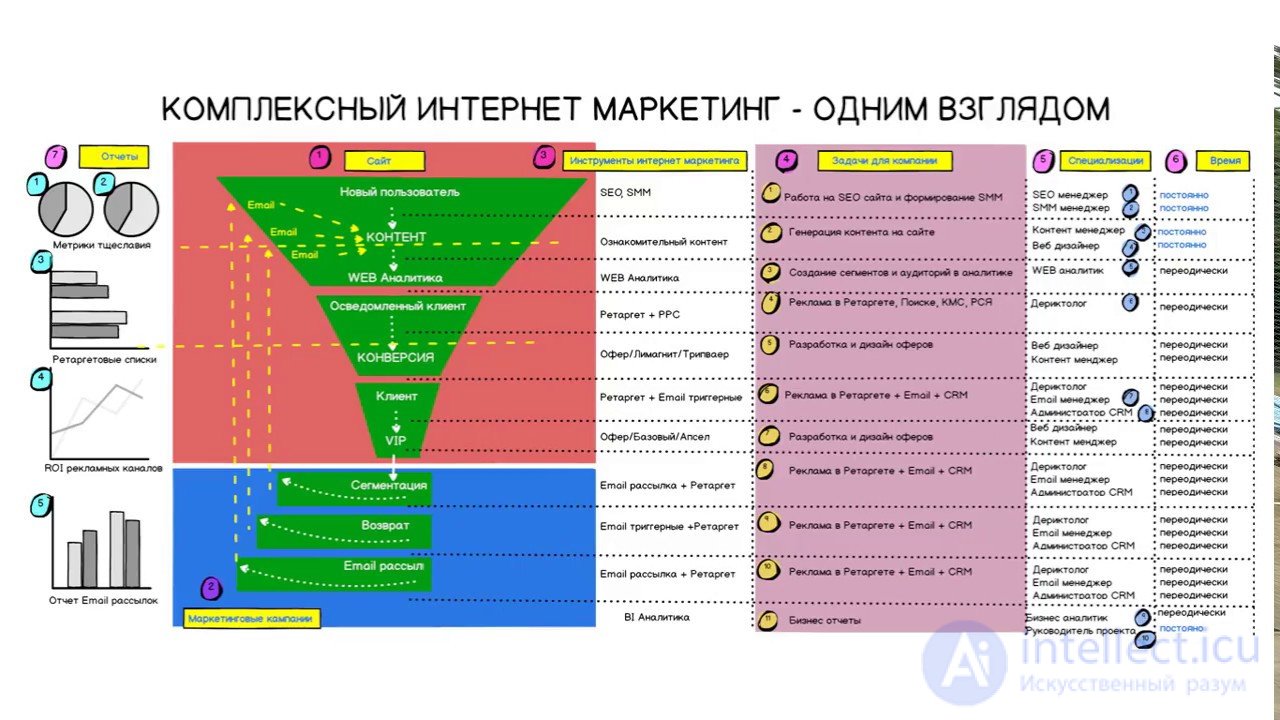
Figure 1. Integrated internet marketing
Relevance
The use of digital marketing today not only allows brands and retailers to promote their products and services, but also provides online customer support through round-the-clock services, rapid response to customer messages, prompt order processing, and much more. Working with customers and building communication with them on social networks allows brands to receive both positive and negative feedback, as well as to determine which media platforms work well for them and allow them to expand their audience and attract new buyers. Thus, digital marketing has become a more significant advantage for brands and businesses.
Nowadays, consumers frequently post reviews online on social networks, blogs, and websites about their experience with a product or brand.
Advertising messages addressed not on behalf of the company, but directly from fellow users, often opinion leaders, frequently have a greater influence on customers. This is a new way of communicating with an audience and promoting products with the help of bloggers. Ordinary social network users also share their experience, singling out particular brands and products. This was noted in a study on Instagram, which found that teenage Instagram users post images of food-related events and tag locations in their social media posts, thereby providing free advertising for the brand.
It is becoming increasingly advantageous for companies to use social media platforms to connect with their customers and create dialogues and discussions. The potential reach of social networks is confirmed by the fact that in 2014 the Facebook app had more than 126 million unique users every month, while YouTube had more than 97 million unique users.
Game Marketing
Game marketing is a set of strategies and actions aimed at promoting a game product on the market and attracting players. It includes a wide range of activities and tools. Here are some of them:
Target audience analysis: Understanding the preferences and behavior of the game's target audience, including their interests, age, gender, geographic location, preferences by game genre, etc.
Game brand development: Creating a unique and appealing image for the game that reflects its features and attracts the attention of the target audience.
Promotional materials and advertising: Creating promotional materials such as trailers, screenshots, artwork, and banners that showcase gameplay and attract the attention of potential players. Advertising campaigns in online and offline media, including social networks, video advertising, mobile advertising, and press releases.
Promotion on social networks and in communities: Creating and maintaining official pages for the game on social networks (for example, Facebook, Twitter, Instagram) to interact with players and publish news, promotions, updates, and content.
Participation in events and exhibitions: Promoting the game at gaming exhibitions, conferences, events, and competitions such as E3, Gamescom, PAX, IndieCade, and others. A Game Jam is a gathering of game developers with the aim of developing one or more games within a limited period of time
Collaboration with bloggers and streamers: Holding joint events, organizing streams, and providing free copies of the game and exclusive content to bloggers and streamers for creating reviews and content for the community.
Engagement with gaming resources and publications: Collaborating with gaming publications, magazines, websites, blogs, and forums to publish reviews, interviews, articles, and other content about the game.
Events and promotions for the player community: Organizing contests, promotions, tournaments, prize giveaways, and other events to attract attention and retain players.
Support and updates: Supporting the game after release, including releasing updates, bug fixes, adding new content, as well as interacting with the player community through forums, chats, and other feedback channels.
These and other activities make up a comprehensive approach to marketing a game product and help increase its recognition, attract the attention of the target audience, and achieve success on the market.
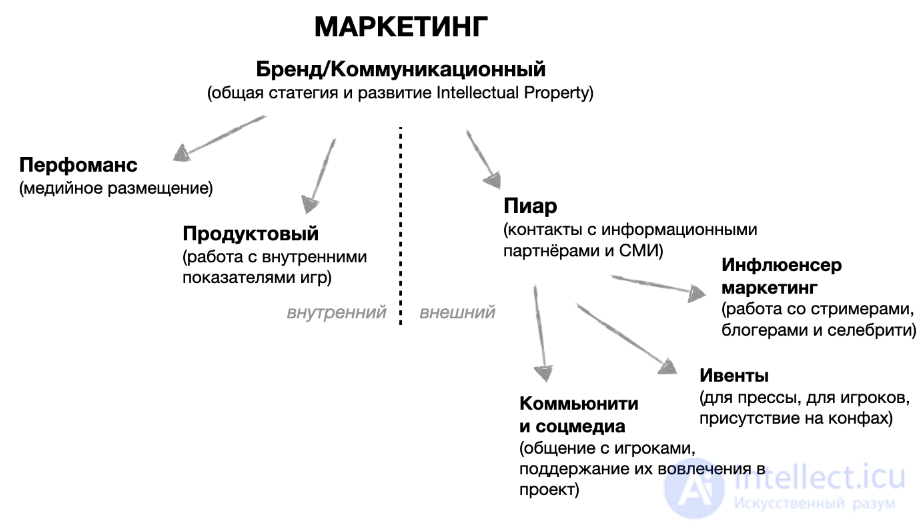
BRAND/COMMUNICATIONS MANAGEMENT.
brand/communications management plays an important role in the development of a product and intellectual property (IP), especially when it comes to expanding the audience and reaching various platforms, such as film, merchandising, and others. Here are a few key points on why this matters:
- Creating and maintaining a brand image: Brand/communications management helps create a unique brand image that will attract the target audience. A well-thought-out brand makes it easier to identify the product and makes it more appealing to new consumers.
- Developing and expanding the audience: Effective brand and communications management makes it possible to attract new users and expand the product's audience across various platforms. This can include running marketing campaigns, collaborating with influential figures, participating in events, and other measures.
- Reputation and perception management: Brand/communications management helps control the perception of the brand and product in the eyes of consumers. This includes reputation management, conflict resolution, responding to user feedback, and building a positive brand image.
- Multimedia content and platforms: Brand and communications management also includes developing content and distributing it across various platforms, such as film, television, social media, streaming platforms, merchandise stores, etc. This makes it possible to reach a wide audience and create a cohesive multimedia experience for users.
- Monetization and revenue growth: Effective brand and communications management helps create additional sources of income through licensing sales, merchandising, partnership agreements, and other commercial opportunities.
Overall, brand/communications management is a key element in the successful development of a product and IP, especially when it comes to expanding the audience and covering various platforms.
Performance marketing
Performance marketing – is a marketing approach focused on achieving specific goals and measuring the effectiveness of advertising activity through certain key performance indicators (KPIs). This approach focuses on making sure advertising campaigns deliver a specific result, such as an increase in clicks, conversions, sales, or other target actions.
Main characteristics of performance marketing:
- Measurability: One of the main features of performance marketing is the ability to precisely measure the effectiveness of an advertising campaign. This allows marketers to analyze results and optimize strategies in real time.
- Goal orientation: Advertising campaigns in performance marketing are created with specific goals in mind, such as increasing sales, generating leads, increasing traffic to a site, etc.
- Use of data: In performance marketing, data is widely used to determine the target audience, target advertising, and analyze results. This makes it possible to fine-tune campaigns more precisely and achieve the desired results.
- Pay for results: Unlike traditional marketing, where advertising payments can be fixed or depend on budget, in performance marketing payment for advertising is based on achieving certain results. For example, payment for clicks, video views, conversions, etc.
Types of performance marketing:
- Search marketing: Includes search engine optimization (SEO) and pay-per-click advertising (PPC) to increase traffic to a site and attract the target audience.
- Social marketing: Includes advertising on social networks (Facebook, Instagram, LinkedIn, etc.), as well as the use of influencers to attract an audience and promote a product.
- Affiliate marketing: Includes cooperation with partners and affiliates to promote a product and earn commissions on sales.
- Email and mobile marketing: Includes email newsletters and mobile apps to increase audience engagement and promote a product.
- Performance marketing is becoming increasingly popular in today’s digital environment due to its effectiveness, measurability, and focus on results.
Performance marketing can include various components, since they are aimed at maximizing the results of advertising activity and optimizing advertising spend. Let’s take a closer look at each of these components:
- Budget allocation across traffic acquisition channels: This is an important step in which it is decided which advertising channels will be used to achieve the company’s goals. This may include social networks (Facebook, Instagram, Snapchat), search engines (Google, Apple Search Ads), advertising networks (Unity Ads), and other platforms depending on the target audience and product characteristics.
- Tracking conversions and bids by channel: For effective management of advertising campaigns, it is necessary to actively track and analyze data on conversions and bids for each traffic acquisition channel. This makes it possible to optimize the budget and campaign settings to achieve the best results.
- Planning and monitoring A/B tests: A/B testing is an important tool in performance marketing for determining the most effective variants of creatives, copy, landing pages, and other elements of advertising campaigns. Planning and monitoring A/B tests makes it possible to continuously improve the quality and effectiveness of advertising.
- Creative production: Developing attractive and effective creatives (banners, videos, icons) plays a key role in the success of advertising campaigns. Creatives should be eye-catching, informative, and motivating in order to attract attention and encourage the target audience to take action.
Together, these components form a performance marketing strategy that allows companies to achieve their goals efficiently and effectively in the online environment.
Product marketing
Product marketing plays an important role in the successful promotion and positioning of a gaming product on the market. It focuses on working with the game’s internal metrics and close collaboration with developers, as well as on creating and maintaining brand identity, optimizing the user experience (UX/UI), and analyzing the market and player behavior. Let’s take a closer look at each of these components:
- Managing the creation of brand identity: Includes developing the game’s name, cover/packaging design, creating the game’s imagery and storyline, as well as shaping communications around the game’s story and characters. The goal is to create an appealing and memorable image of the game that will attract players’ attention and loyalty.
- Conducting marketing research: Includes market analysis, studying the target audience, conducting surveys, and creating benchmarks to determine the strategy for promoting the game on the market. This helps to better understand players’ needs and preferences and adapt the marketing strategy to them.
- Recommendations for improving UX/UI: Based on player feedback, recommendations are made for improving the game’s user experience and interface in order to increase audience engagement and retention.
- Coordination with partners/brands: Involves aligning the game with other partners, brands, or rights holders to create joint marketing campaigns, partnership agreements, and audience expansion.
- Coordination with local teams: Involves aligning marketing activities with local teams, such as PR managers, performance marketing specialists, and producers, to maximize the effectiveness of the game's promotion and monetization.
- Creation of media creatives: Development of videos, web content, screenshots, app store descriptions, and other creatives for use in promoting the game.
- Store optimization: Involves optimizing the description, images, and other elements of the game's page in app stores to increase its visibility and attract more players.
- Analysis of player feedback and behavior: Analyzing player feedback and behavior helps identify the game's strengths and weaknesses, as well as directions for its improvement and development.
- Marketing calendar management: Involves planning and organizing marketing activities based on scheduled updates, events, and in-game happenings.
Product marketing plays an important role in shaping a successful strategy for promoting a game product, ensuring its recognition, appeal, and long-term success in the market.
Game PR
Working with game PR involves a wide range of activities and strategies aimed at attracting the attention of the gaming community, bloggers, journalists, and other interested parties to the game. Here are some of the main aspects of working with game PR:
- Creating press releases and press materials: Developing informational materials about the game to send to journalists, bloggers, and other media figures. Press releases contain information about the game's key features, release date, planned updates, and other important events.
- Organizing press tours and demonstrations: Conducting press tours and demonstrations of the game for journalists and bloggers to give them the opportunity to get acquainted with the game, ask developers questions, and obtain exclusive materials.
- Collaboration with bloggers, streamers, and influencers: Establishing partnerships with popular gaming bloggers and streamers to organize streams, reviews, and promotional campaigns. Collaborating with influential figures helps expand the audience and increase interest in the game.
- Participation in gaming events and exhibitions: Presenting the game at gaming exhibitions, conferences, and events such as E3, Gamescom, PAX, and others. Participating in these events helps attract the attention of the gaming community, media, and potential partners to the game.
- Organizing contests and promotions: Running contests, promotions, and prize drawings among the gaming community to encourage engagement and build a positive image for the game.
- Community support and feedback: Actively interacting with the gaming community through social networks, forums, chats, and other feedback channels. Supporting the community and responding to feedback helps strengthen the connection with the audience and improve the gaming experience.
- Media partnerships and advertising campaigns: Collaborating with media outlets and online platforms to place advertising materials and publications about the game. Media partnerships and advertising campaigns help increase audience reach and attract new players.
- Creating news hooks is an important part of the work in attracting attention to a studio or project. News hooks can be various events, news items, or promotions that attract the attention and interest of the target audience, as well as the media and other interested parties.
These strategies help game developers and publishers attract attention to their products, establish a positive image, and increase their popularity among the target audience.
Community management
Community management is a key function in managing relationships with the audience and creating a positive image of a company or project. Here are several important aspects of a community manager's work:
- Creating a content plan and platform strategy: Developing a content plan for social networks and other platforms, defining content topics and formats based on audience interests and company goals.
- Communicating with players on social networks and on the company's own platforms: Actively interacting with the audience through comments, private messages, answering questions, and feedback. It's important to be able to maintain dialogue, be informative, show empathy, and know how to listen.
- Tracking the performance of posts and community activities: Monitoring and analyzing the audience's reactions to published content, evaluating the effectiveness of posts and community activities to optimize the audience engagement strategy.
- Studying the audience and identifying active players for advocacy: Analyzing the audience's interests, preferences, and behavior to identify the most active and influential players. Developing a strategy for engaging with them and supporting their participation in public events and activations.
- Supporting tactical activations: Organizing and running tactical activations, contests, promotions, and events to increase audience engagement and strengthen relationships with it.
- Creative production: Creating visual content for social media posts, such as images, memes, GIFs, page design, and other elements that help attract attention and support engagement with the audience.
A community manager plays an important role in building and maintaining positive relationships with the audience, increasing its engagement, and strengthening the company's or project's position in the market.
See also
- Internet advertising
- Social media marketing
- Mobile marketing
- SEO
- PPC
- SMM
- Email marketing
- [[b735]]
See also


Comments