
Lecture
The means by which specific needs and wants are satisfied is the product. Physical
objects, services or ideas offered to the market for sale or exchange can serve as a product. Exchange is the primary means of obtaining a product.
A product is the central object of the entire marketing complex. In marketing theory, a product is regarded as the means by which specific needs can be satisfied.
A product is an item characterized by three main features:
The opinion of an American professional marketing consultant, D. Hughes, is interesting: «Engineers create an item, and marketers create a product. At the same time, it should always be remembered that a product can be both the embodiment of an engineer's dream and a nightmare for the sales department at the same time».
Adam Smith, in his analysis of the exchange process, pointed to the presence in any product of two different categories at once:
Marxism likewise views a product as a unity of use value and exchange value. Here, a product is:
Under normal, ideal conditions, goods are sold «at value», that is, exchanged for another good whose production involves comparable labor expenditure.
Marxist political economy strictly distinguishes between the categories of price and value of a commodity:
At the same time, in a real market, price as the amount actually paid for a good constantly deviates from value for various reasons.
On average, price exceeds production costs. This gives the producer the opportunity for not only simple, but also expanded reproduction.
If the price at which a good can be sold does not cover the producer's costs, including depreciation of means of production, sooner or later such a producer «eats through» their capital and ceases to exist as a capitalist, as a producer, as a result of bankruptcy. The cause of this may be either a lack of demand for the given product at the offered price, or a deliberate pricing policy of the producer itself or its competitors (dumping).
Monopoly (limited supply of a good) is an important, but not the only, reason for inflated commodity prices. Acting in the same direction are: price collusion and other methods of monopolistic pricing, factors of national and international market conditions, the effect of advertising, and marketing manipulations (branding, exploiting fear for one's health, or the desire to appear a member of privileged classes), and so on.
Carl Menger, the founder of the Austrian school of economics, devotes chapter 7 of his «Principles of Economics» to the theory of the good. Menger distinguishes between a good and an economic good. Defining a good as an economic good intended for sale, which loses its properties as a good once it reaches the final consumer, he was the first to distinguish between these two economic concepts . He also describes the differences between the concept of a good in everyday and scientific usage. In everyday speech, goods are things that a producer or trader is prepared to exchange, and this concept is limited only to items, with money excluded from it. In scientific usage, a good refers to any benefit intended for exchange, regardless of its materiality, its ability to be moved, its character as a product of labor, and regardless of the persons offering it for sale . A description is also given of the main properties of goods as an economic category — the limits of a good's marketability, the degree of marketability, and the good's capacity for circulation. The limits of a good's marketability are understood as the aggregate consumer demand. Thus, according to Menger, demand for a work on the language of the Tupi Indians of Latin America would not exceed 600 copies even at a minimal price, while the limit of marketability for the works of Shakespeare exceeds hundreds of thousands . The degree of a good's marketability is important for goods that have no independent significance of their own, but are needed only as components of others. Menger gives the example of springs for mechanical clocks and pressure gauges. Whatever their price, the quantity of springs sold will depend solely on the production of clocks and gauges. At the same time, gold and silver have practically no limits to their marketability[10].
There is no doubt that even a thousand times more gold and a hundred times more silver than exist now would still find buyers in the market. True, in that case these metals would fall sharply in price, and even less wealthy people would begin to use them as tableware and household items, and the poor — as ornaments, but even with such an extraordinary increase in their quantities, they would not enter the market in vain, but would, as before, find a market for themselves, whereas a similar increase in the quantity of the finest scientific works, the most excellent optical instruments, or even such necessary goods as bread and meat, would make it impossible to sell these goods. From this it is evident that for the owner of gold and silver it is very easy always to find a market for any quantity of their goods, at worst with a small loss in price, whereas in the case of a sudden increase in the quantity of other goods, the losses in price are much greater, and some of them, under such circumstances, cannot be sold at all.
A good's capacity for circulation presupposes the ease of its circulation. Some goods have almost the same marketability in the hands of any person. A nugget of gold «found by a poor Transylvanian gypsy in the sands of the Aranyos river», has the same marketability as it would in the hands of a mine owner. At the same time, items of clothing, bed linen and other goods of this kind, from the hands of this same person, would lose their marketability, even if he had not used them but had acquired them for resale[11].
Today, a good refers to anything that can be sold. Some modern goods cannot be classified as objects: electricity, information, quotas for emissions of ozone-depleting and greenhouse gases, labor power. Some goods never directly satisfy human needs and are not used in technological processes: securities, money (especially paper and electronic money). Over some goods, buyers do not receive full ownership rights: computer programs, phonograms, videotapes. There are goods to whose appearance a person has no relation at all: one can buy a piece of the Moon, Mars or a wild forest for oneself. Today, any right to something can act as an independent good. When an item is made, various rights to that item arise immediately. At the beginning of the development of commodity exchange, the item itself was the bearer of all rights, which were transferred together with the transfer of the item and were not separated out individually. Perhaps the right of use, in the form of rent, was the first to become separated. The organizational, legal and technical development of society made it possible to split what was once a single right of ownership into a large number of separate rights and to transfer them from one person to another independently of one another. Today, an item is often transferred as an appendage to an acquired right (of full ownership, use, or listening).
Thus, a good can be called a right transferable to another person over something, which may be accompanied by the transfer of items.
Product quality — a consumer's assessment of a product's conformity to its purpose (its usual, generally accepted purpose, or the purpose stated by the manufacturer). It includes an assessment of objective consumer properties (performance, reliability, maintainability) and subjective ones (fashionability, prestige, ease of use). Under modern conditions, quality planning is the foundation of a manufacturer's marketing policy. In addition to quality, the technical level of production is also used to assess a product.
Product as conceived -> Product in actual execution -> Product with augmentation
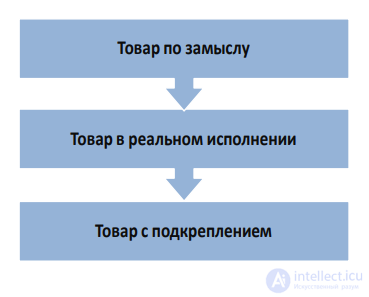
Figure 2.1. The path of a product's development in marketing
The practical usefulness of a product for the consumer is determined by a combination of certain attributes characterizing the properties of the given product, which underlies the multi-attribute model of a product (fig. 2.2). For example, according to Kotler's classification, a product is perceived by the consumer as a combination of the following attributes:
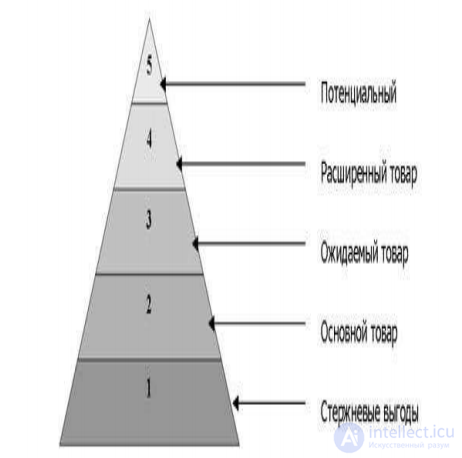
Figure 2.2. Multi-attribute model of a product
The classification of products under modern conditions must meet the following requirements:
the inclusion of new items in the product list without disrupting the overall classification system. Product classification is necessary for developing an effective marketing strategy. That is, each type of product corresponds to a particular marketing strategy.
The classification of products in marketing is presented in Table 2.1.
Table 2.1. Classification of products in marketing
| Classification criteria | Types of products |
| Depending on purpose |
|
| By degree of durability or material tangibility |
|
| By degree of novelty |
|
| By nature of competition |
|
| By degree of adaptation to the foreign market |
|
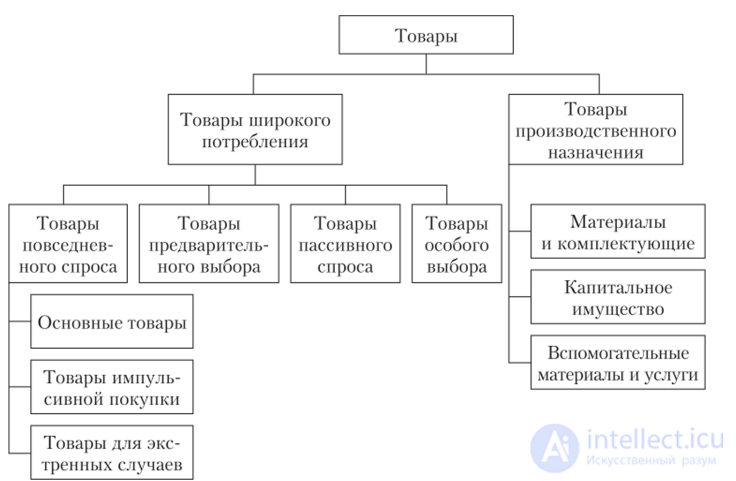
Fig. 2.6. Classification of products by purpose
1. Classification of consumer goods. This classification is based on dividing products into four groups:
Convenience goods – these are products that a consumer usually buys frequently, without much thought and with minimal effort spent comparing
them. Examples include bread, salt, soap. These products can be further divided into several groups:
a) staple goods of constant demand are purchased regularly by people. For example, this is how ordinary purchases of bread and cigarettes are made;
b) impulse-purchase goods are bought without prior planning or searching. For instance, ice cream is sold on every corner, because
otherwise the consumer might not even think about buying it;
c) emergency goods are bought when an urgent need for them arises – these are medicines, plastic bags.
Depending on the value of the income elasticity of demand coefficient, goods are classified into "inferior goods" and "normal goods."
Among "normal goods" the following can be distinguished:
For marketing, the classification of products by novelty is important. First of all, a distinction is made between products new to the world, new to a given country or region
(even though already known elsewhere in the world), new to a particular market segment (for example, women's trousers, a "people's" car), new to an
industry, a firm, an enterprise.
The most common approaches to determining a product's novelty involve positioning it relative to two market participants –
the consumer and the manufacturer (Table 2.2).
Table 2.2. Classification of products by degree of novelty
| New to consumers | |||
| Yes | No | ||
| New to the enterprise |
Yes | Completely new products | Duplicate products |
| New to the enterprise |
No | Product modifications | Known products |

Comments