
Lecture
Distribution of goods – activity related to planning, implementing
and controlling the physical movement of goods from producer to
consumer.
A distribution channel – is the path along which goods move from
producers to consumers, whereby the long-standing
gaps in time, place, and ownership that separate goods and
services from those who would like to use them are eliminated.
Members of the distribution channel perform a number of important functions:
1. Research work – gathering information necessary for
planning and facilitating exchange.
2. Sales promotion – creating and disseminating persuasive
communications about the product.
3. Establishing contacts – building and maintaining relationships with
potential buyers.
4. Product adaptation – adjusting goods to
buyers’ requirements. This concerns activities such as
production, sorting, assembly, and packaging.
5. Negotiating – attempting to agree on prices and other conditions for
the subsequent transfer of ownership or possession.
6. Organizing physical distribution – transportation and warehousing
of goods.
7. Financing – finding and using funds to cover
the costs of operating the channel.
8. Risk taking – assuming responsibility for
the functioning of the channel.
The level of the distribution channel – is any intermediary that
performs some work in bringing the product and title
to it closer to the final buyer.
The criteria used in choosing the length and width of the distribution
channel include:
▪ the revenue criterion – a direct channel provides a greater
sales volume and profit;
▪ the flexibility criterion – the possibility of improving the channel considering
market development;
▪ the cost criterion – in marketing practice, the rule applies: direct
supply to a retailer is justified if the additional costs of
representatives and carrying out transactions to ensure the corresponding
level of sales are less than the wholesaler’s margin and the additional costs associated
with advertising in the case of engaging one.
The widest network of distribution channels and quite a complex
structure are characteristic of consumer goods. Industrial
goods are most often sold by the producer itself.
Services are also usually sold by those who provide them. In all such cases,
when a producer itself sells the manufactured goods, it implements direct
marketing. In carrying out direct marketing, direct
distribution is also carried out.
Depending on market coverage, intensive, exclusive, and
selective distribution are distinguished.
With intensive distribution, producers strive to ensure
the availability of stocks of their goods in as many trading
outlets as possible.
Exclusive distribution means that the producer grants
a limited number of dealers exclusive rights to distribute
the firm’s goods within their sales territories.
The method of selective distribution represents something in between
the methods of intensive distribution and exclusive distribution.
A direct distribution channel exists when the producer
independently sells the manufactured goods directly to the consumer
(buyer). Such sales make it possible to:
- study consumer needs more fully;
- promptly identify and eliminate shortcomings made in
the process of creating and manufacturing the product;
- ensure a higher level of efficiency
in business activity.
Forms of sales in direct sales:
Choosing the most suitable form of sales, the manufacturer
creates a corresponding sales management service.
When carrying out indirect distribution, the manufacturer decides
how many and which intermediaries it should engage in order to ensure
the effective movement of goods to consumers. In many cases such
movement of goods cannot be carried out without the participation of wholesale trade,
which is designed to ensure the accumulation of the relevant goods and their sale for
the purposes of further resale or industrial use.
In carrying out wholesale trade, the seller may perform a wide variety of
functions. It gathers and processes information about demand, buyers, and
offers and, analyzing it, purchases the relevant goods, forming
its own product assortment. Based on the assortment formed, the wholesaler
selects, sorts, and forms the batches of deliveries most suitable for its buyers.
Wholesalers may finance deliveries and
sales, participate in promoting goods to the market, provide
consulting services, take on risk, being liable for theft,
damage, and obsolescence of stock. In addition, wholesalers take the most
direct part in the transportation, warehousing, and storage of
stock. Of course, not all of the listed functions and not at the proper
level are performed by each of the wholesalers. The number of functions performed
and the level of their execution depend on who the wholesale seller is.
Wholesale trade may be carried out both by the manufacturers themselves and by
individual private persons, and various commercial structures. Most
often such trade is engaged in by commercial wholesale trade
enterprises, dealers, distributors, sales agents and manufacturers’ agents,
as well as brokers.
For the successful promotion of a product through distribution channels,
two types of distribution are used:
▪ «push» – emphasis on intermediaries with the aim of attracting
attention to the goods. Trade discounts, cooperation in
advertising, staff training, etc. are used;
When organizing sales, franchising is now widely
used – a vertical contractual marketing system for the sale
of goods, based on long-term contractual relationships, under which
one enterprise (the franchisor) grants another (the franchisee) the right to
conduct a retail business in a certain territory while complying with
established rules and under a particular brand.
Franchising is regarded as a form of privileged entrepreneurship, in
which the franchisee pays a certain sum of money plus a percentage of
sales to the franchisor, receiving in return the right to use the trademark, as
well as ongoing support and the transfer of expertise. A retailer may
use the trademark and trade name
of the manufacturing enterprise, wholesaler, or trading company. Control over
the work of the "franchisee" is very strict and covers all the main aspects of its
activity.
▪ "pull" – an emphasis on end consumers without intermediaries.
Active advertising, exhibitions, promotion of the trademark, etc. are used.
In retail trade, distribution takes on special importance owing to
its significance and substance. On the one hand, this
marketing tool concerns the problem of choosing the location
of a specific store, and on the other – determining the store's format (the combination
of forms and methods of retail trade). This problem faces a
store only at the first stage of its life cycle. Afterward, the priority
problem for this element of the marketing mix becomes horizontal
and vertical distribution within the sales floor (Figure 11.1).
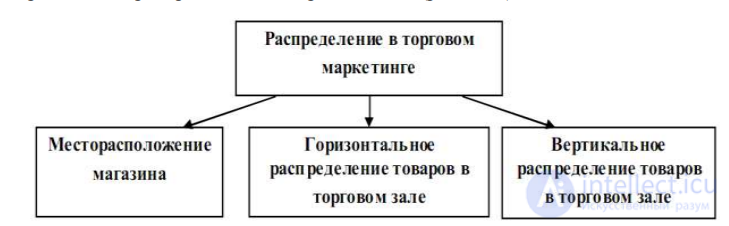
Figure 11.1. Components of distribution in retail marketing
Based on the logic of the marketing mix, the main task of distribution
for a retail store is to ensure the accessibility (attainability)
of the retail service for a potential consumer. Ease of access to
the source of the retail service (the store) implies not only its
location but also its hours of operation. For example, if a potential
buyer of a given point of sale prefers to make purchases on
the way home from work, then if the store is already closed, they cannot
use its services at all, no matter how attractive its assortment, price
level, or proximity may be

Comments