
Lecture
The marketing environment – a set of entities acting inside and outside the enterprise, and the relationships forming between them, which influence
the activity of the enterprise's management in terms of establishing and maintaining interaction with customers (Fig. 4.1).
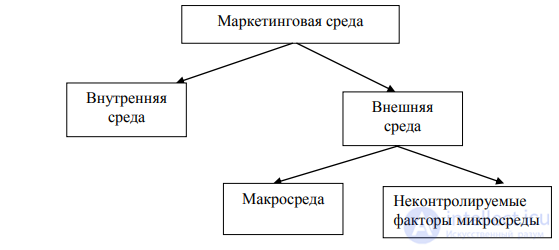
Figure 4.1. The structure of the marketing environment
In its activity, the marketing management service takes into account
factors that have a direct impact on the effectiveness
of marketing implementation. These factors are both controllable and
uncontrollable. Controllable factors are determined by the activity
of management personnel, primarily its top management and the
marketing management service. Uncontrollable factors are conditioned
by the activity of suppliers, competitors, intermediaries, clients, as well as
by the state of the economy, demographics, politics, law, culture,
science, and the environment.
Controllable factors, together with the factors conditioned by
the activity of suppliers, competitors, intermediaries, clients, and
contact audiences, determine the micro-environment of marketing. That is, the
micro-environment – a set of relationships that develop within the
enterprise itself, between it and suppliers, intermediaries, competitors,
clients, and contact audiences.
The enterprise in these relationships is represented by various departments,
among which their own relationships also arise (top
management, the finance department, the R&D department, accounting, the
materials and technical supply department, the marketing department, production).
Suppliers – any market entities that supply the enterprise
with the necessary material and technical resources.
Intermediaries – these are legal entities or individuals who serve as a
connecting link in the market between producers and consumers.
The following types of marketing intermediaries are distinguished:
1) trade intermediaries:
- dealers;
- distributors;
- retail chains;
2) logistics intermediaries:
- transport and forwarding firms;
- warehouses;
- logistics operators;
3) marketing services agencies:
- marketing consulting;
- marketing research;
- advertising agencies;
4) credit and financial institutions:
- banks;
- credit companies;
- insurance companies;
5) auditing firms.
Competitors – these are individuals or legal entities (rivals) that
produce analogous products, substitute products, or carry out their
activity in the same market as other producers.
Clients.
Contact audiences – these are any individuals or social groups
that show a real or potential interest in the enterprise or
have an effect on its business activity, effectiveness, and ability
to achieve its stated goals.
Contact audiences are of three types:
1. Beneficial.
2. Sought.
3. Undesirable.
The external environment is understood as all the conditions and factors arising in
the surrounding world independently of the activity of enterprises, but that have
an effect on the state of its internal environment.
The factors of the external environment are presented in Figure 4.1.
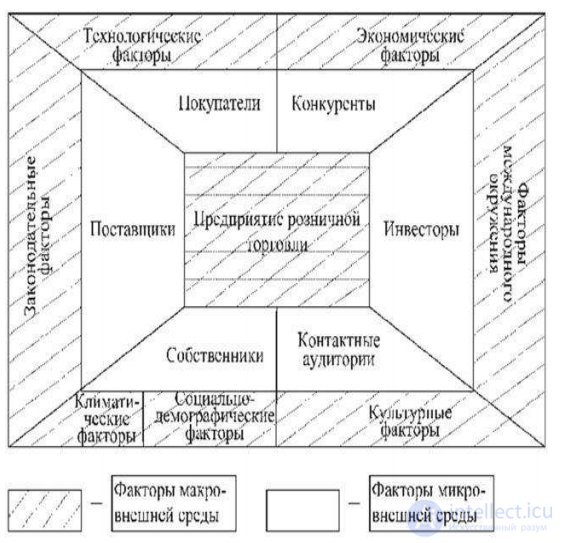
Fig. 4.1. Factors of the enterprise's external environment
The macro-environment — these are factors that affect all the elements of its
micro-environment. These are general factors that determine the current
demographic, economic, natural, scientific and technical,
and political situations, as well as the features of the cultural way of life
prevailing in a particular country.
Demography - the science that studies the population in terms of its
size, density, and so on. For marketing, the demographic environment
is of great interest, since markets consist of people.
A table of markets in various districts is compiled and the
approximate size of the population and its structure is determined.
Economic factors. Market players must pay attention to
the nature of income distribution with regard to geographic location.
Natural factors include:
Scientific and technical factors include:
Political and legal factors are represented by:
Cultural factors are determined by:
The most widespread tool for researching the marketing
environment is SWOT analysis.

Comments