
Lecture
Discounts — are reductions in price applied to the base selling price of goods or services.
The practice of offering discounts applies both in business-to-business and business-to-consumer relationships. Discounts can be applied anywhere along the distribution channel, changing either the manufacturer's stated price (set by the manufacturer and often printed on the packaging), the retail price (set by the retailer and often attached to the product via a sticker), or a quoted price intended for a specific prospective buyer, often specified in writing.
There are many purposes for offering discounts, including increasing short-term sales, moving outdated inventory, rewarding valuable customers, encouraging distribution channel participants to perform a function, or otherwise encouraging behavior that benefits the party issuing the discount. Some discounts and rebates are forms of sales promotion. Many of them are methods of price discrimination that allow the seller to capture part of the consumer surplus.
Trade discounts — are deductions from the list price or catalog price charged by a wholesaler or manufacturer to a retailer or supplier, who then deals with the end buyer. The discount then allows the retailer to charge the end buyer the list price and cover its own costs/profit.
Cash discounts — are price discounts offered to a debtor to motivate them to make payment within a specified time. These discounts are intended to speed up payment and thus ensure cash flow for the firm. They are sometimes used as a promotional tool. A study conducted by the British Chamber of Commerce in the UK found that 13% of British businesses offered prompt payment discounts (PPD).
Until 2014, suppliers in the United Kingdom were allowed to add VAT to the discounted price, even if payment was not made within the discount period and was therefore due in full. This provision led to a shortfall in tax revenue, and also meant that UK practice was inconsistent with the EU VAT Directive of 2006, which specified that value added tax should be charged on the price actually paid. The 2014 budget put forward proposals to amend UK tax law in this regard. In the telecommunications and broadcasting sectors (where there was no obligation to provide a VAT invoice), the law was changed effective May 1, 2014, whereas in other sectors of the economy the change took effect on April 1, 2015.
Some retailers (especially small retailers with low margins) offer discounts to customers paying in cash to avoid paying credit card transaction fees.
Similar to a trade discount, it is used when a seller wants to improve cash flow or liquidity but finds that the buyer is usually unable to meet the desired discount deadline. A partial discount on any payment the buyer makes partially helps the seller's cash flow.
A discount granted based on the buyer's ability to pay. More common in nonprofit organizations than in commercial retail.
This is when the buyer does not pay for goods until they arrive. The date on the invoice is moved forward – for example: purchasing goods in November for sale during the December holiday season, but the payment date on the invoice is January 27.
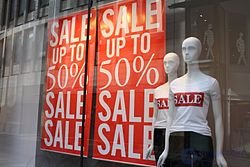
A seasonal promotion in an offline store
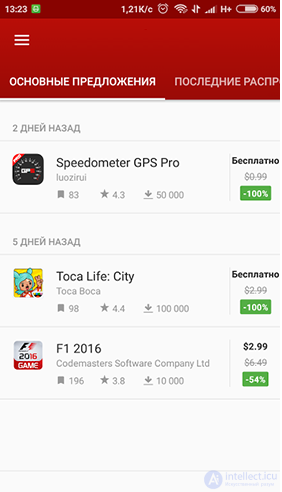
Discounts in an online app store
These are price discounts offered when placing an order during a slow period (for example, buying skis in April in the Northern Hemisphere or in September in the Southern Hemisphere). On a shorter time scale, happy hour could fall into this category. Retailers organize major discounts almost every season to make room for new inventory for the upcoming season.
This discount is usually called "X-Dating" or "Ex-Dating". An example of X-Dating could be:
Spaving — is a marketing strategy. Consumers are encouraged to spend money in order to gain access to savings. Spaving offers include free shipping upon reaching a certain threshold and buy one, get one free.
Bargaining — is a process in which the seller and buyer agree on a price lower than the original selling price.
Trade discounts, also called functional discounts, are payments to distribution channel participants for performing some function. Examples of such functions are warehousing and shelf-stocking. Trade discounts are often combined to include a range of functions; for example, 20/12/5 might mean a 20% discount for warehousing the product, an additional 12% discount for delivering the product, and an additional 5% discount for keeping the shelves stocked. Trade discounts are most common in industries where retailers hold most of the power in the distribution channel (called channel captains).
Trade discounts are offered with the goal of increasing the supplier's sales volume.
A discount described as a trade-rate discount is sometimes called a «trade discount». A trade discount — is a discount offered on the retail price of a product or something. For example, the retail price of a cream is 25, and the trade discount is 2% of the 25.
A trade-rate discount, sometimes also called a «trade discount», is offered by a seller to a buyer for trading or resale purposes, rather than to the end consumer. For example, a pharmacist might offer a discount on over-the-counter drugs to doctors who purchase them to dispense to their patients. [ 7 ] A seller supplying both trade agents or resellers and the general public will have a single list price for everyone and will offer a trade discount to bona fide trade customers.
Trade-in credit, also called exchange credit, is a discount or credit granted for returning something. The item being returned may have a small monetary value, like an old version of the new item being purchased, or it may be resold profitably as used. The idea, from the seller's point of view, is to offer some discount but require the buyer to demonstrate some «counter-action» to receive this special discount. Sellers like this because the discount granted is not simply «given away for free», and it facilitates future price/value negotiations. Buyers have the advantage of getting some value for something that is no longer used. Examples can be found in many industries.
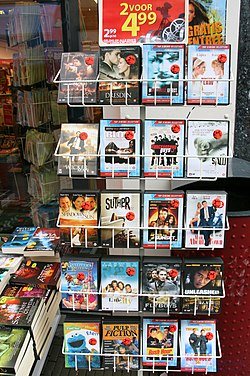
DVD movies are sold at a discount when purchasing 2 units.
These are price discounts offered on bulk purchases. Their purpose is to achieve economies of scale and pass along part (or all) of these savings to the buyer. In some industries, buying groups and cooperatives have formed to take advantage of these discounts. Iyengar and Jedidi note the popularity of quantity discounts offered to both corporate buyers and consumers. There are generally two types:
Cumulative quantity discounts, also called accumulation discounts, are a price reduction based on the quantity purchased over a certain period of time. The seller's expectation is that this will impose an implied switching cost and thereby tie the buyer to the seller.
This is a price reduction based on the quantity of a single order. The seller's expectation is that this will encourage larger orders, thereby reducing billing, order fulfillment, shipping, and sales staff costs.
If a buyer has to purchase more than they need to get a discount, we can distinguish between surplus that simply goes unused and surplus that creates inconvenience, for example, from having to carry a large container.
A discount system can involve various mathematical approaches to calculating them. Let's look at the main types of discounts and their features.
This is the original cost of a product before any discounts are applied.
An absolute discount is expressed as a fixed amount:
Pnew=P−A
Where:
Pnew — the new price after the discount
A — the discount amount
Example:
If a product costs $1000 and the discount is $200, the new price is:
1000−200=800
A relative discount is expressed as a percentage of the base price:
Pnew=P×(1−R/100)
Where:
RRR — the discount percentage
Example:
For a 20% discount on a $1000 product:
1000×(1−20/100)=1000×0.8=800
If several discounts apply to a product in succession, the first is applied first, and then the second is applied to the new price:
Pnew=P×(1−R1/100)×(1−R2/100)×…
Where R1,R2 — the percentages of the successive discounts.
Example:
A $1000 product, first discount 20%, second 10%:
1000×0.8=800
800×0.9=720
The final price — is $720. Note that the total discount is NOT equal to 30% (it is less than 1000−30%=700).
If a fixed discount is applied first, followed by a percentage discount:
Pnew=(P−A)×(1−R/100)
If the reverse (percentage discount, then fixed):
Pnew=P×(1−R/100)−A
Cumulative: the discount increases as the purchase total grows (for example, 5% for purchases of $5000, 10% for $10000).
Threshold: the discount applies only when a certain order total is reached (for example, a $500 discount on orders of $3000 or more).
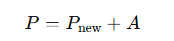
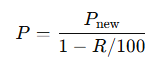
If the final price after the discount is known and you need to find the original:
For a fixed discount:
For a percentage discount:
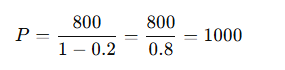
Example: after a 20% discount the price is $800:
These principles are widely applied in marketing, pricing, and loyalty programs.
Cashback (Cashback) — is the return of part of the purchase amount back to the buyer, most often in the form of bonuses or money. It differs from a traditional discount in that payment is made at full price, and the discount is returned later.
C=P×(K/100)
Where:
P — the purchase amount
K — the cashback percentage
C — the refund amount
The new price accounting for cashback (if treating the refund as a discount):
Pnew=P−C=P×(1−K/100)
Example:
If a purchase of $1000 has 10% cashback, the refund will be:
1000×0.1=100 $.
Effective price after cashback:
1000−100=900 $
Does not reduce the price immediately – the buyer first pays the full amount.
May be limited by conditions (for example, only credited on purchases in certain categories).
Usually not applied to discounted items, but can be combined with points and bonuses.
The buyer receives points (bonuses), which can be used to partially or fully pay for future purchases.
Point accrual formula:
B=P×(Br/100)
Where Br — the percentage of points accrued.
Example:
For a $2000 purchase with a 5% bonus program, the following is accrued:
2000×0.05=100 bonus points
If 1 bonus point = $1, they can be used on future purchases.
These are special codes or certificates that provide a discount when used. The discount can be fixed, percentage-based, or combined.
Coupons are associated with Sunday circulars and help consumers who are struggling to make ends meet. A coupon — is a discount, either in the amount of a specified sum or a percentage, for the holder of a voucher, usually subject to certain conditions. There are usually restrictions, as with other discounts, for example, they are only valid when purchasing a certain quantity or only if the buyer is older than a specified age. Today coupons are printed not only in newspapers and brochures. Coupons are offered to customers at the counter after they have paid for their purchase.
Sometimes a document, usually a plastic card similar to a payment card, is issued as proof of entitlement to discounts.
Or the discount is simply communicated by a coupon number or tied to the buyer's phone number.
In other cases, existing documents confirming status (student, disabled, resident, etc.) are accepted. Documentation may not be required, for example, for people who are clearly young enough or old enough to qualify for age-related discounts. In some cases, a card may be issued to anyone who requests it.
Example:
The coupon «DISCOUNT500» gives a $500 discount on orders of $3000 or more.
The promo code «SALE20» reduces the price by 20%.
The more a customer buys, the lower the price per unit.
Example discount structure:
1–4 units – price $1000.
5–9 units – price $950.
10+ units – price $900
If a customer bought 7 units:
7×950=6650 $
A discount for purchasing a bundle of products.
Example:
One item costs $1200.
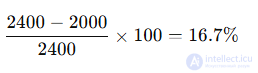
A set of two — $2000 (instead of $2400).
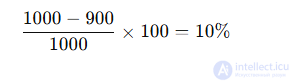
Actual discount:
The customer receives a discount for setting up a subscription for regular purchases (for example, a subscription to coffee, food, or cosmetics).
Example:
One-time purchase — $1000.
With a subscription — $900.
Savings:
Discounts on one item when purchasing another.
Example:
Buy a laptop — get a mouse at 50% off.
Formula for calculating the final price:
Pnew=Pmain + Padditional×(1−R/100)
If a laptop costs $50,000 and a mouse — $2000 with a 50% discount:
Pnew=50000+2000×0.5=51000 $
The discount is valid only for a short period (for example, 24 hours).
Example:
On regular days the item costs $3000.
Today there's a 40% discount:
3000×0.6=1800 $.3000
The customer needs to complete some task to get a discount.
Examples:
Wheel of fortune: you can win a discount of 5%, 10%, or 15%.
A discount for completing a quest (for example, taking a quiz or finding a code on the website, in the app, or right in the physical store).
The customer turns in an old item and receives a discount on a new one.
Example:
A new phone costs $50,000.
You trade in the old one — you get a $10,000 discount.
Final price:
50000−10000=40000 $.
Discounts calculated individually for the customer (based on purchase history, preferences, and activity).
Example:
If a customer often buys shoes, they might be offered a 15% discount on sneakers.
If they haven't purchased in a long time, they might be given a «win-back» discount of 10%.
Modern discounts — are not just simple percentage price reductions. Marketers actively use hybrid schemes (cashback, points, subscriptions, quests, trade-in, and others) to increase customer engagement and retain them over the long term.
The following discounts are tied to specific customer characteristics.
A discount offered to customers who have a disability.
These are price discounts offered to members of educational institutions, usually students, but possibly also faculty and other staff of the institution. The provider's goal is to increase brand awareness early in the buyer's life or make the product familiar, so that after graduation the owner is more likely to buy the same product for themselves or their employer at its regular price. Providers also offer student discounts as a way to offer a product within a student's budget that would otherwise be too expensive, thereby gaining additional sales. Students can get discounts on products, services, entertainment, and much more. Educational discounts can be provided by merchants directly or through a student discount program. Many brands, such as Apple, Dell, provide students with exclusive discounts on their tech products so that students can learn using the latest available technology, which makes their work less costly. In addition, travel sites also offer student discounts to make travel more affordable for students. Some sites may also offer other benefits for students, such as free cancellation or extra loyalty points. Students can get discounts not only on products in the technology and travel sectors, but also on lifestyle brand products.
A discount provided by a company to employees who purchase its products.
In 2005, American automakers ran an "Employee Discount" advertising campaign for all customers to attract buyers, and it achieved a certain degree of success.
A discount offered to customers who are or were military service members. Types of military discounts include discounts for active-duty personnel, veterans, retired military, and spouses or dependents of service members. In the United States, obtaining military discounts often requires proof of identification, such as a DD 214 form, DD 215 form, or DD 217 form from any branch of the armed forces, a TRICARE card, a Veterans Affairs card, Uniformed Services Privilege and Identification Card (USPIC), or other official documentation. Eligibility for military discounts can also be verified online or via mobile phone using verification companies. In Australia, a similar discount card is DefCom Australia.
A discount or free service offered to children under a certain age, usually for attending entertainment venues and attractions, restaurants, and hotels. There may be a requirement that the child be accompanied by an adult paying full price. Young children often ride free on public transport, while older children may pay a substantially reduced price; proof of age may be required.
Sometimes discounts are offered to young people under a certain age who are neither children nor students, for example:
A discount offered to customers who have reached a certain relatively advanced age, usually a round number, such as 50, 55, 60, 65, 70, or 75; the exact age varies from case to case. The rationale for the senior discount offered by companies is that the customer is assumed to be retired and living on a limited income, and unlikely to want to pay full price; sales at a reduced price are better than no sales. Nonprofit organizations may offer discounted prices as part of a social policy. Free or discounted travel is often available for seniors (see, for example, Freedom Pass).
In the United States, most grocery stores offer senior discounts starting at age 50 and older, but most discounts are offered to those in their 60s.
Discounts specifically offered to firefighters, paramedics, police officers, and other emergency service workers are called first-responder discounts. Sometimes hospital staff can also receive discounts. In the United Kingdom, an example of a discount scheme available to emergency service workers, the NHS, social service providers, and the armed forces is the «Blue Light Card»
A discount offered to a seller's friends, an attitude parodied in the stereotype of a salesperson saying: «This costs [so much], but for you...» In Australia, New Zealand, and the UK, discounts for friends are known as «mate's rates». In French, this discount is known as prix d'ami. In Spain, it is known as «precio de amigo» in Spanish or «preu d'amic» in Catalan. In German, the term «Freundschaftspreis» is commonly used.
Discounts are common in tourist destinations. For example, in Hawaii, many tourist attractions, hotels, and restaurants charge a very low price to anyone who provides proof that they live in Hawaii; this is known as the «kama'aina discount», which means «child of the land» or «local resident». In Hawaii or elsewhere, it may be called a resident discount.
The return of part or sometimes the full cost of a product after purchase, although some rebates are offered at the time of purchase. A special case is the promise of a full refund if a claim is filed within a limited period several years in the future; the hope being that the promise will attract customers and increase sales, but most will fail to meet the conditions for a valid claim.
Promotional allowances are also known as trade allowances. These are price discounts offered to a buyer for performing certain promotional activities. These include a discount for setting up and maintaining an in-store display or a discount for cooperative advertising. Trade allowances are most common in the automotive industry, but they are also provided for other durable goods.
From the manufacturer's point of view, any brokerage commission paid is similar to a promotional allowance. It is usually based on a percentage of the sales made by the broker.
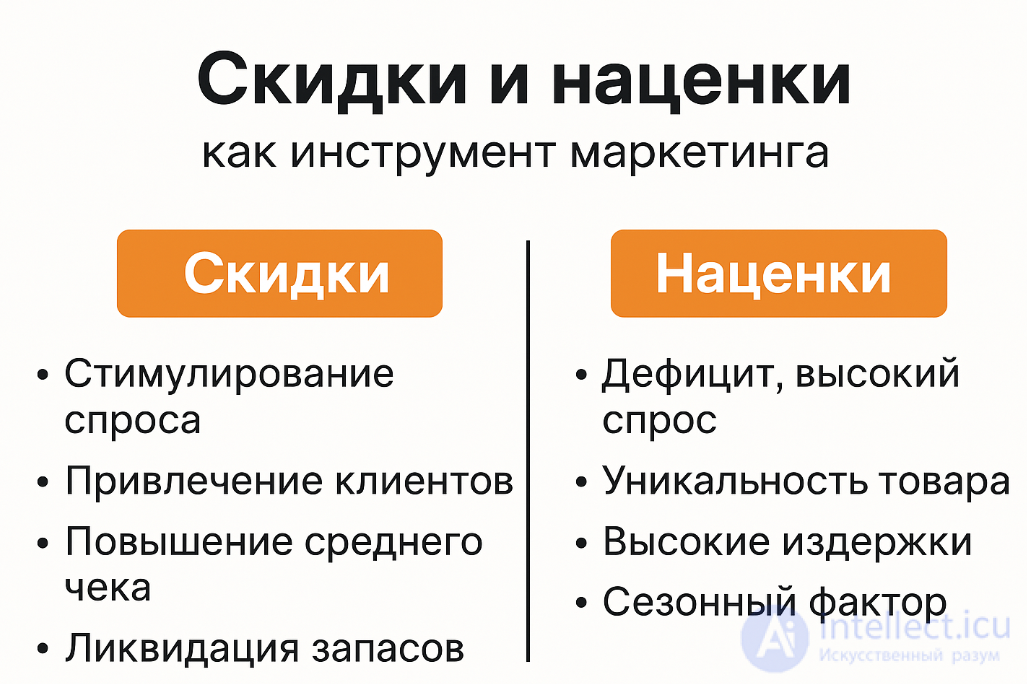
Discounts and markups — are price management tools applied depending on business goals, market conditions, demand, and other factors.
Discounts are used to stimulate demand, increase sales, attract customers, or liquidate inventory. Main use cases:
When demand for a product is low (for example, seasonal items at the end of the season).
During economic downturns, when purchasing power declines.
Example:
Winter jackets are sold at a 30–50% discount in March to make room for spring collections.
Offering a discount on the first purchase (for example, -10% for registering at an online store).
Promotions for new subscription users (for example, the first month free).
Example:
A streaming service offers 3 months of subscription for $1 to attract users.
Discounts when purchasing multiple items (for example, «2nd item at half price»).
Discounts for purchases over a certain amount (for example, «$500 discount on orders of $3000 or more»).
Example:
A restaurant offers a 20% discount on orders over $2000.
When a product becomes outdated or a new version is released.
If a product isn't selling and is taking up warehouse space.
Example:
Last year's smartphone model is sold at a 40% discount after the new model is released.
Black Friday, New Year, March 8, company anniversary.
Example:
In honor of Black Friday, an electronics store offers discounts of up to 50%.
Personal discounts for regular customers.
Discounts for «dormant» customers who haven't made a purchase in a while.
Example:
A cosmetics store sends a customer a 10% discount coupon if they haven't placed an order in 3 months.
Markups are used to increase profit, cover costs, or regulate demand.
If demand for a product greatly exceeds supply.
With limited product availability (for example, during a pandemic, masks and antiseptics were sold with a markup).
Example:
During the rush for the PlayStation 5, resellers applied a 50–100% markup.
Luxury brands set high markups for exclusivity and prestige.
Example:
Rolex watches can cost 10 times more than their production cost due to the brand and limited production runs.
If a product requires expensive shipping or storage.
If production is complex or uses rare materials.
Example:
Imported fruit in remote regions costs more due to logistics.
On products that are in demand during a certain period.
Example:
Flowers become 50–100% more expensive before March 8 due to demand.
Express delivery.
Custom orders (for example, made-to-order clothing).
Example:
Delivery within 1 hour costs 30% more than regular 3-day delivery.
Inflated prices to create the image of an elite product.
Example:
Apple sells its devices more expensively than comparable products, creating the image of a premium brand.
Discounts are applied when there is a need to stimulate demand, attract customers, clear out inventory, or increase loyalty.
Markups are used in cases of scarcity, high costs, premium products, or to manage demand.
Businesses often combine both approaches: first applying a markup, then offering a «discount» to create the illusion of a good deal.
1. How is the new price calculated after a percentage discount?
2. A product costs $500. The discount is 20%. What is the final price?
3. Which type of discount returns money after purchase?
4. Which formula is used for cascading discounts (discount on discount)?
5. How will the price change if a 10% discount is applied first, and then another 20%?
6. In which case is a markup applied?
7. A store sells an item for $200 with a 50% markup. What is the original price (without the markup)?
8. Which type of discount gives advantages to regular customers?
9. Which of the following is a markup, not a discount?
10. What does «threshold discount» mean?
11. Does the order in which discounts are applied matter, if one is applied first and then the other, versus the reverse?

Comments