
Lecture
Organization – is an activity undertaken with the aim of creating, maintaining, or changing the positions and/or behavior of target audiences in
relation to specific organizations.
Organizational structure – is the set of elements, services, departments, and units, made up of employees engaged in one
or another marketing activity.
Organizational structure – is not a factor that can directly increase work efficiency, but it is a factor that determines
the possibility of achieving an effect overall. If the structure of an enterprise and its marketing department fail to match its goals and objectives at a given
moment of work in the market, this can lead the enterprise to failure and exit from the market, and fairly quickly.
The organizational structure of a marketing department is most often based on a functional, product-based, or matrix approach
(Figures 13.1, 13.2, 13.3).
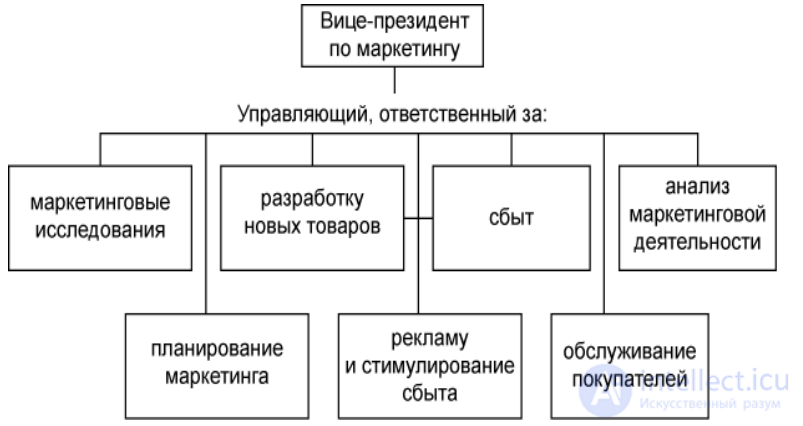
Figure 13.1. Functional organizational structure
The functional approach is oriented toward a stable structure
for the marketing department's performance of its main functions, in
coordination with other departments. Relationships within such departments
are based on direct vertical links of the "management-subordination" type.
This structure is the most widespread and simple.
A product-based structure – is an organizational structure for marketing management in
which the organization's functional marketing services develop and
coordinate the implementation of certain goals and objectives that are unified for the organization's
marketing, as well as carry out individual pieces of work as ordered by product
managers. A product manager formulates tasks in the area of marketing
specific products for the organization's functional marketing services
and monitors their execution, which is possible on the
basis of internal cost accounting. It is used in the case of a company producing
a wide range of products, when the items differ greatly from one
another.
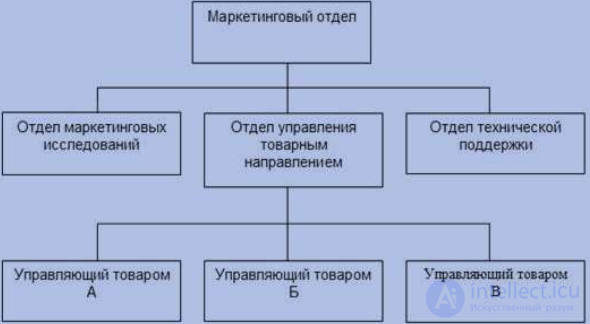
Figure 13.2. Organizational structure by product line
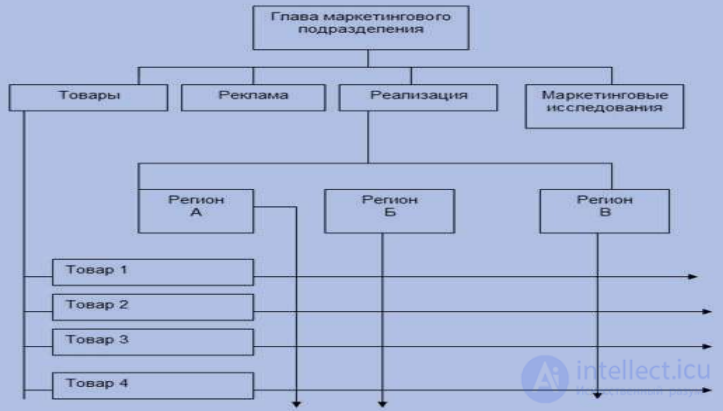
Figure 13.3. Matrix organizational structure.
Management involves the implementation of all the management functions
inherent in managing an enterprise. However, among all these functions,
primary importance is given to:
Strategic planning – is the management process of creating and
maintaining a strategic fit between the company's efforts, its
potential capabilities, and opportunities in the field of marketing.
Marketing strategies – are the set of a company's strategic
priorities used to achieve
the goals set.
Basic competitive strategies for company development:
Depending on the market share held by the company, the following
types of competitive strategy are distinguished:
Options for company development may be pursued in the following three
main directions: intensive, integrative, diversified.
Sales management planning is divided into
sales volume planning and sales strategy planning.
Sales volume planning, in turn, is determined by:
A marketing plan includes the following 8 sections.
The first section is "Baseline performance indicators."
The second section is "Assessment of the current marketing situation"
The third section is "Analysis of the company's market position".
The fourth section is "Goals and objectives".
The fifth section is "Marketing strategy.
The sixth section is "Action program".
The seventh section is "Budget".
The eighth section is "Control procedure".
Marketing control – is the systematic comparison of
actual and planned results of a company's work in order
to ensure its effective business activity.
Types of marketing control of market activity:
Annual plan control consists of identifying deviations of the
company's actual production and commercial results
from the planned ones.
Profitability control requires identifying all costs and establishing
the actual profitability of the company's operations by product, sales
territory, market segment, sales channel, and order size.
Control of the efficiency of sales, product promotion, and
distribution. In each case, a set of indicators is used
that allows the fullest possible assessment of the effectiveness of the implementation of individual
marketing elements.
Strategic control – is the activity of analyzing the implementation of
the company's marketing objectives, strategy, and program.
Main means of control:
1) analysis of sales opportunities.
2) analysis of market share.
3) analysis of the ratio between marketing spend and sales.
4) monitoring customer attitudes.
When controlling profitability, the following types of costs are distinguished:
–> direct – costs that can be attributed directly to
individual marketing elements: advertising expenses, commissions to
sales agents, conducting research, salaries of marketing department
employees, etc. They are included in the marketing budget under the
relevant areas of activity;
–> indirect – costs that accompany marketing activities:
rent for premises, transportation expenses, etc. These costs are not
directly included in the marketing budget, but are taken into account during control.
Analysis of the "marketing costs to sales volume" ratio makes it possible not to
allow significant overspending of funds while achieving marketing
goals.

Comments