
Lecture
Drawing is a wonderful activity for children that helps develop their creativity, motor skills, imagination, and concentration.
Drawing has many positive aspects for children's development and is important for many reasons:
Developing fine motor skills: Drawing requires children to coordinate their hand and eye, and it also improves fine motor skills, which is useful for developing writing skills.
Creative self-expression: Drawing allows children to express their thoughts, feelings, and fantasies. It's an important way for them to make their inner world visible and understandable.
Developing imagination and creativity: Drawing fosters the development of imagination, as children create their own worlds, characters, and stories.
Improving analysis and perception skills: By drawing objects or scenes, children learn to analyze shape, color, and texture. This contributes to the development of their observation skills.
Preparation for writing: Drawing and drawing lines help children develop the skills needed for future writing.
Improving concentration: Drawing requires children to focus and be patient, which contributes to the development of important skills.
Social interaction: Drawing can become a way for children to communicate with each other and share their creative ideas.
Developing language skills: Drawings are often accompanied by stories and explanations. This helps children develop language skills and learn to describe their thoughts.
Self-affirmation and confidence: Successfully completing a drawing can strengthen a sense of self-confidence and give children satisfaction from their achievements.
Positive pastime: Drawing can be a wonderful way to spend time, have fun, and relax.
Developing attention to detail: While drawing, children pay attention to details and can become more observant of the world around them.
Improving critical thinking: While drawing, children can ask themselves questions about how to draw something and what materials to use, which contributes to the development of critical thinking.
It's important to remember that drawing for children is not about their artistic talent, but rather about their ability to express themselves and develop important skills. Support children in their creative efforts and give them the opportunity to enjoy this useful and engaging activity.
Here are some tips for drawing with children:
Provide a variety of materials: Give children access to various art materials, such as colored pencils, markers, watercolors, paints, brushes, colored paper, and chalk. This will allow them to experiment and develop their own style.
Encourage creativity: Don't judge children's drawings by their quality. Instead, appreciate their effort and the expression of their own imagination. Encourage them to draw what interests them.
Suggest a theme: Sometimes children need inspiration. You can suggest a theme for the drawing, such as "My Family," "Summer," "Sea Life," and so on.
Teach basic techniques: Gradually introduce children to basic artistic techniques, such as color mixing, drawing outlines, creating textures, and so on.
Creating together: Drawing together with children can be a wonderful way to spend family time. You can work on a joint project or simply draw your own separate pictures.
Show examples: Sometimes it's good to demonstrate to children the possibilities available with different materials and techniques. This can inspire them to experiment on their own.
Create a creative atmosphere: Provide children with a comfortable work area with adequate lighting and freedom from various distractions.
Display their work: Help children feel proud of their creative achievements by displaying their work on the wall or refrigerator.
Teach them stories and art: Tell children about great artists and their works; this can inspire them and broaden their artistic education.
Don't forget about safety: Explain safety rules to children when using art materials, especially when working with scissors or paints.
Drawing is not only a fun and creative activity, but also a way to develop important skills and improve children's motor coordination. Encourage their diligence and imagination, and let them enjoy the process of creating their own works of art.
Children's drawings have their own unique characteristics that reflect the developmental stage and creative traits of children. Here are some of them:
Bright and vivid colors: Children often use bright and vivid colors in their drawings, which can be an expression of their perception and interest in vivid impressions.
Exaggerated proportions: Children may exaggerate the size and shape of objects. For example, the sun may be drawn much larger than the house, reflecting their perception and the importance of objects.
Lack of detail: Children often simplify details in their drawings. For example, they might draw a tree using only circles and lines, without paying attention to the leaves.
Lack of perspective: Children's drawings usually lack perspective. This means that objects are drawn without regard to distance and size in space.
Emotional expressiveness: Children may use drawings to express their emotions. For example, they might draw smiley faces, suns, rainbows, or other elements to convey their joy and happiness.
Interest in detail: Some children show interest in details and may carefully draw small elements, such as raindrops, tiny patterns on dresses, or animals.
Fantasy and creativity: Children's drawings often reflect rich imagination and creative potential. They may depict surreal scenes or create their own worlds.
Evolution with age: Children's drawings change and develop with age. At first they may be abstract and chaotic, but over the years children gain greater skill and begin to create more detailed and realistic images.
Use of symbols: Children may use symbols and metaphors in their drawings to convey their thoughts and feelings, even if they are not always obvious to adults.
Individuality: Every child's drawing is unique and reflects their own personality, interests, and inner world.
Remember that children's drawings are valuable and important not only as an expression of creativity, but also as a way of expressing their own feelings and thoughts. Support and encourage children in their creative efforts; their drawings can become a wonderful way for them to express themselves.
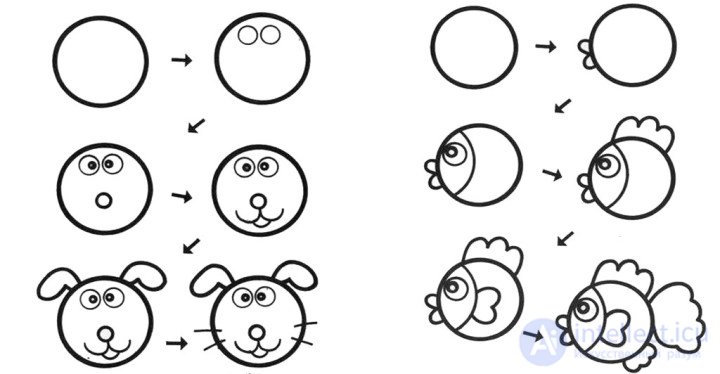
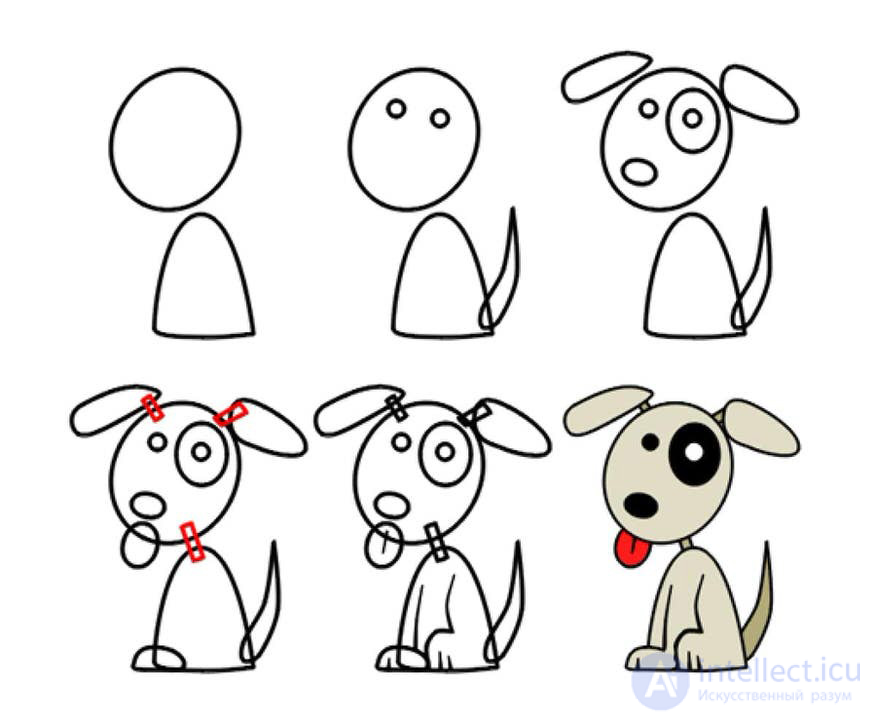
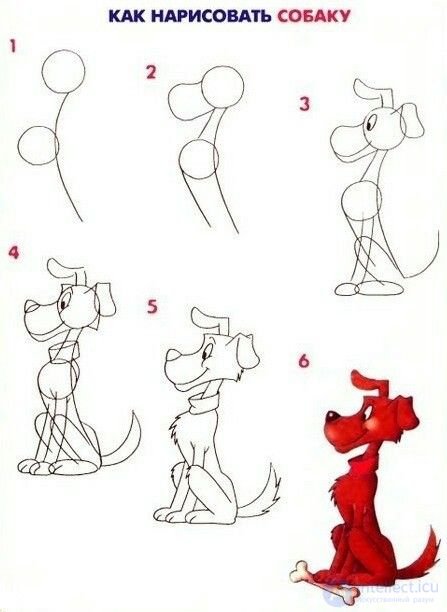
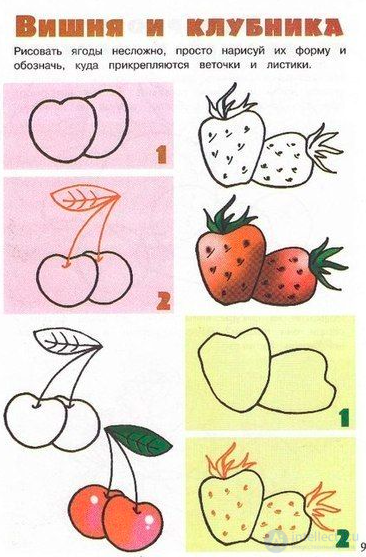
When giving drawing advice to children, it's important to consider their age, interests, and skill level. Here are some recommendations on what to advise and what's better not to advise children to draw:
What you can advise:
Encourage creative self-expression: Encourage children to draw what they like and what they feel. Give them the freedom to choose their own theme.
Suggest theme options for inspiration: You can suggest some themes or ideas for a drawing, especially if the child has trouble choosing. For example, "Draw your favorite fairy-tale character" or "Imagine you're in space, and draw your spaceship."
Teach basic artistic techniques: Give children tips on using different materials and techniques, such as color mixing, drawing outlines, creating textures, and others.
Encourage drawing from observation: Encourage children to draw objects they see around them, such as trees, animals, objects in the room. This will help develop observation skills.
Encourage experimentation: Give children the opportunity to experiment with different materials and styles. This will help them develop their own artistic style.
What's better not to advise:
Forbidding or criticizing: Avoid forbidding children from drawing what they want, even if it seems unusual or strange to you. Also avoid criticism and negative comments.
Overestimating expectations: Don't expect children to create high-level works of art. Children draw in order to learn and express themselves, not to create masterpieces.
Restricting creativity: Don't limit children with strict rules or templates. Help them develop their own creativity and individuality.
Comparing with others: Avoid comparing your child's drawings with those of other children. Every child is unique, and their creative abilities develop at their own pace.
Creating pressure: Don't put pressure on a child to draw "correctly." Pressure can lead to stress and loss of interest in drawing.
It's important to remember that drawing for children should above all be an engaging and joyful process. Advice and support from adults can help develop their skills and interest in art, but should not suppress their creativity or restrain their imagination.

Comments