
Lecture
Continuous (steady) precipitation – of moderate intensity, falling over large areas, lasting up to tens of hours, observed in temperate latitudes.
Shower precipitation – intense, short-lived, covering a small area. Most often observed in tropical and equatorial latitudes.
Drizzle – falls from stratus and stratocumulus clouds. This precipitation is characterized by low intensity, long duration, and covers large areas. It consists of very fine droplets.
By form, the following types of precipitation are distinguished:
Liquid – drops with a diameter of 0.5 – 0.8 mm;
Drizzle – less than 0.5 mm (0.05 – 0.5 mm);
Snow – solid precipitation consisting of complex ice crystals;
Ice rain – consists of transparent ice pellets with a diameter of 1 to 3 mm;
Hail – precipitation falling in hot weather, spherical in shape with a diameter of 6 mm or more.
Precipitation falls when at least some of the elements making up a cloud grow larger for some reason. Droplets cannot grow larger through condensation; they can only grow larger by merging with one another. Turbulence and electrostatic charges promote such merging. The greatest amount of precipitation falls in the equatorial zone. In some cases, artificially seeding a cloud with certain substances (silver iodide, dry ice, etc.) can induce precipitation in the form of shower rain.
The distribution of precipitation over the earth's surface depends on the following factors:
Features of atmospheric circulation
Nature of the underlying surface
Relief (terrain)
Slope exposure
An idea of the average distribution of precipitation over the earth's surface is given by geographic maps on which lines connecting points with equal amounts of precipitation are plotted; such lines are called isohyets.
The variability of annual precipitation totals is significant, especially under continental climate conditions. In some cases, precipitation falling from cumulonimbus clouds is accompanied by powerful manifestations of atmospheric electricity – discharges within clouds or between clouds and the ground. Spark-type discharges are commonly called lightning. The potential difference is thereby equalized by means of a spark discharge of up to 100∙106 V, with a current of tens of thousands of amperes.
Besides condensation in the atmosphere, condensation is also possible on the earth's surface and on objects on the ground. Water vapor condenses upon contact of moist air with cold surfaces. Condensation products of this type are called ground hydrometeors; these include: dew, liquid coating (glaze film), hoarfrost (rime on grass), solid rime, rime ice, and glaze ice.
Dew – the tiniest droplets of water that form during condensation of water vapor on the earth's surface, most often on grass, in the evening or at night during the warm season. The cause is the cooling of soil and plants due to nighttime radiative cooling of the air down to the dew point.
Liquid coating – a film of water that forms on cold, mainly vertical surfaces, in cloudy and windy weather. The cause is advection of warm, humid air following cold weather.
Hoarfrost – ice crystals that form on grass, soil, and horizontal surfaces under the same conditions as dew, but only at negative temperatures of the underlying surface.
Solid rime - forms on vertical surfaces, especially on the windward side, under the same conditions as the liquid coating, on surfaces with a temperature below zero.
Rime ice – loose white crystals that build up on tree branches, conifer needles, wires, and other small objects, observed during significant frosts following fog.
Glaze ice – the formation of a dense layer of ice on the earth's surface and on objects as a result of the freezing of drops of supercooled rain, drizzle, or dense fog. Unlike solid hydrometeors, glaze ice does not form through direct sublimation of water vapor onto objects on the ground.
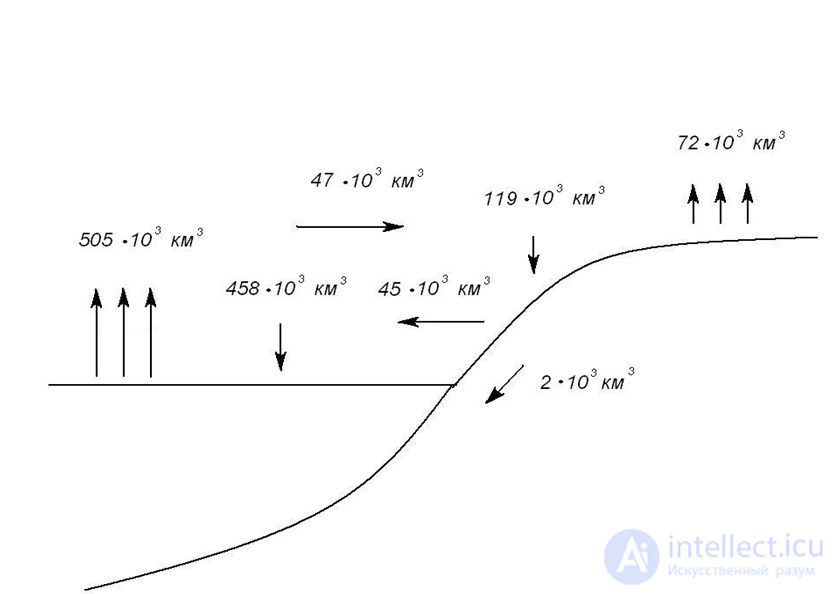
Fig. 6 Global water balance in the atmosphere
A continuous cycle of water vapor takes place in the atmosphere. Water vapor enters the atmosphere as a result of evaporation from the surface of oceans, seas, and continents; in the atmosphere it condenses, forming clouds, and then precipitation – snow and rain. Precipitation falls again onto the earth's surface – the ocean and land.
Evaporating this amount of water consumes 30% of all solar radiation. Heat is released into the atmosphere upon condensation of the vapor. At any given time, the atmosphere contains 14∙103 km3 of water.
Snow and ice cover are products of climate. However, they influence both the climate and other components of the geographic landscape. Snow has a certain influence on the adjacent layer of air – it promotes surface-based inversion.
In Russia, snow accumulated over the winter provides more than 50% of the feeding of Russia's rivers.

Comments