
Lecture
The simplest motion of air that can be assumed theoretically is rectilinear, uniform motion without friction. Such motion, with the deflecting force different from zero, is called the geostrophic wind. In the real atmosphere it occurs at altitudes above 1000–1500 meters.
In a homogeneous pressure field the gradient force is directed identically everywhere in both direction and magnitude. In the absence of friction, the moving air is acted upon by the gradient force FG, directed perpendicular to the isobars, and the deflecting force A, directed perpendicular to the motion.
In steady motion the gradient and deflecting forces balance one another (equal in magnitude but opposite in sign), so in the Northern Hemisphere the Coriolis force is always directed to the right of the velocity vector at a right angle. It follows that the gradient force is directed at a right angle to the velocity, to the left. Thus, the geostrophic wind blows along the isobars.  ;
;  .
.
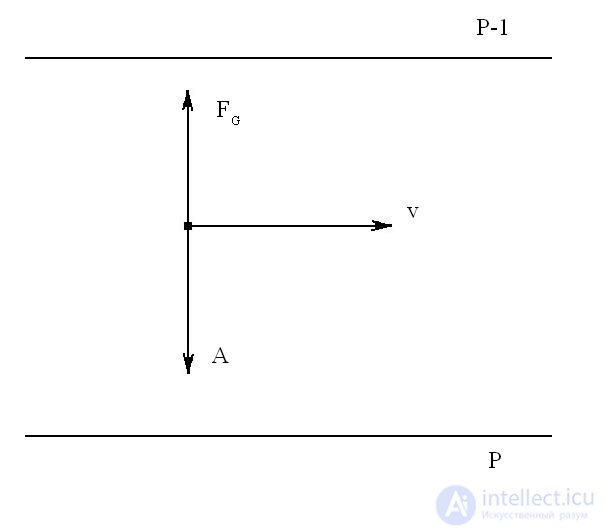
Fig. 9 Gradient force
The speed of the geostrophic wind is directly proportional to the pressure gradient and inversely proportional to the air density and geographic latitude.
The wind at the Earth's surface always differs from the geostrophic wind in both speed and direction, since the friction force at the surface is significant, whereas for the geostrophic wind it is assumed to be zero.
In the case of curved isobars, the direction of the pressure gradient, and hence of the gradient force, changes from point to point, so the motion of the air becomes curvilinear.
In the absence of friction, the following forces act on the moving air:
Gradient force FG
Deflecting force A
Centrifugal force C
The velocity at any point is directed along the tangent, and the deflecting force is directed at a right angle to the velocity. In a region of low pressure (cyclone) the gradient force is directed from the periphery toward the center of the pressure system and is balanced by the centrifugal and deflecting forces, which coincide in direction. In the case of an anticyclone, the deflecting force is balanced by the gradient and centrifugal forces.
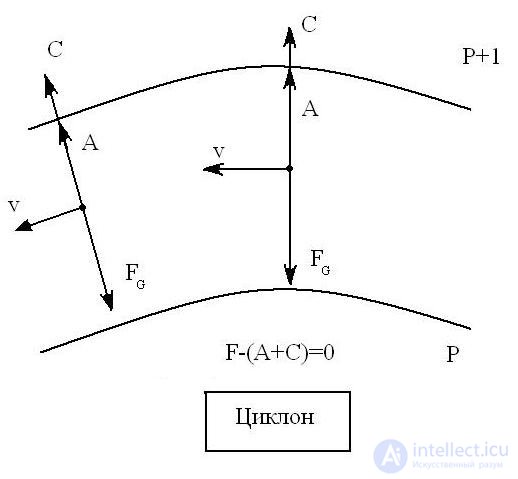
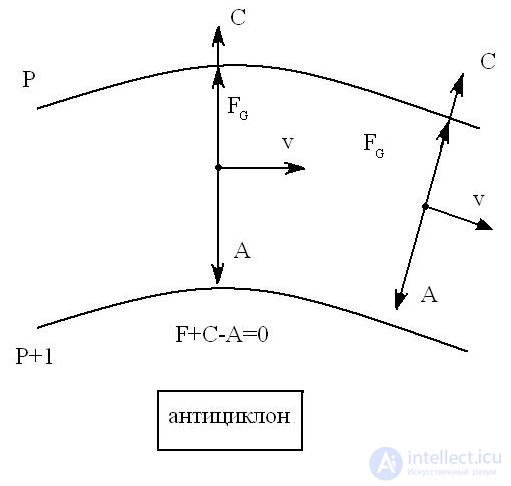
Such a theoretical case of uniform air motion along circular orbits, without accounting for friction, is called the gradient wind. The speed of the gradient wind is easily calculated from the formula:
FG - A C = 0
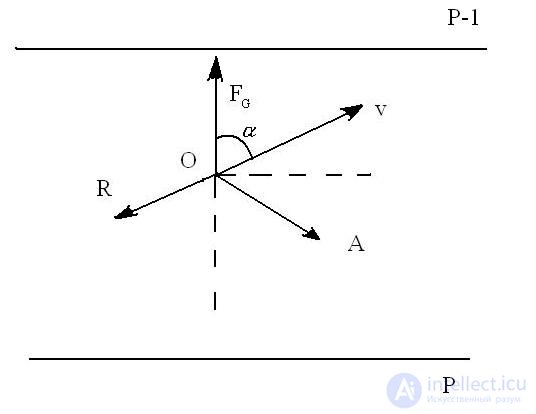
Fig. 10 Air motion in the presence of friction
The motion of air at the Earth's surface is accompanied by a friction force. Let us consider steady air motion with straight, parallel isobars. In the case of straight isobars, the air motion will be rectilinear and uniform, but its direction will not coincide with the direction of the isobars. At point O, the motion of the air is acted upon by:
Gradient force FG
Deflecting force A, directed perpendicular to the velocity vector, to the right of it
3) R – the friction force, opposite to the velocity vector
The angle  between
  and
and  increases with latitude and decreases with friction. At the equator, where = 0 and = 0, the direction of motion coincides with the gradient. In temperate latitudes the angle over the oceans is 60–70°, and over land 45–50°.
With circular isobars, the air motion becomes curvilinear, since a centrifugal force is added to the forces acting on the air.
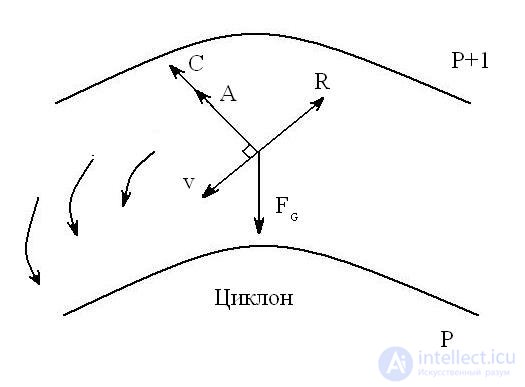 Fig. 11 Circular motion in a cyclone
In a cyclone, the gradient force is directed from the periphery toward the center, the velocity vector is deflected to the right, the centrifugal force is perpendicular to the velocity vector and directed along the radius of the trajectory away from its center, and the friction force is opposite to the velocity vector. The air motion in a cyclone is directed counterclockwise, from the periphery toward the center. Air from the surrounding areas tends to flow into the center of the cyclone. To compensate for this inflow, an upward air motion develops in the central part of the cyclone – air from the lower layers rises into the higher layers of the atmosphere.
In an anticyclone the air motion is directed from the center toward the periphery, that is, the air tends to flow out of the anticyclone's region beyond its boundaries; in the central part of the anticyclone, to compensate for this outflow, a downward air motion develops from the overlying layers of the atmosphere into the lower layers.
It is possible to determine areas of high and low pressure. If one stands with one's back to the wind, the area of low pressure will be located to the left and somewhat ahead of the observer, and the area of high pressure to the right and behind the observer (for the Northern Hemisphere).
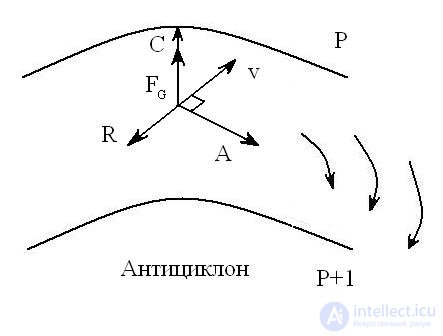
Fig. 12 Circular motion
in an anticyclone
With altitude, the friction force decreases, so the wind speed increases, and at the same time its direction changes, approaching the direction of the isobars. In the surface layer, up to a height of 30 meters, the wind speed increases rapidly while its direction does not change; then the wind speed continues to increase and its direction changes. In the Northern Hemisphere the wind will turn to the right, and in the Southern Hemisphere to the left, until its direction approaches that of the geostrophic wind.
The altitude above which the wind can be considered geostrophic depends on:
the nature of the underlying surface
the stratification of the atmosphere
the magnitude of the wind speed
The greater the roughness of the surface, the greater the height to which the friction force extends. Under unstable stratification, convection occurs, the atmospheric layers mix, and wind speeds are smoothed out. In this case the wind approaches the gradient wind at altitudes above 1500 meters.
Under stable stratification, turbulent mixing is almost absent, the exchange of air masses is weakened, the wind speed in the lower parts of the atmosphere is low, and with altitude it quickly reaches the gradient direction. In these cases the height of the friction layer is 300–500 m.

Fig. 13 Change in wind direction and speed with increasing altitude
The surface wind deviates from the horizontal pressure gradient on average by 60° to the right (in the Northern Hemisphere), gradually increasing with altitude, and at the level of the friction layer becomes gradient wind, reaching an angle of 90°. Over the sea, the angle at the surface is about 70–80°; over land (where friction is greater) – 40–50°.
If the stratification of the atmosphere is unstable, then already near the underlying surface the angle may be about 80°; however, its turning toward the direction of the geostrophic wind will occur slowly with increasing altitude.
If the stratification of the atmosphere is stable, especially during inversions, then the surface wind deviates from the pressure gradient to the left by an angle of 20–30°, and then, with increasing altitude, turns sharply to the right.
The following signs can serve to determine wind force (chart 78).
Light wind
The flag deviates slightly from the flagpole.
Smoke from a chimney is deflected slightly.
A handkerchief flutters and sways slightly.
Grass sways.
Branches and leaves on bushes tremble.
Branches sway on trees and leaves rustle.
Moderate wind
The flag is held unfurled and flutters.
Smoke from a chimney is deflected and stretches out without breaking.
A handkerchief flutters vigorously.
Grass bends toward the ground.
Bushes sway.
On trees, thin branches deflect and leaves sway strongly.
Strong wind
The flag unfurls with a noise and is held horizontally.
Smoke from a chimney is sharply deflected and breaks apart.
A handkerchief is torn from the hands. Grass is flattened to the ground.
Bushes are held bent over.
On trees, boughs sway and large branches deflect.
|
2-3 m/s (light) |
4-6 m/s (moderate) |
8-12 m/s (strong) |
|
|
|
|
|
|
|
|
|
|
|
|
|
|
|
|
Chart 78. Wind speed
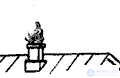 Deflects slightly
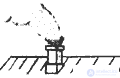 Deflects and stretches out without breaking
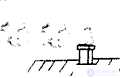 Sharply deflects and breaks apart
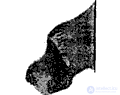 Sways slightly and lifts from the flagpole
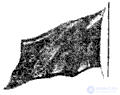 Held unfurled and flutters
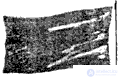 Unfurls with a noise and is held horizontally
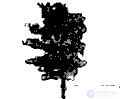 Thin branches sway and leaves rustle
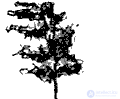 Thin branches deflect and sway strongly
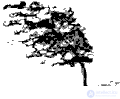 Thick branches deflect and thin branches sway
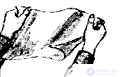 Sways and flutters slightly
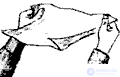 Flutters
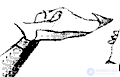 Is torn from the hands
Comments