
Lecture
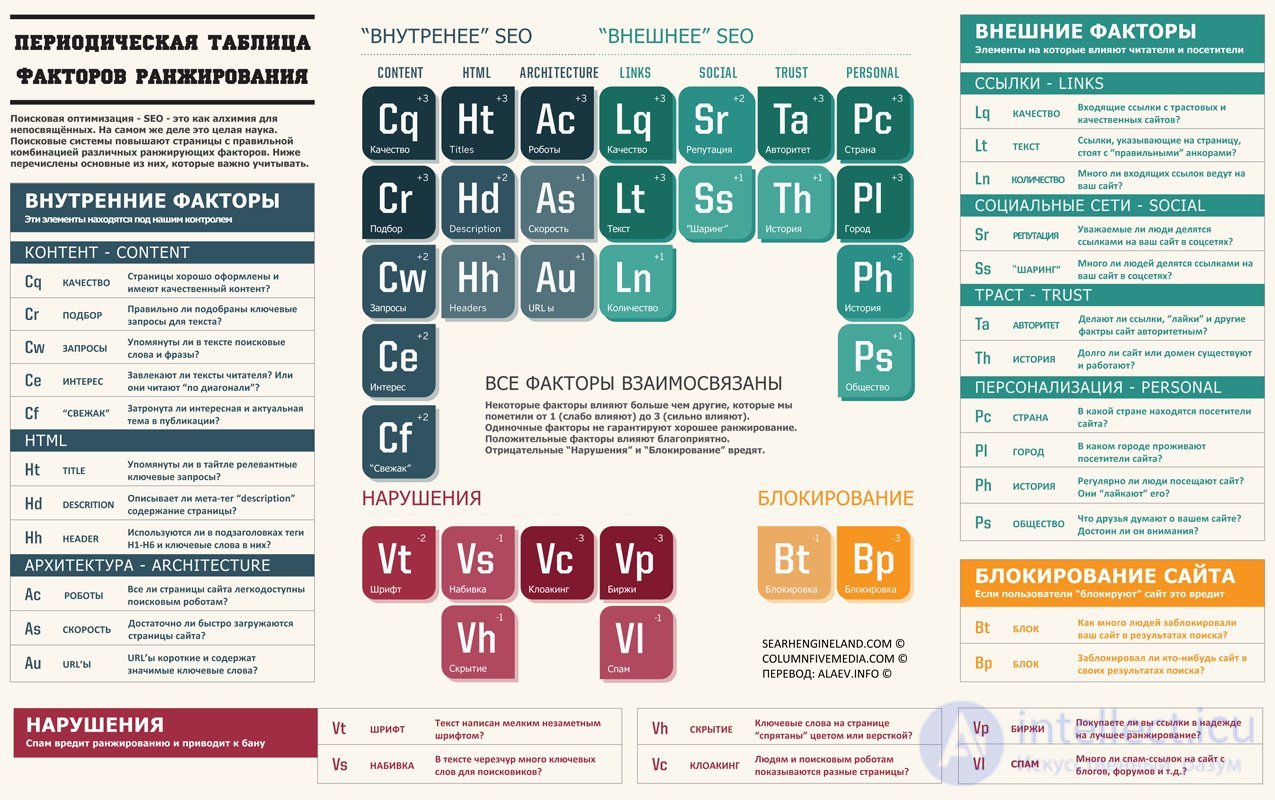
Here I bring together in one table the list of all the factors that affect your site's ranking in Google, Yandex, Bing, Yahoo!, Baidu, MailRu, SputnikRu and other search engines. The list contains positive, negative and neutral factors affecting ranking.
Even though ranking algorithms and signals keep changing and new ones keep appearing, the existing signals largely stay in the ranking factor set with only minor tweaks. Signals related to a site's internal content are the main, classic ones, because the most important thing on any site is its content, and that the site is made for people rather than being just another junk site.
Don't forget the most important thing: you're building the site for PEOPLE, not for search engines, so first and foremost the content or service on the site must be unique, and only secondarily should the site follow SEO rules.
The tag shows the page title in the search results. The title tag should be short (6 or 7 words maximum) and the keyword should be placed right at the start. for key pages it matched its name (with the page's heading, marked up, for example, with a tag this page should state: “Site name” — “Contacts” or simply “Contacts”;
but it's better to use link rel="alternate" and
Cutts recommends that webmasters place language versions of a site on separate domains (for example, domainname.com, domainname.ru, domainname.fr, etc.). First, Matt Cutts states that it's easier for a search engine to properly evaluate content that sits on a separate domain with a regional binding. Second, users in each individual country trust sites in their own domain zone more, because they perceive a company with such a site as a local business rather than something distant and inaccessible. If your budget doesn't allow you to buy separate domains in different domain zones, Cutts advises at least creating subdomains for each language version of the site.
Also, if a site in an international domain zone (for example, .com) is made for the audience of a specific country, you should specify that regional targeting in Google Webmasters.
9. Other |
|||
| 9.1 | excessive grey-hat and black-hat optimisation | there is a high probability of a significant drop in the site's ranking or even falling under search-engine filters and a ban | -3 |
| 9.2 | excessive white-hat optimisation | the zero-click effect, when for certain queries Google shows a snippet from your site, and it's enough for the user to look at that snippet without ever visiting your site. | -1 |
| 9.3 |
Registering a domain via Google local |
+1 | |
| 9.4 |
Using Google Search Appliance |
+1 | |
| 9.5 | HTML validation and CSS validation | the site's markup should be valid | +1 |
| 9.6 | Penalties, black-hat and grey-hat SEO, search-engine ban |
|
-3 |
You probably already know that Google uses around 200 ranking factors in its algorithms. But which ones? Luckily for you, today we're publishing the complete list.
155. Number of tweets. As with links, a page's tweets can influence its ranking in Google's search results.
156. Authority of Twitter user accounts. It's logical to assume that tweets from authoritative, long-established accounts with many followers carry more value than tweets from new accounts.
157. Number of Facebook “Likes”. Even though Google can't see most Facebook accounts, it's quite possible that the number of likes has some small influence on ranking.
158. Facebook shares. Shares on Facebook are very similar to backlinks, so they may influence a page's ranking more strongly than likes.
159. Authority of Facebook user profiles. As with Twitter, shares and likes on Facebook from popular accounts may be more valuable.
160. Pinterest pins. Pinterest — an insanely popular social network with a huge amount of public information. Google may well treat pins as a social signal.
161. Votes on social sites. It's quite possible that Google treats data from sites like Reddit, Stumbleupon and Digg as yet another form of social signal.
162. Number of Google +1s. Even though Matt Cutts tried hard to convince everyone that Google+ has no direct effect on ranking, it's hard to believe they'd ignore their own social network.
163. Authority of Google+ user accounts. It's not hard to guess that +1s from accounts with a good level of trust will be valued more highly than +1s from accounts with no followers.
164. Verified Google+ authorship. In February 2013, Google CEO Eric Schmidt stated that in search results, pages linked to a verified author profile would rank higher than pages without such a connection. As a result, users would be able to find verified results faster.
And although the Google+ authorship programme was shut down, Google most likely still uses authorship information to single out truly important content creators on the internet and give them a ranking boost.
165. Relevance of social signals. Google most likely takes relevance information from the account where the content is published, as well as from the text surrounding the link.
166. Site-wide social signals. Social signals concerning the site as a whole can increase its authority, which in turn strengthens the visibility of all its pages in the search results.
167. Brand name in anchor text. An anchor containing the brand name (company, trademark) — this is a simple but very strong signal.
168. Searches containing the brand name. Naturally, people often search for brands, companies and sites by name. If users search for your site on Google (for example, the query “Backlinko twitter” or “Backlinko ranking factors”), Google most likely takes this into account.
169. The site has a Facebook page and “Likes”. Companies often have a page with a good number of likes on this social network.
170. The site has a Twitter account and followers. A Twitter profile with a lot of followers means the company (brand) is popular.
171. Official LinkedIn page. Most genuinely existing businesses, as a rule, have profiles set up on the LinkedIn site.
172. Employees listed on LinkedIn. Rand Fishkin believes that having LinkedIn user profiles listed as employees of your company is another positive signal for Google.
173. Authenticity of social media accounts. An account with 10 thousand followers, two posts and zero activity will most likely be perceived differently from an account with the same number of followers but a high degree of activity on the network.
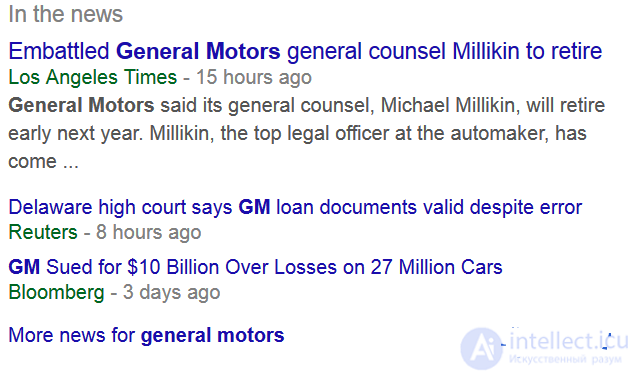
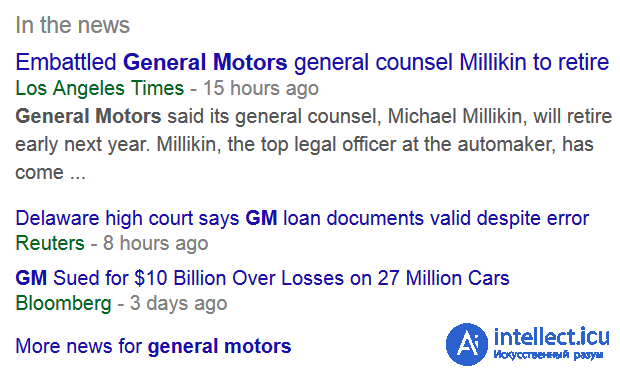
174. Brand mentions on news sites. Truly large companies are often mentioned in the Google News section. Some of them even have their own news feed on Google's first page:
175. Word-of-mouth mentions. Brands can be mentioned not only through links but simply in words. There's a possibility that Google treats such “unlinked” mentions as another signal.
176. Number of RSS subscribers. Given that Google owns the popular Feedburner RSS service, it's logical to assume that RSS subscriber data is a signal of a brand's popularity.
177. Physical location marker on Google+. A genuinely existing business usually has an office. There's a possibility that Google looks at a company's location data to gauge how large it is.
178. Site of a tax-paying company. Moz reported that Google may track whether a site belongs to a business that pays taxes.

179. Panda penalties. Sites with low-quality content (content farms in particular) lose rankings after being hit by the Panda filter.
180. Links to “bad neighbourhoods”. If you give out links without nofollow that point to sites using suspicious linking schemes and dubious promotion methods, your site's ranking may suffer.
181. Redirects. Using redirects for cloaking purposes is a very, very bad idea. If you get caught, the site risks not only a penalty but also being dropped from the index.
182. Pop-up and distracting ads. The official Google Rater Guidelines document states that this kind of advertising is a sign of a low-quality site.
183. Overdoing site optimisation. This includes on-page factors such as overloading a page with keywords, an excessive number of headings, over-emphasising keywords, and so on.
184. Overdoing page optimisation. Many sources report that, unlike Panda, Penguin only affects individual pages of a site (and even then only for certain keywords).
185. Ads “above the fold”. The Page Layout algorithm is aimed at lowering the ranking of sites with a lot of advertising above the fold that distracts users from the main content (especially if there isn't much of it to begin with).
186. Hiding affiliate links. If you go too far trying to hide affiliate links, especially through cloaking, you can end up with a penalty.
187. Affiliate sites. It's no secret that Google isn't a huge fan of affiliate programmes. Many believe that sites which earn money through affiliate links are under closer scrutiny.
188. Automatically generated content. As with the previous point, Google isn't a fan of content generated automatically by a computer. If it suspects a site is using this kind of content, this may lead to a penalty or the site being removed from the index.
189. Attempts to manipulate PageRank. If you try too hard to boost your PageRank score (by putting a nofollow attribute on all outgoing links or on most internal ones), this can be seen as an attempt to game the system.
190. IP address flagged as spammy. If your server's IP address has been flagged for spam, it can harm the ranking of every site hosted on that server.
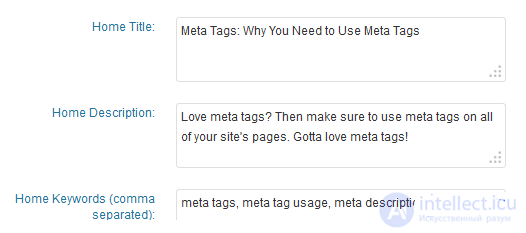
191. Meta-tag spam. Stuffing meta tags with keywords still happens too. If Google decides you're adding keywords specifically to trick the algorithm, your site can expect a penalty.

192. Unnatural link growth. A sudden (and unnatural) surge of links is a sure sign that they're fake.
193. Penguin algorithm penalties. Sites that have been penalised by Penguin are significantly less visible in Google's search results.
194. Link profile with a high percentage of low-quality links. Having a large number of links from sources typically used in black-hat SEO (such as blog and forum comments) can be seen as an attempt to game the system.
195. Topic of the linking domain. A well-known study conducted by MicroSiteMasters.com showed that sites with an implausibly large number of links from unrelated-topic sites are more susceptible to the Penguin algorithm.
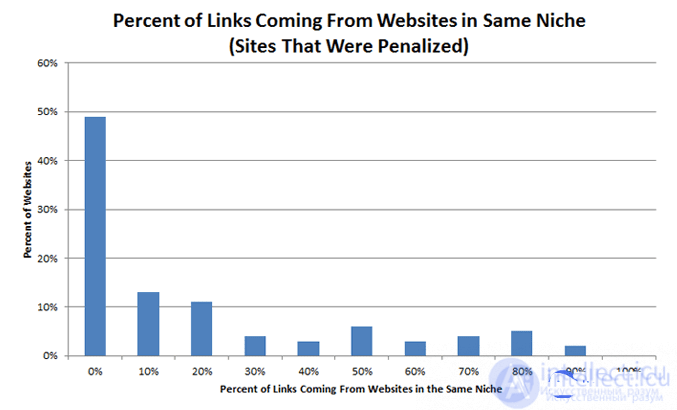
196. Unnatural links warning. Google has sent webmasters thousands of notifications about detecting implausible links. Such messages usually precede a drop in rankings, although the probability isn't always 100%.
197. Links from the same class C IP address. Getting an unnaturally large number of links from sites hosted on a server with a single IP can indicate the creation of a link network.
198. The word “poison” in anchor text. If the anchor text of inbound links contains words like “poison” (especially alongside medical-themed keywords), the search engine may treat this as a sign of spam or hacking. Either way, it can hurt your ranking.
199. Manual penalties. As is well known, Google can also apply penalties to a site manually, as happened with the well-known flower shop Interflora.
200. Sold links. Sold links can definitely affect your PageRank and your site's visibility in the search results.
201. Google Sandbox. New sites that get a sudden influx of links are sometimes placed in the Google Sandbox, which temporarily limits the site's visibility in the search results.
202. Google Dance. During the period when Google updates its databases (a phenomenon nicknamed Google Dance), sites' rankings can “shake around”. According to a Google patent, this event can help determine whether a site is trying to game the algorithm.
203. Disavowing backlinks (Disavow Tool). A tool like the Disavow Tool can be used to remove the effects of automatic and manual penalties applied to a site that has fallen victim to bad SEO.
204. Reconsideration request. An approved request for Google to re-review a site (after you've fixed the identified rule violations) can help lift penalties.
205. Temporary links. Google has already caught spam links that were created and quickly removed. Otherwise these are called temporary links.
206. cyrillic domains, oddly enough, have a negative effect on overall ranking. tested personally - not a single site with a key cyrillic word shows up for its own search query.... and this is true for both yandex and google.. and even for words like president etc

Comments