
Lecture
Electrical activity of the skin (EAS), formerly called galvanic skin response (GSR) — a bioelectric response recorded from the surface of the skin, an indicator of the activity of the autonomic nervous system, widely used in psychophysiology.
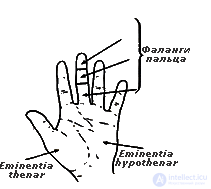
Recording methods. The measurement and study of the electrical activity of the skin (EAS), or galvanic skin response (GSR), began at the end of the 19th century, when the French physician Fere and the Russian physiologist Tarkhanov almost simultaneously recorded: the former — a change in skin resistance when a weak current was passed through it, the latter — a potential difference between different areas of the skin. These discoveries formed the basis of two methods for recording GSR: the exosomatic method (measuring skin resistance) and the endosomatic method (measuring the electrical potentials of the skin itself). It should be remembered that these methods yield differing results.

At present EAS encompasses a whole range of indicators: skin potential level, skin potential response, spontaneous skin potential response, skin resistance level, skin resistance response, spontaneous skin resistance response. Skin conductance characteristics have also come to be used as indicators: level, response, and spontaneous response. In all three cases "level" refers to the tonic component of EAS, i.e. long-term changes in the indicators; "response" — the phasic component of EAS, i.e. rapid, situational changes in EAS indicators; spontaneous responses — short-term changes with no visible connection to external factors.
Origin and significance of EAS. The occurrence of the electrical activity of the skin is due mainly to the activity of the sweat glands in human skin, which are in turn under the control of the sympathetic nervous system.
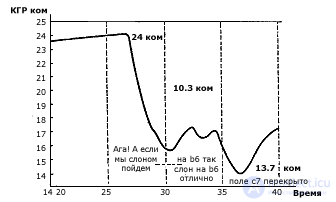
Dynamics of the galvanic skin response in the process of solving a mental (chess) problem (after O.K. Tikhomirov, 1984).
The lower part of the figure gives the verbal reasoning accompanying the solution. A sharp drop in skin resistance is an indicator of emotional activation at the moment of decision-making
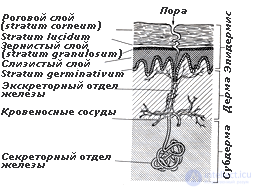
A person has 2-3 million sweat glands, but their number varies greatly across different areas of the body. For example, on the palms and soles there are about 400 sweat glands per square centimeter of skin surface, on the forehead about 200, on the back about 60. Sweat is secreted by the glands constantly, even when no drop appears on the skin. Over the course of a day about half a liter of fluid is released. In exceptionally intense heat, fluid loss can reach 3.5 liters per hour and 14 liters per day (see Video).
There are two types of sweat glands: apocrine and eccrine.
Apocrine glands, located in the armpits and groin, determine body odor and respond to stimuli that cause stress. They are not directly related to body temperature regulation.
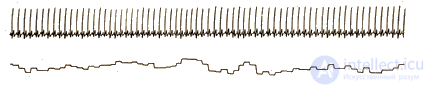
Eccrine glands are located over the entire surface of the body and secrete ordinary sweat, the main components of which are water and sodium chloride. Their main function — thermoregulation, i.e. maintaining a constant body temperature. However, those eccrine glands located on the palms and soles, as well as on the forehead and under the arms — respond mainly to external stimuli and stressful influences.
In psychophysiology, the electrical activity of the skin is used as an indicator of "emotional" sweating. As a rule, it is recorded from the fingertips or palm, although it can also be measured from the soles of the feet and the forehead. It should be said, however, that the nature of GSR, or EAS, is still not entirely clear.
In 1849, the German physiologist Dubois-Reymond first noticed that human skin has electrical activity. By immersing the limbs of subjects in a zinc sulfate solution, he discovered a movement of electrical current between a limb with contracting muscles and a relaxed limb. Because of this, he considered the electrical activity of the skin to be related to muscle activity.
In 1878 in Switzerland, Hermann and Luchsinger demonstrated a connection between the electrical activity of the skin and the sweat glands. Hermann showed that electrical activity is more pronounced in the area of the palms, believing that the activity of the sweat glands is an important factor in this.[25]
In 1879 in France, Vigouroux was the first to apply EAS in psychological work, working with mentally unbalanced patients.
In 1888, the French physiologist C. Fere, while working with a case of hysterical anorexia in a patient he referred to as «Madame X», found that when a weak current was passed through the forearm, systematic changes occurred in the electrical resistance of the skin. In 1889, the Russian physiologist Ivan Tarkhanov showed the presence of similar electrical shifts even without the application of an external current. Changes in the electrical activity of the skin were discovered during internal experiences, as well as in response to sensory stimulation. It is now believed that the physiological bases of the indicators measured by these methods differ. In former times, both of these indicators were designated by the common term «galvanic skin response». Now, when applying Fere's method with the application of an external current (exosomatic method), the indicator is considered to be skin conductance (SC), while when using Tarkhanov's method (endosomatic method) — the electrical potential of the skin (SP).
Carl Jung regarded GSR as an objective physiological «window» into the unconscious processes postulated by his mentor Freud. It was in Jung's work that it was first shown that the magnitude of the electrical skin response probably reflects the degree of emotional experience.[26]
Waller studied GSR in subjects who mentally imagined a German air raid on London.[27]
Syz was among the early researchers who believed that GSR is a better indicator of emotions than a subject's own report of their experiences. He found that in medical students, words such as «prostitute», «wasted youth», or «unpaid bill» provoked GSR, while the subjects themselves reported no emotion in response to these words. The scientist believed that, owing to social taboos, these emotional responses were not consciously recognized, yet remained emotional nonetheless. However, in this experiment the GSR changes in medical students are more likely an indicator of the orienting response.[28]
In 1928, Bayley, in her work devoted to the study of fear, based on an analysis of subjects' subjective reports as well as their physiological responses in the form of EAS changes, concluded that there are two types of fear: fright from the unexpected and fear caused by understanding of the situation. [29]
Also in 1928, Linde found that funnier jokes regularly evoked a more pronounced GSR (a relationship expressed by the logarithmic Weber—Fechner curve).[30]
The Austrian psychoanalyst W. Reich studied EAS in his experiments at the Psychological Institute of the University of Oslo, in 1935 and 1936, as part of developing his hypothesis about orgone energy[31]
E. N. Sokolov, in his studies, concluded that it is possible to distinguish the orienting response to new stimuli from the defensive response to threatening stimuli based on a comparison of the pattern of blood flow in the scalp skin: the orienting response is accompanied by dilation of the forehead arteries, while the defensive response — by constriction of these vessels. Vinogradova O. S.,[32] In psychophysiological studies, the rate of habituation, expressed as a decrease in response to a repeatedly presented stimulus, often serves as a dependent measure and is assessed, for example, as the number of stimulus presentations before the electrodermal response disappears. Thus, using this method it was found that in patients with schizophrenia, habituation occurs more slowly than in normal individuals.[33]
By 1972, more than 1,500 articles on EAS had been published in specialized journals. Today, EAS is considered the most popular method for studying human psychophysiological phenomena.[34] As of 2013, the use of EAS in clinical practice continues to grow.[3
The occurrence of EAS is mainly related to the activity of the sweat glands of human skin, however its physiological basis has not been fully studied. Although early researchers assumed that factors other than sweat gland activity might be involved in determining the electrical activity of the skin: some scientists believed that EAS reflects muscle activity, while others spoke of a possible role of peripheral blood vessels. The muscular theory was rejected fairly quickly. Somewhat later, a number of experiments also refuted the possibility of the vascular theory. Thus Lader and Montagu demonstrated that when the sweat gland response is pharmacologically suppressed, the SCR disappears, while under similar blockade of peripheral blood vessels the SCR is preserved unchanged.[15] However, the possible influence of the vascular system on skin potential still remains unclear.
Despite the fact that the neurotransmitter for the sweat glands is acetylcholine (a transmitter characteristic of the parasympathetic system), they are under the control of the sympathetic nervous system (for example, destruction of the sympathetic nervous system on one side of the body leads to the abolition of EAS only on that side[16]). Because of this, and also because of the widespread belief that the sympathetic response is diffuse in character, EAS was used in the past as a crude indicator of sympathetic system activation. However, research into the connections of the sweat glands with the central nervous system reveals the unfoundedness of such a simplified approach[17][18]). The sweat glands receive influences from the cerebral cortex and deep brain structures: the hypothalamus and the reticular formation.
A person has 2-3 million sweat glands on their body, but their number varies greatly across different areas of the body. Thus on the palms and soles the density of sweat glands is about 400 per square centimeter of skin surface, on the forehead — about 200, on the back — about 60. Although the exact number of glands per unit area varies between individuals, the ratio of their numbers across different sites is quite consistent. Sweat secretion by the glands occurs constantly.
Experiments have shown that the activity of the sweat glands reflects certain events occurring in the brain. In the work of Bernstein, Taylor, and Weinstein, the key role of the «psychological significance» of a physical stimulus in predicting the sweat gland response was demonstrated.[21] At the same time, the magnitude of the sweat gland response is systematically related to the intensity of consciously experienced feelings. In his work «Consciousness and the Galvanometer», E. McCurdy summarized data on increased sweating in response to emotionally charged stimuli.[22]
There are a number of main hypotheses about the biological significance of «emotional» sweating. According to the traditional view, attributed to Darrow (1936), increased sweating allows the hand to grip something better and leads to increased tactile sensitivity; in addition, moistening of the palms and soles makes them less vulnerable to abrasions and cuts. All these changes are favorable in a threatening situation and quite understandable from an evolutionary standpoint. There are also other, more complex theories regarding the subtle physiological effects of such sweating
At present the term EAS encompasses a number of indicators, such as:
Different EAS indicators may carry different information about the underlying processes.
In psychophysiology, EAS is used as an indicator of «emotional» and «activity-related» sweating and is usually recorded from the fingertips or the palm using bipolar non-polarizing electrodes, although it can also be measured from the soles of the feet, the forehead, and the armpit area. Owing to the cyclical nature of sweat secretion by the sweat glands , EAS recordings have an oscillatory character. When applying Fere's method with the application of an external current (exosomatic method), the indicators are considered to be conductance (SC) or skin resistance (SR), while when using Tarkhanov's method (endosomatic method) — the electrical potential of the skin (SP).
Previously, many psychophysiologists in their studies adhered to the assumption that the site of EAS recording is of no significant importance. Thus Bull and Gale demonstrated that when subjects listened to a series of tones, the responses recorded from both hands turned out to be similar. However, a number of studies indicate that this assumption does not always hold true. Thus Varni found that in the course of classical conditioning, a stronger electrodermal response is found on the hand to which the electric shock is applied. Mystobodsky and Rattok showed the occurrence of a greater response on the left hand to visual stimuli compared with verbal ones, which is consistent with current views on interhemispheric asymmetry.
From an electronics standpoint, direct recording of resistance is simpler and cheaper, and in connection with this most researchers continue to use instruments that measure SR, and then, through the application of nonlinear transformations, convert the resulting data into conductance (SC) values, owing to the preference for this indicator for a number of reasons. One of the arguments for such a preference is based on biological considerations and consists in the fact that the sweat glands function as a set of parallel-connected resistors.[10] Since the conductance of a group of parallel-connected conductors equals the sum of their conductances, an increase in conductance is directly proportional to the number of sweat glands becoming active. Darrow independently found a linear relationship between skin conductance and sweat secretion, which is absent for skin resistance.[11] From a statistical standpoint, the use of SC values is also preferable compared with SR, because its distribution is closer to normal than that of SR values.
The following characteristics are considered as indicators of EAS:
A number of studies indicate that the two tonic SC indicators — SCL and SSCR — may be related to different types of activity. Thus, in Kilpatrick's experiment, it was found that in most subjects there was an increase in SCL without corresponding changes in SSCR during IQ testing, and a simultaneous increase in both indicators when taking the same test used to assess the degree of brain damage. This fact is consistent with data showing that spontaneous activity increases under emotional stress, while level changes arise both as a result of emotions and during mental work.
The level of tonic electrodermal resistance is used as an indicator of the functional state of the central nervous system: in a relaxed state (for example, during sleep) skin resistance increases, while at a high level of activation it decreases. Phasic indicators respond acutely to tension, anxiety, and increased mental activity.
Edelberg developed the «sweat duct circuit» model. The scientist proceeds from the fact that the lumen of the sweat gland has a marked negative potential compared with the surrounding tissue, which is the main electromotive force of SP. The amount of sweat standing in the duct determines the tonic level of EAS indicators. SCR or SPR occur when sweat is pushed along the duct as a result of secretion under the influence of sympathetic nerves or contraction of myoepithelial fibers, which are controlled to a greater extent by hormones. The sweat then either slowly diffuses through the duct wall into the stratum corneum, or is actively reabsorbed by the membranes of the duct cells. The shape of the late components of the responses is determined by the ratio of these two processes.[17]
In addition to the simple form of SPR, in which all changes are reduced to a brief increase in electronegativity, more complex forms are often observed. Thus, monophasic and biphasic SPR waves have been identified, which relate in a certain way to the recovery phase (return to the baseline level) of the SCR. With slow diffusion of sweat through the duct wall, skin conductance gradually returns to the baseline level. This slow recovery is usually accompanied by a monophasic shift in skin potential. Slow recovery in SCR and a monophasic negative SPR are signs of rapid movement of sweat up the duct, caused by its increased secretion or by contraction of the muscle at the base of the gland. It appears that a biphasic SPR, associated with rapid SCR recovery, is observed during active reabsorption of sweat due to changes in the membranes of the duct cells.[17]
According to this model, different EAS indicators, as well as different components of a single response, may reflect different biological processes. Thus the distinction between monophasic and biphasic negative SPR is used in studies of the nature of response formation in relation to behavior. In one experiment, subjects exposed to a loud tone showed SCR with slow recovery, however, when the same tone was presented as a signal for pressing a button as quickly as possible, the rate of SCR recovery increased. These data, among others, led Edelberg to the conclusion that the active process of sweat reabsorption, associated with rapid recovery, is a sign of the goal-directed nature of this activity.[23] Reabsorption — a biologically adaptive process that protects the skin from excessive moistening, which could impair fine movements. SCR with slow recovery is defined as a protective response, in which sweat is retained on or near the surface of the skin to reduce the risk of abrasions.
EAS is a measure of autonomic nervous system activity with a long history of use in psychological research.[36] Hugo D. Critchley of the Department of Psychiatry at Brighton and Sussex Medical School states: «EAS is a sensitive psychophysiological indicator of changes in autonomic sympathetic arousal, which is associated with emotional and cognitive states».[37] In biofeedback therapy, EAS is used as an indicator of a patient's stress response for training them in anxiety control skills[38]
EAS recording is often carried out in combination with recording of heart rate, respiration rate, and blood pressure, which are also indicators of autonomic nervous system activity. EAS is used as one of the recorded parameters in modern polygraph devices, which are often used in lie detection.
A list and description of devices operating on the principle of measuring EAS (electrical activity of the skin, formerly called galvanic skin response (GSR)).
Measurement of EAS is also becoming increasingly popular in hypnotherapy and psychotherapeutic practice for determining the depth of hypnotic trance before beginning suggestive therapy. When traumatic experiences are evoked by the client (for example, during hypnoanalysis), immediate changes in the intensity of sweating may indicate that the client is experiencing emotional arousal.
A multicenter study is currently being conducted in Europe under the leadership of the research company Emotra[40] in cooperation with the psychiatric association (link unavailable) (EPASS) into the extent to which electrical hyperactivity of the skin may be an indicator of increased risk of suicide among patients with depression. The study covers 17 clinics in 10 European countries and is scheduled to be completed in 2016. The basis for this hypothesis was published in the Journal of Psychiatric Research.

Comments