
Lecture
The spherical coordinate system is a three-dimensional coordinate system in which every point in space is defined by three numbers  , where
  is the distance to the origin (the radial distance), and
  and
and  are the zenith and azimuthal angles, respectively.
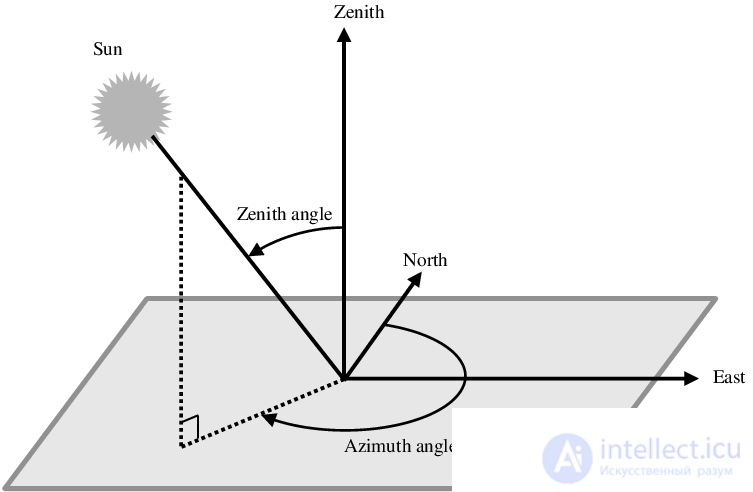
The concepts of zenith and azimuth are widely used in astronomy. The zenith is the direction of vertical ascent above an arbitrarily chosen point (the point of observation) belonging to the fundamental plane. In astronomy, the fundamental plane may be chosen as the plane containing the equator, the plane containing the horizon, the plane of the ecliptic, and so on, which gives rise to different systems of celestial coordinates. The azimuth is the angle between an arbitrarily chosen ray of the fundamental plane, originating at the point of observation, and another ray of that plane sharing the same origin as the first.
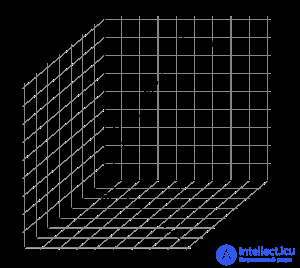
Fig. 1. A point has three Cartesian and three spherical coordinates
If we consider the spherical coordinate system relative to the Cartesian system  , the fundamental plane will be the plane
  , the zenith angle of a point given by the radius vector
  will be the angle between and the axis
  , and the azimuth will be the angle between the projection of onto the plane and the axis
  . This explains the names of the angles and the fact that the spherical coordinate system can serve as a generalization of many kinds of celestial coordinate systems.
The position of a point in the spherical coordinate system is determined by the triple , where
 is the distance from the origin to the given point .
 is the angle between the axis and the segment connecting the origin to the point .
 is the angle between the axis and the projection of the segment connecting the origin to the point onto the plane (see Fig. 1).
The angle is called the zenith, or polar, angle; it may also be called the inclination, or colatitude, while the angle is called the azimuthal angle. The angles and are undefined when  , and the angle is likewise undefined when
  (that is, when
  or
or  ).
).
This convention is established in the standard (ISO 31-11). In addition, a convention may be used in which, instead of the zenith angle , the angle between the radius vector of the point and the plane is used, equal to  . It is called the latitude and may be denoted by the same letter . The latitude can range within
  . Under this convention, the angles and have no meaning when , just as in the first case, and has no meaning when
  (that is, when
  or
or  ).
).
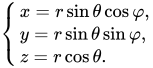
If the spherical coordinates of a point are given, the conversion to Cartesian coordinates is performed using the formulas:
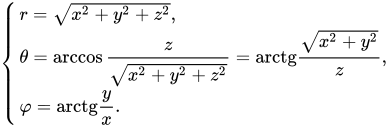
Conversely, from Cartesian to spherical:
The Jacobian of the transformation to spherical coordinates is equal to
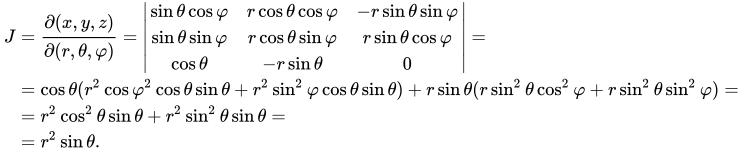
Thus, the volume element when converting from Cartesian to spherical coordinates will look as follows:

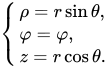
If the spherical coordinates of a point are given, the conversion to cylindrical coordinates is performed using the formulas:
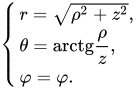
Conversely, from cylindrical to spherical:
The Jacobian of the transformation from spherical to cylindrical coordinates is  .
.
The vector  , drawn from the point
  to the point
  , is equal to

where



are the orthogonal unit vectors of the spherical coordinates in the direction of increasing  , respectively, and
  are the unit vectors of the Cartesian coordinates. Spherical coordinates are orthogonal, so the metric tensor has a diagonal form in them:
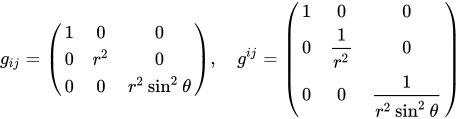



 :
: 


The rest are equal to zero.
The spherical geographic coordinate system is constructed as follows :
is measured along the radius vector drawn from the center of the Earth; is the colatitude (the complement of the geographic latitude to 90°); coincides with the geographic (eastern) longitude.The vector of the Earth's magnetic field induction  has the components

where  is the magnetic inclination;
  is the magnetic declination.
The components of the free-fall acceleration vector  are equal to

Finally, the components of the Earth's angular velocity vector  are as follows:

Spherical geographic coordinates are optimal for solving the equations describing the behavior of neutral particles in near-Earth space .
The spherical geomagnetic coordinate system is constructed as follows :
is measured along the radius vector drawn from the center of the Earth; is the geomagnetic colatitude (the complement of the magnetic latitude
  to
to  );
); coincides with the geomagnetic longitude, measured eastward from the plane in the western hemisphere containing the geographic and geomagnetic poles.
The geographic coordinates of the north magnetic pole are equal to

In the spherical geomagnetic coordinate system, the declination �=0 and
and





Formulas relating the geographic and geomagnetic spherical coordinates :




In spherical geomagnetic coordinates it is simpler than in spherical geographic coordinates to describe the influence of the geomagnetic field on charged particles in near-Earth space .

Comments