
Lecture
News — timely information that holds political, social or economic interest for the audience precisely because it is fresh, that is, reports of events that have recently happened or are happening right now. News also refers to programmes (a collection of several news items) on television and radio, and in the print press or on websites — to news digests, in a dedicated section of a newspaper.
an event did not happen when it happened, but when it was reportedan event did not happen the way it happened, but the way it was reported in the news
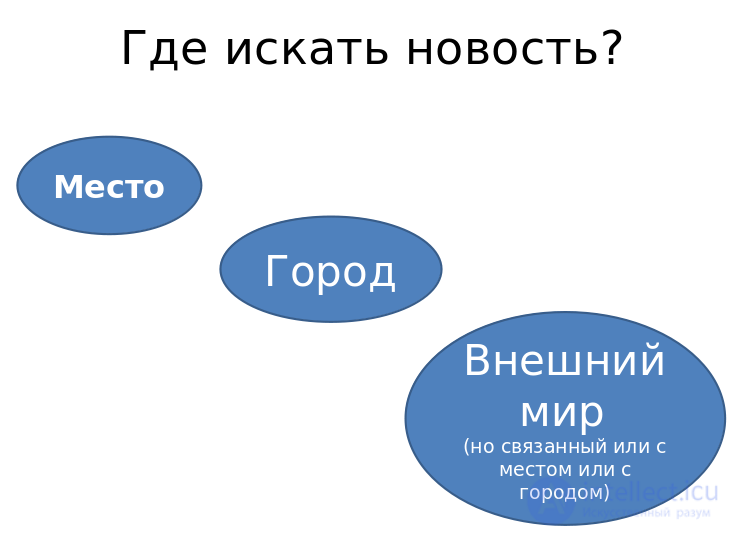
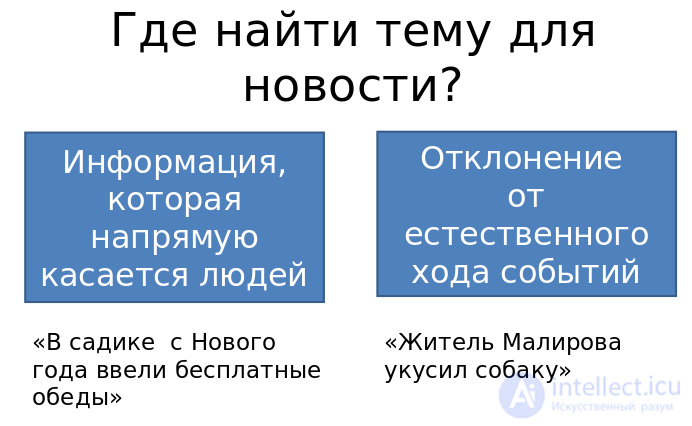
Information that directly concerns people
“Free lunches introduced at the kindergarten from New Year”
Deviation from the natural course of events “Resident of Makir bites a dog”
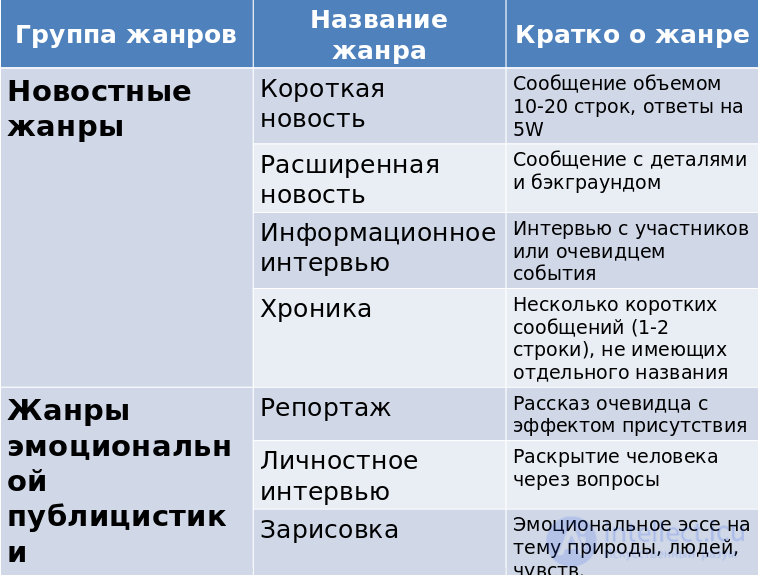
News genres
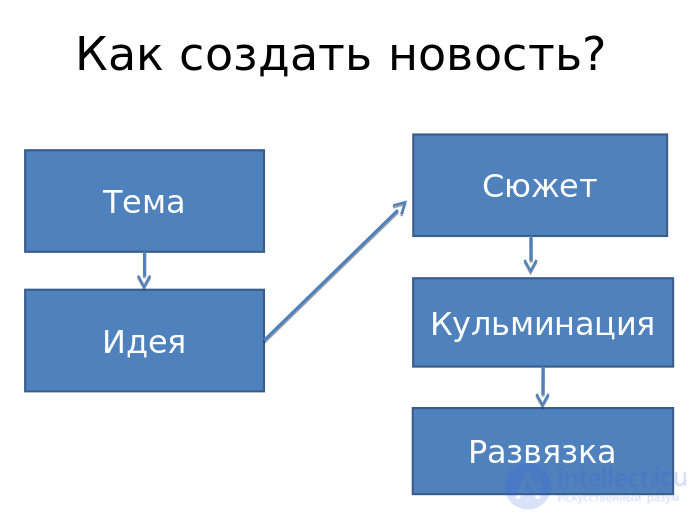
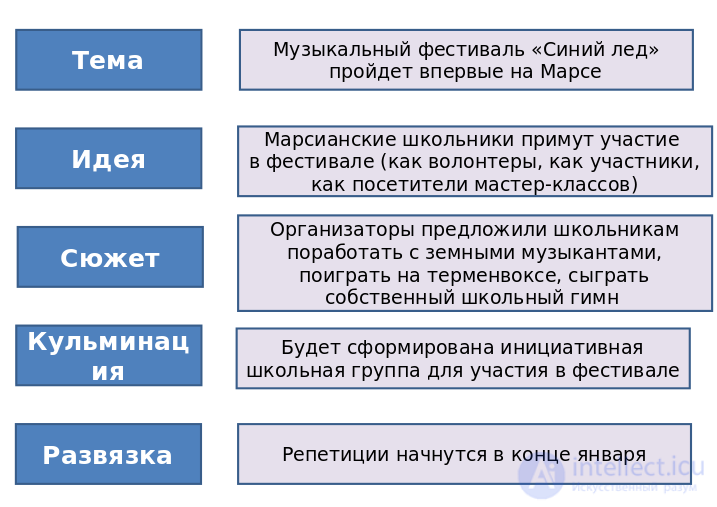
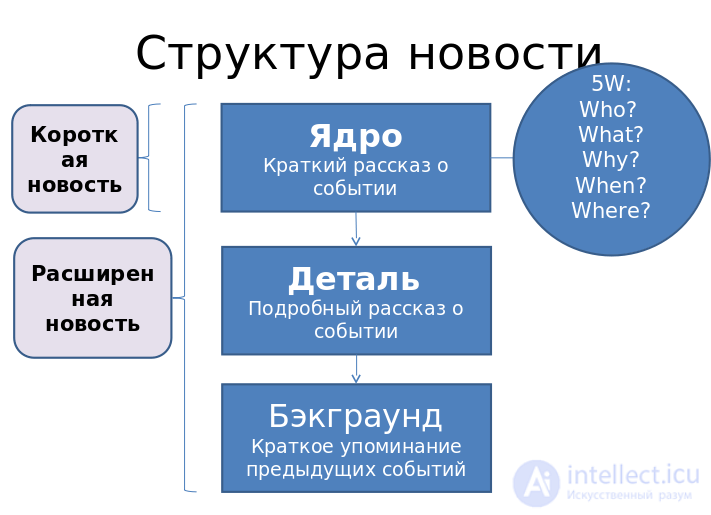
Structure of a news story
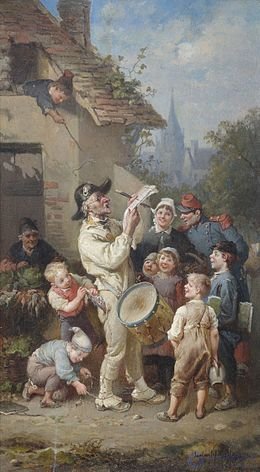
For a long time news spread, often in a distorted form, as rumours, from person to person. In antiquity, official news was delivered by messengers, and heralds announced it to the general public. In Ancient Rome, wealthy people who lived in the colonies had their own personal correspondent-chroniclers in Rome, whose job was to keep them abreast of everything happening in the capital. Most of these correspondents were educated slaves. For example, when Cicero was proconsul, a certain Chrestus sent him political news from Rome, forwarding reports on gladiatorial fights, city incidents and gossip circulating around town.
Hand-copied scrolls titled Acta diurna populi romani (“Daily acts of the Roman people”) were posted in public squares and delivered to politicians or simply to prominent citizens. Roman newspapers took the form of wooden tablets on which a chronicle of events was recorded. News digests were, as a rule, unofficial in character, until Julius Caesar ordered that reports of senate sessions, dispatches from generals and messages from the rulers of neighbouring states be distributed as a matter of course.
The world's first printed newspaper was the “Capital Herald”, which began to appear in China in the 8th century. It carried the emperor's edicts and reports of the most important events. Newspapers were printed from boards on which characters were carved, coated with ink and pressed onto paper. This technology was extremely inconvenient, since a board quickly wore out from being repeatedly coated with ink.
In medieval Europe, the need to maintain communications between cities forced governments, institutions and some private individuals to keep special messengers, who constantly travelled between certain cities, carrying various kinds of messages from one to another. At the end of the 15th century, in order to maintain a steady exchange of news between various points, government institutions, monasteries, princes and universities began to make intensive use of such messengers, and between the most central and busy points an extremely active and thoroughly regulated exchange of news was established. At first this news was nothing other than messages from private individuals to private individuals, or else government circulars. But gradually an ever wider circle of people began to take an interest in all sorts of tidings brought by the messengers, and these began to be distributed among people for whom they represented not a personal but a public interest. Letters addressed to a private individual but of general interest began to be copied out in several copies and sent round to acquaintances. In this way private correspondence gradually developed into a public handwritten newspaper .
Until the invention in Germany in the 1450s, by Johannes Gutenberg, of the printing press, which made it possible to reproduce text and images without resorting to the services of copyists, newspapers (which were still the same hand-copied scrolls with the main news) remained a rather expensive attribute of the life of high-ranking officials or wealthy merchants. Newspapers began to take on their modern appearance in the 16th century. It was then that the very name “gazette” came into use — after the name of a small Italian coin, the gazzetta, which was paid for a news sheet vien. La gazeta dele novità (literally “News for a gazzetta”) in Venice . It is believed that it was in this city that the first information-gathering bureaus were formed — the prototypes of news agencies — and the profession of “news writers” arose.
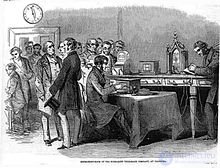
In the 19th century, the advent of the electric telegraph made it possible for newspapers to bring news of events around the world to readers with a speed never seen before.
The advent of radio broadcasting in the 1920s further accelerated the spread of news.
The spread of television starting in the 1940s made it possible to obtain not only textual or audio, but also video information about events. By the end of the 20th century, thanks to the development of satellite and cable television, dedicated news channels appeared, broadcasting around the clock.
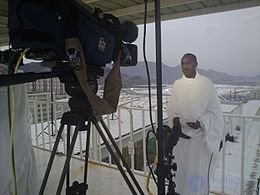
Finally, the development of the Internet and the emergence of online media have led to news now spreading practically instantaneously around the world.
As a rule, television and radio news is broadcast several times a day, starting on the hour and lasting from two minutes to an hour. News usually covers such areas as politics, economics, science, culture and sport, with a weather forecast at the end. The Western tradition holds that news should be presented as neutrally and objectively as possible and kept separate from commentary. The selection of news for a bulletin is made by the editorial team. A special broadcast is one devoted to a single topic; the length and frequency of special broadcasts may differ from that of regular broadcasts.
News is the answer to five questions: who, what, when, where and why (all starting with W: who, what, when, where, why).
A well-written piece is clear, easy to read, uses living, unstiffened language, instructs and entertains. All these characteristics apply to a well-written newspaper article to the same degree as to a well-written novel.
Analysing the situation in the media industry, Tom Wolfe rightly noted that the New Journalism uses typical literary devices :
Psychotherapists believe that a large amount of news coming from the media can have a negative effect on the psyche, particularly the psyche of introverts. This effect is related to the fact that negative reports about conflicts, accidents, mishaps and other problems tend to dominate the news, which can emotionally overload people who are emotionally sensitive. Doctors recommend that such people limit their viewing of news programmes .

Comments