
Lecture
Reportage – the most popular genre of journalism, especially on television. Its main task – to give the viewer (listener or reader) the chance to, as it were, be present at the event. The essential feature of reportage – the correspondent must necessarily be an eyewitness to the event, with personal perception, the selection of facts and details coming to the fore.
Video reportage is a composite genre: it includes interviews with participants and onlookers, comments from experts and so on. It uses practically every expressive means of television, with the exception of music. By content, reportages can be divided into event-based and thematic (problem-oriented and analytical).
Sound bite – video material that uses a piece of a direct interview with participants of the story.
Stand-up – video material in which the reporter is present in the frame and comments directly on the event taking place.
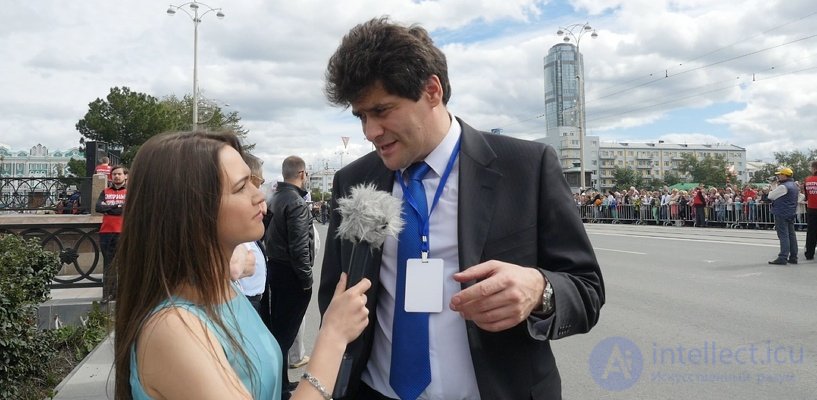
The first tell about a specific event – an exhibition, a sporting competition, a rally, a master class, an extracurricular event, and so on. Event (news) video reportage is based on current information. Its task – to reflect events tied to the unfolding of the informational, temporal process of the event taking place. An event story does not, as a rule, require any special flourishes of execution. The optimal set: a picture of the scene, a sound bite from a participant and (or) a sound bite from an expert, a stand-up against the backdrop of the scene with details clearly confirming the correspondent's presence there. For such a story, the most important determining factor is promptness, the timeliness with which the editorial team obtains the material.
Thematic reportages are devoted to a particular problem, for example the aftermath of a flood or drought, problems of ecology, migrants, tolerance, the introduction of a new school subject “Fundamentals of Orthodox Culture” and so on. Such reportages are noticeably more analytical, since the journalist does not follow a single event, as in an event reportage, but examines a series of events related to the theme, and selects from them what serves to reveal the theme. In the problem-oriented and analytical video reportage, an important element is the evaluative, commentary moment. By sound accompaniment, video reportages can be divided into voiced and silent. In the first case, the reportage is accompanied by the journalist's voice-over commentary,
in the second the event is shown without any commentary (no comments, as on “Euronews”).
In a commented reportage, an actively acting figure, alongside the camera operators, director and sound engineers, becomes the reporter. And although, as a rule, he remains off-screen for the whole broadcast, and the event itself often appears to him on the monitor screen as the result of directorial and camera selection, for the viewer it is precisely the reporter, as an eyewitness of the event, who is best informed about what is happening on the other side of the screen. At the start of the reportage, the journalist tells about the meaning and significance of the event, its participants, and the essential circumstances of its conduct. Then follows the actual presentation
of the event. At the end of the reportage its results can be summed up.
There is only one source of a video reportage — the event. But there are four component parts:
True, there is one more part — the interstitial ambient sound (live) — but it can quite reasonably be considered a variety of footage.
Out of these four and a half “building blocks” you will have to assemble your video reportages. With their help you will show events, create a story, evoke emotions and thoughts in the viewer, and craft an informational image. These component parts are universal tools, with the help of which any video reportage can be created.
A sound bite — video material that uses a piece of a direct interview with participants of the story. The name remained from the times when news was shot on film. For an interview it was necessary to synchronize what was filmed by the camera and the sound recorded on a separate tape. This was called “shooting on two tapes” or simply “synchronization”. The technology has moved far ahead, but the term has remained (at least, in post-Soviet countries).
Stand-up — video material in which the reporter is present in the frame and comments directly on the event taking place. This term, borrowed from English-speaking television people, comes from the English stand up. And indeed, 95% of stand-ups are done by the reporter standing (with the rare exceptions when he is lying down — under fire — or sitting — in a theater hall). With the emergence of live news, a variant of the stand-up appeared, known as
a fly-in — a live connection with the reporter from the scene of the event.
Voice-over — the text for a video reportage, which the reporter himself speaks off-screen, everything that he writes and broadcasts on air. The term came from cinema. When a script is marked “S/T” (sound track), it means that this shot should be accompanied by some sound or other, for example music. Video reportage adopted the “S/T” mark as one of its most important parts.
Footage — the entire set of edited shots shown in a video reportage.
Everything that was filmed on location by the television news crew's camera, and was later edited, is considered footage. With the exception of the stand-up. Footage — a term unique to news. Film — is one continuous, indivisible sequence of footage. But in a reportage, footage is merely the basis for the voice-over text and the reporter's words. Strange as it may seem, footage is only one of the components of a reportage, but not the reportage itself.
By the way, the interstitial ambient sound, or live sound, — is a small piece of footage that goes to air with the natural sound recorded by the camera. The concept of “ambient sound” was borrowed from the same cinema terminology. When it was necessary to record a sound, for example that made by a moving train or the wind, this was ambient sound. Live sound in the shot. But now it is more often called live (from the English live — live).
A media creator must handle the component parts of a video reportage correctly. He must understand why and for what purpose he makes the sound bite, what he films, how he records the stand-up, what he writes the text about, how he reads it off-screen, and how he edits the footage. For the material shot to become a true video reportage, one must not only master each of the named parts individually, but also be able to make them work together. The sound bite, the stand-up, the voice-over
text and the footage — are “bricks”, in which there is nothing complicated. But if you do not know how to lay a brick, the wall you build will inevitably collapse. The same is true of a video reportage. When laying the “bricks”, one must observe the laws of “bricklaying”: lay along a taut string, evenly and strictly vertically. That is why the general rule for creating a video reportage states: the parts of a video reportage exist only together and in interdependence. “More — less”, “better — worse”, “shorter — longer” — such ratios cannot be applied to the parts of a video reportage. It makes no sense. Each of them must be present to the extent that creating the story and the informational image requires. The sound bite, the stand-up, the voice-over text and the footage are not an end in themselves for the reporter, but merely professional tools that allow a true video reportage to be created. And, unfortunately, a bad, boring, uninteresting, unprofessional one too. If you have learned to do one of the components of a video reportage, but cannot cope with the rest, failure is guaranteed. A reporter's professional skill implies mastery of all the levers to an equal degree. And in the necessary proportion. How can this be achieved? By working through
each part of the story separately. Let's start, at least, with how to make a sound bite?
Of everything you will have to do in a video reportage, the sound bite — is the simplest and the most difficult. (Though, as are all the other components of the story.) Before you rush into the thick of events with a microphone, you need to think through what and why to ask people. After all, a sound bite is always an answer recorded on tape to a question posed by the reporter. So what exactly is a sound bite in a finished video reportage?
A sound bite — is one complete thought expressed by a participant of the event, which has a beginning and an end, fits entirely within a few sentences and
unambiguously clarifies the participant's attitude toward the event and his personal assessment of the event. From this definition it follows that a sound bite is always rigidly tied to the event chosen for the story. The point of a sound bite is by no means for someone to appear on screen and deliver an abstract, wise pronouncement. For the reporter, a sound bite — is the direct testimony of a hero or an antihero, which confirms, clarifies and deepens the development of the conflict within the bounds of
the chosen story. Moreover, the importance of this testimony is by no means that the person on screen voices some figures or facts. A sound bite is needed so that, first, it emotionally explains the event, second, it emotionally clarifies the participant's attitude toward the event, and, third, it emotionally evaluates the event. This rule applies to all persons who appear on screen, even official and government figures. A sound bite should contain not dry information, but a verbal expression of the hero's emotional attitude toward the event. This is, after all, precisely why you ask the question. Of course, far from all sound bites in a video reportage are emotional and vivid. Some people report dull information on screen. However, this does not mean that the reporter should only give the floor to those who foam at the mouth and tear their shirts in anguish. It is enough that the person on screen speaks in understandable language, and that his WORDS reveal a personal stance. Dry information in a sound bite matters less than the participant's living attitude toward the event.
The sound bite in a video reportage – is a subjective opinion that the reporter considers it possible to rely on when telling the story. Therefore the sound bite always testifies in favor of the hero, and hence in favor of the reporter's position. And if an “other opinion” is inserted into the story, that is the words of an opponent or antihero, it must still be presented in such a way as to affirm the hero's ultimate rightness. In this subjective, emotional truthfulness of the sound bite lies a curious paradox. It is generally accepted that the weight of an expressed opinion is directly proportional to the person's social, public status. Roughly speaking, people will listen to a subject if he can present weighty proof of his intelligence, merits, experience and so on. This holds true for any case
when a personality appears before the public. But not for video reportage. It does not matter to the viewer at all who is speaking on screen: a street sweeper or a general. The viewer will sooner believe the street sweeper if he delivers one vivid and emotional phrase, than the general, who, fumbling over his words, mumbles something long and incoherent. A sound bite recognizes neither rank nor title. Here only the freshness and precision of the emotion evoked by the event matters. Trust in the person on screen is determined by whether or not his words evoke empathy in the viewers. The mothers of Beslan were believed no less, and perhaps even more,
than an army official or Doctor Roshal.
Perhaps you have already put an equals sign between a sound bite and an interview. Regarding video reportage this is true only in part. If we consider an interview a means
of getting answers, this is correct. But in every other respect, the interview and the sound bite — are products of different technologies. This has to do with the practice of television broadcasting. As experience shows, “a person off the street” can meaningfully and emotionally sustain a sound bite for 3-5 seconds. A more prepared or educated participant of an event is able to draw out a sound bite lasting 8-12 seconds. A seasoned talker can manage even 20 seconds. The president or other figures from the top tier of the state are permitted to speak for up to 45 seconds. True, such long sound bites rarely make it into the story. So the usual length of a sound bite lies within 8-15 seconds. And what can be said in that time? Very little, and very much. After all, a sound bite — is not simply an emotional statement about an event, but also a meaningful one. One thought begun and finished in a single breath — an intelligent emotion. At the same time, this intelligent emotion for a sound bite almost always has to be obtained in a rush, sometimes under extreme conditions. In an interview you get answers to a variety of questions, in a sound bite you concentrate on one event. An interview reveals the hero's rational assessment of various problems, a sound bite — the emotional assessment of an event, an intelligent emotion. An interview is global and long, a sound bite — is narrow and short. And some quite minor details. A journalist conducting an interview has a couple of hours of calm work in a cozy, well-heated room in reserve, in order to ask dozens of questions. A reporter very often has only a few minutes and just one question at his disposal. The most important one. And he has to ask it in the rain or even under gunfire. An interview — is details, a sound bite — is only the main thing, and quickly.
A reporter can ask five or six questions in order to end up with the one or two sound bites he needs. Interview technique implies a complex and well-thought-out psychological duel with the “subject”, who must relax and say more than intended. Most often the reporter is deprived of this opportunity. He has to ask clear and specific questions head-on, pressing the interlocutor to get the needed answer. And all this in order to obtain the single necessary sound bite. An interview teaches you to listen to a person. A sound bite teaches you to listen closely to the answers, trying to catch the needed phrase.
You need to have a clear idea of what questions you will ask in order to obtain the right sound bite. The reporter is hunting for an intelligent emotion. To get it, all you need to do is:
These rules say one thing: when making a sound bite, you need to ask the questions that reveal the news hook and the story of the piece. Knowledge alone is not enough for this. You need to have a certain boldness and drive. And also to know the four laws of the sound bite.
The first law of the sound bite states: always press for the answer that you need. If you think that the heroes of the sound bite are aware of your creative plans or intend to present a pleasant surprise, you will never achieve a result. A sound bite is not an occasion for satisfying curiosity. A sound bite — is the search for the “edible” grain amid heaps of verbal chaff. How would you search for a diamond in a pile of coal if you do not know what it looks like? To get a good sound bite, you need to know exactly what you need it for in the story. From this follows the second law.
The second law of the sound bite states: the right question is the one whose answer you already know in advance.
The third law: do not ask about what can be said off-screen. A reporter always has at hand the saving reference “according to...”. When preparing the voice-over text, instead of the ellipsis you can insert the name of the person answering your questions, or some abstract “experts”, “observers” or “specialists”. And everything will turn out wonderfully! The viewer will get the impression that you listened to the hero of the story or the witness for a long time, and then briefly set out their words. In fact, this is exactly what happens. The reference “according to...” lets you quickly and clearly retell what people might chew over for several minutes. Unfortunately, most speakers have mush in their mouths. Many people not only cannot express their thoughts clearly, as is required for a sound bite, but cannot even place the stress on words correctly. Almost everything they will tell the camera, you can retell yourself. Into the sound bite you should take only what cannot be retold. Namely: vivid, intelligent emotions.
The fourth law of the sound bite clarifies: do not ask about what you can say on screen yourself. Every story has the reporter's stand-up. You already know in advance what you will say in it. Why ask the hero about this? Do not do double work, duplicating your stand-up with the answers of the hero or witness.
Make use of the four laws of the sound bite. This will significantly ease the work on the shoot.
Also, reporters the world over use the “5W+H” rule. This means that any person can be asked six of the simplest questions:
1) Who?;
2) What?;
3) Where?;
4) When?;
5) Why? and, joining them,
6) How?.
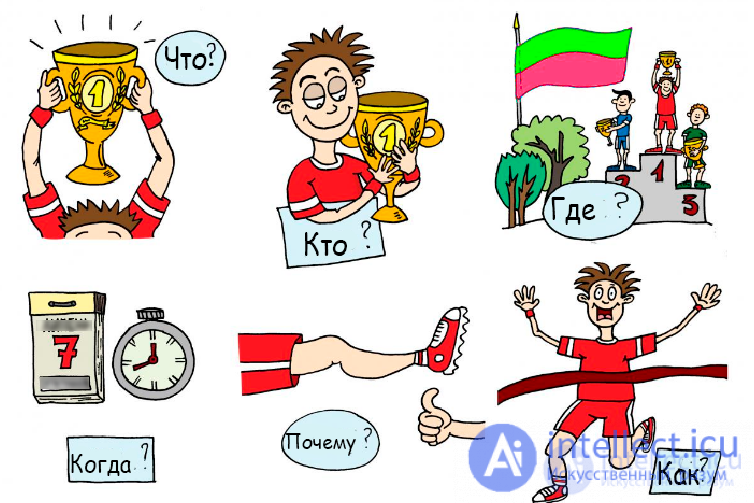
For your sound bites these are quite usable. You will get comprehensive information. Just remember that an intelligent emotion should go into the sound bite. For this
the “5W+H” formula is sometimes not enough. You need to improvise something on the spot. Sometimes the “Posner question” helps (which the respected master, with an inimitable intonation, asks everyone, regardless of position). It sounds simply: “But why?” The participant in your sound bite will be forced to explain something. And that means he will definitely reveal his emotions and attitude toward the event. Of course, you want all your questions to be smart and precise, but it does not always
work out that way.
To avoid the most foolish mistakes, get acquainted with the “blacklist” of what should never be done when preparing a sound bite. Here it is:
1. Do not ask about figures. You will get a precise answer, completely useless for the story. It will contain no intelligent emotion. You need an assessment of the figures, not the figures themselves.
2. Do not ask clarifying questions. People love most of all to delve into details. But you have no need of details.
3. Do not ask anything unnecessary. This requires great restraint and experience. Any unnecessary question leads away from the needed sound bite.
4. Avoid leading questions, in which the answer is already contained (the so-called closed questions).
5. Do not ask questions that can be answered with “yes” or “no”.
6. Do not ask a celebrity about their creative plans, or whether they love children, or how much they earn. Such questions have already been asked a million times, and the answer to them is obvious. Besides, they tend to intrude into private life. The answer will be such that you will not be able to put it into the story.
7. Never begin a question with the word “tell me”. A person subconsciously tunes in to answer like a schoolchild before a teacher, instead of opening up to you.
8. Never say the phrase “And one last question...”. You never know in advance which of the many questions will be the last. Usually this reporter's stock phrase causes irritation or laughter in the person answering.
9. Do not delve into the realm of emotions. Questions like: “What did you feel?”, “Were you upset?”, “Were you scared?” and the like put most people into
confusion, as if asking them to undress in public. By directly asking about their feelings, you will not get an intelligent emotion in the sound bite.
10. Never directly or indirectly insult the person you are talking to. Even if this person is extremely unpleasant to you, you must do your job.
11. Do not address anyone informally, even if they address you informally.
12. Do not ask an official about something that has no relation to their field of activity. You will get a short, meaningless, and therefore useless, answer.
13. Never phrase a question so that it can be dismissed with a short excuse. Your “subject” is in a state of stress, and if he can avoid thinking over the answer, he will not bother to think.
14. Do not try to joke when formulating a question. You will not get a joke back in response. If your joke is good, you will put your interlocutor in a difficult position: he will have to come up with something witty. Reporter's wit irritates many important figures, while ordinary people either laugh or answer incoherently. And if the joke falls flat...
15. Do not phrase simple questions too complexly. This will confuse your interlocutor. He will answer according to his own understanding, and you will not achieve what you were asking for.
16. Do not try to show off your education and awareness. The longer the question, the shorter the answer will be. Because your “subject” will either get confused, or forget the beginning of the question. Attempts to sound clever reveal unprofessionalism, not being well-informed.
17. Do not combine several questions into one. You will not get an answer to any of them.
To sum up the “blacklist”, it comes down to this: it is better not to ask a single question than to ask one bad one. Remember: a good sound bite can come down to three sentences, and a good question — to three words. The whole trick is finding them. So a legitimate question arises: how do you ask questions while shooting a sound bite? You cannot learn this by watching news programs. After editing, the person on screen always speaks smoothly, which in no way reflects the effort the reporter put in. So you will have to learn to ask questions through your own experience. Only a few tried-and-tested tips can be given.
How to ask questions when shooting a sound bite
A reporter's mastery of the sound bite begins with learning to listen to answers in order to hear a few useful seconds in them — that is, essentially, to find the sound bite. Usually people do not pay much attention to their own speech and pour out a whole stream of information. Very often it contains only a few useful seconds. But they are there! You need to catch them the moment the words leave the lips. Having asked a question, you must try to spot the moment when the person being interviewed begins “speaking the sound bite” and when it ends. You need to hear the beginning of the thought, follow its course and catch the ending. If all of this amounts to a few articulate sentences, intelligible by ear, and fits within a runtime of up to 10 seconds, then there is already one ready sound bite on tape.
Whether you need a second one is entirely up to you. People do not speak in sound bites. You need to learn to catch sound bites within the ordinary flow of words. Only experienced politicians know how to shape their speech so that any statement becomes a sound bite. But that is the easy case. To make your work on set easier, practise on relatives and acquaintances. Try to lead them into a long story and, while they are pouring their heart out, find and count how many sound bites they have said. Another problem you will definitely run into: how many questions should you ask to get the sound bite you need? Unfortunately, there is no ready answer. It depends, first, on the time you have available, and second, on the “subject” themselves. In any case, there is a simple way
to help yourself. Before shooting a sound bite, determine which question is the key one for you — that is, the one without which the reportage will be incomplete. You can prepare another three or four questions, but the key one must be the main one. You should try to get an answer to it at any cost.
Having determined the key question, do not expect the answer to come out exactly as you imagined it, word for word. You must anticipate the general meaning of the answer, but to insist on
the exact words you invented from your interlocutor is, at best, naive. People speak the way they speak. And you must aim for the meaning and emotion you need, not specific words. Do not fall into this trap that waylays overly meticulous reporters. A correct sound bite will always sound different from how you imagined it. But you will recognise it instantly.
Remember one more very important rule that helps save a considerable amount of time: the first question should always be the key one. Usually, at the very start of a conversation a person has not yet managed to switch on their defence mechanisms and may let something slip. Try to ask the key question without preparation, preamble or apologies, so as to catch the respondent off guard.
Very often, once people get into the rhythm of the conversation, they pour out everything you need. If there is still no result, use the “playing the fool” technique. Pretend that you completely fail to understand what you are being told, ask for a more precise explanation, and immediately ask the question you need. This technique usually works well for fragile-looking young female reporters who appear naive and trusting. If that has not helped either, you still have the “sweet-voiced nightingale” technique in reserve.
Shower the person with compliments, praise them, tell them how clever and interesting they are. Usually, after such eulogies, the softened-up “subject” is ready for anything. That is when you should ask the key question.
Quite often good sound bites come out when a person does not expect the question and does not even know they are being filmed. If you rush up to an unsuspecting person and thrust a microphone into their face without warning, most likely they will answer without thinking. They will answer exactly what you are waiting for. And if they do not know the camera is on and you are recording their every word, they may let it all slip out to the very end. Such a sound bite comes together quickly and well. Sooner or later you will inevitably run into a “clinical case”, when a person cannot string two words together or says something you simply cannot put into a sound bite. Here, no attempts will help. Let them go in peace and look for another “subject”.
Many reporters try to come up with and ask “sharp” questions that send shivers down the interlocutor's spine. Undoubtedly, a sharp question is very important for a reportage. But you must realise that, most likely, what you will hear in response is: “No comment”, or simply an unintelligible mumble. If you need exactly that kind of sound bite for the story — by all means! But a sharp question is almost never the key one. It only records the moral downfall of a specific individual. But it does not yet make a story. On the other hand, if your question brings a smile to your interlocutor's face, or the words: “Thank you for a good question!”, that means you have accidentally hit upon their pet subject or a “prepared line”. In that case the sound bite will be a good one, at least for your interlocutor.
Besides the problem of how to get a sound bite, another one is bound to arise: how many sound bites does a video reportage actually need?
There are a few general rules.
1. In a story with a runtime of up to two minutes there can be no more than four sound bites. If you decide to put in five or more, your reportage will turn into a set of statements by the event's participants with short lead-ins between them.
2. A reportage cannot contain more than three sound bites from one person. Otherwise it turns into a monologue.
3. The optimal number of sound bites for a reportage with a runtime of up to two minutes is two for the protagonist and two — for witnesses. For the story to develop correctly, the protagonist's first sound bite should come at the beginning of the reportage, then two sound bites from different witnesses follow, and closer to the end one more sound bite from the protagonist appears.
But this scheme is very approximate.
An important question: can a genuine reportage exist without a sound bite at all? How essential is a sound bite? In theory — it can. Especially if it is a reportage from the scene of an incident, an accident, a disaster. But a genuine video reportage, the kind we are discussing here, is practically impossible without a sound bite. In making a video reportage, you are creating a story that has a protagonist. Which means you are obliged to give them a voice, so the viewers can hear them. In the same way, witnesses' sound bites greatly increase trust in the story. After all, it seems to the viewer that these people, who are completely independent of the reporter and unconnected to the event, are surely telling
the truth. A video reportage without a sound bite will never be a genuine one.
A sound bite is recorded on the shoot, but it is always born in editing, when you try to pick out a few seconds of intelligible speech from an event participant. In editing, you will most likely have to go through one more “circle of hell” on the way to a quality sound bite. That is because people who can state a sound bite simply and clearly can be counted on one hand. Usually what you hear on tape is an incoherent mush of stumbles, repetitions, broken-off thoughts, confusion and throat noises. Picking a sound bite out of this chaos is very hard, but it can be done, almost always. Simple editing techniques in special computer programs will help you with this. Listen through and find your sound bites before writing the voice-over text. Then you will be able to put it all together successfully. Sometimes you may run into the opposite situation: a person spoke so vividly, so emotionally, that you want to take it all. You should categorically avoid doing this. However much you like all the sound bites, you must select only the best of the best for the reportage — that is, the ones that work most effectively for your story. A correct sound bite is short, precise and vivid. A genuine sound bite is one intelligent emotion. Look for these and put them into the story. Then it will turn out to be genuine.
Viewers have no idea that sometimes a reporter gets a sound bite without expending any effort at all and without asking a single question. When especially hot and tense events occur, sound bites simply fall into your hands. You just need to switch on the camera in time and record the words of a person worked up by what has happened.
It happens that a gift sound bite is presented by the camera operator. When the camera films the picture, it simultaneously records the sound. And so, reviewing the footage, you may suddenly discover striking words that a participant in the event shouted into the camera. From a theoretical standpoint this is a live. But for the story it is simply a “gift” sound bite. And what difference does it make what it is called, if there is a result? Now you have a general idea of how to make a sound bite.
But in making a video reportage, perhaps the hardest fight will turn out to be the fight with yourself. When you have to do a stand-up.
It is important to remember that a stand-up at the start of a story must plunge the viewer into the material's problem head-on. There is a saying about this, whose authorship is attributed to Vladimir Pozner: “A reportage should begin with a left hook and end with a right uppercut”.
A successful stand-up is necessarily the culmination of the material, the appearance of the journalist on screen at the moment when it is necessary to sharpen some detail to the utmost or to delve into the problem, to reveal it from another side not yet stated in the story. At the same time, the laws of structure allow a story to begin with the culmination — if the situation requires it. The stand-up must actualise to the utmost degree what the video reportage is talking about. There are three types of stand-ups: static, in motion (or as it is often called — a “walk-and-talk”) and combined (a composite stand-up). In the first case — the key role is played by the background against which the stand-up is recorded.
Zooming out or in, and pans, are permissible (if this fits the context of what the journalist is saying on screen). Not the best option is to cover part of the stand-up in editing with another shot — this creates a sense of incompleteness and lack of forethought.
When recording a “walk-and-talk” stand-up, it is important to remember that the movement on screen must be justified. Just “mindless walking” looks silly and out of place. You must always move from something towards something. Watch your gesturing! When talking about something to the camera, there is a great temptation to move your palms vertically and in parallel at chest level (“carrying bricks”). It is better not to do this.
A combined stand-up is a stand-up made up of spliced parts filmed from different points. Sometimes it enhances the story, sometimes it creates a sense of
“artificiality” and an excess of the journalist's presence on screen. It should turn out so that the stand-up's shots differ in scale and fit together organically in the edit. Exiting or entering the frame at the splice points is permissible.
1. SOUND. Besides the picture, sound is very important in a stand-up. Pay attention to where you will be recording; in noisy places try not to record, always record onto a microphone.
2. A stand-up exists in order to show something clearly once again, to draw the viewer's attention not to your own person, but to what you are talking about. If you are filming a battle, then, of course, it is better to take a wide shot, a panoramic one, and, for example, with some kind of zoom-in — a tightening of the frame, depending on the text.
3. Never stand in the centre of the frame, and do not blame the camera operator for this — it is better to explain your idea to them or discuss in advance how you envisage this or that stand-up.
4. More movement on screen. Do not be a talking head.
5. Watch your appearance, you must be neat. Tidiness should never leave you, you must always remember this. No bright items, no flashy details.
No gloves. Try to record with your jacket or coat unbuttoned, you must be open to the viewer.
And you should not use the phrase “behind me” in a stand-up.
One of the main principles of television goes like this: let the picture tell the story of the event. That is the ideal. In practice, the most optimal outcome is a combination of text and video information in which they do not contradict each other, do not duplicate each other, but harmoniously complement each other to give the viewer the fullest and richest possible picture of what is happening.
To achieve this effect, the correspondent, when writing the text of a video reportage, must not forget about the presence of the footage.
How should you write voice-overs? Some prefer speech rich in figures of speech, inversions, epithets and comparisons. Others are drawn to a sparing, sometimes even bare-bones
style of presenting the material. That is a matter of taste. Something else matters more. Attention to the small things, the details that appear in the video shot by the camera operator. The search for non-obvious cause-and-effect links, paradoxes, however minor they may seem at first glance.
You should not talk about what is not there, what did not happen, or what might happen. After all, you do not have that on video. What will you show? At the same time, however, you must never lapse into a detailed retelling of the story's picture. The main thing is facts, details and lead-ins to lives or sound bites, so that everything flows organically, one thing following from another. You should not write unjustifiably long voice-overs. Three or four sentences. After that — a sound bite or a live. The shorter the voice-overs, the more dynamic the story.
Remember the runtime. Anything longer than four minutes can, as a rule, be squeezed down to two and a half. 2:30 is the average runtime of a news video reportage. That is not so little! You should not try to cram into the reportage everything you want to say “on the subject”. There should always be a layer of information that you do not give in the text but keep in mind.
The formatting of the text also matters. Write out the captions in detail. If the person on screen is answering the journalist's question, do not forget to indicate in the caption who it is.
And the most important thing. When working on a video reportage, it is important to understand that there are no rules without exceptions. That is why all the “laws of the genre” in television journalism are nothing more than conventions, which you need to keep in mind but which it sometimes does no harm to forget.
Creating a video reportage requires a minimum of two people: a journalist and a camera operator. Usually, however, the crew also includes a director and an organiser-coordinator (one person can combine both roles), who finds the information needed to create the video reportage, negotiates, calls the necessary people, coordinates the work of the journalist and the camera operator, and helps them during the shoot.
Any kind of reportage requires very thorough preparation: it is necessary to study the event's scenario, the range of issues that might come up during it,
to get to know the most important participants, their opinions on the issues involved, to think through the questions for interviews with participants and viewers of the event and the range of people to be interviewed. It is also necessary to prepare the technical equipment in advance, think through where to place microphones and video cameras, and the correspondent's possible movements. The journalist must prepare the talking points for their commentary, remember or have on hand a considerable amount of reference material. The crew's organiser-coordinator is meant to help the journalist. Beginning reporters are advised to write out an intended script for the video reportage.
The camera operator must have skills in working with a video camera and be able to edit the footage shot. Video editing can also be done by a special (fourth) person on the creative team who is skilled at working in a modern video editing computer program.
Good editing can “pull out” a failing piece of material, bad editing — will “kill” the most spectacular story.
There are laws of editing (alternating shot types, etc.) that every editor should know about. The main thing — avoid shots that are too long. Anything longer than four seconds must be justified by movement on screen, a pan, or a zoom in or out. At the same time, it is inappropriate to use shots shorter than two seconds — it will end up looking like a “cartoon”. Watch the joins between voice-overs and lives with sound bites. There should be no long (around a second or more) dead audio pauses between them.
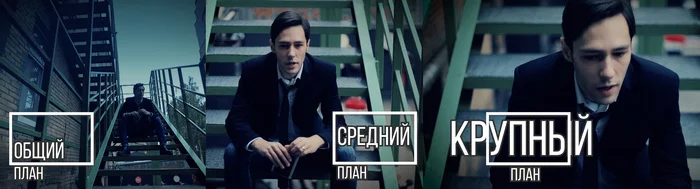
One of the fundamental laws is editing by shot scale. Shots are framed according to the size of the person in them. In wide shots — the person is full-length, in medium shots — from the waist up, in close-ups — most of the frame is taken up by the face.
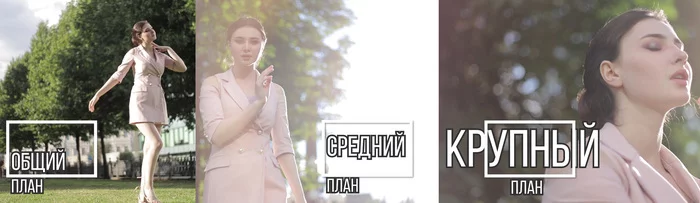
Besides these, there are also extra-wide, extreme close-up, macro shots, and detail shots.
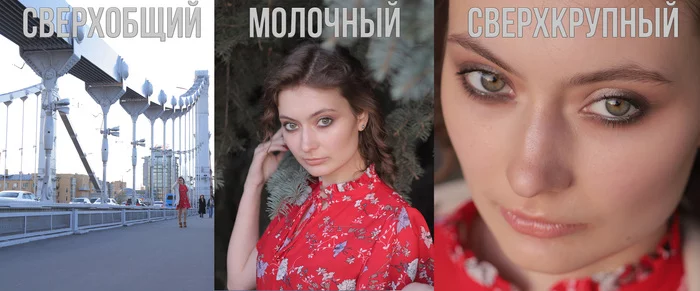
. In editing, it is permissible to place shots of different scale together.
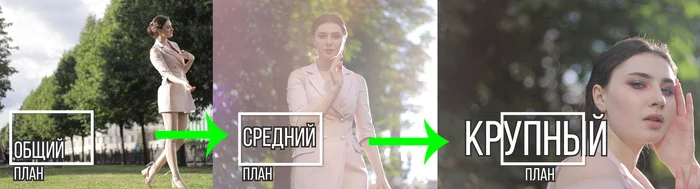
A wide shot with a medium and a close-up, but a wide shot cannot be placed with a wide shot.
At the same time, it is permissible to place two close-up shots next to each other, but they must contain different details. Why that is so, again, is all connected with the psychology of human perception.
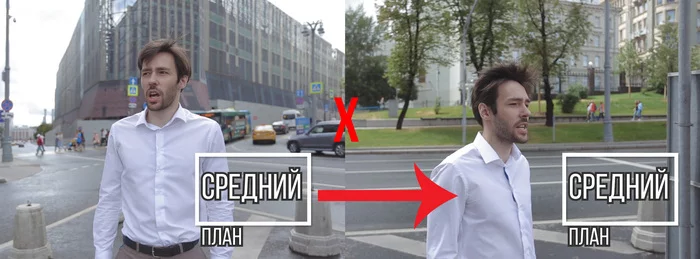
When a person moves, they cannot shift sharply from one place to another. And a medium shot following a medium shot from a different angle will look strange. Conversely, if we are approaching an object of interest, the scale changes from wide to medium, and then to close-up as we get nearer.
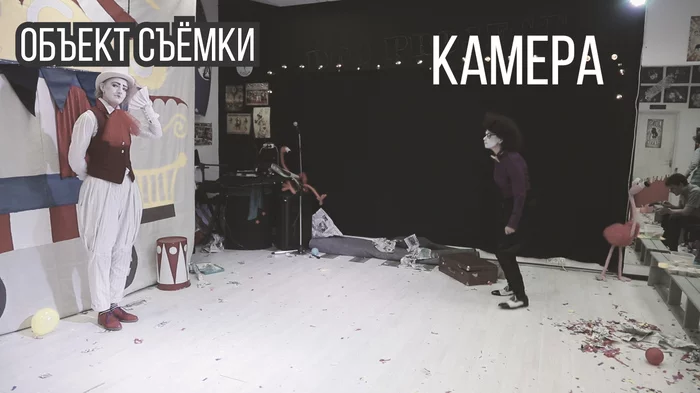
At the same time, if you are already standing next to a person and looking at their face, you cannot look at their face from a different side; you will first shift your gaze to a detail of their clothing and then, moving, look back at the face again, for example.
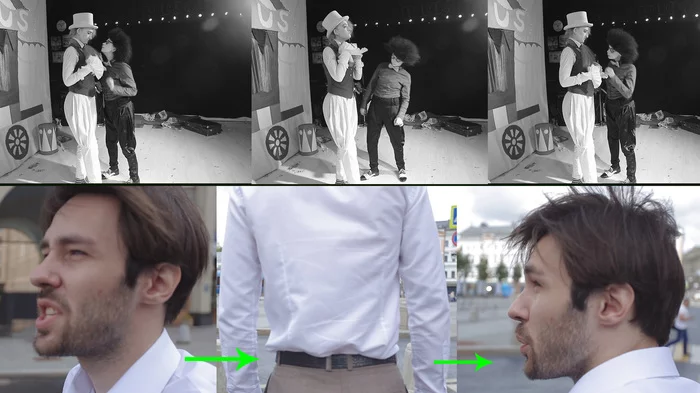
In that case, a cut from close-up to close-up would indeed be justified. Likewise, when changing scale, avoid zooming in from a single fixed point. Because a person, by analogy, cannot move exactly in a straight line.
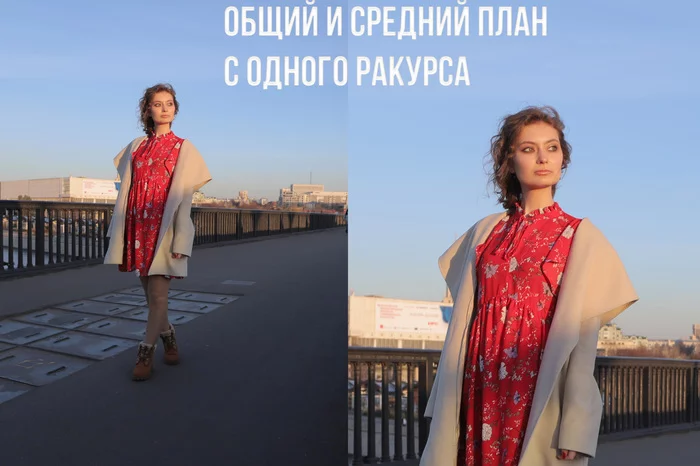
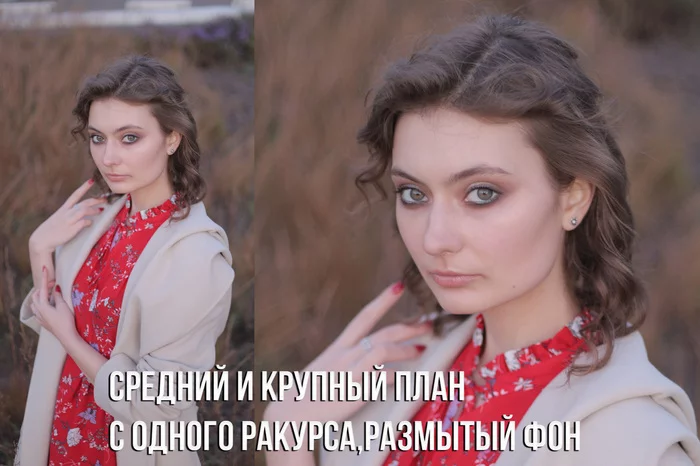
Such an approach can be achieved either through focal length or through framing/cropping. But this rule does not apply when shooting against a blurred or neutral (white, green, or with no noticeable details) background, because in that case we cannot tell whether the background has changed or not.
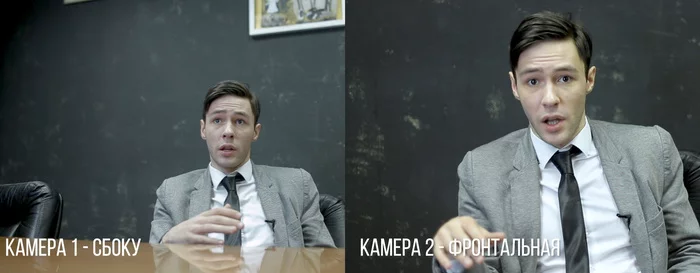
Understanding of shot scale is also important in multi-camera shooting: if we are filming something with two cameras, the picture from each must differ in scale so that the shots can be cut together in sequence. Usually this is a medium and a close-up. But at the same time the angles of both cameras must also differ (in camera position), though not too much.
Besides this set of rules, you can also edit based on the laws of dynamics, on the music, or by covering all the joins with white flashes or other flashy transitions.
On the whole, any editing rules can be broken if there is grounds for it, but first you need to understand what they are based on.

Comments