
Lecture
Asymmetry (Ancient Greek ασυμμετρία literally «disproportion» from μετρέω «I measure») — the absence or violation of symmetry. Most often the term is used in relation to visual objects and in the visual arts. In artistic creation, asymmetry can serve (and very often does serve) as one of the main means of form-building (or composition). One of the concepts close to it in art is arrhythmia.
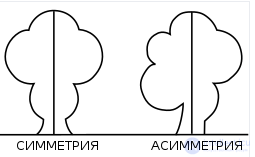
Due to the constant division of cells in an organism, asymmetry in organisms is a common phenomenon at least in one dimension alongside biological symmetry (see also Interhemispheric asymmetry).
Louis Pasteur believed that biological molecules are asymmetric because of cosmic [i.e., physical] forces that control their formation, imparting properties (asymmetry) similar to their own. Although in his time, and even now, greater significance is attached to symmetry in physical processes, fundamental physical asymmetries are also known, starting with time.

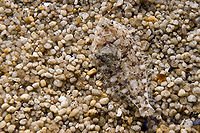
Nature also provides several examples of chirality in traits that are usually symmetric. Below are examples of animals with clear signs of left-right body asymmetry:
The phylum Porifera consists of sponges, made up of several species, which display an almost complete absence of body symmetry. Instead, they evolved to make maximal use of water flow through their central cavity.
Since congenital defects and injuries most likely indicate poor health of the organism, defects leading to asymmetry often put the animal at a disadvantage when it comes to finding a mate. In particular, the degree of facial symmetry in humans is linked to physical attractiveness, but complete symmetry is impossible and probably unattractive.
In architectural styles preceding the modern era, emphasis was generally placed on symmetry, except when siting under extreme conditions or historical developments forced a departure from classical ideals. In contrast, some contemporary architects have become much freer in their use of asymmetry.
While most bridges use a symmetric form for simplicity of design, analysis, fabrication, and economy of material use, a number of modern bridges have deliberately departed from this, either in response to the demands of a particular site or in order to create a striking design.
Some structures that use the idea of asymmetry
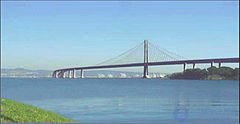
The east span of the San Francisco–Oakland Bay Bridge interchange
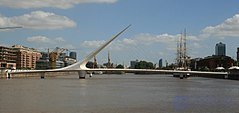
Woman's Bridge
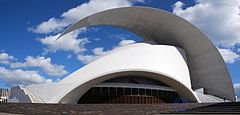
Auditorio de Tenerife
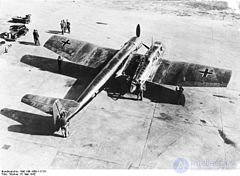
The Blohm & Voss BV 141 aircraft
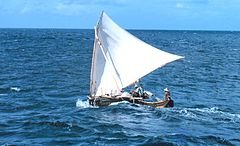
Micronesian proa

Comments