You get a bonus - 1 coin for daily activity. Now you have 1 coin

Figures and Solids of Four-Dimensional Space: Duoprism, Duocylinder, Hypersphere, Hypercone, Hypercube

Lecture


Today, every student knows that the space in which a person exists is three-dimensional, that is, it has three dimensions: length, width and height. But what is four-dimensional space? If we study not only the spatial position of a body but also how it changes over time, that is, the processes that occur in three-dimensional space, then another coordinate appears – time. Four-dimensional space consists of three spatial coordinates and one time coordinate. In this case physicists and philosophers speak of the unity of space and time. Time and space are interrelated. In essence, they manifest as different aspects of four-dimensional space-time.
Figures and Solids of Four-Dimensional Space: Duoprism, Duocylinder, Hypersphere, Hypercone, Hypercube

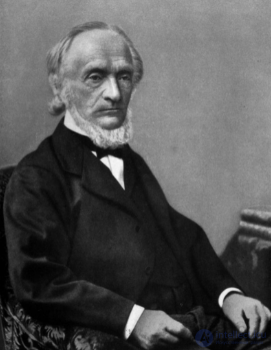
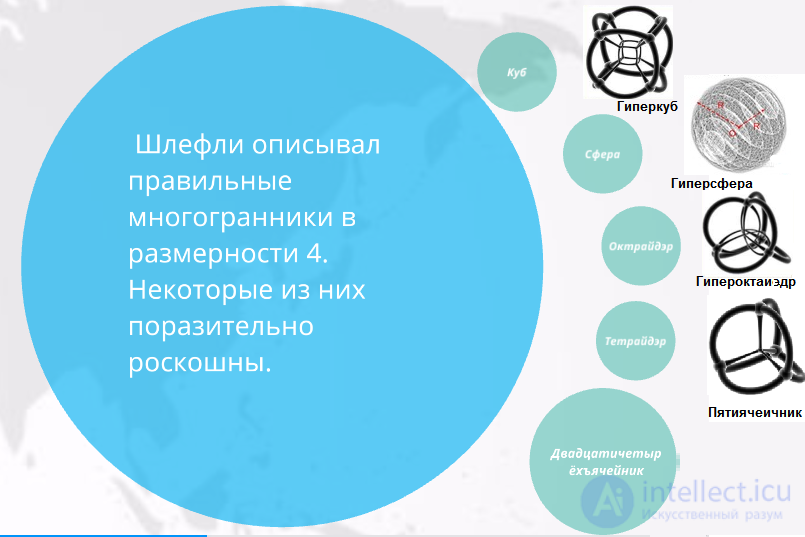
Ludwig Schläfli was one of the first to put forward the idea that even if our physical space has dimension 3, nothing can prevent us from imagining a space of dimension 4, or even proving geometric theorems about four-dimensional mathematical objects.
Figures and Solids of Four-Dimensional Space: Duoprism, Duocylinder, Hypersphere, Hypercone, Hypercube

The first method — the most pragmatic one. We can simply say that a point in four-dimensional space — is just a set of data consisting of four numbers: x, y, z, t. The drawback of this approach is that it is so hard to visualize anything. But it is quite logical, and most mathematicians are content with it.

Schläfli's second approach gives us an explanation "by analogy". The idea is to carefully examine dimensions 1, 2 and 3, notice certain phenomena, and then assume that these phenomena also exist in the fourth dimension.

Features of our perception of the world.

When we drew flat geometric figures at school, we did not experience any particular difficulty – they were two-dimensional (having width and length). It was harder to draw and imagine three-dimensional figures – cones, pyramids, cylinders and others. And imagining four-dimensional figures is quite difficult even for mathematicians and physicists. Of course, one needs to get used to the concept of «four-dimensional space». The reason for this is not psychological but purely physiological. It is all about the structure of our eyes. When we look at a distant object, special muscles bend the lens of the eye – the natural lens – to change its focal length and let us see the object clearly. And also, in each eye there is a group of six muscles that turn it so that the lines of sight of the right and left eyes intersect at a single point. This is called convergence. This is how the binocular effect is created – we see the world in volume. Humanity did not go down the path of mastering the third dimension, but down the path of "taming" it: people tried to squeeze volume into a plane, to depict the surrounding world on rock, sand or papyrus.

The whole trouble is that we ourselves live in the third dimension and therefore look at it «from the inside», we see our voluminous world as if it were flat. It sounds paradoxical, but place a sheet of paper with a figure drawn on it exactly at eye level – and for a second you will experience the tragedy of people doomed to live in two dimensions but perceive only one. After all, to see a figure – be it a square or a circle – one must at least slightly "jump out" of one's own plane.

Features of four-dimensional space.

Draw a circle on a plane and imagine yourself as an imaginary being of a two-dimensional world, able to move about the plane but not permitted to go out into space. (You do not even know that space exists, and cannot imagine it.) Then the boundary of the circle — the circumference — will be an insurmountable barrier for you: you will not be able to get out of the circle, because the circumference will block your way everywhere.

Now imagine that this plane with the drawn circle is placed in three-dimensional space and that you have guessed at the existence of the third dimension. Now, of course, you will easily get outside the circle, for example simply by stepping over the circumference.

Now suppose you are a being of the three-dimensional world. Suppose you are inside a ball whose boundary (the sphere) is impassable for you. Then you will not be able to get outside this ball. But if the ball is placed in four-dimensional space and you have guessed at the existence of the fourth dimension, then you will be able to get outside the ball without any effort.


There is nothing particularly mysterious about this — it is simply that the boundary of a three-dimensional ball (the sphere) does not divide four-dimensional space into two parts, although it does divide three-dimensional space. This is quite analogous to the fact that the boundary of a circle (the circumference) does not divide three-dimensional space into two parts, although it does divide the plane in which it lies.


One more example: it is clear that two figures on a plane that are mirror images of each other cannot be made to coincide if they are only allowed to be moved without leaving the plane. However, a sitting butterfly can fold its wings, taking them out of the horizontal plane into a vertical one. Likewise, in three-dimensional space one cannot make mirror-symmetric spatial figures coincide. For example, no matter how you turn it, a left glove cannot be turned into a right one, although they are equal geometric figures. But in a space of four dimensions, three-dimensional mirror-symmetric figures can be made to coincide, just as flat mirror-symmetric figures coincide once taken out into three-dimensional space.


That is why it is not at all surprising that the hero of the above-mentioned story by Wells, after his journey into four-dimensional space, turned out to be inverted, symmetric to himself: his heart, for example, ended up on the right side. This happened because, on emerging into four-dimensional space, he turned inside out onto the other side (much as a left glove, turned inside out, becomes a right one).

What kinds of dimensions exist in space

It is all very simple. 0D dimension - a point. 1D dimension - a line. 2D dimension - a plane. Adding height to a plane gives us a 3D dimension - volume. To the length-width-height we are used to (3D), one more axis is added, or a fourth dimension - the volume is viewed from all sides and from inside, in a dynamic way.
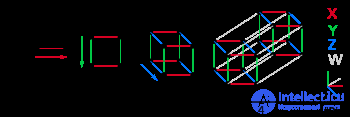
A schematic diagram of the dimensions of space
Figures and Solids of Four-Dimensional Space: Duoprism, Duocylinder, Hypersphere, Hypercone, Hypercube

Examples of four-dimensional geometric solids.

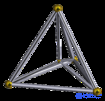
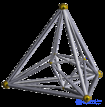
3.1. Four-dimensional simplex

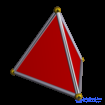
The simplex (the simplest) — is the simplest of all possible figures and has 5 vertices, 10 faces, 10 edges, 5 tetrahedral cells. This unusual construction consists of five pyramids. Together they separate the four-dimensional simplex from the rest of four-dimensional space in exactly the same way that the six faces of a cube separate it from the rest of three-dimensional space, and the three sides of a triangle bound it in the plane.

3.2. Tesseract (hypercube)

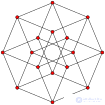
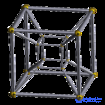
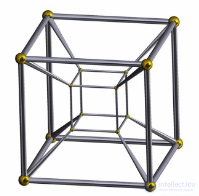
The four-dimensional analogue of our ordinary 3-dimensional cube is known as the tesseract. The tesseract relates to the cube as the cube relates to the square. More formally, the tesseract can be described as a regular convex four-dimensional polytope (polyhedron) whose boundary consists of eight cubic cells.
Figures and Solids of Four-Dimensional Space: Duoprism, Duocylinder, Hypersphere, Hypercone, Hypercube


Each pair of non-parallel three-dimensional faces intersects, forming two-dimensional faces (squares), and so on. In total, the tesseract has 8 three-dimensional faces, 24 two-dimensional faces, 32 edges, and 16 vertices.

But what confirms that the hypercube does not belong to our three-dimensional world? There is one simple test, based on a formula derived by Leonhard Euler for any three-dimensional geometric figure.

Here it is: F + V = E + 2. That is, the number of faces (F) plus the number of vertices (V) equals the number of edges (E) plus 2. Check the validity of this formula on any figure — a cube, a pyramid, a tetrahedron, an icosahedron, an arbitrary polyhedron, a solid of the most intricate shape. Under any deformation of any of them, Euler's formula holds true. But take the hypercube. 24 faces, 16 vertices, 32 edges, and in addition 8 three-dimensional cells — that is the geometric wealth it possesses. The simplest arithmetic will convince you that the hypercube has come to visit us from the most complex four-dimensional world; Euler's formula does not hold for it.

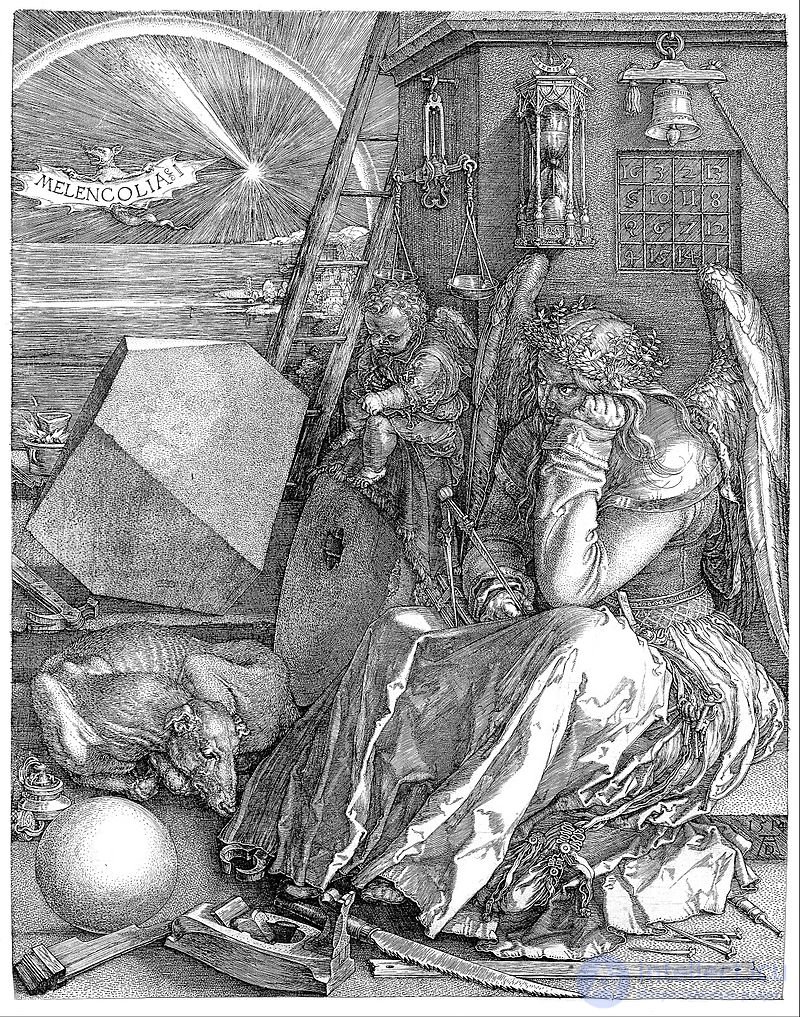
Dürer's solidpolyhedron, depicted in the engraving «Melencolia I», a work by the artist Albrecht Dürer, dated 1514. This striking detail of the engraving «Melencolia I» gave its name to the geometric figure. The exact geometry of this solid is the subject of unfinished scientific debate and a source of inspiration for contemporary artists. The shape of the monolith depicted by Dürer is the subject of unfinished academic debates. There is a hypothesis that it is a truncated cube, but most sources agree that it is a truncation of a rhombohedron.

There is also a hypothesis that this is a three-dimensional cross-section (which is what is seen in three-dimensional space) of a four-dimensional cube in three-dimensional space.
Figures and Solids of Four-Dimensional Space: Duoprism, Duocylinder, Hypersphere, Hypercone, Hypercube

Figures and Solids of Four-Dimensional Space: Duoprism, Duocylinder, Hypersphere, Hypercone, Hypercube

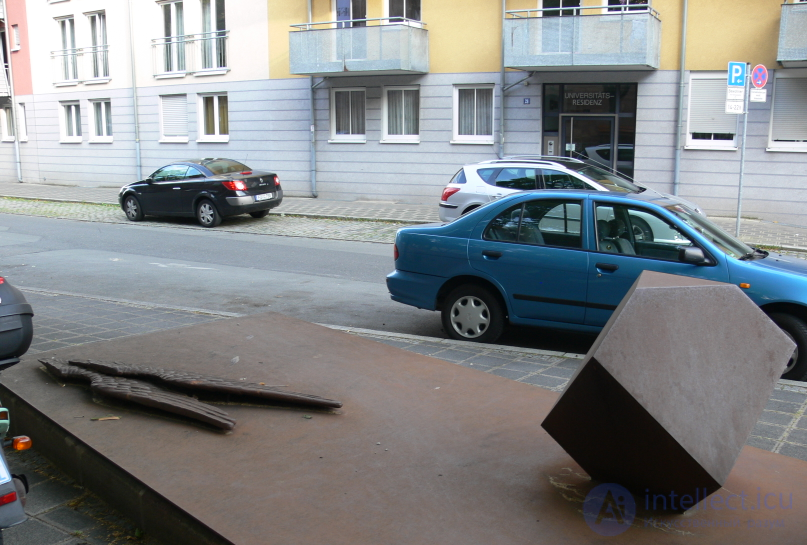
Sculpture in front of the Tucherschloss museum in Nuremberg; steel, cast iron, 1999/2000

3.2.1. Construction and description of the hypercube

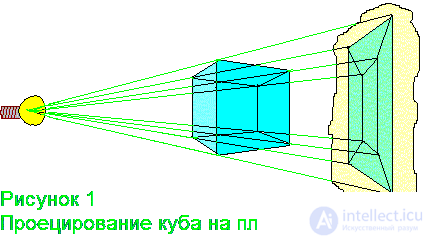
Let us try to imagine what the hypercube would look like without leaving three-dimensional space. Take a wire-frame cube ABCDHEFG and look at it with one eye from the side of a face. We will see, and can draw on a plane, two squares (its near and far faces), connected by four lines — the lateral edges.
Figures and Solids of Four-Dimensional Space: Duoprism, Duocylinder, Hypersphere, Hypercone, Hypercube

And what do we do to depict a three-dimensional cube on a flat sheet of paper? We project it onto a plane. We get two squares, one inside the other, connected at their vertices (Fig. 1).

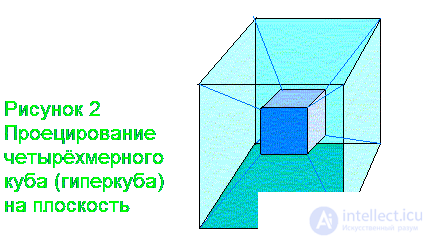
Let us project the four-dimensional cube in the same way. By analogy we get two cubes, one inside the other, with the vertices again connected in pairs. Here it is, the messenger from the fourth dimension — or rather, not the messenger itself, but its projection onto a plane (Fig. 2).
Figures and Solids of Four-Dimensional Space: Duoprism, Duocylinder, Hypersphere, Hypercone, Hypercube

A four-dimensional hypercube in three-dimensional space will look like two cubic «boxes» nested inside one another and connected by eight edges. Here the «boxes» themselves — the three-dimensional cells — will be projected into «our» space, while the lines connecting them will extend in the direction of the fourth axis. One can also try to picture the cube not as a projection, but as a spatial image.

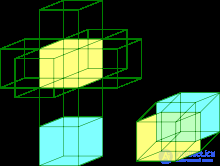
Just as a three-dimensional cube is formed by a square shifted by the length of an edge, a cube shifted into the fourth dimension will form a hypercube. By cutting the six faces of a three-dimensional cube, it can be unfolded into a flat figure — a net. It will have a square on each side of the original face, plus one more — the face opposite it. And the three-dimensional net of a four-dimensional hypercube will consist of the original cube, six cubes «growing» out of it, plus one more — the final «hypercell».
Figures and Solids of Four-Dimensional Space: Duoprism, Duocylinder, Hypersphere, Hypercone, Hypercube

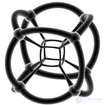
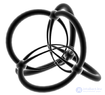
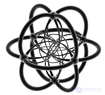
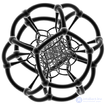
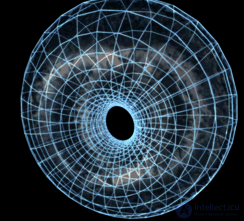
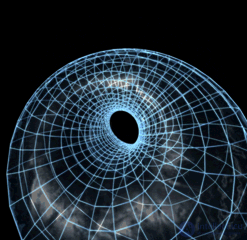
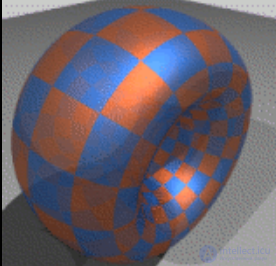
3.3. Stereographic projection of the Clifford torus: the set of points (cos(a), sin(a), cos(b), sin(b)), which is a subset of the 3-sphere.
Figures and Solids of Four-Dimensional Space: Duoprism, Duocylinder, Hypersphere, Hypercone, Hypercube Figures and Solids of Four-Dimensional Space: Duoprism, Duocylinder, Hypersphere, Hypercone, Hypercube Figures and Solids of Four-Dimensional Space: Duoprism, Duocylinder, Hypersphere, Hypercone, Hypercube

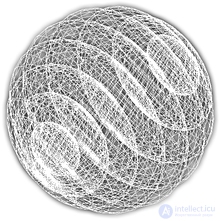
3.4. A hypersphere is a hypersurface in n-dimensional Euclidean space formed by points equidistant from a given point called the center of the sphere.

at n = 1 the hypersphere degenerates into two points equidistant from the center;

at n = 2 it is a circle;

at n=3 the hypersphere is a sphere.

at n=4 the hypersphere is a 3-sphere.

The distance from the center of a hypersphere to its surface is called the radius of the hypersphere. A hypersphere is an (n-1)-dimensional submanifold in n-dimensional space, all of whose normals intersect at its center.
Figures and Solids of Four-Dimensional Space: Duoprism, Duocylinder, Hypersphere, Hypercone, Hypercube

3.5. Hypercone

At present little is known about it. This is what attempts to depict it look like.
Figures and Solids of Four-Dimensional Space: Duoprism, Duocylinder, Hypersphere, Hypercone, Hypercube

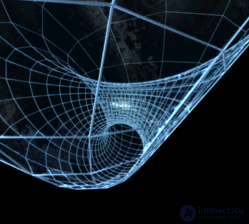
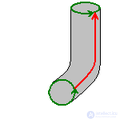
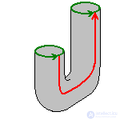
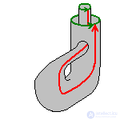
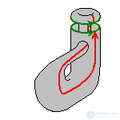
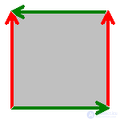
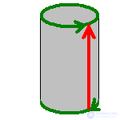
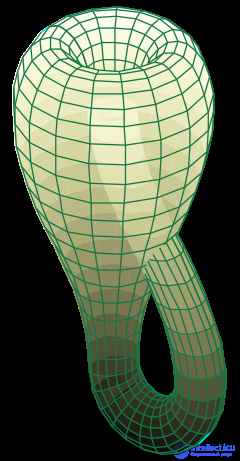
3.6. The Klein bottle is a one-sided surface, first described in 1882 by the German mathematician F. Klein. It is closely related to the Mobius strip and the projective plane. To build a model of a Klein bottle, one needs a bottle with two extra holes: one in the bottom and one in the wall. The neck of the bottle must be stretched out, bent downward, and, after passing it through the hole in the wall, attached to the hole in the bottom of the bottle. For a true Klein bottle in four-dimensional space the hole in the wall is not needed, but in three-dimensional Euclidean space it cannot be avoided.

Unlike an ordinary glass, this object has no «edge» where the surface would abruptly end. Unlike a balloon, one can travel from the inside to the outside without crossing the surface (that is, in fact this object has neither an «inside» nor an «outside»).
Figures and Solids of Four-Dimensional Space: Duoprism, Duocylinder, Hypersphere, Hypercone, HypercubeFigures and Solids of Four-Dimensional Space: Duoprism, Duocylinder, Hypersphere, Hypercone, HypercubeFigures and Solids of Four-Dimensional Space: Duoprism, Duocylinder, Hypersphere, Hypercone, HypercubeFigures and Solids of Four-Dimensional Space: Duoprism, Duocylinder, Hypersphere, Hypercone, HypercubeFigures and Solids of Four-Dimensional Space: Duoprism, Duocylinder, Hypersphere, Hypercone, HypercubeFigures and Solids of Four-Dimensional Space: Duoprism, Duocylinder, Hypersphere, Hypercone, Hypercube

The Klein bottle cannot be embedded (only immersed) in three-dimensional Euclidean space, but it can be embedded in 4D.
Figures and Solids of Four-Dimensional Space: Duoprism, Duocylinder, Hypersphere, Hypercone, Hypercube

Klein bottle immersed in three-dimensional space
Figures and Solids of Four-Dimensional Space: Duoprism, Duocylinder, Hypersphere, Hypercone, Hypercube

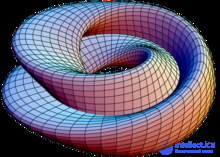
Realization of the Klein bottle in the form of a figure eight.

Three-dimensional sphere, or three-dimensional hypersphere

The 3-sphere is another widely discussed figure located in four-dimensional space. But it is not a four-dimensional polytope, since it is not bounded by polyhedral cells.

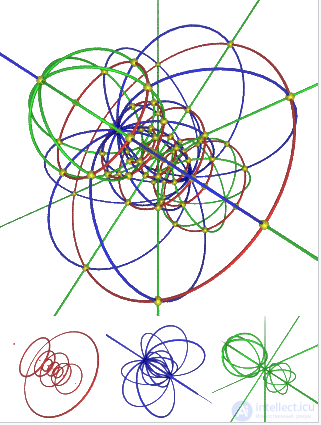
Three-dimensional sphere, or three-dimensional hypersphere, sometimes 3-spherea sphere in four-dimensional space. It consists of the set of points equidistant from a fixed central point in four-dimensional Euclidean space. Just as the two-dimensional sphere forms the boundary of a ball in three dimensions, the 3-sphere has three dimensions and is the boundary of a four-dimensional ball.
Figures and Solids of Four-Dimensional Space: Duoprism, Duocylinder, Hypersphere, Hypercone, Hypercube

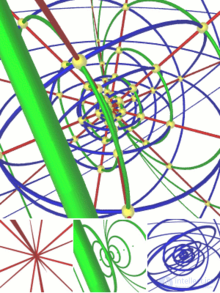
Stereographic projection of the parallels of the hypersphere (red), meridians (blue), and hypermeridians (green). Due to the conformal properties of the stereographic projection, the curves intersect each other orthogonally (at the yellow points), as they do in 4D. All the curves are circles: curves that pass through <0,0,0,1> have infinite radius (that is, they are straight lines).

Duocylinder

Duocylinder is a figure in four-dimensional space, related to duoprisms, although it too is not a polytope.

Duocylinder or double cylinder , is a geometric object , embedded in 4-dimensional Euclidean space , defined as the Cartesian product of two disks of corresponding radii r 1 and r 2 :

Figures and Solids of Four-Dimensional Space: Duoprism, Duocylinder, Hypersphere, Hypercone, Hypercube

This is analogous to a cylinder in 3-space, which is the Cartesian product of a disk and a line segment . But unlike the cylinder, both hypersurfaces ( of the ordinary duocylinder) are congruent .

Its dual is the duospindle, consisting of two circles, one in the XY plane and the other in the ZW plane.
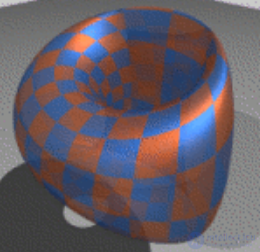
Figures and Solids of Four-Dimensional Space: Duoprism, Duocylinder, Hypersphere, Hypercone, Hypercube Figures and Solids of Four-Dimensional Space: Duoprism, Duocylinder, Hypersphere, Hypercone, Hypercube

Stereographic projection of the ridge of the duocylinder (see below) as a flat torus . The ridge rotates in the XW plane.

Duoprism

Duoprism — a polytope obtained as the direct product of two polytopes, each of dimension two or higher. The direct product of an n-polytope and an m-polytope — is an (n+m)-polytope, where n and m are not less than 2 (a polygon or polytope).

Duoprisms of the smallest dimension exist in 4-dimensional space as 4-dimensional polytopes, being the direct product of two polygons in 2-dimensional Euclidean space. More precisely, this is the set of points:

Figures and Solids of Four-Dimensional Space: Duoprism, Duocylinder, Hypersphere, Hypercone, Hypercube,

where P1 and P2 — are two sets of points located in the polygons (factors). If both polygons are convex, such a duoprism is convex and is bounded by prismatic cells.
Figures and Solids of Four-Dimensional Space: Duoprism, Duocylinder, Hypersphere, Hypercone, Hypercube

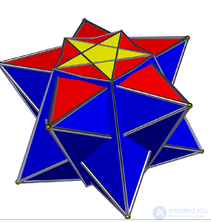
Stereographic projection of the grand antiprism[en], centered relative to of the pentagrammic crossed antiprism[en]

Regular four-dimensional polytopes

Regular 4-dimensional polytopes with Schläfli symbol Figures and Solids of Four-Dimensional Space: Duoprism, Duocylinder, Hypersphere, Hypercone, Hypercube have cells of the form Figures and Solids of Four-Dimensional Space: Duoprism, Duocylinder, Hypersphere, Hypercone, Hypercube, faces of the form Figures and Solids of Four-Dimensional Space: Duoprism, Duocylinder, Hypersphere, Hypercone, Hypercube, edge figures Figures and Solids of Four-Dimensional Space: Duoprism, Duocylinder, Hypersphere, Hypercone, Hypercube, and vertex figures Figures and Solids of Four-Dimensional Space: Duoprism, Duocylinder, Hypersphere, Hypercone, Hypercube.

  • The vertex figure (of a 4-dimensional polytope) is a (3-dimensional) polyhedron formed by the vertices adjacent to the given vertex of the polytope. For regular four-dimensional polytopes, this vertex figure is a regular (3-dimensional) polyhedron.
  • The edge figure is a polygon formed by the faces adjacent to the edge. For regular four-dimensional polytopes, the edge figure is always a regular polygon.

The existence of regular four-dimensional polytopes Figures and Solids of Four-Dimensional Space: Duoprism, Duocylinder, Hypersphere, Hypercone, Hypercube is limited by the existence of the regular polyhedron Figures and Solids of Four-Dimensional Space: Duoprism, Duocylinder, Hypersphere, Hypercone, Hypercube. For 4-dimensional polytopes it is proposed to use the name "polychoron"

Each type can exist in a space depending on the following expression:
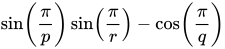
Figures and Solids of Four-Dimensional Space: Duoprism, Duocylinder, Hypersphere, Hypercone, Hypercube

Figures and Solids of Four-Dimensional Space: Duoprism, Duocylinder, Hypersphere, Hypercone, Hypercube : Hyperspherical 3-dimensional honeycombs or 4-dimensional polytopes

Figures and Solids of Four-Dimensional Space: Duoprism, Duocylinder, Hypersphere, Hypercone, Hypercube : Euclidean 3-dimensional honeycombs

Figures and Solids of Four-Dimensional Space: Duoprism, Duocylinder, Hypersphere, Hypercone, Hypercube : Hyperbolic 3-dimensional honeycombs

These restrictions allow for 21 forms — 6 forms are convex, 10 are non-convex, one is a Euclidean 3-dimensional honeycomb, and 4 are hyperbolic honeycombs.

The Euler characteristic Figures and Solids of Four-Dimensional Space: Duoprism, Duocylinder, Hypersphere, Hypercone, Hypercube of a four-dimensional polytope is calculated by the formula Figures and Solids of Four-Dimensional Space: Duoprism, Duocylinder, Hypersphere, Hypercone, Hypercube and equals zero for all types.

Convex

The 6 convex regular four-dimensional polytopes are shown in the table below. All these polytopes have Euler characteristic (χ) 0.

Name Schläfli
{p,q,r}
Coxeter
Figures and Solids of Four-Dimensional Space: Duoprism, Duocylinder, Hypersphere, Hypercone, HypercubeFigures and Solids of Four-Dimensional Space: Duoprism, Duocylinder, Hypersphere, Hypercone, HypercubeFigures and Solids of Four-Dimensional Space: Duoprism, Duocylinder, Hypersphere, Hypercone, HypercubeFigures and Solids of Four-Dimensional Space: Duoprism, Duocylinder, Hypersphere, Hypercone, HypercubeFigures and Solids of Four-Dimensional Space: Duoprism, Duocylinder, Hypersphere, Hypercone, HypercubeFigures and Solids of Four-Dimensional Space: Duoprism, Duocylinder, Hypersphere, Hypercone, HypercubeFigures and Solids of Four-Dimensional Space: Duoprism, Duocylinder, Hypersphere, Hypercone, Hypercube
Cells[en]
{p,q}
Faces
{p}
Edges
{r}
Vertices
{q,r}
Dual
{r,q,p}
5-cell
(4-simplex)
{3,3,3} Figures and Solids of Four-Dimensional Space: Duoprism, Duocylinder, Hypersphere, Hypercone, HypercubeFigures and Solids of Four-Dimensional Space: Duoprism, Duocylinder, Hypersphere, Hypercone, HypercubeFigures and Solids of Four-Dimensional Space: Duoprism, Duocylinder, Hypersphere, Hypercone, HypercubeFigures and Solids of Four-Dimensional Space: Duoprism, Duocylinder, Hypersphere, Hypercone, HypercubeFigures and Solids of Four-Dimensional Space: Duoprism, Duocylinder, Hypersphere, Hypercone, HypercubeFigures and Solids of Four-Dimensional Space: Duoprism, Duocylinder, Hypersphere, Hypercone, HypercubeFigures and Solids of Four-Dimensional Space: Duoprism, Duocylinder, Hypersphere, Hypercone, Hypercube 5
{3,3}
10
{3}
10
{3}
5
{3,3}
(self-dual)
Tesseract
(4-cube)
{4,3,3} Figures and Solids of Four-Dimensional Space: Duoprism, Duocylinder, Hypersphere, Hypercone, HypercubeFigures and Solids of Four-Dimensional Space: Duoprism, Duocylinder, Hypersphere, Hypercone, HypercubeFigures and Solids of Four-Dimensional Space: Duoprism, Duocylinder, Hypersphere, Hypercone, HypercubeFigures and Solids of Four-Dimensional Space: Duoprism, Duocylinder, Hypersphere, Hypercone, HypercubeFigures and Solids of Four-Dimensional Space: Duoprism, Duocylinder, Hypersphere, Hypercone, HypercubeFigures and Solids of Four-Dimensional Space: Duoprism, Duocylinder, Hypersphere, Hypercone, HypercubeFigures and Solids of Four-Dimensional Space: Duoprism, Duocylinder, Hypersphere, Hypercone, Hypercube 8
{4,3}
24
{4}
32
{3}
16
{3,3}
16-cell
16-cell
(4-orthoplex)
{3,3,4} Figures and Solids of Four-Dimensional Space: Duoprism, Duocylinder, Hypersphere, Hypercone, HypercubeFigures and Solids of Four-Dimensional Space: Duoprism, Duocylinder, Hypersphere, Hypercone, HypercubeFigures and Solids of Four-Dimensional Space: Duoprism, Duocylinder, Hypersphere, Hypercone, HypercubeFigures and Solids of Four-Dimensional Space: Duoprism, Duocylinder, Hypersphere, Hypercone, HypercubeFigures and Solids of Four-Dimensional Space: Duoprism, Duocylinder, Hypersphere, Hypercone, HypercubeFigures and Solids of Four-Dimensional Space: Duoprism, Duocylinder, Hypersphere, Hypercone, HypercubeFigures and Solids of Four-Dimensional Space: Duoprism, Duocylinder, Hypersphere, Hypercone, Hypercube 16
{3,3}
32
{3}
24
{4}
8
{3,4}
Tesseract
24-cell {3,4,3} Figures and Solids of Four-Dimensional Space: Duoprism, Duocylinder, Hypersphere, Hypercone, HypercubeFigures and Solids of Four-Dimensional Space: Duoprism, Duocylinder, Hypersphere, Hypercone, HypercubeFigures and Solids of Four-Dimensional Space: Duoprism, Duocylinder, Hypersphere, Hypercone, HypercubeFigures and Solids of Four-Dimensional Space: Duoprism, Duocylinder, Hypersphere, Hypercone, HypercubeFigures and Solids of Four-Dimensional Space: Duoprism, Duocylinder, Hypersphere, Hypercone, HypercubeFigures and Solids of Four-Dimensional Space: Duoprism, Duocylinder, Hypersphere, Hypercone, HypercubeFigures and Solids of Four-Dimensional Space: Duoprism, Duocylinder, Hypersphere, Hypercone, Hypercube 24
{3,4}
96
{3}
96
{3}
24
{4,3}
(self-dual)
120-cell {5,3,3} Figures and Solids of Four-Dimensional Space: Duoprism, Duocylinder, Hypersphere, Hypercone, HypercubeFigures and Solids of Four-Dimensional Space: Duoprism, Duocylinder, Hypersphere, Hypercone, HypercubeFigures and Solids of Four-Dimensional Space: Duoprism, Duocylinder, Hypersphere, Hypercone, HypercubeFigures and Solids of Four-Dimensional Space: Duoprism, Duocylinder, Hypersphere, Hypercone, HypercubeFigures and Solids of Four-Dimensional Space: Duoprism, Duocylinder, Hypersphere, Hypercone, HypercubeFigures and Solids of Four-Dimensional Space: Duoprism, Duocylinder, Hypersphere, Hypercone, HypercubeFigures and Solids of Four-Dimensional Space: Duoprism, Duocylinder, Hypersphere, Hypercone, Hypercube 120
{5,3}
720
{5}
1200
{3}
600
{3,3}
600-cell
600-cell {3,3,5} Figures and Solids of Four-Dimensional Space: Duoprism, Duocylinder, Hypersphere, Hypercone, HypercubeFigures and Solids of Four-Dimensional Space: Duoprism, Duocylinder, Hypersphere, Hypercone, HypercubeFigures and Solids of Four-Dimensional Space: Duoprism, Duocylinder, Hypersphere, Hypercone, HypercubeFigures and Solids of Four-Dimensional Space: Duoprism, Duocylinder, Hypersphere, Hypercone, HypercubeFigures and Solids of Four-Dimensional Space: Duoprism, Duocylinder, Hypersphere, Hypercone, HypercubeFigures and Solids of Four-Dimensional Space: Duoprism, Duocylinder, Hypersphere, Hypercone, HypercubeFigures and Solids of Four-Dimensional Space: Duoprism, Duocylinder, Hypersphere, Hypercone, Hypercube 600
{3,3}
1200
{3}
720
{5}
120
{3,5}
120-cell
5-cell Tesseract 16-
cell
24-
cell
120-
cell
600-cell
{3,3,3} {4,3,3} {3,3,4} {3,4,3} {5,3,3} {3,3,5}
Frame (Petrie polygon) in skew orthogonal projection
Figures and Solids of Four-Dimensional Space: Duoprism, Duocylinder, Hypersphere, Hypercone, Hypercube Figures and Solids of Four-Dimensional Space: Duoprism, Duocylinder, Hypersphere, Hypercone, Hypercube Figures and Solids of Four-Dimensional Space: Duoprism, Duocylinder, Hypersphere, Hypercone, Hypercube Figures and Solids of Four-Dimensional Space: Duoprism, Duocylinder, Hypersphere, Hypercone, Hypercube Figures and Solids of Four-Dimensional Space: Duoprism, Duocylinder, Hypersphere, Hypercone, Hypercube Figures and Solids of Four-Dimensional Space: Duoprism, Duocylinder, Hypersphere, Hypercone, Hypercube
Orthogonal projection
Figures and Solids of Four-Dimensional Space: Duoprism, Duocylinder, Hypersphere, Hypercone, Hypercube
Tetrahedral
envelope
(centered on
cell/vertex)
Figures and Solids of Four-Dimensional Space: Duoprism, Duocylinder, Hypersphere, Hypercone, Hypercube
Cubic envelope
(centered on cell)
Figures and Solids of Four-Dimensional Space: Duoprism, Duocylinder, Hypersphere, Hypercone, Hypercube
Cubic
envelope
(centered on cell)
Figures and Solids of Four-Dimensional Space: Duoprism, Duocylinder, Hypersphere, Hypercone, Hypercube
Cuboctahedral
envelope
(centered on cell)
Figures and Solids of Four-Dimensional Space: Duoprism, Duocylinder, Hypersphere, Hypercone, Hypercube
Truncated
rhombic triaconta-
hedral
envelope[en]
(centered on cell)
Figures and Solids of Four-Dimensional Space: Duoprism, Duocylinder, Hypersphere, Hypercone, Hypercube
Pentakis icosi-
dodecahedral
envelope[en]
(centered on vertex)
Schlegel diagrams (perspective projection)
Figures and Solids of Four-Dimensional Space: Duoprism, Duocylinder, Hypersphere, Hypercone, Hypercube
(centered on cell)
Figures and Solids of Four-Dimensional Space: Duoprism, Duocylinder, Hypersphere, Hypercone, Hypercube
(centered on cell)
Figures and Solids of Four-Dimensional Space: Duoprism, Duocylinder, Hypersphere, Hypercone, Hypercube
(centered on cell)
Figures and Solids of Four-Dimensional Space: Duoprism, Duocylinder, Hypersphere, Hypercone, Hypercube
(centered on cell)
Figures and Solids of Four-Dimensional Space: Duoprism, Duocylinder, Hypersphere, Hypercone, Hypercube
(centered on cell)
Figures and Solids of Four-Dimensional Space: Duoprism, Duocylinder, Hypersphere, Hypercone, Hypercube
(centered on vertex)
Frame of stereographic projection (hyperspherical)
Figures and Solids of Four-Dimensional Space: Duoprism, Duocylinder, Hypersphere, Hypercone, Hypercube Figures and Solids of Four-Dimensional Space: Duoprism, Duocylinder, Hypersphere, Hypercone, Hypercube Figures and Solids of Four-Dimensional Space: Duoprism, Duocylinder, Hypersphere, Hypercone, Hypercube Figures and Solids of Four-Dimensional Space: Duoprism, Duocylinder, Hypersphere, Hypercone, Hypercube Figures and Solids of Four-Dimensional Space: Duoprism, Duocylinder, Hypersphere, Hypercone, Hypercube Figures and Solids of Four-Dimensional Space: Duoprism, Duocylinder, Hypersphere, Hypercone, Hypercube

Spherical

4-dimensional dihedra and hosohedra exist as regular tilings of the 3-sphere.

Regular 4-dimensional dihedra (2 facets = 3-dimensional faces) include: {3,3,2}, {3,4,2}, {4,3,2}, {5,3,2}, {3,5,2}, {p,2,2}, and their duals, the 4-dimensional hosohedra (2 vertices): {2,3,3}, {2,4,3}, {2,3,4}, {2,3,5}, {2,5,3}, {2,2,p}. Polytopes of the form {2,p,2} are simultaneously 4-dimensional dihedra and hosohedra. There are also forms {p,2,q}, which have dihedral cells and hosohedral vertex figures.

Regular 4-dimensional hosohedra as honeycombs on the 3-sphere
Schläfli
{2,p,q}
Coxeter
Figures and Solids of Four-Dimensional Space: Duoprism, Duocylinder, Hypersphere, Hypercone, HypercubeFigures and Solids of Four-Dimensional Space: Duoprism, Duocylinder, Hypersphere, Hypercone, HypercubeFigures and Solids of Four-Dimensional Space: Duoprism, Duocylinder, Hypersphere, Hypercone, HypercubeFigures and Solids of Four-Dimensional Space: Duoprism, Duocylinder, Hypersphere, Hypercone, HypercubeFigures and Solids of Four-Dimensional Space: Duoprism, Duocylinder, Hypersphere, Hypercone, HypercubeFigures and Solids of Four-Dimensional Space: Duoprism, Duocylinder, Hypersphere, Hypercone, HypercubeFigures and Solids of Four-Dimensional Space: Duoprism, Duocylinder, Hypersphere, Hypercone, Hypercube
Cells[en]
{2,p}π/q
Faces
{2}π/p,π/q
Edges Vertices Vertex figure
{p,q}
Symmetry Dual
{2,3,3} Figures and Solids of Four-Dimensional Space: Duoprism, Duocylinder, Hypersphere, Hypercone, HypercubeFigures and Solids of Four-Dimensional Space: Duoprism, Duocylinder, Hypersphere, Hypercone, HypercubeFigures and Solids of Four-Dimensional Space: Duoprism, Duocylinder, Hypersphere, Hypercone, HypercubeFigures and Solids of Four-Dimensional Space: Duoprism, Duocylinder, Hypersphere, Hypercone, HypercubeFigures and Solids of Four-Dimensional Space: Duoprism, Duocylinder, Hypersphere, Hypercone, HypercubeFigures and Solids of Four-Dimensional Space: Duoprism, Duocylinder, Hypersphere, Hypercone, HypercubeFigures and Solids of Four-Dimensional Space: Duoprism, Duocylinder, Hypersphere, Hypercone, Hypercube 4
{2,3}π/3
Figures and Solids of Four-Dimensional Space: Duoprism, Duocylinder, Hypersphere, Hypercone, Hypercube
6
{2}π/3,π/3
4 2 {3,3}
Figures and Solids of Four-Dimensional Space: Duoprism, Duocylinder, Hypersphere, Hypercone, Hypercube
[2,3,3] {3,3,2}
{2,4,3} Figures and Solids of Four-Dimensional Space: Duoprism, Duocylinder, Hypersphere, Hypercone, HypercubeFigures and Solids of Four-Dimensional Space: Duoprism, Duocylinder, Hypersphere, Hypercone, HypercubeFigures and Solids of Four-Dimensional Space: Duoprism, Duocylinder, Hypersphere, Hypercone, HypercubeFigures and Solids of Four-Dimensional Space: Duoprism, Duocylinder, Hypersphere, Hypercone, HypercubeFigures and Solids of Four-Dimensional Space: Duoprism, Duocylinder, Hypersphere, Hypercone, HypercubeFigures and Solids of Four-Dimensional Space: Duoprism, Duocylinder, Hypersphere, Hypercone, HypercubeFigures and Solids of Four-Dimensional Space: Duoprism, Duocylinder, Hypersphere, Hypercone, Hypercube 6
{2,4}π/3
Figures and Solids of Four-Dimensional Space: Duoprism, Duocylinder, Hypersphere, Hypercone, Hypercube
12
{2}π/4,π/3
8 2 {4,3}
Figures and Solids of Four-Dimensional Space: Duoprism, Duocylinder, Hypersphere, Hypercone, Hypercube
[2,4,3] {3,4,2}
{2,3,4} Figures and Solids of Four-Dimensional Space: Duoprism, Duocylinder, Hypersphere, Hypercone, HypercubeFigures and Solids of Four-Dimensional Space: Duoprism, Duocylinder, Hypersphere, Hypercone, HypercubeFigures and Solids of Four-Dimensional Space: Duoprism, Duocylinder, Hypersphere, Hypercone, HypercubeFigures and Solids of Four-Dimensional Space: Duoprism, Duocylinder, Hypersphere, Hypercone, HypercubeFigures and Solids of Four-Dimensional Space: Duoprism, Duocylinder, Hypersphere, Hypercone, HypercubeFigures and Solids of Four-Dimensional Space: Duoprism, Duocylinder, Hypersphere, Hypercone, HypercubeFigures and Solids of Four-Dimensional Space: Duoprism, Duocylinder, Hypersphere, Hypercone, Hypercube 8
{2,3}π/4
Figures and Solids of Four-Dimensional Space: Duoprism, Duocylinder, Hypersphere, Hypercone, Hypercube
12
{2}π/3,π/4
6 2 {3,4}
Figures and Solids of Four-Dimensional Space: Duoprism, Duocylinder, Hypersphere, Hypercone, Hypercube
[2,4,3] {4,3,2}
{2,5,3} Figures and Solids of Four-Dimensional Space: Duoprism, Duocylinder, Hypersphere, Hypercone, HypercubeFigures and Solids of Four-Dimensional Space: Duoprism, Duocylinder, Hypersphere, Hypercone, HypercubeFigures and Solids of Four-Dimensional Space: Duoprism, Duocylinder, Hypersphere, Hypercone, HypercubeFigures and Solids of Four-Dimensional Space: Duoprism, Duocylinder, Hypersphere, Hypercone, HypercubeFigures and Solids of Four-Dimensional Space: Duoprism, Duocylinder, Hypersphere, Hypercone, HypercubeFigures and Solids of Four-Dimensional Space: Duoprism, Duocylinder, Hypersphere, Hypercone, HypercubeFigures and Solids of Four-Dimensional Space: Duoprism, Duocylinder, Hypersphere, Hypercone, Hypercube 12
{2,5}π/3
Figures and Solids of Four-Dimensional Space: Duoprism, Duocylinder, Hypersphere, Hypercone, Hypercube
30
{2}π/5,π/3
20 2 {5,3}
Figures and Solids of Four-Dimensional Space: Duoprism, Duocylinder, Hypersphere, Hypercone, Hypercube
[2,5,3] {3,5,2}
{2,3,5} Figures and Solids of Four-Dimensional Space: Duoprism, Duocylinder, Hypersphere, Hypercone, HypercubeFigures and Solids of Four-Dimensional Space: Duoprism, Duocylinder, Hypersphere, Hypercone, HypercubeFigures and Solids of Four-Dimensional Space: Duoprism, Duocylinder, Hypersphere, Hypercone, HypercubeFigures and Solids of Four-Dimensional Space: Duoprism, Duocylinder, Hypersphere, Hypercone, HypercubeFigures and Solids of Four-Dimensional Space: Duoprism, Duocylinder, Hypersphere, Hypercone, HypercubeFigures and Solids of Four-Dimensional Space: Duoprism, Duocylinder, Hypersphere, Hypercone, HypercubeFigures and Solids of Four-Dimensional Space: Duoprism, Duocylinder, Hypersphere, Hypercone, Hypercube 20
{2,3}π/5
Figures and Solids of Four-Dimensional Space: Duoprism, Duocylinder, Hypersphere, Hypercone, Hypercube
30
{2}π/3,π/5
12 2 {3,5}
Figures and Solids of Four-Dimensional Space: Duoprism, Duocylinder, Hypersphere, Hypercone, Hypercube
[2,5,3] {5,3,2}

Stars

There are ten regular 4-dimensional star polytopes, called the Schlafli—Hess polychora[en]. Their vertices lie on the convex 120-cell {5,3,3} and the 600-cell {3,3,5}.

Ludwig Schlafli found four of them and discarded the other six, because he did not allow the Euler characteristic on the cells or vertex figures to be violated (F+V−E=2). Edmund Hess (Edmund Hess, 1843–1903) completed the list in his book Einleitung in die Lehre von der Kugelteilung mit besonderer Berücksichtigung ihrer Anwendung auf die Theorie der Gleichflächigen und der gleicheckigen Polyeder ( , 1883) (Introduction to the theory of the division of the sphere, with special consideration of its application to the theory of isohedral and isogonal polyhedra) .

There are 4 edge arrangements[en] and 7 face arrangements[en] among these 10 regular star 4-polytopes, shown as orthogonal projections:

Name Wireframe Solid Schlafli
{p, q, r}
Coxeter
Cells
{p, q}
Faces
{p}
Edges
{r}
Vertices
{q, r}
Den-
sity[en]
χ Symmetry group Dual
{r, q,p}
Icosahedral 120-cell[en]
(faceted 600-cell)
Figures and Solids of Four-Dimensional Space: Duoprism, Duocylinder, Hypersphere, Hypercone, Hypercube Figures and Solids of Four-Dimensional Space: Duoprism, Duocylinder, Hypersphere, Hypercone, Hypercube {3,5,5/2}
Figures and Solids of Four-Dimensional Space: Duoprism, Duocylinder, Hypersphere, Hypercone, HypercubeFigures and Solids of Four-Dimensional Space: Duoprism, Duocylinder, Hypersphere, Hypercone, HypercubeFigures and Solids of Four-Dimensional Space: Duoprism, Duocylinder, Hypersphere, Hypercone, HypercubeFigures and Solids of Four-Dimensional Space: Duoprism, Duocylinder, Hypersphere, Hypercone, HypercubeFigures and Solids of Four-Dimensional Space: Duoprism, Duocylinder, Hypersphere, Hypercone, HypercubeFigures and Solids of Four-Dimensional Space: Duoprism, Duocylinder, Hypersphere, Hypercone, HypercubeFigures and Solids of Four-Dimensional Space: Duoprism, Duocylinder, Hypersphere, Hypercone, HypercubeFigures and Solids of Four-Dimensional Space: Duoprism, Duocylinder, Hypersphere, Hypercone, HypercubeFigures and Solids of Four-Dimensional Space: Duoprism, Duocylinder, Hypersphere, Hypercone, Hypercube
120
{3,5}
Figures and Solids of Four-Dimensional Space: Duoprism, Duocylinder, Hypersphere, Hypercone, Hypercube
1200
{3}
Figures and Solids of Four-Dimensional Space: Duoprism, Duocylinder, Hypersphere, Hypercone, Hypercube
720
{5/2}
Figures and Solids of Four-Dimensional Space: Duoprism, Duocylinder, Hypersphere, Hypercone, Hypercube
120
{5,5/2}
Figures and Solids of Four-Dimensional Space: Duoprism, Duocylinder, Hypersphere, Hypercone, Hypercube
4 480 H4
[5,3,3]
Small stellated 120-cell
Small stellated 120-cell[en] Figures and Solids of Four-Dimensional Space: Duoprism, Duocylinder, Hypersphere, Hypercone, Hypercube Figures and Solids of Four-Dimensional Space: Duoprism, Duocylinder, Hypersphere, Hypercone, Hypercube {5/2,5,3}
Figures and Solids of Four-Dimensional Space: Duoprism, Duocylinder, Hypersphere, Hypercone, HypercubeFigures and Solids of Four-Dimensional Space: Duoprism, Duocylinder, Hypersphere, Hypercone, HypercubeFigures and Solids of Four-Dimensional Space: Duoprism, Duocylinder, Hypersphere, Hypercone, HypercubeFigures and Solids of Four-Dimensional Space: Duoprism, Duocylinder, Hypersphere, Hypercone, HypercubeFigures and Solids of Four-Dimensional Space: Duoprism, Duocylinder, Hypersphere, Hypercone, HypercubeFigures and Solids of Four-Dimensional Space: Duoprism, Duocylinder, Hypersphere, Hypercone, HypercubeFigures and Solids of Four-Dimensional Space: Duoprism, Duocylinder, Hypersphere, Hypercone, HypercubeFigures and Solids of Four-Dimensional Space: Duoprism, Duocylinder, Hypersphere, Hypercone, HypercubeFigures and Solids of Four-Dimensional Space: Duoprism, Duocylinder, Hypersphere, Hypercone, Hypercube
120
{5/2,5}
Figures and Solids of Four-Dimensional Space: Duoprism, Duocylinder, Hypersphere, Hypercone, Hypercube
720
{5/2}
Figures and Solids of Four-Dimensional Space: Duoprism, Duocylinder, Hypersphere, Hypercone, Hypercube
1200
{3}
Figures and Solids of Four-Dimensional Space: Duoprism, Duocylinder, Hypersphere, Hypercone, Hypercube
120
{5,3}
Figures and Solids of Four-Dimensional Space: Duoprism, Duocylinder, Hypersphere, Hypercone, Hypercube
4 −480 H4
[5,3,3]
Icosahedral 120-cell
Great 120-cell[en] Figures and Solids of Four-Dimensional Space: Duoprism, Duocylinder, Hypersphere, Hypercone, Hypercube Figures and Solids of Four-Dimensional Space: Duoprism, Duocylinder, Hypersphere, Hypercone, Hypercube {5,5/2,5}
Figures and Solids of Four-Dimensional Space: Duoprism, Duocylinder, Hypersphere, Hypercone, HypercubeFigures and Solids of Four-Dimensional Space: Duoprism, Duocylinder, Hypersphere, Hypercone, HypercubeFigures and Solids of Four-Dimensional Space: Duoprism, Duocylinder, Hypersphere, Hypercone, HypercubeFigures and Solids of Four-Dimensional Space: Duoprism, Duocylinder, Hypersphere, Hypercone, HypercubeFigures and Solids of Four-Dimensional Space: Duoprism, Duocylinder, Hypersphere, Hypercone, HypercubeFigures and Solids of Four-Dimensional Space: Duoprism, Duocylinder, Hypersphere, Hypercone, HypercubeFigures and Solids of Four-Dimensional Space: Duoprism, Duocylinder, Hypersphere, Hypercone, HypercubeFigures and Solids of Four-Dimensional Space: Duoprism, Duocylinder, Hypersphere, Hypercone, HypercubeFigures and Solids of Four-Dimensional Space: Duoprism, Duocylinder, Hypersphere, Hypercone, Hypercube
120
{5,5/2}
Figures and Solids of Four-Dimensional Space: Duoprism, Duocylinder, Hypersphere, Hypercone, Hypercube
720
{5}
Figures and Solids of Four-Dimensional Space: Duoprism, Duocylinder, Hypersphere, Hypercone, Hypercube
720
{5}
Figures and Solids of Four-Dimensional Space: Duoprism, Duocylinder, Hypersphere, Hypercone, Hypercube
120
{5/2,5}
Figures and Solids of Four-Dimensional Space: Duoprism, Duocylinder, Hypersphere, Hypercone, Hypercube
6 0 H4
[5,3,3]
Self-dual
Grand 120-cell[en] Figures and Solids of Four-Dimensional Space: Duoprism, Duocylinder, Hypersphere, Hypercone, Hypercube Figures and Solids of Four-Dimensional Space: Duoprism, Duocylinder, Hypersphere, Hypercone, Hypercube {5,3,5/2}
Figures and Solids of Four-Dimensional Space: Duoprism, Duocylinder, Hypersphere, Hypercone, HypercubeFigures and Solids of Four-Dimensional Space: Duoprism, Duocylinder, Hypersphere, Hypercone, HypercubeFigures and Solids of Four-Dimensional Space: Duoprism, Duocylinder, Hypersphere, Hypercone, HypercubeFigures and Solids of Four-Dimensional Space: Duoprism, Duocylinder, Hypersphere, Hypercone, HypercubeFigures and Solids of Four-Dimensional Space: Duoprism, Duocylinder, Hypersphere, Hypercone, HypercubeFigures and Solids of Four-Dimensional Space: Duoprism, Duocylinder, Hypersphere, Hypercone, HypercubeFigures and Solids of Four-Dimensional Space: Duoprism, Duocylinder, Hypersphere, Hypercone, HypercubeFigures and Solids of Four-Dimensional Space: Duoprism, Duocylinder, Hypersphere, Hypercone, HypercubeFigures and Solids of Four-Dimensional Space: Duoprism, Duocylinder, Hypersphere, Hypercone, Hypercube
120
{5,3}
Figures and Solids of Four-Dimensional Space: Duoprism, Duocylinder, Hypersphere, Hypercone, Hypercube
720
{5}
Figures and Solids of Four-Dimensional Space: Duoprism, Duocylinder, Hypersphere, Hypercone, Hypercube
720
{5/2}
Figures and Solids of Four-Dimensional Space: Duoprism, Duocylinder, Hypersphere, Hypercone, Hypercube
120
{3,5/2}
Figures and Solids of Four-Dimensional Space: Duoprism, Duocylinder, Hypersphere, Hypercone, Hypercube
20 0 H4
[5,3,3]
Great stellated 120-cell
Great stellated 120-cell[en] Figures and Solids of Four-Dimensional Space: Duoprism, Duocylinder, Hypersphere, Hypercone, Hypercube Figures and Solids of Four-Dimensional Space: Duoprism, Duocylinder, Hypersphere, Hypercone, Hypercube {5/2,3,5}
Figures and Solids of Four-Dimensional Space: Duoprism, Duocylinder, Hypersphere, Hypercone, HypercubeFigures and Solids of Four-Dimensional Space: Duoprism, Duocylinder, Hypersphere, Hypercone, HypercubeFigures and Solids of Four-Dimensional Space: Duoprism, Duocylinder, Hypersphere, Hypercone, HypercubeFigures and Solids of Four-Dimensional Space: Duoprism, Duocylinder, Hypersphere, Hypercone, HypercubeFigures and Solids of Four-Dimensional Space: Duoprism, Duocylinder, Hypersphere, Hypercone, HypercubeFigures and Solids of Four-Dimensional Space: Duoprism, Duocylinder, Hypersphere, Hypercone, HypercubeFigures and Solids of Four-Dimensional Space: Duoprism, Duocylinder, Hypersphere, Hypercone, HypercubeFigures and Solids of Four-Dimensional Space: Duoprism, Duocylinder, Hypersphere, Hypercone, HypercubeFigures and Solids of Four-Dimensional Space: Duoprism, Duocylinder, Hypersphere, Hypercone, Hypercube
120
{5/2,3}
Figures and Solids of Four-Dimensional Space: Duoprism, Duocylinder, Hypersphere, Hypercone, Hypercube
720
{5/2}
Figures and Solids of Four-Dimensional Space: Duoprism, Duocylinder, Hypersphere, Hypercone, Hypercube
720
{5}
Figures and Solids of Four-Dimensional Space: Duoprism, Duocylinder, Hypersphere, Hypercone, Hypercube
120
{3,5}
Figures and Solids of Four-Dimensional Space: Duoprism, Duocylinder, Hypersphere, Hypercone, Hypercube
20 0 H4
[5,3,3]
Grand 120-cell
Grand stellated 120-cell[en] Figures and Solids of Four-Dimensional Space: Duoprism, Duocylinder, Hypersphere, Hypercone, Hypercube Figures and Solids of Four-Dimensional Space: Duoprism, Duocylinder, Hypersphere, Hypercone, Hypercube {5/2,5,5/2}
Figures and Solids of Four-Dimensional Space: Duoprism, Duocylinder, Hypersphere, Hypercone, HypercubeFigures and Solids of Four-Dimensional Space: Duoprism, Duocylinder, Hypersphere, Hypercone, HypercubeFigures and Solids of Four-Dimensional Space: Duoprism, Duocylinder, Hypersphere, Hypercone, HypercubeFigures and Solids of Four-Dimensional Space: Duoprism, Duocylinder, Hypersphere, Hypercone, HypercubeFigures and Solids of Four-Dimensional Space: Duoprism, Duocylinder, Hypersphere, Hypercone, HypercubeFigures and Solids of Four-Dimensional Space: Duoprism, Duocylinder, Hypersphere, Hypercone, HypercubeFigures and Solids of Four-Dimensional Space: Duoprism, Duocylinder, Hypersphere, Hypercone, HypercubeFigures and Solids of Four-Dimensional Space: Duoprism, Duocylinder, Hypersphere, Hypercone, HypercubeFigures and Solids of Four-Dimensional Space: Duoprism, Duocylinder, Hypersphere, Hypercone, HypercubeFigures and Solids of Four-Dimensional Space: Duoprism, Duocylinder, Hypersphere, Hypercone, HypercubeFigures and Solids of Four-Dimensional Space: Duoprism, Duocylinder, Hypersphere, Hypercone, Hypercube
120
{5/2,5}
Figures and Solids of Four-Dimensional Space: Duoprism, Duocylinder, Hypersphere, Hypercone, Hypercube
720
{5/2}
Figures and Solids of Four-Dimensional Space: Duoprism, Duocylinder, Hypersphere, Hypercone, Hypercube
720
{5/2}
Figures and Solids of Four-Dimensional Space: Duoprism, Duocylinder, Hypersphere, Hypercone, Hypercube
120
{5,5/2}
Figures and Solids of Four-Dimensional Space: Duoprism, Duocylinder, Hypersphere, Hypercone, Hypercube
66 0 H4
[5,3,3]
Self-dual
Grand great 120-cell[en] Figures and Solids of Four-Dimensional Space: Duoprism, Duocylinder, Hypersphere, Hypercone, Hypercube Figures and Solids of Four-Dimensional Space: Duoprism, Duocylinder, Hypersphere, Hypercone, Hypercube {5,5/2,3}
Figures and Solids of Four-Dimensional Space: Duoprism, Duocylinder, Hypersphere, Hypercone, HypercubeFigures and Solids of Four-Dimensional Space: Duoprism, Duocylinder, Hypersphere, Hypercone, HypercubeFigures and Solids of Four-Dimensional Space: Duoprism, Duocylinder, Hypersphere, Hypercone, HypercubeFigures and Solids of Four-Dimensional Space: Duoprism, Duocylinder, Hypersphere, Hypercone, HypercubeFigures and Solids of Four-Dimensional Space: Duoprism, Duocylinder, Hypersphere, Hypercone, HypercubeFigures and Solids of Four-Dimensional Space: Duoprism, Duocylinder, Hypersphere, Hypercone, HypercubeFigures and Solids of Four-Dimensional Space: Duoprism, Duocylinder, Hypersphere, Hypercone, HypercubeFigures and Solids of Four-Dimensional Space: Duoprism, Duocylinder, Hypersphere, Hypercone, HypercubeFigures and Solids of Four-Dimensional Space: Duoprism, Duocylinder, Hypersphere, Hypercone, Hypercube
120
{5,5/2}
Figures and Solids of Four-Dimensional Space: Duoprism, Duocylinder, Hypersphere, Hypercone, Hypercube
720
{5}
Figures and Solids of Four-Dimensional Space: Duoprism, Duocylinder, Hypersphere, Hypercone, Hypercube
1200
{3}
Figures and Solids of Four-Dimensional Space: Duoprism, Duocylinder, Hypersphere, Hypercone, Hypercube
120
{5/2,3}
Figures and Solids of Four-Dimensional Space: Duoprism, Duocylinder, Hypersphere, Hypercone, Hypercube
76 −480 H4
[5,3,3]
Great grand icosahedral 120-cell
Great icosahedral 120-cell[en]
(great faceted 600-cell)
Figures and Solids of Four-Dimensional Space: Duoprism, Duocylinder, Hypersphere, Hypercone, Hypercube Figures and Solids of Four-Dimensional Space: Duoprism, Duocylinder, Hypersphere, Hypercone, Hypercube {3,5/2,5}
Figures and Solids of Four-Dimensional Space: Duoprism, Duocylinder, Hypersphere, Hypercone, HypercubeFigures and Solids of Four-Dimensional Space: Duoprism, Duocylinder, Hypersphere, Hypercone, HypercubeFigures and Solids of Four-Dimensional Space: Duoprism, Duocylinder, Hypersphere, Hypercone, HypercubeFigures and Solids of Four-Dimensional Space: Duoprism, Duocylinder, Hypersphere, Hypercone, HypercubeFigures and Solids of Four-Dimensional Space: Duoprism, Duocylinder, Hypersphere, Hypercone, HypercubeFigures and Solids of Four-Dimensional Space: Duoprism, Duocylinder, Hypersphere, Hypercone, HypercubeFigures and Solids of Four-Dimensional Space: Duoprism, Duocylinder, Hypersphere, Hypercone, HypercubeFigures and Solids of Four-Dimensional Space: Duoprism, Duocylinder, Hypersphere, Hypercone, HypercubeFigures and Solids of Four-Dimensional Space: Duoprism, Duocylinder, Hypersphere, Hypercone, Hypercube
120
{3,5/2}
Figures and Solids of Four-Dimensional Space: Duoprism, Duocylinder, Hypersphere, Hypercone, Hypercube
1200
{3}
Figures and Solids of Four-Dimensional Space: Duoprism, Duocylinder, Hypersphere, Hypercone, Hypercube
720
{5}
Figures and Solids of Four-Dimensional Space: Duoprism, Duocylinder, Hypersphere, Hypercone, Hypercube
120
{5/2,5}
Figures and Solids of Four-Dimensional Space: Duoprism, Duocylinder, Hypersphere, Hypercone, Hypercube
76 480 H4
[5,3,3]
Great grand 120-cell
Great 600-cell[en] Figures and Solids of Four-Dimensional Space: Duoprism, Duocylinder, Hypersphere, Hypercone, Hypercube Figures and Solids of Four-Dimensional Space: Duoprism, Duocylinder, Hypersphere, Hypercone, Hypercube {3,3,5/2}
Figures and Solids of Four-Dimensional Space: Duoprism, Duocylinder, Hypersphere, Hypercone, HypercubeFigures and Solids of Four-Dimensional Space: Duoprism, Duocylinder, Hypersphere, Hypercone, HypercubeFigures and Solids of Four-Dimensional Space: Duoprism, Duocylinder, Hypersphere, Hypercone, HypercubeFigures and Solids of Four-Dimensional Space: Duoprism, Duocylinder, Hypersphere, Hypercone, HypercubeFigures and Solids of Four-Dimensional Space: Duoprism, Duocylinder, Hypersphere, Hypercone, HypercubeFigures and Solids of Four-Dimensional Space: Duoprism, Duocylinder, Hypersphere, Hypercone, HypercubeFigures and Solids of Four-Dimensional Space: Duoprism, Duocylinder, Hypersphere, Hypercone, HypercubeFigures and Solids of Four-Dimensional Space: Duoprism, Duocylinder, Hypersphere, Hypercone, HypercubeFigures and Solids of Four-Dimensional Space: Duoprism, Duocylinder, Hypersphere, Hypercone, Hypercube
600
{3,3}
Figures and Solids of Four-Dimensional Space: Duoprism, Duocylinder, Hypersphere, Hypercone, Hypercube
1200
{3}
Figures and Solids of Four-Dimensional Space: Duoprism, Duocylinder, Hypersphere, Hypercone, Hypercube
720
{5/2}
Figures and Solids of Four-Dimensional Space: Duoprism, Duocylinder, Hypersphere, Hypercone, Hypercube
120
{3,5/2}
Figures and Solids of Four-Dimensional Space: Duoprism, Duocylinder, Hypersphere, Hypercone, Hypercube
191 0 H4
[5,3,3]
Great grand stellated 120-cell
Grand great 120-cell[en] Figures and Solids of Four-Dimensional Space: Duoprism, Duocylinder, Hypersphere, Hypercone, Hypercube Figures and Solids of Four-Dimensional Space: Duoprism, Duocylinder, Hypersphere, Hypercone, Hypercube {5/2,3,3}
Figures and Solids of Four-Dimensional Space: Duoprism, Duocylinder, Hypersphere, Hypercone, HypercubeFigures and Solids of Four-Dimensional Space: Duoprism, Duocylinder, Hypersphere, Hypercone, HypercubeFigures and Solids of Four-Dimensional Space: Duoprism, Duocylinder, Hypersphere, Hypercone, HypercubeFigures and Solids of Four-Dimensional Space: Duoprism, Duocylinder, Hypersphere, Hypercone, HypercubeFigures and Solids of Four-Dimensional Space: Duoprism, Duocylinder, Hypersphere, Hypercone, HypercubeFigures and Solids of Four-Dimensional Space: Duoprism, Duocylinder, Hypersphere, Hypercone, HypercubeFigures and Solids of Four-Dimensional Space: Duoprism, Duocylinder, Hypersphere, Hypercone, HypercubeFigures and Solids of Four-Dimensional Space: Duoprism, Duocylinder, Hypersphere, Hypercone, HypercubeFigures and Solids of Four-Dimensional Space: Duoprism, Duocylinder, Hypersphere, Hypercone, Hypercube
120
{5/2,3}
Figures and Solids of Four-Dimensional Space: Duoprism, Duocylinder, Hypersphere, Hypercone, Hypercube
720
{5/2}
Figures and Solids of Four-Dimensional Space: Duoprism, Duocylinder, Hypersphere, Hypercone, Hypercube
1200
{3}
Figures and Solids of Four-Dimensional Space: Duoprism, Duocylinder, Hypersphere, Hypercone, Hypercube
600
{3,3}
Figures and Solids of Four-Dimensional Space: Duoprism, Duocylinder, Hypersphere, Hypercone, Hypercube
191 0 H4
[5,3,3]
Great 600-cell

There are 4 failed regular star polytope arrangements: {3,5/2,3}, {4,3,5/2}, {5/2,3,4}, {5/2,3,5/2}. Their cells and vertex figures exist, but they do not cover the hypersphere with a finite number of representations.

Non-convex

There are no non-convex regular polytopes in dimensions 5 and higher.

Regular projective polyhedra in four-dimensional space

In 4-dimensional space, 5 of the 6 convex regular polytopes form projective 4-dimensional polytopes. 3 special cases — these are the hemi-24-cell, the hemi-600-cell, and the hemi-120-cell.

4-dimensional regular hemi-polytopes!Name Coxeter
symbol
McMullen
symbol
Cells Faces Edges Vertices χ
hemi-tesseract {4,3,3}/2 {4,3,3}4 4 12 16 8 0
hemi-16-cell {3,3,4}/2 {3,3,4}4 8 16 12 4 0
hemi-24-cell {3,4,3}/2 {3,4,3}6 12 48 48 12 0
hemi-120-cell {5,3,3}/2 {5,3,3}15 60 360 600 300 0
hemi-600-cell {3,3,5}/2 {3,3,5}15 300 600 360 60 0

4. 4D geometric solids in the surrounding world

4.1. 4D geometric solids in literature.

The tesseract is such an interesting figure that it has repeatedly attracted the attention of writers and filmmakers. Mathematical abstractions gave rise to the notion of the existence of parallel worlds. These are understood as realities that exist simultaneously with ours, but independently of it. In a parallel world, events unfold in their own way; it may differ from our world both in particular details and in almost everything. At the same time, the physical laws of a parallel world are not necessarily analogous to the laws of our Universe.

Herbert Wells, one of the first to describe time travel, also touched on invisible dimensions of space in many of his other works: «The Wonderful Visit», «The Remarkable Case of Davidson's Eyes», «The Crystal Egg», «The Stolen Body», «Men Like Gods», «The Plattner Story». In the last of these stories, a man cast out of our world by a catastrophe and later returned undergoes a spatial reflection — for example, his heart ends up on the right side. Vladimir Nabokov described a similar change of spatial orientation in the novel «Look at the Harlequins!» (1974). In the science fiction of the second half of the 20th century, the fourth dimension was used by such major writers as Isaac Asimov, Arthur C. Clarke, Frederik Pohl, Clifford Simak, and many others. The creation of a four-dimensional tesseract underlies the plot of a story by Robert Heinlein titled, in Russian translation, «The House That Teal Built». In 1924 Valery Bryusov wrote the poem «A World of N Dimensions».

In mystical literature, the fourth dimension is often described as the abode of demons or the souls of the dead. These motifs occur, for example, in George MacDonald (the novel «Lilith»), in several stories by Ambrose Bierce, and in Anton Chekhov's story «The Mystery». In the novel «The Inheritors» (1901) by Joseph Conrad and Ford Madox Ford, the inhabitants of the fourth dimension attempt to seize our Universe.

4.2. 4D geometric solids in fine art

The concept of the fourth dimension had a significant influence on the visual arts. The role of perspective declined; for example, the Cubists (Picasso, Metzinger, and others) in their paintings often depicted people and objects simultaneously from different angles, as if thereby adding a dimension to them.

Figures and Solids of Four-Dimensional Space: Duoprism, Duocylinder, Hypersphere, Hypercone, Hypercube

Pablo Picasso «Les Demoiselles d'Avignon». 1907

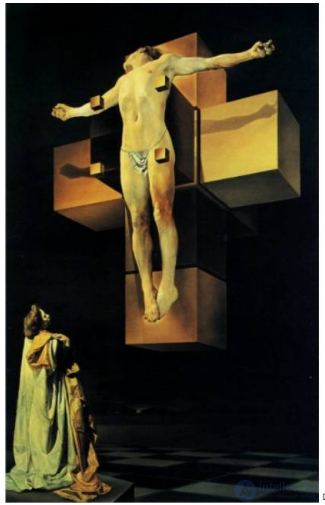
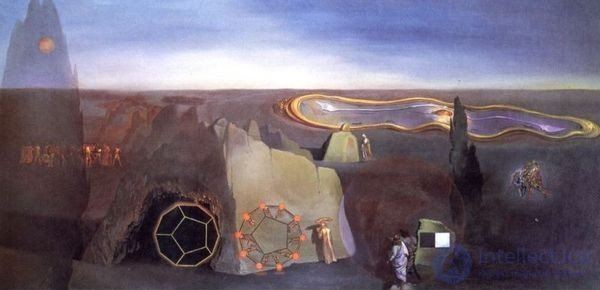
«Crucifixion» — a painting by the Spanish artist Salvador Dali, painted in 1954, depicting the crucified Jesus Christ on the unfolded net of a tesseract. The painting is held at the Metropolitan Museum in New York
Figures and Solids of Four-Dimensional Space: Duoprism, Duocylinder, Hypersphere, Hypercone, Hypercube

Figures and Solids of Four-Dimensional Space: Duoprism, Duocylinder, Hypersphere, Hypercone, Hypercube

S. Dali «In Search of the Fourth Dimension»

Guillaume Apollinaire wrote in 1913: Today scientists no longer confine themselves to Euclid's three dimensions. And artists, quite naturally, have been drawn to the new possibilities of spatial dimensions, which in the language of modern studios has come to be called the fourth dimension. Existing in the mind as the plastic image of an object, the fourth dimension arises out of the three known dimensions: it represents the immensity of space in every direction at any given moment. It is space itself, the dimension of infinity itself; the fourth dimension endows objects with plasticity.

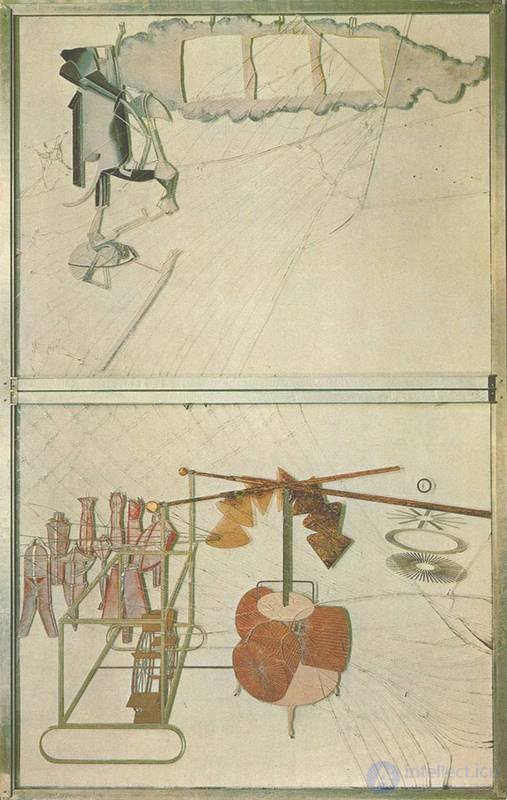
The search for new means was pursued by the surrealist Marcel Duchamp, well acquainted with multidimensional mathematics and the methods of visualizing it. Among the most characteristic examples of his work is the painting «The Large Glass». Similar motifs can be traced among the Futurists, the Suprematists («Malevich's works of this period resemble flat sections of objects from higher dimensions»), and the Surrealists.
Figures and Solids of Four-Dimensional Space: Duoprism, Duocylinder, Hypersphere, Hypercone, Hypercube

M. Duchamp. «The Large Glass: The Bride Stripped Bare by Her Bachelors, Even», 1915–1923, Philadelphia.

4.3. 4D geometric solids in architecture (slides)

Conclusion: To see a plane, you must jump out of it. To see a solid three-dimensional body, you must turn it, since we see only a flat picture – the projection of a three-dimensional body onto a two-dimensional plane. And to picture a 4D body, you must project it onto three-dimensional space, as if placing the body inside itself. This is very hard for our imagination to do, our eye cannot see an object from every side at once. But attempts to look into the fourth dimension, to find there objects accessible to perception, do not leave mathematicians alone.

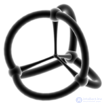
There is an ancient unsolvable problem. Three houses must be connected to three wells, but in such a way that the inhabitants of each house can walk to any well for water, and their paths must not cross. The problem is unsolvable on a plane, but on a torus, that is, a doughnut, for example, everything works out easily.

created: 2021-07-07
updated: 2026-03-08
646


Was this answer useful?
Choose a quick rating so we can improve the next answer for you.
How satisfied are you?


Comments

To leave a comment

If you have any suggestion, idea, thanks or comment, feel free to write. We really value feedback and are glad to hear your opinion.
To reply

Lectures and tutorial on "Stereometry"

Terms: Stereometry