7. The Self-Adjoint Operator. The Norm of a Self-Adjoint Operator

Lecture


In mathematics, an operator 7. The Self-Adjoint Operator. The Norm of a Self-Adjoint Operator in a complex or real Hilbert space 7. The Self-Adjoint Operator. The Norm of a Self-Adjoint Operator is called Hermitian, symmetric, if it satisfies the equality 7. The Self-Adjoint Operator. The Norm of a Self-Adjoint Operator for all 7. The Self-Adjoint Operator. The Norm of a Self-Adjoint Operator in the domain of definition 7. The Self-Adjoint Operator. The Norm of a Self-Adjoint Operator. Here and below it is assumed that 7. The Self-Adjoint Operator. The Norm of a Self-Adjoint Operator — is the inner product in 7. The Self-Adjoint Operator. The Norm of a Self-Adjoint Operator. The name is given in honor of the French mathematician Charles Hermite.

An operator in 7. The Self-Adjoint Operator. The Norm of a Self-Adjoint Operator is called self-adjoint, or hypermaximal Hermitian, if it coincides with its adjoint.

Adjoint operator — a generalization of the concept of the Hermitian-adjoint matrix for infinite-dimensional spaces.A self-adjoint operator is symmetric; the converse, generally speaking, is not true. For continuous operators defined on the whole space, the notions of symmetric and self-adjoint coincide.

Definition 4. A bounded linear operator A in a Hilbert space H is called self-adjoint or symmetric, if it coincides with its adjoint: A = A*.

In other words, a self-adjoint operator A is characterized by the condition (Ax, y) = (x, Ay) for 7. The Self-Adjoint Operator. The Norm of a Self-Adjoint Operator . In the last example, if the kernel K(t, s) is symmetric: K(t, s) = K(s, t), then

7. The Self-Adjoint Operator. The Norm of a Self-Adjoint Operator

and hence, the integral operator will be symmetric.

It is easy to see that any linear combination of self-adjoint operators is also a self-adjoint operator.

Thus, in the normed linear space of linear operators mapping H into H, the self-adjoint operators form a linear manifold. Moreover, we shall now prove that this subset is closed and, consequently, is a subspace. In other words, if the operators An – are self-adjoint and An 7. The Self-Adjoint Operator. The Norm of a Self-Adjoint Operator (in norm), then the operator A – is also self-adjoint. We shall prove an even stronger statement.

Theorem 13. If the operators An – are self-adjoint and the sequence {An} converges pointwise to an operator A, then A will also be a self-adjoint operator.

Proof. It follows from the continuity of the inner product that for any 7. The Self-Adjoint Operator. The Norm of a Self-Adjoint Operator .

(Ax, y) = ( 7. The Self-Adjoint Operator. The Norm of a Self-Adjoint Operator 7. The Self-Adjoint Operator. The Norm of a Self-Adjoint OperatorAnx, y) = 7. The Self-Adjoint Operator. The Norm of a Self-Adjoint Operator 7. The Self-Adjoint Operator. The Norm of a Self-Adjoint Operator(Anx, y) = 7. The Self-Adjoint Operator. The Norm of a Self-Adjoint Operator 7. The Self-Adjoint Operator. The Norm of a Self-Adjoint Operator(x, Any) = (x, 7. The Self-Adjoint Operator. The Norm of a Self-Adjoint Operator 7. The Self-Adjoint Operator. The Norm of a Self-Adjoint OperatorAny) = (x, Ay).

The theorem is proved.

If the operators A and B – are self-adjoint, then 7. The Self-Adjoint Operator. The Norm of a Self-Adjoint Operator Consequently, for the operator AB to be self-adjoint, it is necessary and sufficient that 7. The Self-Adjoint Operator. The Norm of a Self-Adjoint Operator , i.e., that the operators A and B commute with each other. In particular, all powers 7. The Self-Adjoint Operator. The Norm of a Self-Adjoint Operator of a self-adjoint operator A are also self-adjoint operators.

The following important formula holds for the norm of a self-adjoint operator.

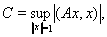
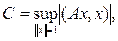
Theorem 14. If the operator A – is self-adjoint, then
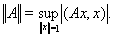
7. The Self-Adjoint Operator. The Norm of a Self-Adjoint Operator

Proof. By the Cauchy – Bunyakovsky inequality we have, for 7. The Self-Adjoint Operator. The Norm of a Self-Adjoint Operator 7. The Self-Adjoint Operator. The Norm of a Self-Adjoint Operator 7. The Self-Adjoint Operator. The Norm of a Self-Adjoint Operator 7. The Self-Adjoint Operator. The Norm of a Self-Adjoint Operator Consequently, if 7. The Self-Adjoint Operator. The Norm of a Self-Adjoint Operator 7. The Self-Adjoint Operator. The Norm of a Self-Adjoint Operator then 7. The Self-Adjoint Operator. The Norm of a Self-Adjoint Operator 7. The Self-Adjoint Operator. The Norm of a Self-Adjoint Operator

Let us prove the converse inequality. Note that any 7. The Self-Adjoint Operator. The Norm of a Self-Adjoint Operator can be represented in the form 7. The Self-Adjoint Operator. The Norm of a Self-Adjoint Operator 7. The Self-Adjoint Operator. The Norm of a Self-Adjoint Operator where 7. The Self-Adjoint Operator. The Norm of a Self-Adjoint Operator 7. The Self-Adjoint Operator. The Norm of a Self-Adjoint Operator (since if 7. The Self-Adjoint Operator. The Norm of a Self-Adjoint Operator 7. The Self-Adjoint Operator. The Norm of a Self-Adjoint Operator then 7. The Self-Adjoint Operator. The Norm of a Self-Adjoint Operator 7. The Self-Adjoint Operator. The Norm of a Self-Adjoint Operatorif 7. The Self-Adjoint Operator. The Norm of a Self-Adjoint Operator 7. The Self-Adjoint Operator. The Norm of a Self-Adjoint Operatorthen 7. The Self-Adjoint Operator. The Norm of a Self-Adjoint Operator 7. The Self-Adjoint Operator. The Norm of a Self-Adjoint Operatorany vector with norm equal to one). Hence for any 7. The Self-Adjoint Operator. The Norm of a Self-Adjoint Operator 7. The Self-Adjoint Operator. The Norm of a Self-Adjoint Operator we have |(Az, z)| = ||z||2|(Az, z )| ≤ C||z||2.

Now for any 7. The Self-Adjoint Operator. The Norm of a Self-Adjoint Operator taking into account the equality 7. The Self-Adjoint Operator. The Norm of a Self-Adjoint Operator we have

7. The Self-Adjoint Operator. The Norm of a Self-Adjoint Operator

7. The Self-Adjoint Operator. The Norm of a Self-Adjoint Operator

and, subtracting the second equality from the first, we find

7. The Self-Adjoint Operator. The Norm of a Self-Adjoint Operator

Hence, and from the inequality established above |(Az, z)| ≤ C||z||2

|(Ax, y)| ≤ 7. The Self-Adjoint Operator. The Norm of a Self-Adjoint Operator C(||x + y||2 + ||xy||2)|.

Let us use the parallelogram equality (Theorem 6.8)

7. The Self-Adjoint Operator. The Norm of a Self-Adjoint Operator ,

we obtain

|(Ax, y)| ≤ 7. The Self-Adjoint Operator. The Norm of a Self-Adjoint Operator C(||x||2 + ||y||2)|.

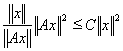
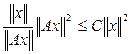
Putting 7. The Self-Adjoint Operator. The Norm of a Self-Adjoint Operator substitute into the last inequality 7. The Self-Adjoint Operator. The Norm of a Self-Adjoint Operator . Then 7. The Self-Adjoint Operator. The Norm of a Self-Adjoint Operator and we obtain 7. The Self-Adjoint Operator. The Norm of a Self-Adjoint Operator 7. The Self-Adjoint Operator. The Norm of a Self-Adjoint Operator or 7. The Self-Adjoint Operator. The Norm of a Self-Adjoint Operator 7. The Self-Adjoint Operator. The Norm of a Self-Adjoint Operator The same inequality also holds for Ax = 0. Hence, 7. The Self-Adjoint Operator. The Norm of a Self-Adjoint Operator and, thereby, equality 7. The Self-Adjoint Operator. The Norm of a Self-Adjoint Operator is proved.

Corollary 1. If for a self-adjoint operator 7. The Self-Adjoint Operator. The Norm of a Self-Adjoint Operator for all 7. The Self-Adjoint Operator. The Norm of a Self-Adjoint Operator then A=0.

Indeed, if 7. The Self-Adjoint Operator. The Norm of a Self-Adjoint Operator for all 7. The Self-Adjoint Operator. The Norm of a Self-Adjoint Operator then by the theorem, 7. The Self-Adjoint Operator. The Norm of a Self-Adjoint Operator and hence A = 0.

For a self-adjoint operator A we further introduce the notion of its bounds – the upper and lower ones:


7. The Self-Adjoint Operator. The Norm of a Self-Adjoint Operator 7. The Self-Adjoint Operator. The Norm of a Self-Adjoint Operator

Corollary 2. 7. The Self-Adjoint Operator. The Norm of a Self-Adjoint Operator 7. The Self-Adjoint Operator. The Norm of a Self-Adjoint OperatorIt follows from the theorem that

7. The Self-Adjoint Operator. The Norm of a Self-Adjoint Operator

From the definition of the bounds it is easily deduced that for any 7. The Self-Adjoint Operator. The Norm of a Self-Adjoint Operator the relation holds

7. The Self-Adjoint Operator. The Norm of a Self-Adjoint Operator

Problems

1. Are the following functionals linear in C[0, 1]?

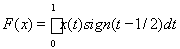
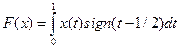
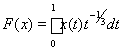
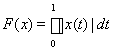
1) 7. The Self-Adjoint Operator. The Norm of a Self-Adjoint Operator 7. The Self-Adjoint Operator. The Norm of a Self-Adjoint Operator;
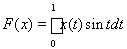
2) F(x)=x(1/2);

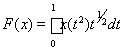
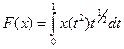
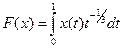
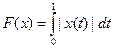
3) 7. The Self-Adjoint Operator. The Norm of a Self-Adjoint Operator 7. The Self-Adjoint Operator. The Norm of a Self-Adjoint Operator;

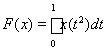
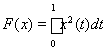
4) 7. The Self-Adjoint Operator. The Norm of a Self-Adjoint Operator 7. The Self-Adjoint Operator. The Norm of a Self-Adjoint Operator

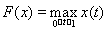
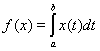
5) 7. The Self-Adjoint Operator. The Norm of a Self-Adjoint Operator 7. The Self-Adjoint Operator. The Norm of a Self-Adjoint Operator;

6) 7. The Self-Adjoint Operator. The Norm of a Self-Adjoint Operator 7. The Self-Adjoint Operator. The Norm of a Self-Adjoint Operator;

7) F(x)=x(t0);

8) 7. The Self-Adjoint Operator. The Norm of a Self-Adjoint Operator 7. The Self-Adjoint Operator. The Norm of a Self-Adjoint Operator;

9) 7. The Self-Adjoint Operator. The Norm of a Self-Adjoint Operator 7. The Self-Adjoint Operator. The Norm of a Self-Adjoint Operator;

10) 7. The Self-Adjoint Operator. The Norm of a Self-Adjoint Operator 7. The Self-Adjoint Operator. The Norm of a Self-Adjoint Operator.

Which of these functionals are continuous in C[0, 1]? Compute their norms.

Which of these functionals are continuous in L2[0,1]? Compute their norms.

2. Which of the given functionals, acting on the corresponding classes of elements from l2, are linear; continuous?

1) f(x)= 7. The Self-Adjoint Operator. The Norm of a Self-Adjoint Operator 7. The Self-Adjoint Operator. The Norm of a Self-Adjoint Operatorxksink;

2) f(x)= xk;

3) f(x)= 7. The Self-Adjoint Operator. The Norm of a Self-Adjoint Operator 7. The Self-Adjoint Operator. The Norm of a Self-Adjoint Operatorxksgn(k-n);

4) f(x)= 7. The Self-Adjoint Operator. The Norm of a Self-Adjoint Operator 7. The Self-Adjoint Operator. The Norm of a Self-Adjoint Operatorxk2k1/2;

5) f(x)= 7. The Self-Adjoint Operator. The Norm of a Self-Adjoint Operator 7. The Self-Adjoint Operator. The Norm of a Self-Adjoint Operatorxkk-1/2;

6) f(x)= 7. The Self-Adjoint Operator. The Norm of a Self-Adjoint Operator 7. The Self-Adjoint Operator. The Norm of a Self-Adjoint Operatorxk2;

7) f(x)= xk-xk-1;

8) f(x)= 7. The Self-Adjoint Operator. The Norm of a Self-Adjoint Operator 7. The Self-Adjoint Operator. The Norm of a Self-Adjoint Operator|xk|;

9) f(x)=supk|xk|;

10) f(x)= 7. The Self-Adjoint Operator. The Norm of a Self-Adjoint Operator 7. The Self-Adjoint Operator. The Norm of a Self-Adjoint Operator|xk| 2.

3. Find the norm of the functional 7. The Self-Adjoint Operator. The Norm of a Self-Adjoint Operator 7. The Self-Adjoint Operator. The Norm of a Self-Adjoint Operator in the space C[0, 1].
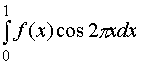
4. Are the following linear functionals continuous on the space 7. The Self-Adjoint Operator. The Norm of a Self-Adjoint Operator 7. The Self-Adjoint Operator. The Norm of a Self-Adjoint Operator,

a) 7. The Self-Adjoint Operator. The Norm of a Self-Adjoint Operator 7. The Self-Adjoint Operator. The Norm of a Self-Adjoint Operator;

b) 7. The Self-Adjoint Operator. The Norm of a Self-Adjoint Operator 7. The Self-Adjoint Operator. The Norm of a Self-Adjoint Operator;

5. Verify that the functional

7. The Self-Adjoint Operator. The Norm of a Self-Adjoint Operator 7. The Self-Adjoint Operator. The Norm of a Self-Adjoint Operator

is continuous in the space 7. The Self-Adjoint Operator. The Norm of a Self-Adjoint Operator ; show that the exact upper bound of its values on the closed unit ball of the space C[0,1] is equal to 1, but this upper bound is not attained at any element of the unit ball.

6. Let in a Hilbert space the sequence {xn} converge weakly to x0, i.e. (xn, y) → (x0, y) for any yH, and ||xn|| → ||x0||. Show that xn → x0.

7. If in a Hilbert space the sequence {xn} converges weakly to x0 and the sequence {yn} converges in norm to y0, then (xn, yn) → (x0, y0). Is weak convergence of the sequence {yn} sufficient?

8. Prove that in a finite-dimensional space weak convergence coincides with strong convergence, i.e., convergence in norm.

See also

  • Mathematical concepts
    • Hermitian operator
    • Norm (mathematics)
    • Transpose of linear maps
  • Physical applications
    • Operator (physics)
    • C*-algebra

Comments

To leave a comment

If you have any suggestion, idea, thanks or comment, feel free to write. We really value feedback and are glad to hear your opinion.
To reply

Lectures and tutorial on "Functional analysis"

Terms: Functional analysis