
Lecture
In an era of global change and a multipolar world, strategic dialogue is becoming not merely a form of communication but a tool for shaping the future. It brings together states, corporations, public institutions, and individual leaders in the search for solutions that go beyond short-term interests. It is not negotiation for the sake of compromise, but joint thinking for the sake of sustainable development.
Strategic dialogue — is a form of communication aimed at developing long-term solutions based on a deep understanding of the interests, values, and potential of the parties. It includes:
Analysis of mutual goals and risks
Forming a shared vision of the future
Creating mechanisms of trust and transparency
Moving from competition to cooperation
Unlike tactical negotiations, strategic dialogue is not limited to current tasks — it builds the architecture of future relations.
Strategic dialogue is built on the idea that strategy is the result of applying the following formula:
Mobilization × Formulation × Implementation
where
Mobilization — is creativity, analysis, choice, engagement, participation;
Formulation — strategic plan, choice of options, logical sequence;
Implementation — action plan, execution of what was planned, setting key milestones, monitoring.
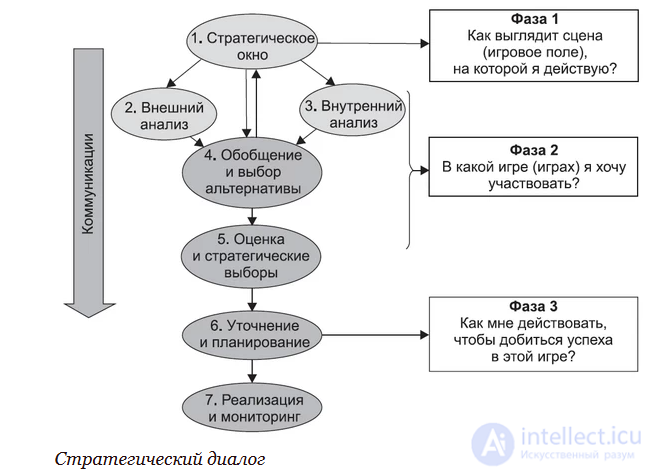
The strategic dialogue model was created as a tool to help avoid common mistakes typical of the strategy development process. These mistakes are related to three key dimensions of strategic planning:
Scope and coverage of the process
Practical implementation of the strategy
Decision-making and choice of direction
Each of these dimensions can contain typical traps that hinder the achievement of long-term goals. The table below presents these aspects and the corresponding risks that strategic dialogue helps overcome.
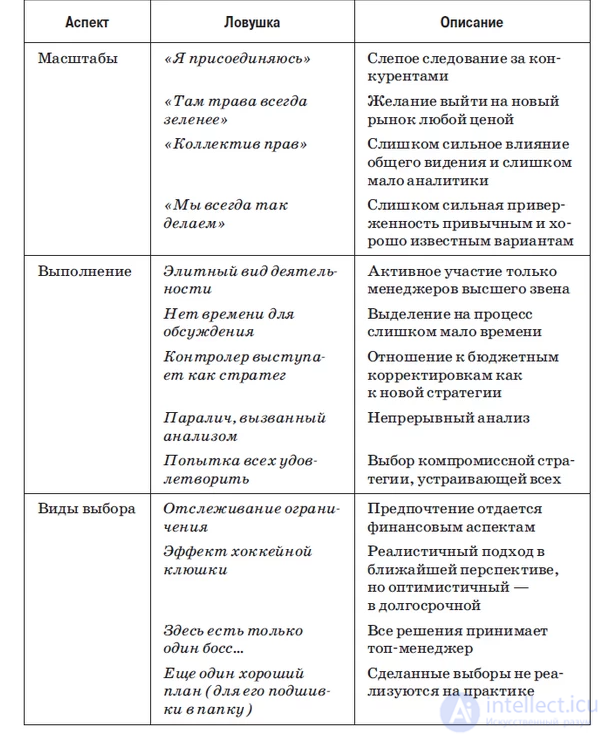
Strategic dialogue — is a structured model designed to support both the development and implementation of a viable, resource-backed strategy. It is especially useful in situations where it is necessary to avoid typical mistakes that arise at different stages of the strategic process.
Traps in strategy formulation most often appear in three key aspects:
Scale of the process — excessive complexity, scattered attention, lack of focus
Strategy implementation — detachment from reality, lack of resources, weak operationalization
Choice of directions and decisions — limited scenarios, ignoring alternatives, premature conclusions
Structures the discussion and engages key participants
Provides a balance between ambition and realism
Creates space for assessing risks and opportunities
Helps align goals, resources, and actions
Interstate relations: dialogue between countries on issues of security, climate, technology, and trade (for example, strategic consultations between the EU and China).
Business environment: partnership discussions between corporations and the state on digitalization, ecology, and regulation.
Public initiatives: dialogue between NGOs, experts, and citizens on issues of education, healthcare, and urban planning.
Context: Amid trade disputes and technological competition, the US and China hold regular strategic dialogues on security, climate, cyber threats and economic stability.
Goal: Reducing tension, preventing conflicts, developing rules of interaction in sensitive areas.
Features:
Multi-level negotiations: ministers, military officials, economists
Discussion of long-term scenarios for the development of relations
Creation of crisis response mechanisms
Context: As part of the transition to a «green» economy, automakers (Volkswagen, Renault, etc.) are conducting a strategic dialogue with the European Commission on the electrification of transport and charging infrastructure.
Goal: Coordination of regulatory norms, investment incentives and timelines for phasing out internal combustion engines.
Features:
Discussion of technological standards and the ecosystem
Forecasting demand and logistics chains
Joint financing of R&D
Context: The city of Utrecht (Netherlands) initiated a strategic dialogue with residents on the future of urban mobility and green zones.
Goal: Creating a sustainable urban environment that takes into account the interests of all population groups.
Features:
Use of digital platforms to collect opinions
Modeling scenarios for the city's development through 2040
Involvement of architects, ecologists, entrepreneurs and schoolchildren
| Element | Description |
|---|---|
| Long-term perspective | Participants discuss not only current problems, but also the future 5–20 years ahead |
| Multi-level nature | Inclusion of different levels: politicians, experts, business, citizens |
| Transparency | Openness of goals, interests and constraints of the parties |
| Flexibility | Willingness to adapt to new challenges and adjust the strategy |
| Cultural sensitivity | Taking into account differences in values, traditions, approaches |
Initiation — defining the agenda and stakeholders
Context analysis — data collection, risk and opportunity assessment
Scenario formation — discussion of alternative development paths
Position alignment — finding common ground
Monitoring and adaptation — regular reassessment and adjustment of strategy
The world has become interdependent: local decisions have global consequences
Balancing interests requires fine-tuning, not the use of force
Strategic dialogue helps avoid conflicts and find points of growth
It contributes to building trust — a resource that is hard to restore
What is a practical form of strategic dialogue?
It is an institutionalized or persistently operating platform where representatives of government, business,
science and society hold long-term, substantive discussions about the future — not for the sake of momentary decisions, but for the sake of forming strategic guidelines.
Form: closed lodges, regular meetings, rituals
Participants: representatives of the elite, intellectuals, politicians, businesspeople
Topics: morality, the development of society, humanism, personal growth
Role: forming a value base for strategic decisions, informal influence on the elite
Freemasonry — is an international brotherhood that emerged from medieval stonemasons' guilds and transformed into an ethical-philosophical movement. Its goal — self-improvement, brotherhood, and humanism.
Role in strategic dialogue:
Forms moral guidelines and value frameworks
Influences the elite through closed discussions and symbolism
Serves as a platform for informal exchange of ideas among representatives of power, business, and science
Form: annual conferences, analytical reports, expert discussions
Participants: politicians, scholars, journalists, international experts
Topics: multipolarity, security, sovereignty, global trends
Role: promoting the Russian point of view, forming an intellectual alternative to Western forums
The Valdai International Discussion Club — an analytical platform founded in 2004. It holds annual conferences with the participation of politicians, experts, and opinion leaders.
Role in strategic dialogue:
Promotes the Russian point of view on global processes
Discusses issues of security, sovereignty, and multipolarity
Forms an intellectual agenda on Eurasia, the Middle East, and other regions
Form: annual meetings, thematic panels, initiatives (for example, The Great Reset)
Participants: heads of state, CEOs, NGOs, scholars, media
Topics: climate, technology, economy, social inequality
Role: developing a global agenda, coordination between sectors, launching sustainable development initiatives
The WEF — a Swiss NGO that organizes annual meetings in Davos with the participation of world leaders, businesspeople, and intellectuals. Founded in 1971 by Klaus Schwab.
Role in strategic dialogue:
Discusses global challenges: climate, technology, inequality
Forms the agenda for sustainable development and ESG standards
Serves as a platform for public and behind-the-scenes diplomacy
Form: annual forum, closed and open discussions
Participants: defense ministers, diplomats, analysts
Topics: geopolitics, conflicts, cybersecurity
Role: strategic dialogue on issues of war and peace
Form: regional meetings, forecast reports
Participants: Middle Eastern leaders, economists, futurologists
Topics: the future of the region, energy, demographics
Role: strategic planning for the development of the Arab world
| Platform | Type of dialogue | Level of influence | Format | Main topics |
|---|---|---|---|---|
| Freemasonry | Ethical, closed | Cultural | Lodges, rituals | Morality, humanism, development |
| Valdai Club | Geopolitical | Regional | Forum, analytics | Sovereignty, security |
| Davos (WEF) | Global | Worldwide | Panels, initiatives | ESG, technology, economy |
| Munich Conference | Security | Worldwide | Forum, reports | Conflicts, cyber threats |
| Arab Strategic Forum | Regional | Middle Eastern | Forecasts, meetings | Energy, demographics, future |
Shanghai Cooperation Organization (SCO) |
Multilateral geopolitical and economic dialogue |
Regional with growing global significance (covers Eurasia and South Asia) |
Summits of heads of state, ministerial meetings, expert groups, the «SCO+» format |
Security, economy, cultural exchange |
Aspen Institute (USA) |
Ethical-political, cross-sector, educational | National and international (through affiliates and global initiatives) | Seminars, leadership programs, conferences, thematic initiatives | Ethical leadership, education, innovation |
Strategic dialogue — is not just a conversation, but a joint design of the future. It requires maturity, patience, and the ability to see beyond current interests. In conditions of uncertainty and complex challenges, it is strategic dialogue that becomes the foundation of sustainable development, peace, and progress.

Comments