
Lecture
This is a list of video and audio connectors and their corresponding video and audio signal standards. They are used to connect devices that generate a video and audio signal to image-display devices and audio equipment.
| Signal standard name | Year introduced | Connector | Analog or digital | Maximum resolution | Usage | Notes |
|---|---|---|---|---|---|---|
| Composite video | 1956 | 1 RCA, BNC, antenna connector, or Mini-VGA | Analog | 768×576, 25 Hz PAL |
Consumer electronics, including VCRs and laserdisc players, 1970s—1980s home computers such as the Commodore VIC-20, 1980s-1990s game consoles such as the Nintendo Entertainment System | |
| S-Video | 1979 | 1 Mini-DIN 4 pin, 1 Mini-VGA, 2 BNC, 2 RCA connectors | Analog | 768×576, 25 Hz PAL |
S-VHS, some laptops, 1980—1990s home computers including the C64, C128 and Atari 8-bit | 4-pin mini-DIN, widespread in consumer electronics, first appeared in 1987 in JVC's S-VHS. |
| SCART | 1977 | SCART 21-pin | Analog | 768×576, 25 Hz PAL |
European “unified” A/V interface, the Commodore Amiga and numerous video games | A unified interface for composite video, composite RGB sync, audio and S-video |
| CGA | 1981 | DE-9 | Digital | 640×200, 60 Hz | x86 machines up through the i80386 | |
| MDA | 1981 | DE-9 | Digital | 720×350, 50 Hz, text only | ||
| HGC | 1982 | DE-9 | Digital | 720×348, 50 Hz | ||
| EGA | 1984 | DE-9 | Digital | 640×350, 60 Hz | ||
| Amiga video | 1985 | DB23 | Both, GenLock | 1280×400/512, 60/50 Hz | Commodore Amiga | The same as SCART, but includes a digital RGBI signal, genlock clock, composite sync and +12/+5 V power |
| VGA | 1987 | Variants of the VGA connector including DE-15/HD-15 (the canonical form), DE-9, and Mini-VGA. Also carried by Mini-DVI. | Analog | 2048×1536, 85 Hz (2560×1600, 60 Hz in theory) |
Introduced on IBM x86 machines, but became the universal analog interface for displays. The VESA Display Data Channel later added the ability for monitors to identify themselves to video cards over the interface, and for video cards — to change the monitor's settings. | Receivers are analog protocols including SVGA, XGA, etc. DVI is the most modern digital alternative. |
| Mac-II/Quadra | 1987 | DA15F | Analog | 1152x870, 75 Hz | Macintosh | The Mac-DA15F and Sun-13W3 are close to VGA in their capabilities. Some Sun machines used 4 or 5 BNC connectors to carry the video signal. |
| 13W3 | 1990 | DB13W3 | Analog | 1152×900, 76 Hz | Sun computer systems. | |
| OpenLDI | 1998 | MDR36 | LVDS digital | |||
| Component video | 1990s | 3 RCA or BNC | Analog | 1920×1080, 60 Hz | consumer electronics | |
| D-Terminal | 1990s | Apple-AAUI | Analog | 1920×1080, 60 Hz | Japanese consumer electronics | Uses component video and selects screen resolution by means of voltage levels. |
| Digital Visual Interface (DVI) | 1999 | DVI, Mini-DVI, Micro-DVI | Both | 2560×1600, 60 Hz | modern video cards | A ubiquitous computer interface. Carries only uncompressed video. High-bandwidth Digital Content Protection (HDCP) encryption is optional. |
| ADC | 2000 | Apple-ADC | Both | 2560 x 1600, 60 Hz | Apple computers | A proprietary connector carrying a DVI signal |
| High-Definition Multimedia Interface (HDMI) | 2003 | HDMI Type A/C |
Digital | 2560 x 1600, 75 Hz | Numerous A/V systems and video cards (including motherboards with IGP) | High-bandwidth Digital Content Protection (HDCP) encryption is mandatory. |
| Serial Digital Interface | 2003 | BNC | Digital | From 143 Mbit/s to 2.970 Gbit/s, depending on the variant. 480i, 576i, 480p, 576p, 720p, 1080i, 1080p. | Broadcast video. Variants include SD-SDI, HD-SDI, Dual Link HD-SDI, 3G-SDI. | |
| DisplayPort | 2007 | 20-pin (external) 32-pin (internal) |
Digital | 2560×1600, 75 Hz | Apple Inc. and DELL monitors Expected: video cards based on the ATI RV670 and NVIDIA G92 graphics chips (both in OEM form) |
DisplayPort includes 128-bit AES to replace HDCP. DisplayPort version 1.1 added HDCP support. |
| DiiVA | 2008 | 13-pin | Digital | 2560×1600, 75 Hz 4096×2160, 24 Hz |
A/V systems | Supports HDCP. |
| HDBaseT | 2010 | 8P8C | Digital | 4096×2160, 24 Hz, 10.2 Gbit/s | A/V systems, up to 100 W of power | |
| CoaXPress | 2010 | BNC connector, DIN 1.0/2.3 | Digital | Machine vision and industrial cameras | Supports a 20.83 Mbit/s uplink, and power delivery over the same coaxial cable |
| Appearance | Connector class or name | Used for | Notes |
|---|---|---|---|
| Analog radio-frequency connectors. Typically used with coaxial cable such as RG-6 and RG-59. | |||
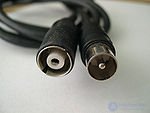 Belling-Lee connector / IEC 169-2 connector |
TV connector, (a.k.a. PAL connector in Europe) | No longer used for antenna connections in the US, where it was replaced by the more reliable F connector. Still used in European countries. | |
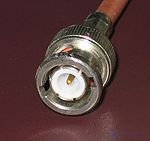 |
BNC (Bayonet Neill-Concelman) | An alternative to RCA for professional video equipment. Protocols: Serial Digital Interface (SDI) and HD-SDI. |
75 Ω for video signals, e.g. RG59 and RG6. 50 Ω for data transmission, e.g. Ethernet over RG58. |
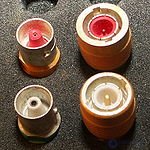 50Ω (bottom row) and 75Ω C connectors (top row) |
C connector (Concelman connector) | ||
| GR connector (General Radio connector) | |||
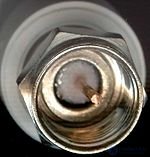 |
F connector | Used in the US for home TV equipment and for satellite and cable systems worldwide. | |
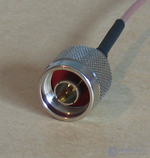 |
N connector (Neill connector) | ||
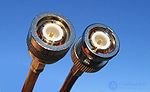 TNC connector (left) compared with BNC (right) TNC connector (left) compared with BNC (right) |
Threaded Neill-Concelman connector (TNC) | ||
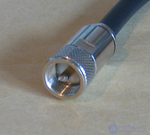 |
UHF connector (a.k.a. PL-259/SO-239) | ||
| D-subminiature family | |||
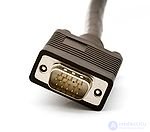 DE-15 (plug/male) |
VGA connector (generically called DE-15) | Became the ubiquitous video connector after its introduction on IBM x86 machines. Older VGA connectors were DE-9 (9-pin). A modern DE-15 connector can carry the VESA Display Data Channel to exchange information between the video card and the monitor | |
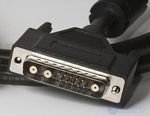 |
DB13W3 | Analog computer video, color and monochrome. Sun Microsystems, Silicon Graphics, IBM RISC, Intergraph and some Apple Computer machines. | Obsolete; superseded by VGA and DVI. The same connector was used by 3Com to supply redundant power in the 3300-series switches. |
| DVI-like | |||
|
|
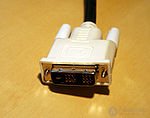
Digital Visual Interface (DVI). 5 variants: DVI-I single link, DVI-I dual link, DVI-D single, DVI-D double, and DVI-A. | Ubiquitous on modern video cards. | |
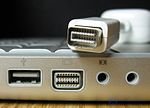 A Mini-DVI plug/male lying on a 12-inch PowerBook G4, with the socket/female second from the left. |
Mini-DVI | VGA, DVI, television. An alternative to Mini-VGA on Apple Computer machines. | |
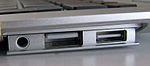 Micro-DVI socket/female (far right) on a MacBook Air |
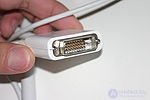
Micro-DVI | Dual-channel DVI-D | |
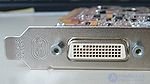 Socket/female Socket/female |
DMS-59 | Dual-channel DVI | |
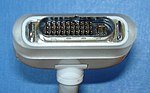 Plug/male Plug/male |
Apple Display Connector | Power, DVI, USB. | |
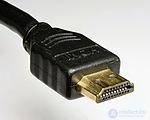 One of the three versions of the HDMI form factor (Type A) plug/male, 2 — mini-HDMI (Type C), 3 — micro-HDMI (Type D). |
High-Definition Multimedia Interface (HDMI) | Transmission of high-quality video signals and multichannel digital audio (the HDMI protocol). | Compatible with DVI-D and DVI-I through a simple adapter. |
| DIN/Mini-DIN | |||
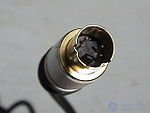 Plug/male Plug/male |
Mini-DIN 4-pin | S-Video | |
|
|
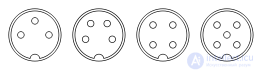
Various Mini-DIN versions | Differ in construction and protocols; see the Mini-DIN article for details | |
| Other | |||
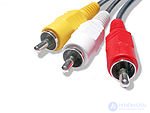 3 RCA connectors — yellow for composite video, and white and red for stereo audio |
RCA | Widely used in consumer electronics for audio and video signals. | A separate connector for each signal. |
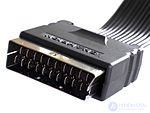 Plug/male Plug/male |
SCART | Consumer electronics, mainly in Europe. Carries an analog stereo audio signal, with composite video or RGB video. Some devices support S-Video, but the use of S-Video is not standardized and uses the same pins as composite video and RGB. | |
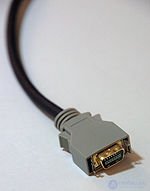 D4 video connector |
D-Terminal | Popular in Japan for analog high-definition TV. Available in sizes from D1 to D5. | Replaces the RCA connector. |
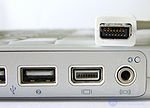 A Mini-VGA plug/male lying on an Apple laptop, with the socket/female second from the right. |
Mini-VGA (used for laptops) | Used in laptops, mainly from Apple Computer and some from Sony. | |
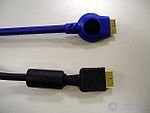 AV Multi (plugs/male with gold-plated contacts) |
AV Multi | Proprietary to Sony. Combines composite video, S-Video, RGB, component video and stereo audio (2 analog channels). | |
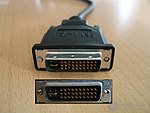 Plug/male Plug/male |
34-pin MicroCross Molex connector | VESA Enhanced Video Connector and VESA Plug and Display (a.k.a. M1-DA) used this port to carry digital video, audio, FireWire and USB over a single cable. | Obsolete, now replaced by DFP and later DVI versions. |
| HDI-45 | Patented by Apple. Combines VGA, stereo audio and ADB. | Used only once | |
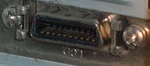 Socket/female (20-conductor) Socket/female (20-conductor) |
Digital Flat Panel | Used together with the PanelLink digital video protocol. | Superseded by DVI. |
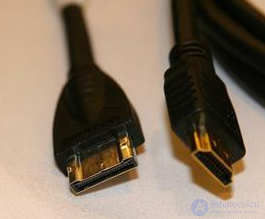 |
Unified Display Interface | Was proposed as a replacement for DVI and HDMI, blocked by Intel in favor of DisplayPort. | |
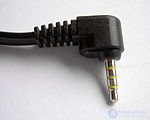 TRRS plug/male TRRS plug/male |
3.5mm (⅛") TRS connector | Analog camcorders mostly use a 3.5mm 4-contact TRRS connector to carry composite video and stereo audio. | The connector closely resembles the widely used 3-contact (Walkman) 3.5mm TRS connector. |
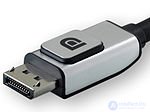 Plug/male Plug/male |
DisplayPort | DisplayPort is also the name of a protocol proposed to replace DVI in computer monitors and consumer electronics such as home theater systems. | |
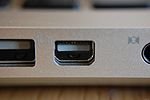 Mini DisplayPort (socket/female) |
Mini DisplayPort | A proposed alternative to HDMI, used with displays (replacing VGA, DVI). Succeeded Apple Inc.'s Mini-DVI. | |
 USB Type-C connector |
USB Type-C | A universal connector from the USB 3.1 standard; in certain modes (Alternate Mode) it can be used to carry a video signal in the DisplayPort 1.3, HDMI 1.4b, MHL 1.0-3.0/superMHL standards. | |
Physical consumer audio connectors
| Appearance | Connector class or name | Used for | Notes |
|---|---|---|---|
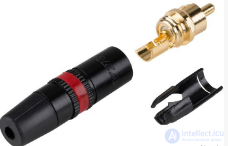 |
RCA connector (tulip) |
An RCA jack, colloquially a “tulip” or “bell”, or AV connector. The RCA name comes from the Radio Corporation of America, which proposed this type of connector in the early 1940s for connecting phonographs to amplifiers. |
A major drawback of such connectors is that when plugging in, the signal contact pair (carrying voltage) mates first, and only afterward do the shell contacts meet. This can damage equipment at the moment of connection if there is a potential difference between the shells. |
|
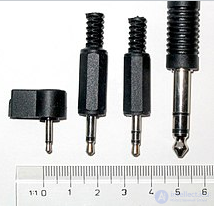
Left to right: 2.5mm mono micro-jack, 3.5mm mono mini-jack, 3.5mm stereo mini-jack and 6.3mm stereo jack
|
TRS connector (jack) |
A TRS connector (an abbreviation of the English Tip, Ring, Sleeve — referring to the shape of the contacts on the plug; also known as a jack) — a common connector for transmitting an analog audio signal. It usually has three contacts (TRS, stereo), but there are variants with two (TS, mono), four (TRRS, the 4th contact for a microphone), and rarely five contacts (TRRRS). |
The first 1/4″ TS connectors were developed in the 20th century for use in telephone switchboards. Originally the tip had a shape different from that of modern plugs. With the appearance of the TRS connector, a physical-compatibility problem arose with the TS, so the TRS standard introduced a modified tip shaped so that its sockets would not accept TS plugs. At present the overwhelming majority of TS plugs are made with the tip originally intended for TRS, so the physical-compatibility problem remains unresolved |
|
|
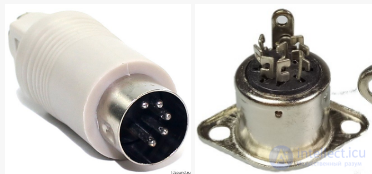
DIN connector | A DIN connector — a connector originally standardized by the German Institute for Standardization (German: Deutsches Institut für Normung, DIN), a German national standards organization. There are DIN standards for many types of connectors, so the term “DIN connector” does not denote any specific connector type until a standard number is given (for example, “DIN 41524 connector”). All the pin connectors (plugs) in this family have a metal shell 13.2 mm in diameter with a projection (a “key”) that sets the orientation when inserting the plug into the socket. A number of connectors of this shape differ only in the pin configuration and are standardized in DIN 41524 (three- and five-contact), DIN 45322 (6-contact at 60°), DIN 45326 (8-contact), DIN 45329 (7-contact) and other standards for various applications. |
5/180° connectors were often used for:
|
|
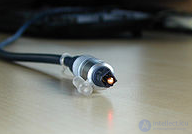
TOSLINK — the optical S/PDIF connector.
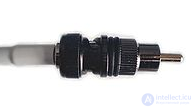
The coaxial S/PDIF connector.
|
S/PDIF or S/P-DIF |
stands for Sony/Philips Digital Interface (or Interconnect) Format (also described as IEC 958 type II in the international standard IEC-60958). It is a set of low-level protocol and hardware-implementation specifications describing the transmission of digital sound between various components of audio equipment
S/PDIF can be used to transmit digital signals in a number of formats. The most common of these are: the format used on DAT, with a sampling rate of 48 kHz, and the format used for recording compact discs, with a sampling rate of 44.1 kHz. To support both of these systems, the format has no fixed data bitrate. Instead, the data is transmitted using the Biphase Mark Code, which has one or two transitions per data bit, allowing the original word clock to be transmitted along with the signal itself. |
Extending the capabilities of this interface, S/PDIF can be used to transmit 20-bit audio data streams plus other associated information. It is also possible to transmit 16-bit streams with zero padding, or 24-bit streams, at the expense of dropping the additional information. The low-level protocol is almost the same as in the AES/EBU description. The only difference — the channel status bit (“Channel status bit”). |
| Appearance | Connector class or name | Used for | Note |
|---|---|---|---|
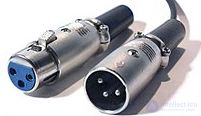 |
XLR Three-contact XLR3 connector, on the left the socket (“female”), on the right the plug (“male”) |
XLR connectors come as plugs and sockets. They use a balanced connection. Used mainly in professional audio, video and lighting equipment. The original manufacturer was James Cannon, founder of Cannon Electric in Los Angeles, California (now part of ITT Corporation); the connector is colloquially called a Cannon connector. XLR connectors are used for balanced signal transmission. | |
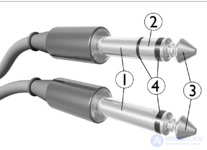 |
jack (6.35 mm, 1/4 inch); 6.3 mm (1/4″) stereo and mono: 1 — ground, 2 — right-channel signal (for stereo), 3 — signal (for mono) or left-channel signal (for stereo), 4 — insulation. |
6.3 mm TS/TRS |
|
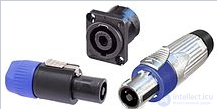 speakON-type connectors made by Neutrik speakON-type connectors made by Neutrik |
Speakon (the manufacturer uses the spelling speakON) |
a type of cable connector developed by Neutrik and used mainly in professional sound equipment for connecting loudspeaker systems to power amplifiers. Speakon connectors are rated for large current values (250VA, 30A or 40A) per channel, and they include protection against a person touching the contacts, as well as against accidental disconnection. The Speakon name is a registered trademark of Neutrik, but third-party manufacturers produce compatible connectors. Speakon-type connectors can have two, four or eight contacts, which allows, for example, a low- and high-frequency audio system to be connected to the corresponding amplifier paths with a single cable. Two- and four-contact connectors are partially compatible with each other: a two-contact plug can be inserted into a four-contact connector, but not the other way around. Eight-contact connectors, despite an outwardly similar appearance, have a different size. Connecting speaker cables are usually fitted with male-type connectors on both ends. Amplifiers and loudspeaker systems are fitted with female-type connectors. In addition, there are two-cable couplers made as two female-type connectors in a small plastic sleeve.
|
There are also combined Speakon-TS connectors that accept both two- and four-contact Speakon plugs and two-contact 6.35 mm TS connectors. |
|
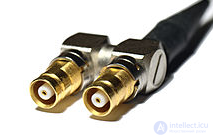
A dual DIN 1.6/5.6 connector for 75-ohm coaxial cable |
A BNC-type connector (BNC — an abbreviation of bayonet Neill-Concelman) — an electrical connector with a bayonet coupling. Named after its developers: Paul Neill of Bell Labs and Carl Concelman of Amphenol. It is used to connect coaxial cable with a characteristic impedance of 50 ohms or 75 ohms and a diameter of up to 8 mm. Losses in such a connector typically do not exceed 0.3 dB. |
Cables with BNC-type connectors are used to connect radio-electronic equipment (signal generators, oscilloscopes and other instruments), as well as to build Ethernet networks using 10BASE2 technology. In BNC connectors of different construction, the center conductor and the braid of the coaxial cable can be attached in three ways: Attaching the inner and outer (braid) conductor of the coaxial cable to the connector can be done in three ways:
|
A coaxial electrical connector (coaxial connector, RF connector, from radio frequency connector, also coaxial RF connector) — an electrical connector designed to connect coaxial cable to equipment and to connect (couple) two coaxial cables to each other. |
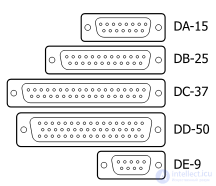 |
D-subminiature or D-sub Sizes of the DA, DB, DC, DD and DE connectors | a family of electrical connectors used, in particular, in computer technology. It gets its name from its distinctive “D” shape, which unambiguously orients the connector for correct insertion. Part of the name, English subminiature — “extremely miniature” — was appropriate when these connectors first appeared; today these connectors are among the bulkier computer signal connectors. | |
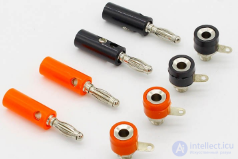 |
Banana connector |
A banana connector is a connector used for connecting speakers, test-equipment probes, or laboratory power supplies. The plug's contact terminal is made of spring-loaded plates to ensure a tight fit with the socket. The plug's contact diameter can be 2 mm or 4 mm. A protective housing is used as insulation. The plug housing is of a knock-down design and is intended for mounting on a cable.
|
|
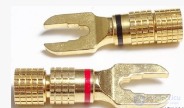 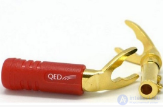 |
“Spade”-type connector |
A “spade”-type connector is used for connecting speaker cable of various cross-sections. The cable can be routed in at various angles. The cable is clamped by screws. This type of connector provides good contact and maximum switching area within the connector, which in turn uses a screw clamp to reliably hold the spade in place.
|
|
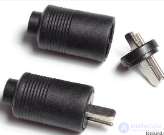 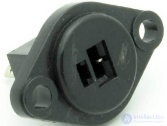 |
DIN 41529 for loudspeakers (dash-dot connector) |
A polarized two-contact unshielded connector designed for connecting a loudspeaker to an audio power amplifier. Known as the DIN 41529 connector for loudspeakers. It exists in the form of a panel-mount socket and a socket/plug on a lead. The plug has a flat central contact and a round contact offset from the center. The round contact should be connected to the positive terminal (red), and the flat one — to the negative (black). Soviet equivalents: ONTs-VN-1-2/16-V — the plug, and ONTs-VN-1-2/16-R — the socket. In the Soviet Union, and even now, it is informally called the “dash-dot connector”. |
RJ-45
rj-11




Comments