
Lecture
Computer architecture (VM architecture, engl. Computer architecture) — the conceptual structure of a computing machine , which determines how information processing is carried out and includes methods for converting information into data and the principles by which hardware and software interact.
For more on this subject, see: History of computing technology.
3000 BC — in ancient Babylon the first counting device, the abacus, was invented.
500 BC — in China a more “modern” variant of the abacus with beads on rods appeared — the suanpan.
87 BC — in Greece the “Antikythera mechanism” was made — a mechanical device based on gear trains, representing a specialized astronomical calculator.
In the 13th century Ramon Llull created a logical machine in the form of paper wheels, built on ternary logic.
1492 — Leonardo da Vinci, in one of his notebooks, gives a sketch of a 13-digit adding device with ten-toothed rings. Although a working device based on these drawings was only built in the 20th century, the feasibility of Leonardo da Vinci's design was nevertheless confirmed.
In 1642 Blaise Pascal, the French scientist after whom one of the programming languages is named, constructed a calculating machine that could perform only addition and subtraction. It was a mechanical device with gears and a hand crank.
Thirty years later, the German mathematician Gottfried Wilhelm Leibniz built another mechanical machine which, besides addition and subtraction, could also perform multiplication and division. In essence, Leibniz created, three centuries ahead of time, the equivalent of a four-function pocket calculator.
In 1822 Charles Babbage, a professor of mathematics at Cambridge University, designed and built a difference engine which, like Pascal's machine, could only add and subtract, and computed tables of numbers for maritime navigation. Only one algorithm was built into the machine — the method of finite differences using polynomials.
there was quite an interesting way of outputting information: the results were stamped with a steel die onto a copper plate, which foreshadowed later input-output media — punched cards and compact discs.
Although this device worked fairly well, Babbage soon grew bored with a machine that performed only one algorithm. He spent a great deal of time, most of his family fortune, and a further 17,000 pounds granted by the government, developing the Analytical Engine.
This machine consisted of four components:
The memory consisted of 1,000 words of 50 decimal digits each; each word held variables and results. The computing unit took operands from memory, then performed addition, subtraction, multiplication or division, and returned the result back to memory. Like the Difference Engine, this device was mechanical.
Because the Analytical Engine was programmed in an elementary assembly language, it needed software. To create this software, Babbage hired a young woman — Ada Lovelace. Thus Ada Lovelace became the world's first programmer. The modern programming language Ada is named in her honor. Interestingly, Babbage himself never actually debugged the computer. He needed thousands of gears made with a precision that was unattainable in the 19th century. However, Babbage's ideas were ahead of their time, and even today most modern computers are similar in design to the Analytical Engine. It is therefore fair to say that Babbage was the grandfather of the modern digital computer.
Late 1930s — Konrad Zuse built several automatic calculating machines using electromagnetic relays. In 1941 Zuse created the first binary computer model — the Z3, which today is considered by many to be the first genuinely working programmable computer. The first three machines, Z1, Z2 and Z3, were destroyed during the bombing of Berlin in 1944. The Z4 was preserved and completed and was the first computer ever sold. In 1945 Zuse created for it the world's first high-level programming language, Plankalkül.
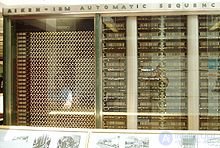
In 1940 George Stibitz demonstrated an automatic calculating machine at Dartmouth College at a conference attended by a then-unremarkable physics professor from the University of Pennsylvania, John Mauchly, who later became very well known in the field of computer development.
In 1944 a young scientist from Harvard — Howard Aiken — designed his first computer, called “Mark I”. His computer had 72 words of 23 decimal digits each and could execute any instruction in 6 seconds. Punched tape was used in the input-output devices. By the time Aiken finished work on the “Mark II” computer, relay computers were already obsolete.
The era of electronics had begun.
16th century — in Russia the schoty (counting frame) appeared, with 10 wooden beads on a wire.
1623 — Wilhelm Schickard, a professor at the University of Tübingen, develops a device based on toothed wheels (a “calculating clock”) for adding and subtracting six-digit decimal numbers. Whether the device was actually built during the inventor's lifetime is not reliably known, but in 1960 it was recreated and proved to be fully functional.
1630 — Richard Delamain creates a circular slide rule.
1642 — Blaise Pascal presents the “Pascaline” — the first actually realized and widely known mechanical digital calculating device. The prototype of the device added and subtracted five-digit decimal numbers. Pascal made more than ten such calculators, with the later models handling numbers of eight decimal digits.
1673 — the well-known German philosopher and mathematician Gottfried Wilhelm Leibniz built a mechanical calculator that performed multiplication, division, addition and subtraction. Leibniz later described the binary numeral system and discovered that if certain groups of binary numbers are written one beneath another, the zeros and ones in the vertical columns recur regularly, and this discovery led him to the idea that entirely new laws of mathematics existed. Leibniz decided that binary code was optimal for a mechanical system that could operate on the basis of alternating active and passive simple cycles. He tried to apply binary code in mechanics and even made a drawing of a calculating machine operating on the basis of his new mathematics, but soon realized that the technology available in his time did not allow such a machine to be built.
At around the same time, Isaac Newton laid the foundations of mathematical analysis.
1723 — the German mathematician and astronomer Christian Ludwig Gersten, building on Leibniz's work, created an arithmetic machine. The machine computed the quotient and the number of successive addition operations when multiplying numbers. It also included a means of checking the correctness of data entry.
1786 — the German military engineer Johann Helfrich von Müller, while working to improve Leibniz's stepped-drum mechanical calculator, invented by his countryman Philipp Matthäus Hahn, put forward the idea of a “difference engine” — a specialized calculator for tabulating logarithms computed by the method of differences.
1801 — Joseph Marie Jacquard builds a programmable loom, whose operating program is set using a set of punched cards.
1820 — the first industrial production of arithmometers. The credit for this belongs to the Frenchman Thomas de Colmar.
1822 — the English mathematician Charles Babbage invented, but was unable to build, the first Difference Engine (a specialized arithmometer for the automatic construction of mathematical tables) (see: Charles Babbage's Difference Engine).
1840 — Thomas Fowler (engl. Great Torrington) built a wooden ternary calculating machine using a balanced ternary numeral system.
1855 — the brothers Georg and Edvard Scheutz (engl. George & Edvard Scheutz) of Stockholm built the first Difference Engine based on the work of Charles Babbage.
1876 — the Russian mathematician P. L. Chebyshev created a summing device with continuous carry of tens. In 1881 he also built an attachment for it for multiplication and division (the Chebyshev arithmometer).
1884—1887 — Hollerith developed an electric tabulating system, which was used in the 1890 and 1900 United States censuses and in the 1897 census of the Russian Empire.
1912 — a machine for integrating ordinary differential equations was created, designed by the Russian scientist A. N. Krylov.
The “Computing Division” hall of the U.S. Treasury. 1920s
1927 — at the Massachusetts Institute of Technology (MIT), Vannevar Bush developed a mechanical analog computer.
1938 — the German engineer Konrad Zuse, shortly after graduating from the Berlin Technical College in 1935, built his first machine, named the Z1. (Helmut Schreyer is also mentioned as his co-author). This was a fully mechanical programmable digital machine. The model was experimental and was not used in practical work. Its restored version is kept at the German Museum of Technology in Berlin. That same year Zuse began building the Z2 machine (these computers were originally called V1 and V2. In German this sounds like “Fau1” and “Fau2”, and to avoid confusing them with the rockets, the computers were renamed Z1 and Z2).
1941 — Konrad Zuse creates the first computing machine, the Z3, possessing all the properties of a modern computer.
1942 — at Iowa State University, John Atanasoff and his graduate student Clifford Berry created (or more precisely, designed and began assembling) the first electronic digital computer in the U.S., the ABC. Although this machine was never completed (Atanasoff was called up for active military service), historians write that it had a major influence on John Mauchly, who two years later created the ENIAC computer.
Early 1943 — the first American computing machine, the Mark I, successfully passed tests; it was designed to perform complex ballistic calculations for the American Navy.
Late 1943 — the British special-purpose computing machine Colossus went into operation. The machine worked on decoding secret codes of Nazi Germany.
1944 — Konrad Zuse developed an even faster computer, the Z4, as well as the first high-level programming language, Plankalkül.
1946 — the first general-purpose electronic digital computing machine, ENIAC, was created.
1950 — Lebedev's group in Kyiv created the first Soviet electronic computer.
1957 — the American company NCR created the first transistor-based computer.
1958 — N. P. Brusentsov, together with a group of like-minded colleagues, built the first ternary computer with a posi
An important milestone in the history of computers is the work of John von Neumann, published in 1956.
The possibility of building a digital computing machine was first proven by the English mathematician Turing in 1936. He showed that any algorithm can be realized by means of his discrete automaton, which was named the Turing machine. Post independently proved the same thing (the Post machine).
Physically, the first digital computing machine was built in 1935 by the Bell company (USA). A machine of the same kind was built for special tasks under the direction of K. Zuse (1941, Germany). An attempt to build a universal computer was made by Aiken (USA). It was named "Mark-1". It was designed and built at Harvard University.
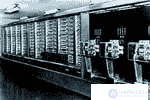 Characteristics of the computer (it worked with 23-digit decimal numbers):
The relay base was unreliable. Special relays were developed for computers, and on the basis of these the "Mark-2" machine was built.
The real countdown of computer technology begins with the transition from relays to flip-flops. The flip-flop was invented in 1918 in Russia by Bonch-Bruevich. The first computer built using electronic components was made in 1942 ("ENIAC") at the University of Pennsylvania under the direction of Mauchly and Eckert. 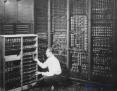 In 1943, under Turing's direction, the "Colossus" computer was developed. After the archives were declassified in the 1970s, it turned out that the first computer, named "ABC", had been developed in 1939 by the American of Bulgarian origin Atanasoff.
In the development of computers, five generations can be distinguished in total:
The first generation of computers was the vacuum-tube computers, industrial production of which began in the early 1950s.
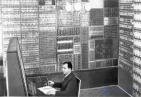 In our country, the beginning of production can be considered the early 1950s — the appearance of the "MESM". The "MESM" was developed under the direction of Lebedev. In 1952-1953, on its basis, the "BESM-1" (Large Electronic Calculating Machine) was developed. And on its basis, the serial production of the "BESM-2" machine was carried out.
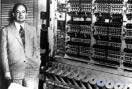 At the same time, in the USA, the "EDVAC" machine was being produced. The technical characteristics of the "BESM-2" machine were far higher. This was because "BESM-2" used two completely new principles: pipelining and the stack. For the "BESM-2", the ALU speed was about 10,000 operations per second. In 1953 the "Strela" machine was developed under the direction of Bazilevsky. Also, at the Moscow Power Engineering Institute, under the direction of Academician Brook, computers named "M" were developed.
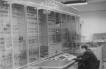 A plant for producing computers was built in Minsk, where serial production of the "Minsk" machines began. In the city of Penza an OKB (design bureau department) was set up under the direction of Academician Rameev, where the "Ural" computer was developed and produced serially.
The structure of first-generation computers fully corresponded to the von Neumann machine. The technical characteristics of the machines were significantly lower than those of modern PCs. Programming was done in machine code. The capacity of the RAM was 2,000 words, and information was input from punched tape and film.
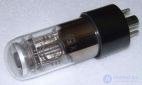 Vacuum-tube computers were large in size and mass, consumed a great deal of energy, and were very expensive, which sharply narrowed the circle of computer users and, consequently, the volume of production of these machines. Their main users were scientists solving the most pressing scientific and technical problems related to the development of nuclear power, jet aviation, rocket engineering, and so on. An increase in the number of problems that could be solved was hindered by the low reliability and performance of vacuum-tube machines, the limited nature of their resources, and the extremely labor-intensive process of preparing, entering and debugging programs written in machine instruction language.
Increasing the speed of computers came from increasing their memory and improving their architecture: the use of binary codes to represent numbers and instructions, and their placement in the growing memory of the computer, simplified the structure of the processor and increased the performance of data processing. To speed up the process of preparing programs, the first programming automation languages began to be created (symbolic coding languages and autocodes).
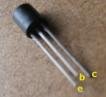 In 1948, theoretical physicists John Bardeen and William Shockley, together with the lead experimenter at "Bell Telephone Laboratories", Walter Brattain, created the first working transistor. This was a point-contact device in which three metal "whiskers" made contact with a block of polycrystalline germanium.
The first computers based on transistors appeared in the late 1950s, and by the mid-1960s more compact peripheral devices had been created.
The most astonishing capability of the transistor is that it alone can do the work of 40 vacuum tubes while operating at a higher speed, generating very little heat, and consuming almost no electricity. Alongside the process of replacing vacuum tubes with transistors, methods of storing information were also being improved. Memory capacity increased, and magnetic tape, first used in the UNIVAC computer, began to be used both for input and for output of information. 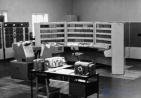 And in the mid-1960s, storing information on disks became widespread. Major advances in computer architecture made it possible to achieve a speed of a million operations per second! Examples of transistor computers include the "Stretch" (England) and the "Atlas" (USA). At that time the USSR was keeping pace and produced world-class computers (for example the "BESM-6").
The appearance of computers built on transistors led to a reduction in their size, mass, energy consumption and cost, as well as to an increase in reliability and performance. This immediately widened the circle of users and, consequently, the range of problems that could be solved. Algorithmic languages began to be created for engineering and technical (ALGOL, FORTRAN) and economic (COBOL) calculations.
But even at this stage, the main task of programming technology remained ensuring the economical use of machine resources (machine time and memory). To solve this, operating systems began to be created (complexes of service programs providing better allocation of computer resources when executing user tasks).
The first operating systems (OS) simply automated the work of the computer operator involved in carrying out a user's task: entering the program text into the machine, invoking the required translator, invoking the library subroutines needed for the program, invoking the linker to place these subroutines and the main program in the computer's memory, entering the source data, and so on. Now, along with the program and data, an instruction was also entered into the computer, listing the processing stages and giving a number of details about the program and its author. Then several user tasks began to be entered into the computer at once (a batch of tasks), and operating systems began to distribute the computer's resources among these tasks — a multiprogramming mode of data processing appeared (for example, while the results of one task are being output, calculations are being carried out for another, and data for a third is being entered into memory).
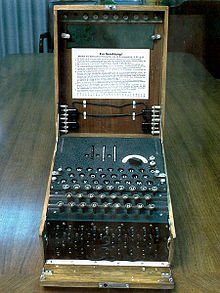
At the start of World War II, German submarines were sinking British ships. German admirals sent commands to the submarines by radio, and although the British could intercept these commands, the problem was that the radio messages were encoded using a device called ENIGMA, whose predecessor had been designed by the amateur inventor and former U.S. president Thomas Jefferson. The British managed to obtain an ENIGMA machine from the Poles, who in turn had stolen it from the Germans. However, to decode an encrypted message required an enormous amount of computation, and it had to be carried out immediately after the radio message was intercepted. So the British government founded a secret laboratory to build an electronic computer called COLOSSUS.
In 1943 the electronic computer COLOSSUS began operating; the famous British mathematician Alan Turing took part in its creation. But since the British government fully controlled this project and treated it as a military secret for 30 years, COLOSSUS did not become the basis for the further development of computers. We mention it here only because it was the world's first electronic digital computer.
That same year, Mauchly and his student J. Presper Eckert began building the ENIAC (Electronic Numerical Integrator and Computer) — an electronic computer that consisted of 18,000 vacuum tubes and 1,500 relays, weighed 30 tons and consumed 140 kilowatts of electricity. The machine had 20 registers, each of which could hold a 10-digit decimal number.
In 1946 work on the ENIAC was finished. By then, however, it was already unnecessary — at least, for achieving the originally intended goals. The ENIAC had 6,000 multi-position switches installed and numerous cables running to connectors. Since the war had ended, Mauchly and Eckert were allowed to set up a school where they told fellow scientists about their work. It was in this school that interest in building large digital computers was born.
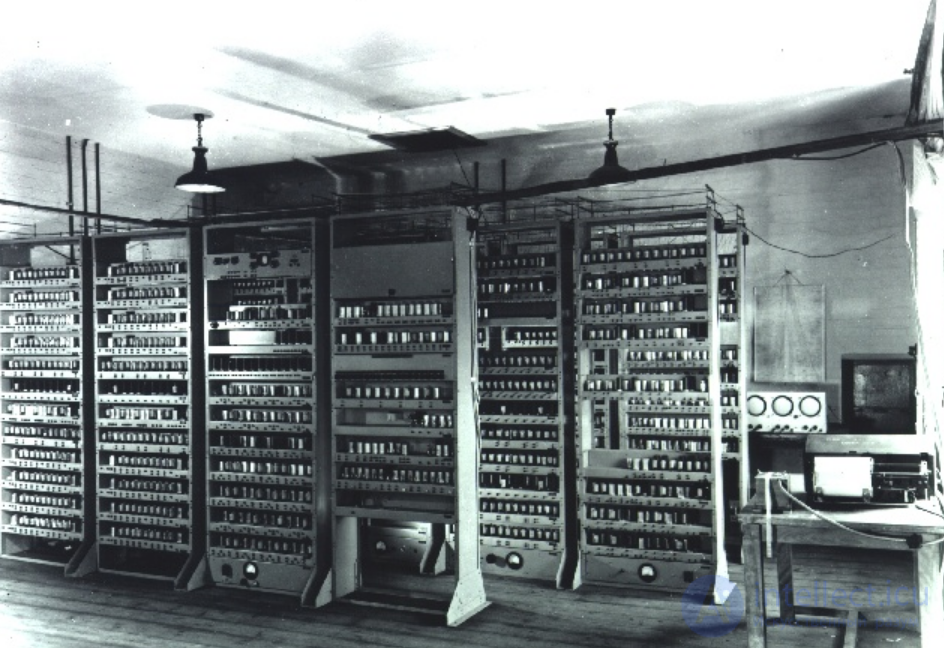
In 1949 Maurice Wilkes built the EDSAC — the first working computer. Next came JOHNNIAC at the Rand Corporation, ILLIAC at the University of Illinois, MANIAC at the Los Alamos laboratory, and WEIZAC at the Weizmann Institute in Israel. Eckert and Mauchly soon began work on the EDVAC (Electronic Discrete Variable Computer) machine. However, this project was shut down after they left the university.
Eckert and Mauchly received a patent for the invention of the ENIAC as a digital computing machine in 1946. This patent was invalidated in 1973, when the U.S. Federal Court ruled that the ENIAC had used an architecture that already existed in the first digital computing machine, built by John Vincent Atanasoff, who received a grant of $650 from Iowa State University in 1939, and his assistant, the electrical-engineering student Clifford Berry, although they had not patented their machine. While Eckert and Mauchly were working on the EDVAC machine, one of the ENIAC project participants, John von Neumann, went to the Institute for Advanced Study in Princeton to build his own version of the EDVAC, called the IAS (Immediate Address Storage).
Von Neumann was a genius in the same fields as Leonardo da Vinci. He knew many languages, was an expert in physics and mathematics, and had a phenomenal memory: he remembered everything he had ever heard, seen or read. He could quote word for word, from memory, the text of books he had read years earlier. By the time von Neumann became interested in computing machines, he was already the most famous mathematician in the world.
Von Neumann soon realized that building computers with a large number of switches and cables took a long time and was very tedious, and he came to the idea that the program should be represented in the computer's memory in digital form, together with the data. He also noted that the decimal arithmetic used in the ENIAC machine, where each digit was represented by ten vacuum tubes (1 on, the rest off), should be replaced by parallel binary arithmetic.
Von Neumann's basic design was used in the EDSAC, the first machine with a stored program, and even now, more than half a century later, it remains the foundation of most modern digital computers. The concept itself, and the IAS (Immediate Address Storage) machine, had a very great influence on the further development of computer technology.
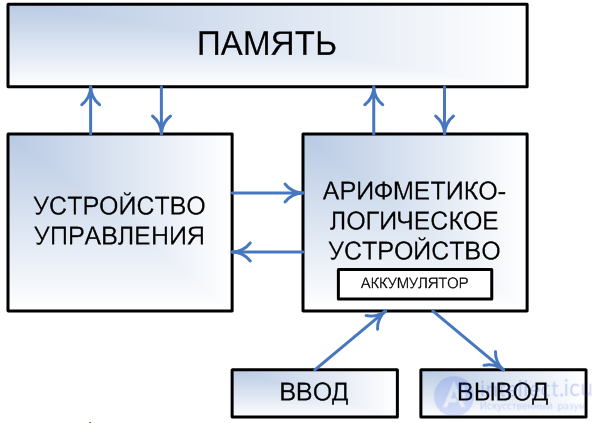
Von Neumann's machine consisted of five main parts:
The memory included 4,096 words of 40 bits each (a bit is either 0 or 1). Each word held either 2 instructions of 20 bits each, or a signed integer of 40 bits.
8 bits indicated the type of instruction, while the remaining 12 bits identified one of the 4,096 words.
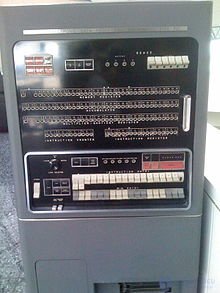
The arithmetic unit and the control unit made up the “brain center” of the computer. In modern machines these units are combined on a single chip, called the central processing unit (CPU).
Inside the arithmetic-logic unit there was a special internal 40-bit register, the so-called accumulator. A typical instruction would add a word from memory to the accumulator or store the contents of the accumulator into memory. This machine did not perform floating-point arithmetic operations, since von Neumann believed that any competent mathematician could keep track of the decimal point in their head.
In 1953 the IBM company built the 701 computer, many years after Eckert and Mauchly's company, with its UNIVAC computer, had become number one on the computer market. The 701 had 2,048 words of 36 bits, each word holding two instructions. It became the first computer to lead the market for ten years.
In 1956 the 704 computer appeared, which had 4 KB of magnetic-core memory, 36-bit instructions, and a floating-point processor.
In 1958 IBM began work on its last vacuum-tube computer, the 709, which was essentially an enhanced version of the 704.
In 1956 John Bardeen, Walter Brattain and William Shockley, employees of Bell Labs, invented the transistor, for which they received the Nobel Prize in Physics. Transistors revolutionized computer manufacturing, and by the end of the 1950s vacuum-tube computers were already hopelessly obsolete. The first transistor-based computer was built at the MIT laboratory. It handled words of 16 bits, just like Whirlwind I.
The computer was called the TX-0 (Transistorized experimental computer 0) and was intended only for testing the future TX-2 machine, which later turned out not to be of great importance. But in 1957 Kenneth Olsen, one of the engineers at this laboratory, founded the company DEC (Digital Equipment Corporation) to produce a serial machine similar to the TX-0.
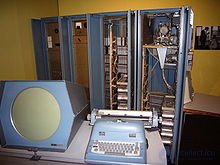
In 1961 the PDP-1 computer appeared, which had 4,096 words of 18 bits and a speed of 200,000 instructions per second. This figure was half that of the 7090, the transistor counterpart of the 709. The PDP-1 was the fastest computer in the world at the time. The PDP-1 cost $120,000, while the 7090 cost millions. DEC sold dozens of PDP-1 computers, and thus the computer industry was born. One of the innovations of the PDP-1 was a 512 x 512 pixel display, on which dots could be drawn.
Soon MIT students wrote a special program for the PDP-1 to play “Spacewar!” — the world's first computer game. Later DEC developed the PDP-8 model, a 12-bit computer that cost far less than the PDP-1 (only $16,000). Its main innovation was a single bus (the omnibus).
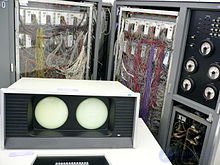
In 1964, CDC (Control Data Corporation) released the 6600 machine, which ran almost an order of magnitude faster than the 7094. This computer was very popular for complex calculations, and CDC's fortunes rose sharply. The secret of such high performance lay in the fact that inside the CPU (central processing unit) was a machine with a high degree of parallelism, having several functional units for addition, multiplication and division, all of which could operate simultaneously.
The central processor performed only number crunching, while the other functions (controlling the operation of the machine, as well as input and output of information) were carried out by small built-in computers. Some of the operating principles of the 6600 are used in modern computers as well.
The designer of the 6600, Seymour Cray, was a legendary figure, just like Von Neumann. He devoted his entire life to creating very powerful computers, which are now called supercomputers. Among them are the 6600, the 7600 and the Cray-1.
 Thanks to the development of integrated circuit (IC) manufacturing technology, it became possible to increase the speed and reliability of semiconductor circuits while also reducing their size, power consumption and cost. Integrated circuits consist of dozens of electronic elements formed on a rectangular silicon wafer with a side length of no more than 1 cm. This wafer (die) is housed in a small plastic package, the size of which is generally determined only by the number of “pins” (the leads for the inputs and outputs of the electronic circuit built on the die).
This made it possible not only to increase the performance and reduce the cost of general-purpose computers (mainframes), but also to create compact, simple, inexpensive and reliable machines — minicomputers. Minicomputers were originally intended to replace hardware-implemented controllers (control units) in the control loop of some object, in automated process control systems, in systems for collecting and processing experimental data, in various control complexes on mobile objects, and so on.
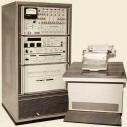 The appearance of minicomputers made it possible to shorten controller development times. Instead of the lengthy process of designing and building a complex electronic circuit, one only had to buy a ready-made universal “semi-finished” controller and then program it to perform the required functions. True, such a universal device usually had functional redundancy (the controller being built might not need some of the minicomputer's instructions, part of its memory, its high performance, and so on). However, the low price of a mass-produced minicomputer, the large number of off-the-shelf devices for interfacing with the controlled object, and good software usually made the use of such a programmable controller economically worthwhile.
Organizations that bought minicomputers to build controllers quickly realized that these machines could also be used to solve computational problems — the traditional tasks of mainframes. The simplicity of maintaining minicomputers, their comparatively low cost and small size made it possible to equip small teams of researchers, developers, experimenters and students with these machines, that is, to put computers directly into the hands of users. In the early 1970s, the term minicomputer already referred to two substantially different types of computing equipment:
The most important thing in that period was the standardization of computers in terms of design and technological parameters. Third-generation computers began to be produced in series or families of compatible models. Further development of mathematical and software tools led to the creation of packaged programs for solving standard problems, of problem-oriented programming languages (for solving problems in a particular category), and, for the first time, unique software systems — operating systems (developed by IBM) — were created.
In 1958, Robert Noyce created the silicon integrated circuit, which made it possible to place several dozen transistors on a single small chip. Computers built with integrated circuits were smaller, faster, and cheaper than their transistor-based predecessors.
By 1964, IBM was the leader in the computer market, but there was one major problem: the 7094 and 1401 computers it produced were incompatible with each other. The 7094 was intended for complex calculations and used binary arithmetic on 36-bit registers, while the 1401 used a decimal number system and words of varying length. Many customers disliked this incompatibility.
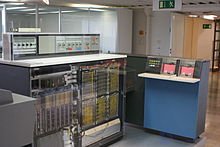
The System/360 line of transistor computers, designed for both scientific and commercial calculations, was released by IBM to replace the previous two series. It had many innovations. It was an entire family of computers working with a single language (assembler). Each new model had greater capabilities than the previous one.
The idea of creating families of computers became so popular that within a few years most computer companies were releasing series of similar machines with different prices and features. The memory of the transistor-based System/360 computers could hold several programs at once, and while one program was waiting for an input-output operation to finish, another would execute. As a result, processor resources were used more efficiently.
| Parameters | Model 30 | Model 40 | Model 50 | Model 65 |
|---|---|---|---|---|
| Relative performance | 1 | 3.5 | 10 | 21 |
| Cycle time, ns | 1000 | 625 | 500 | 250 |
| Maximum memory size, bytes | 65,536 | 262,144 | 262,144 | 524,288 |
| Number of bytes fetched from memory per cycle | 1 | 2 | 4 | 16 |
| Maximum number of data channels | 3 | 3 | 4 | 6 |
The 360 managed to resolve the dilemma between binary and decimal number systems: this computer had 16 registers of 32 bits for binary arithmetic, but its memory was organized in bytes, as in the 1401. The 360 used the same instructions for moving records of different sizes from one part of memory to another as the 1401 did.
Advances in electronics led to the creation of large-scale integrated circuits (LSI), in which several tens of thousands of electrical elements were placed on a single chip. This made it possible to develop cheaper computers with more memory and a shorter instruction execution cycle: the cost of a byte of memory and of a single machine operation began to fall sharply. But since programming costs hardly decreased at all, saving human rather than machine resources came to the fore.
New operating systems were developed that allowed programmers to debug their programs directly at the computer's display (in interactive mode), which made things easier for computer users and sped up program development. This completely contradicted the concepts of the early stages of information technology: “the processor performs only that part of data-processing work which people fundamentally cannot do — mass computation.” A different trend began to emerge: “everything that machines can do should be done by machines; people perform only the part of the work that cannot be automated.”
In 1971, an LSI chip was produced that housed the entire processor of a simple-architecture computer. It became possible to place almost all the electronic devices of a computer with an uncomplicated architecture in a single LSI chip (on a single die), that is, it became possible to mass-produce simple computers costing 5—50 rubles (excluding the cost of peripheral devices). Inexpensive devices appeared (pocket keyboard calculators) as well as control devices built on one or several LSI chips containing a processor, memory and communication systems with sensors and actuators in the controlled object (that is, with the peripheral devices of such a specialized computer). Programs for controlling fuel supply to a car engine, the movement of an electronic toy, or a given washing-machine cycle were loaded into the computer's memory either during the manufacture of such a controller, or directly at the plants producing cars, toys, washing machines and so on.
In the 1970s, general-purpose computing systems also began to be built, consisting of a processor, memory, input-output interface circuits and a clock generator, all placed in a single LSI chip (single-chip computer) or in several LSI chips mounted on a single printed circuit board (single-board computer). Thus, the picture of the 1960s repeated itself, when the first minicomputers took over part of the work from large general-purpose computers.
Characteristic properties of fourth-generation computers:
Technical characteristics of fourth-generation computers:
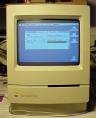 The first personal computer was created in April 1976 by two friends, Steve Jobs (b. 1955), an employee of Atari, and Steve Wozniak (b. 1950), who worked at Hewlett-Packard. Based on an integrated 8-bit controller from a hard-wired circuit of a popular electronic game, working evenings in a car garage, they built a simple game computer programmable in the BASIC language, the “Apple”, which was a runaway success. In early 1977, Apple Comp. was registered, and production began on the world's first personal computer, the Apple.
Today, Apple produces Macintosh personal computers, which surpass IBM PC computers in most parameters.
Here, PCs of the IBM PC type are mainly used. This can be explained by the following reasons:
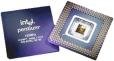 In the late 1980s, the first fifth-generation computers appeared. The fifth generation of computers is associated with the transition to microprocessors. From the standpoint of structural design, maximum decentralization of control is characteristic. From the standpoint of software and mathematical support, it is characterized by a transition to working within software environments and shells.
Performance of 108 – 109 operations per second. The fifth generation is characterized by multiprocessor structures built from simplified microprocessors, of which there are very many (solving fields or environments). Computers oriented toward high-level languages are being created.
During this period there are two diametrically opposed tendencies: the personification of resources and the collectivization of resources (collective access — networks).
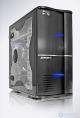 Thanks to an operating system that makes it easy to interact with such a computer, a large library of application programs for various fields of human activity, and also the low cost of the computer, it becomes a necessary item for an engineer, a researcher, an economist, a doctor, an agronomist, a teacher, an editor, a secretary and even a child.
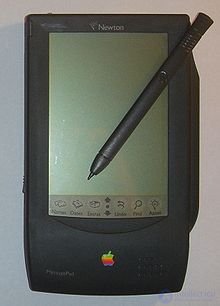
In 1981, the government of Japan announced its intention to allocate 500 million dollars to national companies for the development of fifth-generation computers based on artificial intelligence technologies, which were supposed to push aside the “dim-witted” machines of the fourth generation. However, despite a great deal of noise, the Japanese fifth-generation computer project ultimately proved untenable and was quietly “shelved.” In a sense, this situation turned out to be close to the one Babbage faced: the idea was so far ahead of its time that no adequate technological base existed for its implementation. What can be called the fifth generation of computers did nevertheless materialize, but in a rather unexpected form — computers began shrinking rapidly. The Apple Newton model, which appeared in 1993, clearly demonstrated that a computer could fit into a case the size of a cassette player. The handwriting input implemented in the Newton might have seemed to complicate matters, but the user interface of such machines, now called personal digital assistants (PDAs), or simply handheld computers, was subsequently refined and gained wide popularity. Many handheld computers today are no less powerful than ordinary PCs from two or three years earlier.
Considerably more significance is now given to so-called “invisible” computers — the ones embedded in household appliances, watches, bank cards and a huge number of other devices. Processors of this type offer broad functional capabilities and no less broad a range of application options at a very moderate price. Whether these chips can be grouped into one full-fledged generation (and they have existed since the 1970s) remains debatable. The fact is that they expand the capabilities of household and other devices by an order of magnitude. Already the influence of invisible computers on the development of world industry is very great, and it will keep growing over the years.
In the 1980s, the appearance of very-large-scale integrated circuits made it possible to place first tens of thousands, then hundreds of thousands, and finally millions of transistors on a single board. This led to the creation of smaller, faster computers. By this time, prices had fallen so much that the ability to buy computers became available not only to organizations but also to individuals. The era of personal computers had begun.
Personal computers were used for word processing, spreadsheets, and also for running applications with a high level of interactivity (such as games), which large computers could not handle.
The first personal computers were sold as kits, which contained:
The buyer had to assemble the computer from these parts and write the software for it themselves. Later, an operating system, CP/M, written by Gary Kildall, appeared for the Intel 8080.
The Apple computer was designed by Steve Jobs and Steve Wozniak. This computer became extremely popular among home users and schools, which instantly made Apple a serious player in the market.
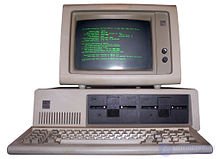
In 1981, the IBM PC computer appeared and became the best-selling computer in history.
The rapid growth of personal computer production was helped by the fact that IBM, instead of keeping the machine's design secret (or at least protecting itself with patents), as it usually did, published the complete designs, including all the electronic schematics, in a book costing 49 dollars. This book helped other companies produce plug-in boards for the IBM PC, which increased the compatibility and popularity of this computer. Unfortunately for IBM, as soon as the IBM PC design became widely known, many companies started making PC clones and often sold them much cheaper than IBM did (since all the computer's components could easily be purchased).
The first version of the IBM PC was equipped with the MS-DOS operating system, produced at the time by the still-tiny Microsoft corporation. IBM and Microsoft jointly developed the operating system OS/2, which followed MS-DOS and whose distinguishing feature was a graphical user interface (GUI), similar to the interface of the Apple Macintosh. Meanwhile, Microsoft also developed its own operating system, Windows, which ran on top of MS-DOS, in case OS/2 did not prove popular. OS/2 indeed did not prove popular, and Microsoft went on to successfully release the Windows operating system, which caused a major rift between IBM and Microsoft.
The legend of how the tiny company Intel, and the even tinier company Microsoft, managed to overthrow IBM, one of the largest, richest and most influential corporations in world history, is told in detail in business schools around the world.
From 1982 to 1989, versions of Intel processors were released: the 186 (1st generation), the 286 (2nd generation), the 386 (3rd generation), the 486 (4th generation). In 1993, a processor under the new trademark Pentium appeared, being Intel's 5th-generation processor. Modern Intel Pentium processors are much faster than the 486 processor, but from an architectural standpoint they are simply more powerful versions of it.
In the mid-1980s, CISC (Complex Instruction Set Computer — a computer with a full instruction set) was superseded by RISC (Reduced Instruction Set Computer — a computer with a reduced instruction set). RISC instructions were simpler and worked much faster.
In the 1990s, superscalar processors appeared, capable of executing many instructions at once, often not in the order in which they appear in the program. Up until 1992, personal computers were 8-, 16- and 32-bit. Then the revolutionary 64-bit Alpha model, made by DEC, appeared — a genuine RISC computer, far surpassing all other PCs in performance. However, at the time the commercial success of this model turned out to be quite modest — it was only a decade later that 64-bit machines gained popularity, and even then only as professional servers.
The sixth generation can, for now, only be dreamed of...
Neurocomputer
A computer built on the basis of neural networks. It does not yet exist independently, but is actively modeled on modern computers.
One of the developers of neurocomputers, A. N. Gorban, believes: "Five generations of computers follow one after another. The emerging sixth generation differs so much from the previous ones that it is better to speak not of generations, nor even of new types, genera or families, but of a new kingdom — the scale of the distance between neurocomputers and ordinary computers corresponds to the differences between the kingdoms of living organisms.
How do the machines of the second kingdom differ?
| Year released | Computer name | Creator | Notes |
|---|---|---|---|
| 1834 | Analytical Engine | Babbage | First attempt to build a digital computer |
| 1936 | Z1 | Zuse | First relay-based computing machine |
| 1943 | COLOSSUS | British government | First electronic computer |
| 1944 | Mark 1 | Aiken | First American general-purpose computer |
| 1946 | ENIAC | Eckert/Mauchly | The history of modern computers begins with this machine |
| 1949 | EDSAC | Wilkes | First computer with stored programs |
| 1951 | Whirlwind I | MIT | First real-time computer |
| 1952 | IAS | Von Neumann | This design is used in most modern computers |
| 1960 | PDP-1 | DEC | First minicomputer (50 units sold) |
| 1961 | IBM 1401 | IBM | Very popular small computer |
| 1962 | IBM 7094 | IBM | Very popular small computing machine |
| 1963 | B5000 | Burroughs | First machine designed for a high-level language |
| 1964 | S/360 | IBM | First family of computers |
| 1964 | CDC 6600 | CDC | First supercomputer for scientific computing |
| 1965 | PDP-8 | DEC | First mass-market minicomputer |
| 1970 | PDP-11 | DEC | These minicomputers dominated the market in the late 1970s |
| 1974 | i8080 | Intel | First general-purpose 8-bit computer on a chip |
| 1974 | Cray-1 | Cray | First successful commercial vector supercomputer |
| 1978 | VAX | DEC | First 32-bit superminicomputer |
| 1981 | IBM PC | IBM | The era of modern personal computers began |
| 1981 | Osborne-1 | Osborne | First portable computer |
| 1981 | 8010 Star | Xerox | First PC with a graphical user interface |
| 1985 | i386 | Intel | First 32-bit predecessor of the Pentium line |
| 1985 | MIPS | MIPS | First RISC processor |
| 1987 | SPARC | Sun | First workstation based on the SPARC RISC processor |
| 1990 | RS/6000 | IBM | First superscalar computer |
| 1992 | Alpha | DEC | First 64-bit PC |
| 1993 | Newton | Apple | First handheld computer |

Comments