
Lecture
Solid-state relays are similar to analog switches, but differ from them chiefly in having no electrical connection between the control circuit and the switched circuits. The electrical isolation voltage can reach several kilovolts. Solid-state relays differ chiefly in the type of key (switching) elements used, which may be thyristors, bipolar transistors or MOSFETs. The first two types of keys have poor accuracy characteristics, so the corresponding types of solid-state relays are used exclusively for switching low-power power circuits. Solid-state relays with MOSFETs have fairly good accuracy characteristics, so they can be used as switches for analog channels. Fig. 7.26 shows the circuit of a MOSFET-based solid-state relay.
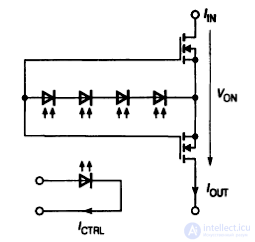
Fig. 10.9. Circuit of a MOSFET-based solid-state relay
The power key is formed by two n-channel MOSFETs connected back-to-back in series. Although this doubles the on-resistance of the key, it makes it possible to obtain a high maximum permissible voltage in the off state. Both transistors are controlled by several photodiodes connected in series. In this case the photodiodes operate as photocells in open-circuit mode. When illuminated, each of them generates a voltage of about one volt, so when a current ICTRL is passed through the LED, the transistors turn on. The dynamic resistance of the photodiodes, even in open-circuit mode, is comparatively high, so the turn-on and turn-off processes of the key, associated with charging the input capacitance of the MOSFETs, proceed rather slowly.
A typical representative of this class of devices is the 2-channel TLV422 solid-state relay made by International Rectifier. This relay can switch bipolar signals with a voltage of up to 400 V, which no CMOS switch can withstand. The maximum permissible isolation voltage is 4 kV. The on-channel resistance is no more than 20 Ω at an input control current of 5 mA. The typical turn-on time of the key at a switched current of 20 mA – 800 µs, and the turn-off time – 400 µs. The leakage current of the off key reaches 1 µA ( for analog switches it is less than 1 nA).

Comments