
Lecture
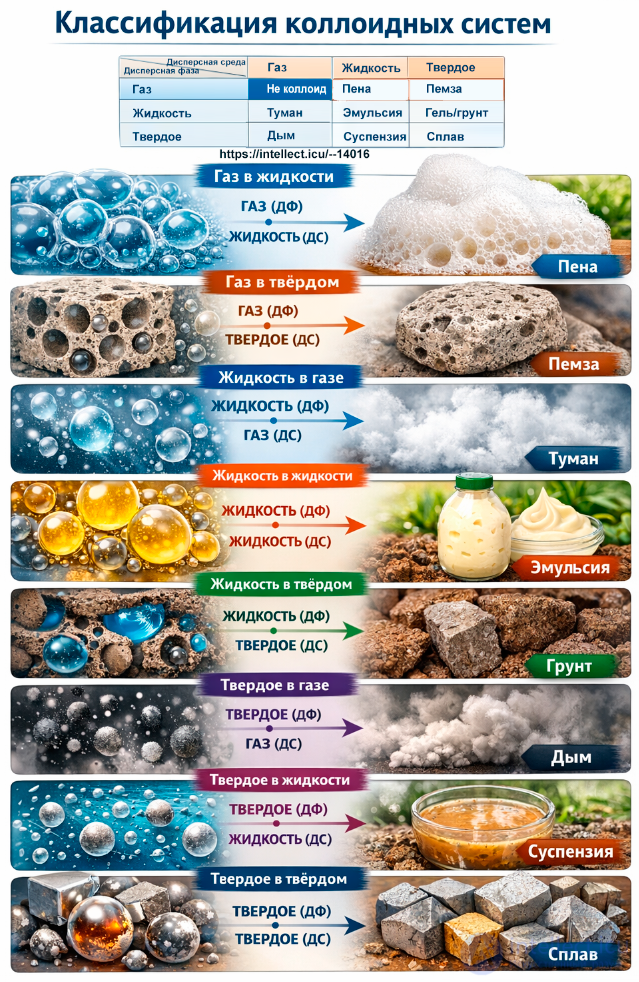
By the nature of the dispersed particles, colloids are divided into organic and inorganic; by the intensity of interaction between the dispersed phase and the dispersion medium — into lyophilic and lyophobic. By the aggregate state of the dispersion medium, one distinguishes gaseous (aerosols), liquid (lyosols), and solid (cryosols and solidosols) colloidal systems.
| Dispersed Phase (DP) | Dispersion Medium (DM) | Type of System | Example |
|---|---|---|---|
| Gas | Liquid | Gas in liquid | Foam |
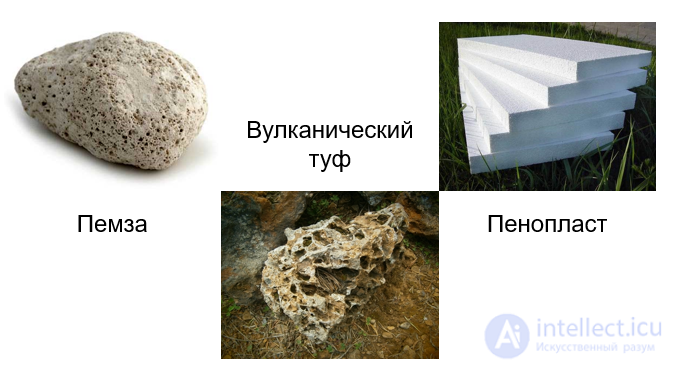
| Gas | Solid | Gas in solid | Pumice |
| Gas | Gas | Not a colloid | Ideal solution |
| Liquid | Gas | Liquid in gas | Fog |
| Liquid | Liquid | Liquid in liquid | Emulsion |
| Liquid | Solid | Liquid in solid | Soil |
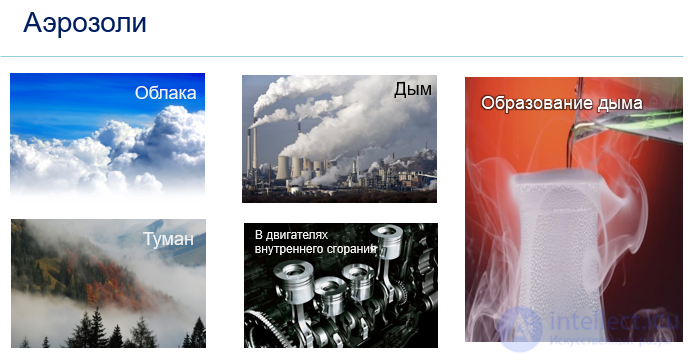
| Solid | Gas | Solid in gas | Smoke |
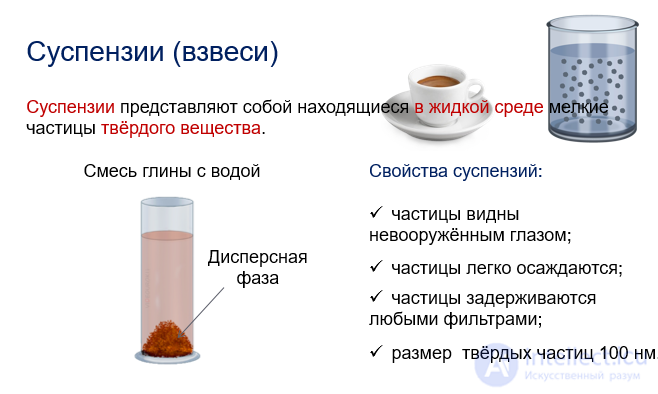
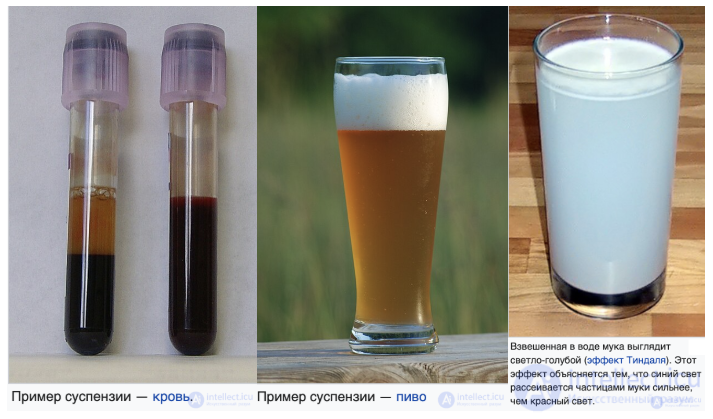
| Solid | Liquid | Solid in liquid | Suspension |
| Solid | Solid | Solid in solid | Alloy |
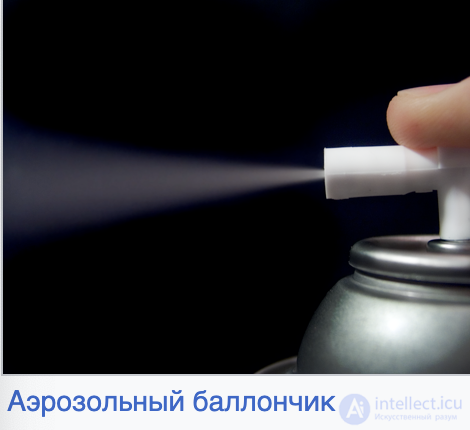
Feature: a large Δρ and therefore a high rate of sedimentation, a high rate of Brownian motion, and a high rate of coagulation. They are characterized by the phenomena of thermophoresis (movement of DP particles toward lower temperature), thermal precipitation (deposition of the DP on cold surfaces), and photophoresis (movement of the DP under the action of light).
In aerosols, DP particles do not have a fixed and uniform charge. It may even have the opposite sign.
A specific group of aerosols – powders.
 .
. 
People produce aerosols for various purposes, including:
Some devices for generating aerosols:
The theory of particle distribution in aerosols describes condensation on the aerosol surface and evaporation from it. Mass condensation leads to an increase in the mode of the particle size distribution in the aerosol; conversely, evaporation leads to a decrease in the mode. Nucleation is the process by which aerosol mass forms from the condensation of a gaseous precursor, namely a vapor. Pure vapor condensation requires supersaturation, that is, a partial pressure exceeding the vapor pressure.
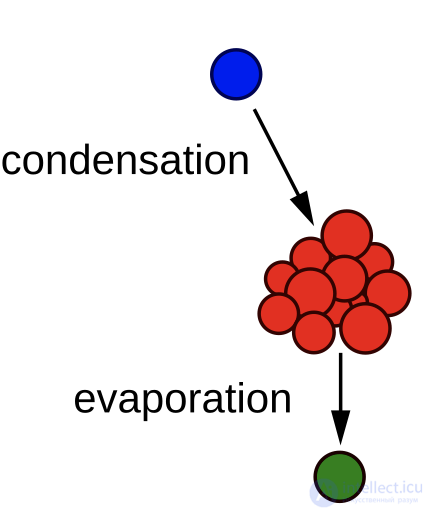
Condensation and evaporation
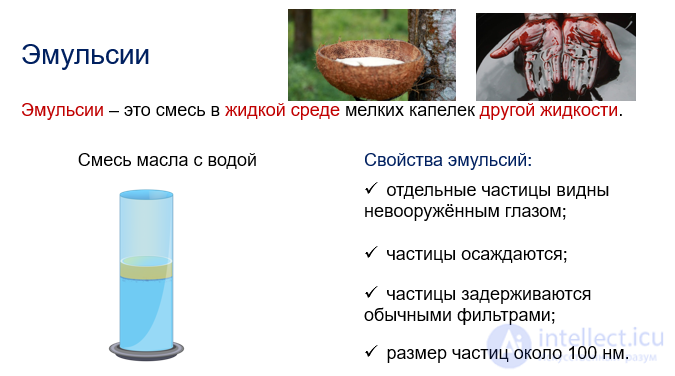
Formed by liquids of different polarity. There are direct (O/W) and inverse (W/O) emulsions. In emulsions, the DP particles have the shape of spheres. Therefore, the maximally concentrated emulsion has 72.75 vol.% DP (dense spherical packing). Dilute emulsions have < 0.1% DP. Emulsions are stabilized by emulsifiers – bipolar surfactants. Using effective surfactants with the HLB value required for the system (8-18 for O/W, 4-6 for W/O), one can obtain
highly concentrated emulsions (up to 99% DP). They have a honeycomb structure, where the DM is a film surrounding polyhedral DP particles. By changing the surfactant, emulsions can be inverted, or multiple emulsions can be obtained.
The type of emulsion is identified by dilution with a solvent: direct (O/W) emulsions mix with water, while inverse (W/O) ones mix with oil.
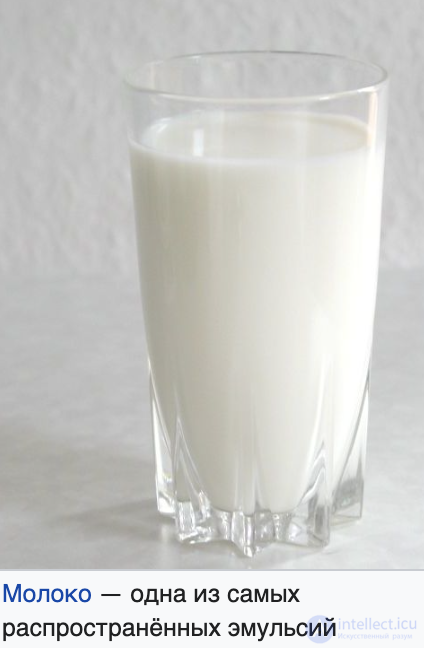
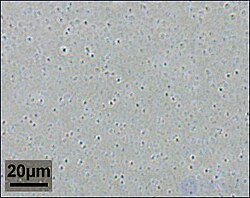
Micrograph of a milk fat emulsion (1.5% milk)
The type of emulsion depends on the composition and ratio of its liquid phases, on the amount and chemical nature of the emulsifier, on the emulsification method, and on some other factors.
For O/W-type emulsions, water-soluble soaps (sodium and potassium salts of fatty acids) can serve as good emulsifiers. Molecules of these compounds, adsorbing at the phase interface, not only lower the surface tension there but, owing to their regular orientation in the surface layer, create a film in it possessing mechanical strength and protecting the emulsion from breakdown.
For W/O-type emulsions, water-insoluble soaps (calcium, magnesium, and aluminum salts of fatty acids) can be good emulsifiers.
A change in the composition of an emulsion or an external effect can lead to the conversion of a direct emulsion into an inverse one, or vice versa.
| type of emulsion | dispersed phase | dispersion medium |
|---|---|---|
| direct (o/w) | oil | water |
| inverse (w/o) | water | oil |
Emulsions are also divided into lyophilic and lyophobic:
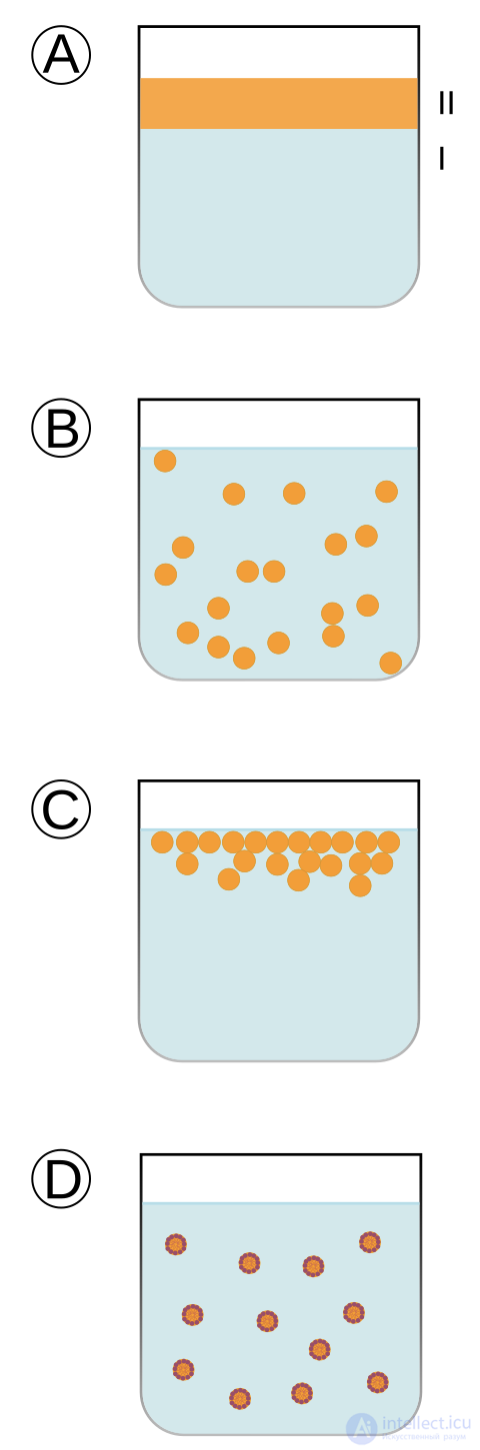
Preparation of an emulsion
A. two immiscible liquids;
B. dispersion of phase II, formation of an unstable emulsion;
C. coagulation of phase II particles, separation of the phases of the unstable emulsion;
D. addition of a surface-active substance (violet outline around the particles), stabilization of the emulsion.
Emulsions form in two ways:
This method is carried out by slowly adding the substance to be dispersed into the dispersed system in the presence of an emulsifier under continuous, vigorous stirring. The main factors on which the degree of dispersion of the particles of the resulting emulsion and its stability depend are the stirring speed, the rate of introduction of the substance being dispersed, its amount, the nature and concentration of the emulsifier, and the temperature and pH of the medium.
The mechanism of formation is as follows. The liquid forming the dispersed phase (for example, oil), when slowly added to the dispersion medium, forms a film. This film is ruptured by air bubbles emerging from the opening of a tube located at the bottom of the vessel. Small individual droplets are formed. At the same time, the air bubbles vigorously stir the entire liquid, thereby promoting further emulsification. Nowadays, ultrasound is used to obtain a concentrated emulsion of oil with water.
Emulsions spontaneously break down over time. In practice, it is sometimes necessary to accelerate the breakdown process of emulsions (in cases where the presence of an emulsion hinders further processing or use of the material). The breakdown process of an emulsion can be accelerated in various ways:
Emulsions are widely used in various branches of industry:
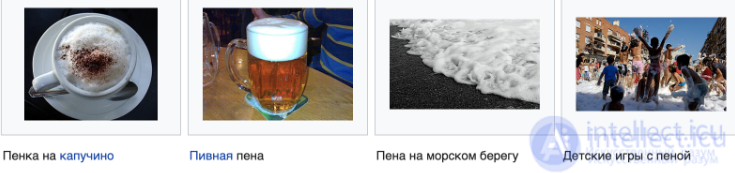
Characterized by the expansion ratio – the ratio of the foam volume to the DM volume. It can reach several thousand. A high volumetric concentration of the DP causes deformation of the bubbles into polyhedral (honeycomb) structures. Stabilized with the help of surfactants (foaming agents). Alcohols (allyl, octyl) or certain esters are used as defoamers.
Foam is formed either by mechanical dispersion of gas in a liquid or by chemical generation of gas.
Foams are widely used in various fields: fire extinguishers, ore beneficiation, construction materials, food products.
Characterized by the expansion ratio – the ratio of the foam volume to the DM volume. It can reach several thousand. A high volumetric concentration of the DP causes deformation of the bubbles into polyhedral (honeycomb) structures. Stabilized with the help of surfactants (foaming agents). Alcohols (allyl, octyl) or certain esters are used as defoamers.
Foam is formed either by mechanical dispersion of gas in a liquid or by chemical generation of gas.
Foams are widely used in various fields: fire extinguishers, ore beneficiation, construction materials, food products.
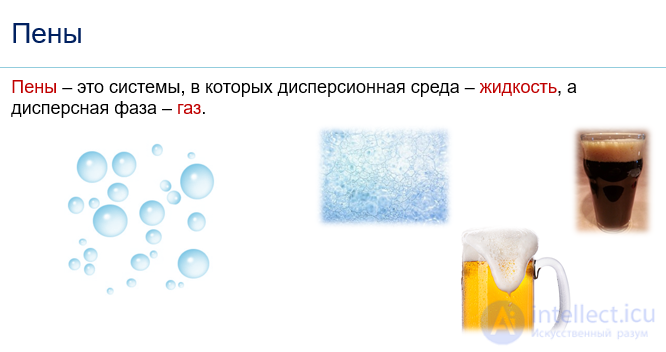
Foams are by nature close to concentrated emulsions, but the dispersed phase in them is a gas rather than a liquid. Foams are obtained from solutions of surface-active substances. To increase their stability, high-molecular-weight substances that raise the viscosity of the solutions are added to the surfactant solutions. A complex of properties comprehensively characterizing the foam is used to describe it.
Foams, unlike other dispersed systems whose composition is determined by the concentration of the dispersed phase, are characterized by the content of the dispersion medium.
Foams are extremely unstable dispersed systems, since the density of the liquid is hundreds or even thousands of times greater than the density of the gas from which the foam bubbles are formed. Foams are considered coarsely dispersed systems: at the moment of foam formation, the foam bubbles are visible to the naked eye. The mass and volume of the gaseous dispersed phase are not constant and change rapidly, and the bubble sizes vary greatly, so foams can be regarded as polydisperse systems. Foams are typical lyophobic dispersed systems.
Foams as dispersed systems have their own features, determined by the properties of the dispersed phase, the dispersion medium, and the phase boundary between them, such as: the change in Gibbs energy, the interfacial surface tension, and the shape of the bubbles (spherical, polyhedral).
Foams are thermodynamically unstable, since processes occur in them that lead to changes in structure and to the breakdown of the foam. These processes include:
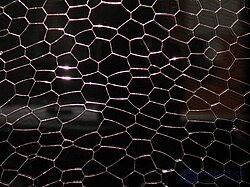
Two-dimensional foam
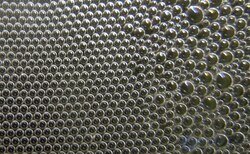
Plateau triangles between air bubbles in foam
Foams, especially high-expansion ones, are characterized by a cellular film-and-channel structure in which gas-filled cells are separated by thin films — bubble walls. Three converging films, arranged at an angle of 120°, form a channel (Plateau triangle, Plateau–Gibbs channel, Gibbs–Plateau channel; see figure); four channels with an angle of about 109°28′ between them converge at a single point and form a node. The most typical cell shape in a monodisperse foam is a pentagonal dodecahedron (a twelve-faced solid with pentagonal faces), often with 1-3 additional faces; the average number of films surrounding a cell is usually close to 14. In low-expansion foam, the cell shape is close to spherical and the films are small.
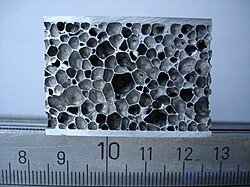
Aluminum solid foam
Systems with a solid dispersion medium and a gaseous dispersed phase — G/S — are often called solid foams. Solid foams, like liquid foams, due to the large size of the gas-phase bubbles, are usually classified as microheterogeneous or even coarsely dispersed systems.
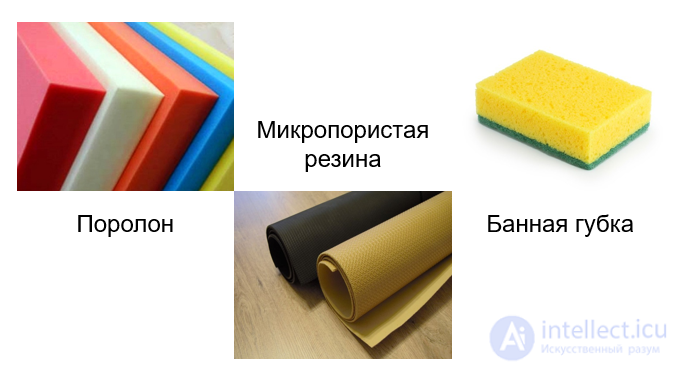
An example of a natural solid foam is pumice — a porous, spongy, very lightweight volcanic rock, used as an abrasive for polishing and grinding, as well as in construction for making pumice concrete. Among artificial solid foams, one can mention foam glass and foam concrete, widely used as building and insulating materials. The advantages of these materials are low density, low thermal conductivity, and quite high strength, due to their cellular structure and the strength of the dispersion medium. This category also includes artificial spongy materials made on the basis of polymers (microporous rubber, various foam plastics).
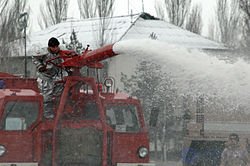
Foam in firefighting
In a number of practical applications of foams, such properties as viscosity, thermal conductivity, electrical conductivity, optical properties, etc. are important. Foams are widely used in many branches of industry and in everyday life:
Foams with thin solid walls (aerogels, foam plastics) are widely used for making heat- and sound-insulating materials, life-saving equipment, packaging, etc.
G/S
Gaseous
Solid
Porous bodies: foam polymers, pumice
Ground — any rock, soil, sediment, and man-made mineral formation, considered as multicomponent dynamic systems and part of the geological environment, studied in connection with engineering and economic activity[1].
Ground is used as a foundation for buildings and structures, as a material for constructing roads, embankments, and dams, as a medium for placing underground structures (tunnels, pipelines, storage facilities), and for other purposes. Ground is studied in engineering geology.
Soil — a natural object formed as a result of the transformation of the surface layers of land under the joint action of soil-forming factors.
Soil consists of soil horizons forming a soil profile and is characterized by fertility[1][2]. The diversity of soils is reflected in different soil types[3]. Soils are studied by a special science — soil science — as well as by agronomy, geology, ground science, geochemistry, and other scientific fields. Soils and subaqueous silts form a special envelope of the Earth — the pedosphere, which actively interacts with neighboring geospheres.
V. V. Dokuchaev with a soil sample
Soils substantially transformed as a result of prolonged agrotechnical impact are called agrosoils[4].
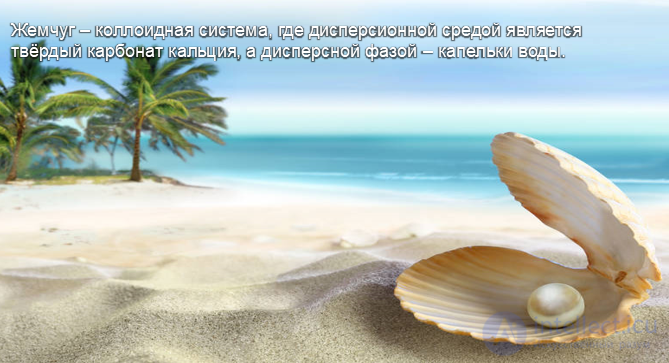
Gas in gas does not exist as a colloidal system. Here is why:
Colloidal systems are defined by the presence of a dispersed phase (small particles or droplets) and a dispersion medium.
For a colloid to form, the particles must have a phase boundary and be stably distributed in another medium.
In the case of «gas in gas», there is no such boundary: gases mix completely and form true solutions (for example, air — a mixture of nitrogen, oxygen, argon, etc.).
Gas in gas → not a colloid, but a true solution (a mixture of gases).
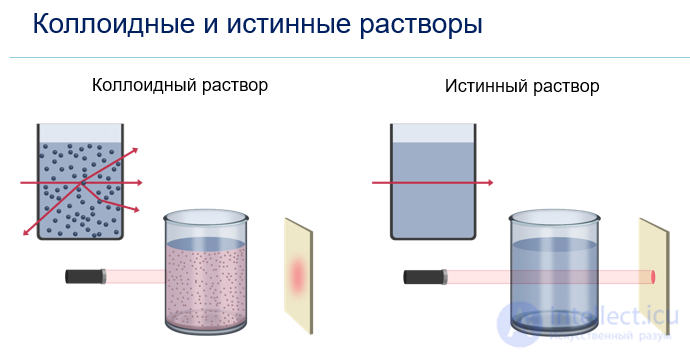
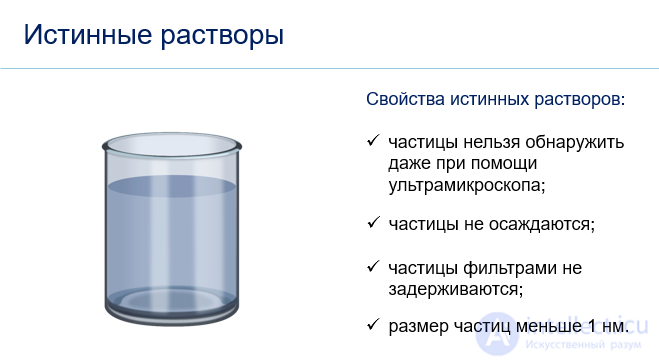
In true solutions, the solute and the solvent are broken down to the atomic or molecular level and are uniformly distributed throughout the volume of the solution.
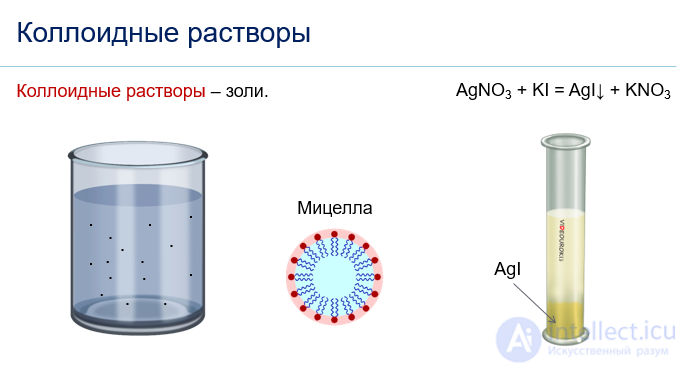
Colloidal solutions – sols.
Micelles (diminutive of the Latin mica «particle, grain») — are aggregates of surface-active substances (surfactants) in a colloidal solution (sol), consisting of a large number of amphiphilic molecules. An example is micelles of dodecyl sulfate in water. A surfactant solution in which micelles are in equilibrium with individual, non-associated molecules — monomers — is called a micellar solution.
The transition to micelle formation occurs within a narrow concentration range and can be interpreted as a second-order phase transition. The cause of micelle formation in aqueous solutions is the hydrophobic effect, while in media of non-polar molecules it is the mutual attraction of the polar groups of the surfactant molecules. Below a certain temperature (the Krafft point), micelle formation does not occur, and as the surfactant concentration increases, crystallization is observed. As the surfactant concentration approaches the critical micelle concentration, a sharp change occurs in the properties of the solution: electrical conductivity, surface tension, light scattering coefficient, etc.
Micellar systems are of great interest both from the standpoint of various physicochemical technological applications (see, for example, micellar catalysis) and because of the distinctive nature of the micelle-formation mechanism itself. In particular, this interest is related to the polymorphism of micelles — the ability of surfactant molecules to form aggregates of various shapes — spherical, cylindrical, thread-like. One of the important properties arising directly from the structure of surfactant molecules is solubilization. Applications of the solubilization property include emulsion polymerization, food production, and the manufacture of pharmaceutical preparations[1].

Comments