
Lecture
Socio-political sciences regard conflict as a phenomenon that creates the conditions for the onset of social and political change. The question of the nature of social conflict is linked to an understanding of the nature of man, his interconnection with society and the state. Contradictions, disagreements, misunderstandings are insufficient conditions for conflict; they turn into a conflict only when the forces that are their bearers begin to interact.
Socio-political conflict (from the Latin conflictus - "collision") is a confrontation between subjects in their striving to realise their interests and goals, connected with the struggle to obtain status, power, and resources, under conditions of mutual opposition.
According to scholars, the generalising factor that gives rise to conflicts is social interest. Psychologists understand conflict as a kind of psychological tension between two sides. Culturologists regard conflict as the opposition or confrontation of cultures. Historians analyse and describe the causes of the emergence of specific conflicts, the forms and features of their development and resolution (wars, uprisings, revolutions, strikes, and so on). At the centre of conflicts are most often economic, social, foreign- and domestic-political, territorial, linguistic, interconfessional, interethnic, and other problems. That is precisely why conflict is simultaneously regarded both as a system and as a process.
Any conflicts are conditioned by both objective and subjective factors, namely: inequality among people, social and national communities; incompatibility of social and individual values; differences in culture and types of leadership; the absence of reliable information; the striving to win and hold resources of influence, power, and the like.
By the object of a conflict is meant the value over which a clash of interests among the participants in the conflict arises.
The subjects of conflicts are individuals, small and large groups, social movements, economic and political groupings, and the like.
Socio-political conflicts differ in structure, composition, forms, scale, character, type, functions, source of origin, composition of participants, duration, and consequences, and in the means of overcoming them.
The structure of a conflict includes the following elements: the conditions of emergence and the character of the conflict; the participants in the conflict; the conception of the given conflict situation formed by its participants, as well as by a third party (neutral, interested subjects); the conception of the opponent (his goal, values); each participant's conception of how the other perceives him; the content of the participants' actions aimed at achieving their goals; the means used by the conflicting sides to create or resolve the conflict situation; the character and spatio-temporal parameters of the conflict; the consequences and results.
By the composition of the conflicting sides, the following are distinguished:
1. interpersonal and group - this is a clash of interests between two people or between an individual and a group;
2. conflicts between large social groups can occur between groups that differ in size and composition. Most often they are generated by unmet needs, social inequality, differing degrees of participation in power, and a mismatch of interests and goals;
3. interstate conflicts are a struggle for political influence in society on the international stage; their basis consists of clashes of national-state interests, with states or coalitions acting as the subjects;
4. domestic political conflicts occur between political forces, institutions, and branches of power, over leadership in the state, party, or movement.
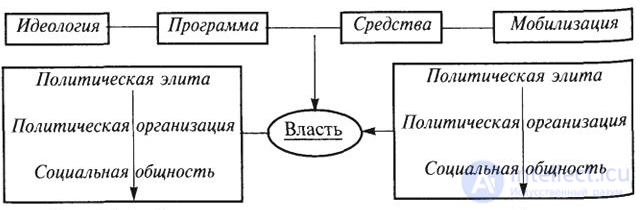
Fig. 1 Diagram of a socio-political conflict
Analysing the peculiarities of the course and realisation of conflicts, simple and complex forms of socio-political conflicts are distinguished. Simple ones include boycott, sabotage, persecution, verbal and physical aggression. Complex ones include public protest, riot, social revolution, war, and terrorist actions.
By typology, conflicts are divided into conflicts of values, interests and identities.
A conflict of values, in particular, appears as a clash of polar values and ideologies, the disagreements between which act as the main preconditions of the conflict (poor-rich, left-right).
A conflict of interests is connected with the clash of social, political and economic interests, which leads to conflict between the ruling power elite and broad strata of the population.
A conflict of identity is traced when the question of determining the social status or citizenship of an individual is being resolved. The essence of the conflict lies in the fact that, with the destruction of old stratification mechanisms in the socio-political space of a transitional society, the majority of individuals experience a crisis of social identification and self-identification.
Large-scale conflict situations testify to the presence in society of disorganising processes, which act as one of the main causes of socio-political conflicts. Disorganisation is understood as a state of society characterised by economic (inflation), social (the deepening of inequality between different social strata) and political (crisis of power, military conflicts) processes going beyond the limits of the norms existing in society, threatening the established rules and norms of society. Thus, the ripening and unfolding of a conflict reflects the culminating stage of the struggle of real opposites. The resolution of a conflict leads to the destruction of the old system with the simultaneous emergence of a new quality.
By their nature, socio-political conflicts are divided into antagonistic (irreconcilable) and non-antagonistic (reconcilable).
Antagonistic conflicts are characterised by irreconcilability: each of the conflicting parties seeks to gain an advantage, which, as a rule, leads both sides into a dead end. Non-antagonistic conflicts do not have a diametrically opposite character: in discussing one or another problem, different understandings of it are allowed, and different ways of resolving it can be traced.
There are two forms in which conflicts unfold: open - frank, transparent confrontation using various forms and methods of struggle, and closed, or latent, in which an invisible, hidden struggle to achieve the desired result takes place.
Socio-political conflict in society performs the following functions.
Signalling - indicates the need for serious changes in society.
Informational - the presence of information about the balance of coercive, economic, political and legal potential among influence groups in society.
Differentiating - is connected with the process of destroying old social and political structures and defining new forms of interconnection.
Integrative - studies how, in the course of confrontation, the consolidation of a group or society grows and the degree of group identification increases.
Dynamic - forces society to move forward, to develop and modernise the socio-political system.
Let us note that any conflict performs both positive (constructive) and negative (destructive) functions.
Building on the ideas of the German scholar M. Weber, who held that social stratification in society is generated by the uneven and limited distribution of such social resources as property, power and prestige, contemporary conflict theorists identify four main sources of conflict. These are wealth, power, prestige, and dignity.
Possessing specific wealth in the form of money, capital, property, or securities gives a person a sense of their own exceptionalism. But it is not easy to obtain wealth, because economic resources in society are always fewer than those who wish to possess them.
The main question in socio-political conflicts is who controls resources and how. Subjects who hold power must constantly remain attractive in the eyes of public opinion, proving that other structures are not worthy of holding power. In turn, those deprived of power strive for revenge, for a redistribution of powers in their favour.
Power and wealth accumulate into prestige, which is always connected with popularity, authority, and the legitimacy of an individual, and with their ability to influence decision-making.
In the struggle for wealth, power and prestige in particular, one should not forget the limits of one's choices, or human dignity. A person without dignity cannot count on gaining prestige in the eyes of others, and as a result, their capacity to hold on to wealth and power is called into question.
Conflict theorists distinguish four stages of a conflict: the pre-conflict situation, the onset of the conflict and the conflict itself, the resolution of the conflict, and the post-conflict situation.
The following conditions are necessary for the settlement of socio-political conflicts.
First, the presence of value-based preconditions. Each of the conflicting parties must acknowledge the existence of the conflict situation and the opponents' right to exist. Second, a certain degree of organisation of the parties: the better organised they are, the easier it is to reach agreements and secure fulfilment of the terms of the agreement. Third, the conflicting parties must agree on certain rules of the game and normative regulation, compliance with which makes a negotiation process possible. Fourth, the willingness of the parties for mutual concessions and consensus.
Socio-political conflicts are viewed as a means of self-regulation of the stability of society. On the one hand, they are a destabilising phenomenon, while on the other, they contribute to a clearer awareness and formation of group interests, slogans, and the like. Conflicts make it possible to naturally sustain the dynamics of socio-political life, which leads to the restoration and modernisation of all institutions of society

Comments