
Lecture
In a democratic society, politics is carried out by people and for people. The individual, the person, is the original subject of politics, endowed with the capacity to take part in political life and to influence power. A person's political activity, the degree of their participation in political life, and their social maturity depend largely on the quality of their political socialisation. By assimilating knowledge about politics and acquiring experience of political activity, a person becomes a citizen - a conscious participant in the political process.
The original and principal bearer of political and power relations in society is the individual. Their interests, goals and aspirations, integrated into various social and economic structures, ultimately determine the direction of a society's political development.
The problem of the individual has three main aspects in political science:
The place of the individual in political life has, in general terms, been examined in many political doctrines. Already in ancient times doctrines appeared that assessed the relationship of the individual to politics and the state in different ways. The most influential among them are the teachings of Confucius, Plato and Aristotle.
Confucius developed a paternalistic conception of the state, according to which the state was portrayed as one large patriarchal family in which the fullness of power belongs to the ruler-father. In the paternalistic conception of power, the ordinary person is assigned the role of a simple executor of the sovereign's will, that is, of a passive participant in politics, without conscious involvement.
In Plato's political conception, a totalitarian interpretation of the individual was developed. Under such an understanding of the individual, the question of their autonomy and political roles is deliberately excluded, and the person acts merely as an object of power.
In Aristotle's teaching, the political life of society was examined in relation to human nature. Aristotle considered the individual to be a political being by nature, owing to their being destined to live in society, in a collective. In the state, as the highest form of human association, human nature is realised - the individual becomes an organic part of a living and integral organism. Although Aristotle advocated the priority of the state in its relations with citizens, unlike Plato he was an opponent of the total subordination of society to the state. On the whole, Aristotle, like his predecessors, does not separate the individual and society from the state.
In Machiavelli's political conception, the human being was regarded as fundamentally negative, and relations between people were characterised by the formula "man is a wolf to man." People united into a crowd of dark and ignorant people. According to Machiavelli, a ruler must consider all people to be evil. However, Machiavelli was also a theorist of the organisational behaviour of people. His name is associated with the theory of elites and the technologies of effective leadership.
The role of the individual in politics has, in general terms, been examined in many political doctrines. However, the emphasis has predominantly been on the political role of outstanding politicians in relation to the activity of the popular masses, classes, and even the crowd. Political doctrines have spoken mainly of the political role of outstanding individuals - statesmen, leaders of political movements, ideologists, and rulers - that is, those who exerted a noticeable influence on politics and the masses. That is why politics is often personified, taking the name of the one who defined or carried it out. In this regard, the question of the role of the "ordinary" or "mass" individual proved to be the least developed. It was only in the second half of the 20th century, under the influence of the collapse of totalitarian regimes and the further democratisation of public life, that this direction in political doctrines began to receive fairly serious attention.
Politics, in one way or another, is reflected in the fates of ordinary people. In this sense, one can always say that the ultimate object of politics is always the ordinary citizen. This circumstance conditions the active stance of the ordinary citizen in political life, that is, that he should act as a subject of politics.
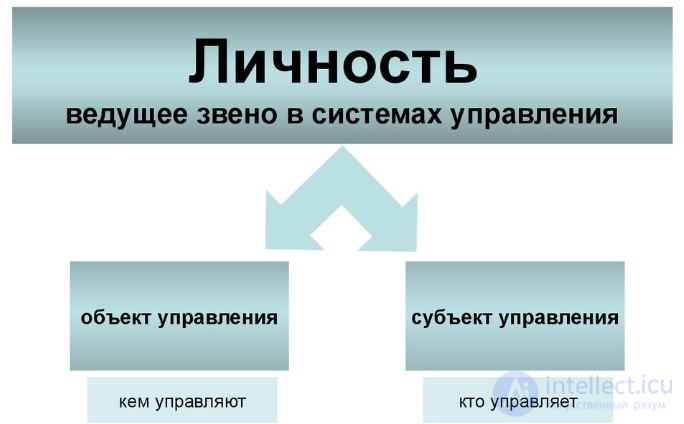
The active inclusion of the individual in the political process requires certain preconditions. They can be divided into three groups: material, socio-cultural, and politico-legal. Experience shows that for a person to take part in normal political activity, primary satisfaction of his vital needs is necessary. Observations show that the wealthier a society is, the more open it is to democratic forms of functioning. The level of well-being exerts a noticeable influence on a person's political convictions and orientations.
A necessary condition for ensuring effective opportunities for a person to influence the state and its organs is that person's political culture, particularly such a cultural factor as education. An illiterate person stands outside consciously understood politics and is an object of political actions rather than their subject. Conversely, the higher a person's level of education, the better politically oriented he is and, most importantly, the more disposed toward democratic orientations, institutions, and actions.
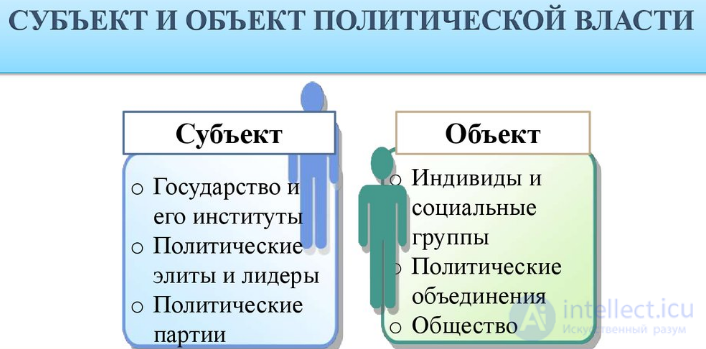
An essential condition for active political participation is also politico-legal factors. These include a democratic political regime, the dominance of a democratic political culture in society, legal guarantees of democratic procedures for forming all structures of power, and the participation of members of society at all stages of political decision-making.
Thus, the political activity of the individual rests on a set of certain preconditions, which either promote the development of political activity, the unfolding of a person's potential qualities as a socio-political actor, and the formation of the individual as a genuine subject of the political life of society, or significantly hinder all these processes and entrench political apathy and passivity.

Comments