
Lecture
The formation of the individual as a subject of politics takes place gradually, as the person's social nature develops in the course of their political socialisation.
Political socialisation is the process by which an individual acquires, over the course of their life, the political knowledge, norms and values of the society to which they belong.
Political socialisation is part of the individual's overall socialisation, of their engagement with the social experience accumulated by preceding generations - in other words, it is a matter of forming a person's life position on the basis of assimilating social experience, and of their civic formation.
In the process of political socialisation, the individual acquires certain knowledge about political life and gains the skills of socio-political activity that allow them to become a full-fledged participant in political relations. At the same time, a process takes place in which the individual's orientations, preferences and attitudes in the sphere of political reality are formed.
As a result of political socialisation, political consciousness is formed and the foundations for the individual's political behaviour are laid. However, the socialisation of the individual does not presuppose the passive assimilation of the values cultivated by the political system. Political practice and the individual's own social experience are of great importance, as is the development, on this basis, of rational political behaviour adequate to the realities taking shape.
Political socialisation is a complex, multi-factor process. The pace and level of socialisation are determined by many factors, including the influence of:
a) the macro-environment - the socio-economic formation, the state, class, nation, other social groups, and the political culture of society;
b) the micro-environment - institutional and informal communities, schools, families, individual persons;
c) biopsychological characteristics;
d) self-education.
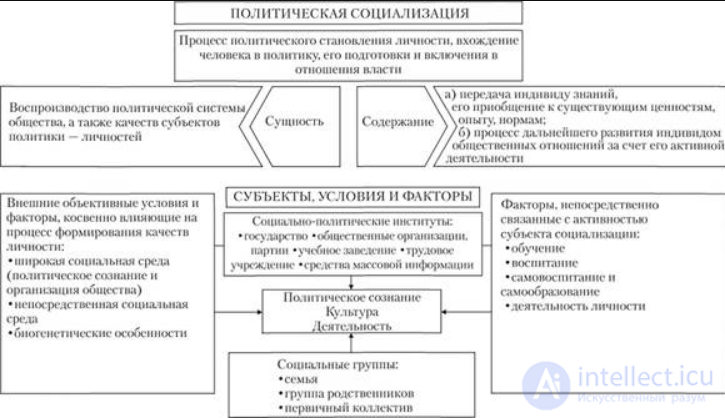
Fig. 1. The main characteristics of political socialisation
Political socialisation is carried out in two ways.
The first is the purposeful effort of the political system to gain the political recognition of the population. This includes, above all, the socialising influence of studying political science and historical and social-science disciplines in educational institutions, the influence of official propaganda, and the propaganda of political parties and movements, especially during election campaigns.
The second way is the spontaneous influence on the political consciousness and behaviour of the individual exerted by social and political practice at the macro level - international and domestic political realities, the global problems of our time, the economic and social situation, individual political events, and so on. It should be said that the spontaneity of this influence is relative: it is mediated by the mass media, which contribute their own share to the interpretation of social and political practice.
An important factor in political socialisation is the individual's personal participation in socio-political life. It is precisely in the process of practical political activity that the knowledge gained is transformed into convictions, tested by personal experience, and freed from certain illusory notions. Personal experience helps a person correct previously acquired ideas and assimilate new values and patterns of political behaviour for themselves.
Political socialisation of the individual begins in childhood and continues throughout life. Two stages of socialisation can be distinguished within it - primary and secondary.
Primary socialisation begins in early childhood. At first the main agents of socialisation are the parents, since it is they who serve as the child's first figures of authority. The system of reward or punishment used by parents shapes the first ideas about a system of control and sanctions. Within the family the child becomes acquainted with moral, social and religious values. Finally, it is from their parents that children learn about party affiliation, elections, and political leaders.
Primary socialisation continues at school, where children learn about state and national symbols and receive lessons in patriotism.
The individual's immediate environment - friends, peers, neighbours - is also a factor in socialisation. The values and attitudes formed under the influence of these agents may contradict the values that the school and the state try to instil.
Secondary (continued) socialisation is characterised by the formation of one's own attitude toward the political system. The individual is directly included in political life and interacts directly with political and governmental structures (parties, organs of power, courts). On the basis of accumulated knowledge and experience, the individual becomes capable of selecting particular political values, rejecting earlier ones and adopting new ones.
Important agents of secondary socialisation are the mass media: newspapers, magazines, television, radio. It is from these that adults obtain most of their information about political events. The role of television is especially great. Reading socio-political newspapers and magazines requires intellectual effort and presupposes a certain educational level. Television, in this respect, is a simpler channel for transmitting information, allowing spoken word and image to be combined. Topics conveyed in visual form are remembered more often than topics conveyed in written or spoken form.
Political socialisation is a process whose concrete historical content is determined, not least, by the type of political regime in the country. In democratic societies it involves the formation of political tolerance, a tolerant attitude toward differing opinions and opposing political positions, and the capacity for compromise and political consensus.
The principles of political socialisation in non-democratic, totalitarian societies are aimed at ensuring the unity of society through the suppression of individual will. It is carried out by imposing on the individual a particular system of political and ideological values and orientations.
The main function of political socialisation is to form an independent and responsible subject of politics. A high level of political socialisation of individuals is a precondition for a high level of development of social relations and their stability.

Comments