
Lecture
Let us begin our reflections by analyzing this subject from the standpoint of the theory of factors of production. As one might easily guess, the authors take a rather critical view of this theory, seeing it as one that describes the illusory content of the bourgeois world engendered by the domination of relations of alienation; nevertheless, it still dominates economic science today, and so we cannot leave it unaddressed. If we accept this theory, then even from such a standpoint it can be shown that the future society presupposes the removal of the traditional schemes in which land, capital, and labor create their corresponding sources of income. Let us turn to the subject of greatest interest for analysis in this section — income from capital. With the transition to development lying "beyond material production," fundamental changes occur here as well, changes that can be registered even while remaining within the framework of the theory of factors of production. The most important of these is the capacity of even an individual's creative activity to create (already in the contemporary world) social wealth comparable in scale and in its influence on economic development to the activity of entire corporations.
Thus the objective conditions of labor, while remaining an objective condition of human activity, cease to play the role of the dominant factor of economic development, and this is one of the qualitative distinctions between a society lying "beyond material production" and an industrial one. These changes have prompted a certain correction of the "three factors" theory: theories of intellectual and human "capital" have appeared. Since the end of the twentieth century, the factors of production that generate income have come to include the firm's so-called "intellectual (in some formulations, intangible) assets" and a person's creative (more often, by now, entrepreneurial or professional) abilities.1 We shall return later to the problem of "human capital," but in the case of a firm's "intangible assets" a whole series of perverted forms get mixed together. These assets de facto (though not explicitly — we would even say unconsciously) include: First, the potential a corporation possesses for local market regulation and for subordinating customers. This local power (the strength of the "field of dependency" it forms, or of "market power," of PR and marketing influence, of the brand, and so on) over particular market segments can, as we showed above in analyzing the "field of dependency," lead to a rise in the rate of profit and thus increase the firm's capitalization. Here the "intellectual" factor as such is, properly speaking, beside the point — of little significance. Second, the corporation's exclusive (monopoly) private ownership of a certain intellectual potential (know-how, technologies, including managerial technologies, and so on).
Private intellectual property yields a rent, and this rent naturally increases the firm's income and hence its capitalization. Third, the capitalistically transformed creative potential of the "professionals" (including managers) employed by the firm. The universal social wealth created by their creative activity receives, under market conditions, a monetary valuation many times greater than the expenditure required to acquire such a "factor of production" as a "professional." This factor thus proves to be highly productive and likewise increases capitalization. So then, even remaining on the surface of phenomena and without stepping outside the theory of factors of production, we can name two principal sources of the additional profit obtained by the so-called "creative corporation" — corporate capital that forms a "field of dependency" and makes use of creative resources.
These are (1) income created by its market power (often masked by other forms, especially the so-called "brand") plus (2) rent on private intellectual property, obtained by capital's appropriation of the results generated by various creative resources. If we return to the theory of factors of production, it is easy to see that theoretically no particular difficulties arise here, since in all these cases either the fact that social wealth is created by activity is reflected in a perverted form (as "human capital" generating income for its owner), or the old theory is simply extrapolated and reduced onto a qualitatively new object (creative activity). Let us emphasize: there is no theoretical investigation, within the theory of factors of production, of the substance of intellectual rent and other incomes from "intellectual capital"; the works devoted to the role of this new factor offer no explanation of how creativity creates a special kind of income — the authors confine themselves to registering the empirical phenomena: creative workers and entrepreneurs earn large incomes, and the efficiency of business depends on their activity. Let us allow ourselves a historical analogy. This kind of registration resembles the thesis: if in a late feudal society you want to acquire a title — save up money and buy it. Experience confirmed that such a path was possible. Moreover, the "elite" of most European countries (not to mention Russia) accumulated money right up to the nineteenth century precisely for this purpose — to buy titles and gain recognition in society and at court (recall Molière's Bourgeois Gentleman, or the characters of Griboyedov and Pushkin). But did this empirical connection prove that money, in its essence, is not the universal equivalent of the world of commodities but merely a "factor" of estate advancement?
Yes, under conditions of late capitalism creative abilities are indeed reduced (and not only by theorists, but by life itself) to the status of a factor of capital accumulation and income generation, but this is merely a historically transient perverted form (that is, one distorting its own "generic essence"), characteristic only of the period in which creative activity is subordinated to capital, of a deeper process — the birth of a new quality of social life that is displacing capital as such. As for labor as a source of wages, we consider it sufficiently well argued that the value created by universal creative activity cannot be reduced to the wage as the market price of labor power. Moreover, even while remaining within the framework of the theory of factors of production, one can formulate the hypothesis that creative activity is characterized by a peculiar fusion of "labor" and "capital" (in a certain sense one might speak of the "capital-like nature"1 of creative activity), in which each of these phenomena is sublated within a new process. It is another matter that, under the domination of capital, the process of creativity too is organized in a capitalist manner.
The owner of the material factors of activity external to creativity, and/or of such immanent factors of creativity as informational commodities, will act as personified capital (the subject of profit appropriation). The worker possessing creative abilities will either receive an "ordinary" wage (the effect of his innovation will "enter into" profit), or will act as one of the co-owners of the aggregate capital (having "invested" in the firm's activity his intellectual, human "capital," valued in some externally determined way in money or even in shares). In the latter case he will lay claim to a corresponding share of the profit. In any case, however, what occurs here is the transposition of capitalist forms onto a process that is patently different in nature, much as late feudalism "dressed" the process of capitalist production arising within its bosom in estate-hierarchical forms (for example, the purchase of titles or court offices for the sake of successful commercial activity) and/or forms of extra-economic compulsion (the capitalist who is a serf). Before proceeding, in keeping with our customary logic, to the Marxist paradigm, let us allow ourselves a few comments on the problem of the union (alienation) of workers and the means of production, examining the latter from the standpoint of the economic theory of property rights.2
It is immediately striking that the transition to a world in which creative labor, unrepeatable individuality, and other such properties of the creatosphere play the leading role increases externalities, complicates the specification of property rights, and leads to a rise in transaction costs. In turn, this growing complexity of the system of property rights means that the alienation of the immediate worker from key property rights develops and grows more complex. At the same time, transitional forms arise in which a considerable share of the creative functions connected with "servicing" the functioning of property rights turn out to be bound up with the activity of a specific social stratum — highly qualified managers. The growing complexity and diffusion of property rights; the increasing role and significance of creative activity (including entrepreneurship as one of its perverted forms); the growth in the scale of the firm (up to the size of transnational corporations) and, consequently, of management — these are the principal factors underlying the tendency toward a "managerial revolution," a tendency already registered by classical institutionalism and Marxism as early as the beginning of the twentieth century. The premise of this tendency is the separation of capital-as-property from capital-as-function, already analyzed by Marx, which predetermines both the possibility of replacing the capitalist owner with a hired manager and the persistence, in this process, of the basic capitalist relation between hired labor and capital.1 The growth of the centralization and concentration of capital, and the transition to the dominance of large corporations, determined shifts in the role of top managers in such large corporations. Their relative independence from the owners of capital, and the strengthening of their own interests as distinct from the interests of the owners, were analyzed in the works of American institutionalists more than half a century ago.3
These agents perform the function of joining a certain bundle of property rights with labor activity. Such a complication of the system of property rights is a reaction to the contradictory processes occurring in the area of the sublation of material production and the progress of contemporary forms of corporate capital, which (on the whole) confirms the conclusions drawn above. However, in the authors' view, it is the use of Marxist theory that holds the greatest interest for analyzing the sublation of the relations of alienation of the worker from the means of production.
From a substantive standpoint, within the categorial field of classical Marxism, the appropriation of surplus value and the exploitation of the hired worker in the narrow sense of the word (understood merely as relations of such appropriation) are likewise negated by the development of the creatosphere. From the standpoint of Marxist theory, the phenomenon of exploitation is bound up with the fact that the productive process creates a commodity whose value exceeds both the value of the aggregate labor power expended in creating it and the magnitude of the value of the means of production transferred onto that commodity. This difference is surplus value, the result of the exploitation of the hired worker, since, from the Marxist standpoint, all newly created value is created by labor (moreover, labor, by virtue of its dual character, also transfers the value of the means of production onto the final commodity). But once we move to the world lying "beyond material production proper," the result of activity here is no longer a commodity alienated and sold on the market, but rather the process of activity itself and the self-development of the worker within that process, plus cultural value. These results are in principle inalienable from the worker, and alienation can characterize only the material carrier of this cultural value. Yet the practice of late capitalism shows that the creative worker is nonetheless an object of exploitation. In any case, it is empirically obvious that the use of creative labor as hired labor in creative corporations brings their owners an income incommensurable even with the income of the highest-paid workers who are not among the owners and top managers. Wherein, then, lies the secret of this paradox?
Let us set aside the answers offered by the theories of factors of production and marginal productivity. From their standpoint everything is simple: the "ordinary" capital invested by Bill Gates (recall: he began by investing a few hundred thousand dollars in his business, and is now the owner of more than a hundred billion1) is several thousand times more efficient than the "intellectual capital" even of his most talented programmers, who "invested" their creative abilities in his business (the same hundreds of thousands of dollars, spent over many years of education, went into "creating" those abilities) and who earn, over their whole lifetimes, at most a few tens of millions. What interests us here, however, is the Marxist categorial field, and here we shall naturally have to turn to Marxist methodology and, in particular, to the method of ascent from the abstract to the concrete, unfolding the system of relations that allows the owner of capital to appropriate the value created by the creative worker. Let us begin with the relation between the creator and capital, in which the form of hired labor is preserved. Directly, the process looks the same as in the case of purchasing the labor power of a subject of reproductive labor. However, the essence of this relation is significantly modified: the owner of capital is no longer purchasing labor power, but the creative potential of the human being.
1 Here is one of the more contemporary descriptions of this condition of a person voluntarily placing himself in the service of capital: "Metrics were climbing, the team was growing, we felt invincible. We were pushing forward but didn't feel like we were straining ourselves. We were fueled by a constant stream of adrenaline from new press coverage and from landing new big clients. We didn't need rest, we felt great. More than great. But after the very peak, those wonderful times started to fade. We began burning through a lot of money and couldn't keep to the path we'd set out on. The days seemed to grow longer, and the adrenaline rushes rarer. Even Red Bull didn't help. The only way out was to push even harder, and that's what we did. All of us were working 80-hour weeks. That pace was impossible to sustain. Eventually I burned out. I remember coming home and collapsing on the couch. I was so emotionally and physically exhausted I couldn't even move. My productivity dropped to zero. The next day at the office I just stared blankly at the computer. For hours. Not moving, just staring." (Ideanomics, July 8, 2013;
Let us consider the key differences between the creator as an "object" (the word "object" is placed in quotation marks, since in the case of creativity it is in fact a subject) of exploitation and the "ordinary" hired worker (who is a subject of reproductive labor). First, this is a commodity that is always doubly owned: it is inalienable from its "bearer"; the latter does not lose it even when it is sold to another party. Moreover, in the process of consuming this commodity, its use value increases. Unlike labor power, which, once purchased, was consumed by capital, exhausting the worker physically and morally,3 a person's creative potential grows in the course of activity (and hence of exploitation), and this is one of the chief results of creativity. Second, it is well known that the creative process unfolds not only in working time but also in free time. Hence arises capital's drive to acquire the human being with all of his personal qualities, the whole of his life-activity, all the products of his personal self-realization. Hence, in particular, the owner of capital's interest in a long-term (in the limiting case, lifelong) contract with the creator. Third, in acquiring creative human qualities, capital must pay the cost of reproducing this commodity. This cost will include, alongside the traditional components of the value of labor power (means of subsistence and support of the family), the entire set of expenditures on education and skill development (and retraining), on the acquisition and constant use of cultural values, on personal recreation, and on ensuring a healthy and long-lived lifestyle. In addition, this cost will include certain social guarantees granting the creator "the right to be wrong" (the possibility of not suffering in the event of a temporary absence of commercial results from his activity; let us recall that in creative work a negative result is also a result).
Because of this, we can give a theoretical account of the cause of a well-known empirical phenomenon: a person's creative qualities are an expensive commodity. At the same time, creativity is an activity that is itself the stimulus for its own performance. Monetary motivation in this case functions as something external. Hence arises the possibility for capital to parasitize on the creative worker's internal motivation, obtaining part of his creative potential for free, without paying for the incentives that the worker generates for himself simply by engaging in creative work. Fourth, the above-mentioned property of creative activity — that it produces an unforeseeable (in some cases outright negative) result — means that the owner of capital is buying "a pig in a poke": precisely a potential that is undetermined either qualitatively or quantitatively. Capital does not purchase a qualitatively and quantitatively fixed capacity to create a determinate value (such fixing takes the form of a time-based or even piece-rate wage), but rather a fundamentally indeterminate potential, and it therefore pays for the level of this potential rather than for the expenditure of labor or the quantity of product created by that labor (the volume of services rendered).
Accordingly, the price of this commodity (unlike the commodity that is labor power) depends not so much on the cost of the worker's labor power (the essence of hiring relations), nor on the volume and quality of the commodity produced by the given worker (the perverted form of hiring relations — piece-rate wages), as on how society and the market assess the qualitative parameters of the creative worker's potential. A consequence of this is an important dependency: the non-market social valuation we have singled out (for example, an educational diploma, an academic degree, prestige among one's colleagues — in the case of science) matters more, the more fully the subject of activity is engaged in creative activity proper within the creatosphere (science, art, education). And conversely: the strictly market valuation matters more, the more the case in question involves the labor of professionals in the perverted sector (corporate management, finance, mass culture, professional sports). This accounts, in particular, for the possibility of very large deviations of a creative worker's price from the actual cost of reproducing his creative qualities (it is well known that the total market of simulacra values a pop star or a lucky rainmaker hundreds of times more highly than a renowned scientist, to say nothing of a village schoolteacher). Finally, and this is especially important, in the case under consideration we encounter a duality in the object of the exploitation of creative activity, and this is a direct consequence of the duality of creativity itself. Let us recall that, on the one hand, it is a strictly individual activity of a particular subject, while on the other hand it is universal labor, co-creation, an open (in time and space) dialogue of the creator with his colleagues, predecessors, and successors — with all those whose cultural results he has un-objectified in his own activity, and who will in turn un-objectify the results of his efforts. A new theory in physics is created not only by its immediate authors, but also by their teachers, their students, and by Pythagoras and Einstein alike...
New music, or a "pedagogical poem" embodied in the lives of one's students, is created in the same way. Hence a fundamentally important conclusion: in every concrete case of the use of creative activity, capital exploits not only the given concrete subject but the entire world of culture, all of humanity, whose cultural potential it indirectly appropriates, mediated by the process of dialogue between the creative worker it employs and the whole world of the creatosphere. Thus the creator as an "object" of exploitation is substantially different from the "ordinary" hired worker (who is a subject of reproductive labor). But this is far from exhausting the differentiae specificae of the phenomenon examined in this subsection. The most important differences concern the content of the exploitation of creative activity, as distinct from what we — Marxists — already know from Capital. Creative activity, as we showed above, is in its content the product of the universal activity of co-creators interacting in a process of un-alienated dialogue, not the abstract labor of isolated producers. As such, creative activity creates not value but universal social wealth. It is another matter that, under the domination of relations of commodity production, and all the more so of a totalized market, this content "puts on" a perverted form, receiving on the market an indeterminately large monetary valuation. It is significant that this valuation (the price of the product of creativity, transformed into private [intellectual] property) can be (but need not be) only indirectly connected with the labor expenditures of the creator, which in any case are not subject to measurement (not even in hours: the time of creativity is not working time, it is free time). Consequently, in the case of the exploitation of creative activity, neither the creation nor the appropriation of surplus value takes place (although the creator's activity may influence the growth of surplus-value production by reproductive workers).
Something else occurs instead — the creation of universal [un-alienated] cultural wealth by the worker-creator (and indirectly by the whole world of culture) and the appropriation of this wealth by capital-the-corporation (personified alienated reified wealth). Thus capital appropriates not unpaid working time but the free time of the creator, for it is precisely in this time that the above-mentioned wealth is created; this is the exploitation of free time and hence, as we noted above, of the creator's life-activity (free time is precisely the time of a person's life, of his self-realization). However, the most important specific feature in this case is the duality not only of the object but also of the content of the relation of exploitation of creative activity. The paradox of exploitation in the sphere of co-creation consists in the fact that even the creator himself has no grounds (if we proceed from the laws of the creatosphere) for appropriating the monetary valuation of the whole of the cultural wealth he has created. Under the laws of the creatosphere, cultural value belongs, economically speaking (that is, as a resource exclusively used and yielding income), not to its creator but to everyone — to the whole of humanity and to every representative of the human race. The creatosphere is characterized by "everyone's ownership of everything." Cultural value is the result of the process of co-creation between the given creator and his direct and indirect colleagues in the cultural dialogue.
Therefore, in the strict sense of the word, the exploitation of creative activity is not only the exploitation of a particular creator but also the exploitation, by capital, of the entire creatosphere — the free appropriation of all those cultural goods that were un-objectified by the particular creative worker of the corporation in the process of creating a commercial innovation for it. Moreover, since capital is not only the sum of individual enterprises but also the concrete-universal of capitalism, we can speak of the exploitation, by aggregate capital, of humanity's creatosphere in all its spatial and temporal richness (running somewhat ahead of ourselves, we should add to the creatosphere its alter ego — the Earth's biosphere as well). This last point accounts for the substantial differences between the exploitation of creative activity and "ordinary" capitalist exploitation.
Thus, in the case of the appropriation, by a particular capitalist (say, Henry Ford), of surplus value created by the reproductive labor of some aggregate hired worker (say, the workforce of an automobile plant), the problem of sublating exploitation could, on its quantitative side, be resolved relatively simply — by withdrawing the surplus value from that particular capitalist and transferring it to the labor collective. At the national level, this problem could be resolved by nationalization (provided the state is, economically and politically, a representative of the workers' interests). And this is why the socialization (nationalization) of the means of production was and remains a key question for [industrial] socialism as a social system called upon to replace [industrial] capitalism. In the case of creative activity, matters are far more complex. The alternative to capitalist exploitation cannot, in this case, consist in transferring ownership of the result of the activity to the creator himself (whether individual or collective, it makes no difference here), since this result is nothing more than the "final stage" of an endless universal process of co-creation. The sublation of the exploitation of [universal] creative activity can therefore consist only in the sublation of [private] ownership of cultural values (intellectual property), and the latter can be achieved only as the sublation of relations of alienation and appropriation (in their economic sense) in the world of the creatosphere — a rejection, within this world, of [private] property as a special institution.
Such is the substantive characterization of the exploitation of universal creative activity, which rests on the universal labor we have already written about above. It is important that this content is determined not only within the parameters of the capitalist system of production relations (where the qualitative characteristic of this process is the appropriation, by capital, of the person's activity-and-personality qualities), but also within the space-time of the transformation of the "realm of necessity" into the "realm of freedom." It is precisely here, in the categorial field of the study of the leap into the world of the creatosphere lying "beyond material production proper," that it becomes possible, and only here, to define fully and adequately the content of capital's exploitation of creativity. However, the specific features of the exploitation of creative activity singled out above have so far not touched on the second side of this dual process: the exploitation, by a particular corporate capital, of a particular creative worker (individual or collective, again it makes no difference here). Qualitatively, the presence of this exploitation is beyond doubt: we have shown above the principal components of the subordination of the creator and his life-activity to corporate capital. Moreover, since creativity is always not only universal but also individual labor, the problem of sublating this aspect of exploitation as well arises. And from a substantive standpoint, the principal direction for solving this problem is fairly obvious: in place of capital there should come a free working association of creative workers (we shall not go into the specific forms of such an organization in this text). As for the form of the exploitation of creative activity, a distinction must be drawn here between two aspects: the forms of the relation of exploitation of the hired creative worker by capital, and the form of the appropriation of the results of the exploitation of creative activity. As for the first aspect, oddly enough, the differences are not so significant.
In most cases, the creative worker employed by a corporation remains, in form, a hired employee, one who signs a contract of employment and receives the wage stipulated in that contract and (in the case of a certain degree of social "progressiveness" in the business) a benefits package and certain labor rights. If we look at the most typical creative workers (teachers at private schools, doctors at private hospitals, programmers, and staff of firms' research divisions), it turns out that there are differences between the creative hired worker and the "ordinary" one (engaged in reproductive labor), but as a rule these are not fundamental: a higher wage, more frequent use of long-term hiring, management styles closer to the "human relations" model or similar management models, a labor process less rigidly determined by capital (greater autonomy of labor), more attention paid to skill development — the list is well known and has been reproduced many times over in the literature on management problems in creative corporations. It is another matter that the relations of the subordination of labor to capital (even formal subordination) in this case do indeed undergo significant changes. Moreover, alongside hired labor, relations are developing in which the creative worker, in form and/or in substance, becomes a free worker not subordinated to capital (the so-called "members of the free professions," or the self-employed). The problem of the form in which the results of the exploitation of creative activity are appropriated, however, is far more complex, since it is precisely here that the changes are fundamental. And in order to depict them, we shall have to make an effort to adequately reflect the quantitative side of the exploitation of creative activity as well.
From a quantitative standpoint, the situation here is likewise fundamentally different from that of classical capitalism. Marx's formula of exploitation, which involves dividing the hired worker's working time into necessary time (the time during which he creates value equal to the value of his labor power) and surplus time (the time in which surplus value, appropriated by capital, is created), "does not work" here, since, as we noted above, the universal cultural wealth appropriated by capital is created by the creator in his free time. What, then, do we get here? We get a relation between two qualitatively heterogeneous parameters. On the one hand, the cost of reproducing a person's creative qualities within the capitalist system. On the other, the monetary valuation (a transposed perverted form) of the universal cultural wealth created by the exploited creator and (NB1) by the entire preceding world of culture, with which the given creator entered into dialogue in the course of his activity. To specify this relation in terms of the conditions of capitalist production, we must take into account that from the total income obtained from realizing creative wealth (Wcr) we must subtract:
• the expenditures on compensating the creative resources purchased by the capitalist (Ccr; note that, unlike the elements of "ordinary" constant capital, their value is not transferred onto the final product, since they have no value; they have only a monetary valuation); • the expenditures on acquiring a person's creative qualities (Hcr);
• the newly created value in the "ordinary" capitalist production accompanying the creative activity (the wages of "ordinary" workers, V, and the surplus value they create, M) and the value of "ordinary" material costs (C) transferred onto the final product.
What remains — the monetary valuation of the portion of universal cultural wealth, created by the creative worker and by the entire world of culture, that is appropriated by the corporation's owners (Wmcr) — will be the net income that capital derives from the exploitation of the creative worker and (once again, NB!) of the entire world of culture. In this case, the ratio of Wmcr to the cost of reproducing the creative worker (the remaining cultural goods having been un-objectified by the creative worker free of charge and/or having entered into capitalist costs) will be a measure of the exploitation, by this particular capital, not only of its creative workers but of the entire world of culture as well (Wmcr'). These relations can be expressed in the form of the simplest formulas as follows:

Accordingly,

The measure of exploitation:

The similarity of the notations (Wmcr and M, Wmcr' and M1) should not, as we have already noted, obscure the substantive differences between the formula for the exploitation of creative activity and Marx's formula.
The first difference lies between surplus value as the result of "ordinary" capitalist production and the monetary valuation of the universal cultural wealth appropriated by the owners of a corporation using creative resources (the authors have not yet found a concise categorial designation for this phenomenon). Second, whenever capital makes use of creative activity, the object of exploitation is always dual in nature: it is both the particular creator and the entire creatosphere. This duality of the process of exploiting the creatosphere and its subject raises a problem: if the universal cultural wealth appropriated by the owners of a corporation using creative resources is created not only by the particular creator, then how is one to calculate a quantitative expression of the exploitation of a particular hired creative worker? The authors have argued above for only one possible answer to this question: there is no way to do so. A quantitative expression, in monetary (capitalist) parameters, of this measure is impossible, since it is impossible to express quantitatively the "contribution" to this wealth made by the given creator and by all his predecessors and colleagues in co-creation. In the world of the creatosphere there is, in principle, no quantitative expression of the ratio of the labor expenditures of the participants in a cultural dialogue, in a process of co-creation. Under the market form of organizing this process, such an expression is all the more impossible, since the creative worker (and hence capital) makes use of the basic goods of the creatosphere free of charge. Moreover, combining the first and second consequences allows us to draw a seemingly paradoxical conclusion: if we look at the problem of the exploitation of the creative worker purely from a quantitative standpoint (from the standpoint of the volume of monetary income he receives), then freeing creative labor from subordination to capital changes nothing particular in this subject's position. In principle, the creative worker would receive from society no more than the equivalent of the means necessary to reproduce his human qualities. Given that many of the goods involved would in that case be free (education, health care, access to information), one might even suppose that the strictly monetary equivalent received by the creator could be smaller than it is under capitalism. However, there are quite a few "nuances" here.
First, as we have already noted, an inevitable consequence of the market capitalist system is a large deviation of the price of the creative worker from the cost of reproducing his potential. Owing to the hegemony of corporate capital, these deviations are "arranged" in such a way that the price of workers most closely fused with capital and serving its hegemony, workers included in the reproduction of the perverted sector (workers in such fields as finance, corporate management, the mass media, mass culture, professional sports, and so on), far exceeds the cost of reproducing their human qualities. Conversely, workers in the universally accessible branches of the creatosphere (teachers at public schools, social workers, and so on) have a price on the market of simulacra that is substantially lower than the cost of the means necessary to reproduce their human qualities (it is well known that even in the United States a schoolteacher in a "colored" ghetto lacks the means to pay for the education of his two or three children at Harvard...).
Second, capital pays creative workers (and, as we showed above, far from all of them at that) at a level close to the cost of reproducing their human qualities, their creative potential, only in the developed countries. The bulk of the "rank-and-file" subjects of universally accessible creative activity in the world (activity most important from the standpoint of the tasks of developing the creatosphere and, hence, of the universal criteria of progress) receive from capital less than they ought to have even by capital's own laws. The world's "rank-and-file" intelligentsia is undervalued by capital, while the circle of the world's "professionals" is overvalued. In this way contemporary global capital forms an internal contradiction within the social stratum of creative hired workers. The former — those closest, by their professional role, to the world of the "realm of freedom" (subjects of creatosphere activity proper, rather than labor in the perverted sector) and undervalued by capital even by capitalism's own standards — are, even from this standpoint, interested in the removal of capital's global hegemony. The latter — those performing the tasks of the direct "creation" of capital's hegemony, employed in the perverted sector (which displaces and disfigures the creatosphere) and overvalued by capital — turn out, objectively, to be opponents of such a removal. Third, from a fundamental standpoint, the quantitative, monetary aspect of the exploitation of the creative hired worker ought to matter least of all to him. The value of homo creator's being is objectively determined by the measure of freedom of his activity, and from this standpoint the transformation of the conditions of creative life-activity, of its space and time, into an object of exploitation, a function of capital, is the deepest foundation of the confrontation between Man as creator and global capital. This foundation is all the more significant in that capital introduces into this relation traits of personal dependency as well, subordinating to itself, as we have already said, the human being's "divine soul." But even here there are "details" of its own. For the "professionals" who serve capital's hegemony, this slavery is sweet, since it is precisely this that makes them privileged, capital's pampered slaves — as if (here, indeed, is the world of simulacra!) equal to capital in their role.
Moreover, let us not forget that the position of every subject of creative activity under capitalism is dual: on the one hand, he is a creator, thirsting for freedom of life-activity; on the other, he is the owner of "human capital," a seller of his own creative potential, interested in getting a good price for his commodity. Hence, subjectively, the creator may be either an opponent or a supporter of preserving capital's hegemony. This subjective inconsistency is superimposed on the above-mentioned objective contradiction in the nature of the creative hired worker, forming a complex spectrum of concrete socio-political sympathies within the social stratum usually referred to, in general terms, as the "intelligentsia." Allow us a small clarification, concerning the profit obtained by a corporation that makes use of creative resources. It is fairly clear that, within Marxist methodology, this profit can be represented as a perverted form (every profit is, from the Marxist standpoint, a perverted form) of the sum of surplus value and the monetary valuation of the universal cultural wealth appropriated by the owners of a corporation using creative resources:
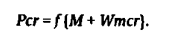
Since, in the overwhelming majority of cases, such corporate capitals are also capable of generating a "field of dependency" (that is, they possess "market power") and derive from this a certain income (Pmp), and also, owing to the process of financialization drawing virtually all corporations into the orbit of virtual fictitious capital, a certain financial profit (let us denote it Pf), this formula accordingly takes on a somewhat more complex form:

The income received by the owner of capital that employs creative resources is, in its form, analogous to rental income, a fact adequately reflected both in practice and in economic theory. Both proponents of neoclassical economics and many Marxists specifically emphasize that this income is intellectual rent. On the surface of phenomena, the latter is defined as income derived from ownership of a product created by creative (in modern market terminology, intellectual) activity. In doing so, the former, in keeping with their methodology, pose primarily questions not of the nature of this rent but of its quantitative determination, while the latter confine themselves to the correct but substantively insufficient assertion that this is a new form of capitalist exploitation. Meanwhile, the key issue here is arguably not one of form but of the nature of the relations concealed behind the form of intellectual rent. And behind it, as we shall show below, lies a relation that substantially distinguishes this form from, say, natural rent. But let us begin with the similarity in form. It is no accident that income from ownership of creative resources is defined as rent. Here an implicit analogy is drawn with any other universal resource held in private ownership — land, oil, gas... The resource itself is a public good, and therefore, when the latter (land, oil) acquires the economic form of [private] property, the income from its use is classified — not only by Marxism but also by the mainstream of economic theory, and (which is especially important) by economic practice — as rent rather than profit. Here it is implicitly acknowledged that, by its nature, cultural value (an "intellectual product") is a public rather than a private good. The transformation of this public good into private property gives its owner the opportunity to receive not profit but rent, which is commonly called intellectual (and below we shall generally use this name), though it would be more accurate to call it cultural or creatosphere rent. The amusing thing is that in this case the positive view of the phenomenon turns out to be as close to the truth as could be: the income in question, from the Marxist standpoint too, must be classified as rental in form. Universal cultural wealth becomes a source of value-based income only insofar as this wealth takes the form of [private] property. The income itself must, in this case, take the form of rent, just as happens with land in the case of absolute rent — a phenomenon correctly described by Marx in Capital. And just as absolute rent is nothing more than a hindrance to the development of capitalism in agriculture inherited from the past (from feudal landownership) — a set of artificial barriers to the development of production and an additional burden on the consumer of the given product — intellectual rent is an artificial hindrance to the development of activity in the creatosphere. Thus, on the surface, intellectual rent and "ordinary" (for example, natural) rent are similar: the transformation of a public good (a cultural phenomenon or a natural resource) into an object of private property and market (capitalist) use is a precondition for the formation and appropriation of rental income. However, the sources of these rental incomes differ. Intellectual rent is, at its foundation, the product of an activity (universal creative labor) that creates the wealth whose appropriation yields the rent. At its foundation lies a value assessment of the labor that created the cultural value. Natural rent has no such foundation. Natural wealth is not created by human labor (here we abstract from expenditures on geological prospecting and the like — these enter into capitalist costs and have no bearing on rental income). Hence natural rent, as its source, has a false social value, presupposing a redistribution of abstract social labor.
And one more important remark: under conditions of a market economy, intellectual rent is a source not only for covering the costs of acquiring paid creative resources and the [super]income received by the creative corporation, but also of the income received by the creator working within that corporation as a hired employee. It does not follow from this, however, that the creator-employee is a parasite on society's neck, analogous to the recipient of feudal rent. On the contrary, he is a creator of social wealth whose useful effect many times exceeds what society spends on creating the conditions for his reproduction. The crux of the problem here lies not in the quantitative ratio but in the theoretical classification of the nature of the income received by the creator under capitalism. It is precisely the socio-economic form of the latter that produces all those inversions associated with the rental nature of the "intellectual's" income. Outside the market and capital, the problem is resolved quite differently: society determines the measure of income for subjects of creative activity in the way that, for example, happens at a public university, a school, or a temporary creative collective that has received a public grant. Returning to the problem of the quantitative expression of the exploitation of creative activity, and introducing into the formulas given above the parameter of intellectual rent (let us denote it Rer, since, as we noted above, this rent would more properly be called cultural or creatosphere rent), we can represent the propositions formulated above in the form of the simplest formulas:
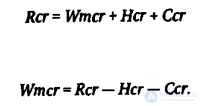
The formula for a corporation's gross income, when expressed through intellectual rent, takes the form:

The conclusion that intellectual rent is the source of payment for the creative worker (let us stress — not payment for the creative worker's labor, but payment for his potential) at first glance introduces certain doubts into the conclusion, reached by our predecessors and confirmed by us, about the parasitic nature of intellectual rent. However, this is precisely a "first glance," an appearance. The essence lies in the fact that what is parasitic is the relation itself, which clothes in value form a social wealth that is not, in fact, value, and hands it over not to every member of society capable of de-objectifying it ("the property of each in all") but to certain private owners. The fact that among the latter is also to be found the direct creator of this wealth does not change the essence of the matter: by the laws of the creatosphere, the creator does not work for the sake of reward. And he can fully secure his livelihood by receiving from society or its representatives (a creative association, the state, an NGO) free goods and a socially guaranteed income that ensure the reproduction of his human qualities. There is, however, another side to this coin. The free appropriation by market agents, and above all by creative corporations, of part of the goods of the world of culture (the results of the prior development of science and culture, the fruits of universally accessible education and fundamental science) poses the problem of demarcating and coordinating two worlds — the free and universally accessible world of culture and the paid, privately-owned-and-limited world of the market — as a fundamental theoretical and practical question of the period of transformation of the "realm of necessity" into the "realm of freedom," of "late" capitalism into "early" communism. For the "mainstream" of economic science there is no problem here: free goods are created with the money of taxpaying and donating market agents (corporations, hired workers) and are appropriated gratis on the grounds of universal accessibility or state rationing. Private goods are created by market agents and appropriated by them on a paid basis. The differing nature of goods (limited versus unlimited) determines the differing modes of their appropriation. For a Marxist, as we have tried to show above, behind this question lies the fundamental problem of capital's exploitation of the world of the creatosphere — its free and/or partially paid appropriation of humanity's cultural values ("creative resources"). In this connection, we consider the following hypothesis appropriate: the degree of capital's exploitation of culture (ЕСС') can be expressed quantitatively as well, namely as the ratio of income received in the form of superprofit and intellectual rent (Rer) to capital expenditures on the development of the creatosphere (СССг)
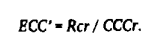
Let us clarify. The first (Rer) is an indicator whose nature and calculation we have already discussed above. The second (СССг) is direct capital investment in the development of the creatosphere, including investment in the material resources for the development of the creatosphere (fixed capital), expenditure on hiring workers (variable capital), and investment in intellectual resources (so-called "human capital"), plus budgetary funds used for these purposes. The existence of such exploitation also allows us to propose a hypothesis of transitional forms for its partial removal — a kind of "cultivation" of capitalism (a phenomenon much discussed over the past decade). If we proceed from the premises that (1) capital, in its commercial activity, appropriates the public goods of the creatosphere free of charge, in a way that allows it to increase profit (for example, by using a portrait of Mozart on a box of chocolates, one can sell them in greater quantity and at a higher price than if the box carried only an ordinary picture), and that (2) this additional income is a special kind of rent (let us call it, in this case, cultural rent), then the following conclusion is logical: this rent, like any other, must be withdrawn from the capitalist and transferred to the owner. Since the owner of culture is (and this has been demonstrated within the Marxist paradigm) everyone, the rent from capital's use of the phenomenon of culture must accordingly be used for the development of that sphere in which any phenomenon belongs to any subject, that is, the creatosphere. Put simply, business should pay for inserting a portrait of Mozart into an advertisement no less than for using a photograph of a top model, and the money received from firms using the public goods of culture should go into international funds for the development of the creatosphere. This proposal violates a fundamental principle of the market economy: public goods are public precisely because they are equally free for everyone.
We propose to "excommunicate" the commercial sector from what people create free of charge. An analogy here might be the model of museums, libraries, and websites that are free only for certain categories of citizens (say, cultural workers). What is proposed here is the same thing, except that the principle of discrimination becomes where and for what purpose the cultural phenomenon is used. If it is for producing universally accessible objects, the goods of the creatosphere are free. If it is for producing objects of private property, they are paid. Moreover, certain cultural phenomena could be banned outright from commercial use. Exactly how this could be done technically, how much and to whom exactly businessmen should pay, and how to distinguish the goods of culture for whose use one must pay from those that may be used free of charge (such as, for example, language or the rules of arithmetic) — this is a task for future fundamental and applied research. And the path to its solution may be no less long and complex than the path from the hypothesis of
Tsiolkovsky to the spacecraft that carried Gagarin into space. As first steps, one might propose, for example, the creation of international expert commissions that "patent" public cultural goods. For phenomena of art, say, this could be a set of "sanctions" ranging from an absolute ban on commercial use to rental payments into international funds supporting the arts, based on a model similar to the ban on using videos sold to the public for commercial screenings. Control (let us recall, it would apply only to commercial firms) could be organized by analogy with the monitoring of the use of patented intellectual products. Of course, all these forms will be imperfect, as are any palliative solutions aimed at forming transitional relations that remain within the framework of the capitalist system, the "realm of necessity." As an aside, let us note that similar solutions are possible in the sphere of the "ecologization" of capitalism, in using natural rent for the benefit of all humanity.
The transformation of nature, and in particular of land, into a universal cultural value (a "public good") — occurring under conditions of intensifying global environmental problems — presupposes its universal accessibility as an element of the creatosphere subject to de-objectification. Private property in this respect can be no more than a distorted (displaced) form which, by its very nature, cannot but hinder the use of the biogeocenosis as a cultural phenomenon — a universally accessible value open to all. Incidentally, it is quite apt to note here: since the natural resources of planet Earth were created by the natural development of the biosphere, then (if we abstract for the moment from the factor of human activity, which has — in the case, say, of arable land in developed countries — increased or decreased the productivity of these resources) the thesis of humanity's universal ownership of natural resources may be considered well-founded (let us stress: not of particular firms, states, or even international organizations, but of Humanity; to whom and how it entrusts the realization of its universal interests is a separate, though very important, question).
The universality of ownership of natural resources determines the appropriation of rent from the use of any (more precisely, all) natural resources in commercial use by humanity for the purpose of solving its global problems: providing all citizens of all countries with a socially guaranteed minimum, and implementing global environmental, social, humanitarian, and similar programs. Let me stress: in this case there is no encroachment on any of the principles of capitalism: the owner of the Earth (the biogeosphere), that is, Humanity, receives the product "created" (here we are reasoning within the framework of the theory of factors of production) by it — rent. However, let us return to the problems of intellectual rent, and, in concluding this analysis, let us consider the question of exploitation in the world of the creatosphere in the case where the [private] owner of a certain cultural value is (though not in the case of the creative "dispersed manufactory") the creator himself. In this case the problem of the exploitation of the world of the creatosphere turns out to be applicable to this subject as well. And while one cannot speak here of the exploitation of the creator by a third party, the exploitation of the creatosphere by the creator as a private owner is nonetheless evident in this case too. By appropriating the value assessment of a cultural value that he created in cooperation with the entire world of the creatosphere, the private-owner-creator acts as an exploiter of humanity. Should there be a renunciation of [private] intellectual property, that is, a socialization (transformation into a universal, freely accessible resource) of all the components of the creatosphere, the private-owner-creator might lose a significant part of his wealth that has taken value form (his cultural wealth is not taken from him in this case; from him, as from everyone else, is taken the right to transform it into money — his intellectual rent is "taken away"). This is how the empirically well-known duality of the private-owner-creator in the capitalist world is theoretically derived.
It differs both from the internal contradiction in the position of the creative hired worker and from the position of the "ordinary" petty bourgeois. Since we have already written a good deal about the creative hired worker, let us comment briefly on the second case. The independently working creator differs from the subject of reproductive activity who is the owner both of the means of production and of the products of his labor (the "ordinary" petty bourgeois — for example, the owner of a kiosk) in at least this respect: he appropriates public cultural goods free of charge and receives as income not new value created by himself, but a value assessment of the universal wealth created by him (and — NB! — by his co-authors in open dialogue, in co-creation), which, under the dominance of relations of private property in "intellectual" products, takes the form of
продолжение следует...
Часть 1 Chapter 6. Creative Activity and Capital: A View Through the Lens of Neoclassical Theory
Часть 2 Self-Check Questions - Chapter 6. Creative Activity and Capital: A

Comments