
Lecture
As was mentioned above, more than 20 years of transformation in Russia have produced a rather peculiar system of production relations and institutions, one whose form is typical of semi-peripheral models of late capitalism. The content of this system, however, has its own significant specificity. Below we examine the specifics of the relations of (1) coordination (resource allocation) and, in particular, the market and regulation, (2) appropriation and alienation (property), and (3) reproduction (in particular, questions of the specific parameters of development, crises, and so on).
The destruction of the predominantly planned-bureaucratic system of coordination relations (bureaucratic planning) led to the emergence in Russia of a complex ensemble combining ways of coordinating resources and maintaining proportionality of development. These methods include:
The market proper, as a form of coordination in its "classical" guise, is present in the Russian economy perhaps only in the sphere of mass consumption. The greater part of the space of market coordination is occupied by relations that differ substantially from the abstract model of the market.
In the contemporary Russian economy, forms of the market characteristic of late capitalism dominate, but, as a rule, in an underdeveloped and deformed guise. They are supplemented not only by "classical" forms of the market but also by a broad spectrum of semi-feudal forms. The reason for this is that the commodity relations ("the market") characteristic of capitalism took shape in the Russian economy as a system that was originally largely subordinated to non-market or not-quite-market forms, and therefore itself exists in a deformed state. An analogue here could be the market of the Middle Ages, significantly deformed by tradition and personal dependence. In our country, the market mechanisms characteristic of late capitalism for forming proportions, stimulating producers, and so on (in particular, oligopolistic competition) do operate, but, first, in a highly specific form, and, second, as only one of several methods of coordination. As a result, the transformations of the market specific to late capitalism (oligopoly, unequal "market power" of actors) have, in the Russian transformation economy, taken the form of local corporate-monopolistic managerial influence over the market, undermining self-regulating relations and allowing participants in market relations to be manipulated.
It is significant that corporate market-regulation relations in Russia unfold as a mutation of the "classical" form typical of developed economies. This happens to a considerable extent because of the presence of state-bureaucratic and late-feudal transitional forms. The freedom of the commodity owner in transformation economies is fairly illusory: his behavior is determined by the largest corporations. Admittedly, this regulating influence is of course somewhat weaker than the bureaucratic influence of the past. Let us note that both in the past and now this determination varies considerably: whereas earlier it was the difference between the "weak" plan in Hungary from the late 1960s and the "strong" plan in the USSR of the 1950s, now it is the difference between the "weak" power of corporate associations in some areas of services and the "strong" power in "factory towns" such as Magnitogorsk or Norilsk.
In economic theory this mechanism of local corporate regulation is well known. In neoclassical theory it is characterized as "market power." In the classical institutionalism of J. K. Galbraith it appears as the "planning system" that corporations build around themselves, forming a diffuse space of influence over consumers and sub-suppliers through advertising and a host of other channels. In new institutionalism it is described as unequal "bargaining power." In Marxism it is described as local, partial, polycentric regulation of the economy by the largest corporations (these ideas were developed in the later works of F. Engels, in the writings of V. I. Lenin, and in the studies of critically minded Soviet scholars of the 1960s–1970s, who introduced the concept of "incomplete, monopolistic planned-ness"). With respect to the Soviet-type system, where such local regulation also existed alongside centralized planning, this phenomenon was called "vegetative control" by J. Kornai (by analogy with the central and autonomic nervous systems of the human body).
This mechanism is qualitatively distinct both from national economic planning and regulation and from market self-regulation. Moreover, it also differs from the basic model of oligopolistic competition, since it includes the possibility of deliberately influencing not only price but also a range of other parameters of the counterparties that fall within the "field of dependency" formed by the corporation. This field, much like a magnetic field, acts upon: • the content, structure, and volume of consumer demand for the corporation's products; • the volumes, quality, and production technologies of its sub-suppliers; • the production programs of affiliated firms; • the development strategies of structures within the corporation's sphere of influence; • the dynamics, volumes, and structure of purchases and sales; and the lifestyle parameters of end consumers. The market price is thus far from the only, or even the main, parameter of regulatory influence here. The corporation derives the potential ("power") for such regulatory influence by no means solely from monopolizing a certain share of the market. Under present-day conditions, an almost leading role is played by financial control, control over information flows, fusion with the state apparatus at various levels, and personal ties among key owners, top managers, and insiders (often one and the same individuals).
In developed market economies these phenomena are not especially conspicuous (although they are examined in certain studies, usually non-economic ones) and apparently do not play a substantial role. In Russia, the "fields of dependency" created by our corporate structures are brutally pronounced. The mechanism of local polycentric corporate regulation that has taken shape in the Russian economy is the chief parameter determining the allocation of resources. In our case it is starkly and vividly evident that the decisions of the largest corporate producer structures shape needs (demand) and the structure of production, rather than the reverse, as the free-market model assumes. However, this does not mean that market self-regulation mechanisms are absent from the Russian economy. What follows is that, across the greater part of the economy, they play a subordinate role relative to local corporate regulation. As a result, in post-Soviet Russia the demand-constrained (market) economy is subordinated to the corporate-formed one.
Local corporate regulation in Russia develops predominantly (though not exclusively) in a deformed guise. The principal features of these deformations are as follows. First, the subject of local regulation is, as a rule, not personified capital that has reached a certain level of development, but a "fragment" (or "fragments") of the former state pyramid (hence the dominance in Russia of raw-material, military-industrial, and other corporations that grew up on the base of the "giants of socialist industry," former state banks, and so on). Second, the basis of the power of these structures is, correspondingly, not so much highly concentrated capital (although the formation of such capital is proceeding very actively) as access to various resources — ranging from the monopolistic use of natural wealth to proximity to state resources. Hence, incidentally, the association of this mechanism with what economists call "rent-seeking." All this allows us to define such influence as a contradictory combination of corporate-capitalist control and vegetative regulation that survives as a relic of the "economy of shortage." The only difference is that the "shortage" nowadays is increasingly access to raw materials and/or state credit-and-financial resources, which today's heirs to the Soviet "expediters" (tolkachi) extract by even more brutal methods than their Soviet predecessors used decades ago to extract scarce raw materials or equipment. Third, owing to this content, and under the influence of other coordination methods as well as the general atmosphere of institutional diffusion, the methods of local corporate-bureaucratic regulation make wide use both of pre-bourgeois mechanisms (extra-economic subordination, up to and including the direct use of violence by organized criminal groups) and of mechanisms based on fusion with an extremely bureaucratized and often shadow-based state regulation. The manifestations of local corporate regulation relations in Russia are well known. For example, the economy poorly withstands radical market reforms (either the "reforms" are sabotaged, or the reformers are "removed"). Under the dominance of pseudo-state and pseudo-private corporations lie the system of proportions, the dynamics of prices (the price "scissors" between agricultural output and the resources for producing it, labor, and consumer goods), finance, and so forth. This is not simply an oligopolistic market. It is an economy regulated to a decisive degree by non-market rivalry among separate corporate-bureaucratic structures — a kind of capitalist "dinosaurs," underfoot of which all other citizens "dangle." The "dinosaurs" ruthlessly trample everyone below them, while themselves being doomed, in the long historical run (most likely a fairly distant one, since our model is preserved in stasis), to extinction. It is the regulatory influence of the "dinosaurs" — rather than a single center (as in the past) or the "invisible hand of the market" (which clearly points in the wrong direction) — that determines the real system of coordination in a crisis-type transformation economy.
State regulation likewise takes extremely specific forms in the post-Soviet Russian economy. The latter has been called into being both by the immanent laws of late capitalism, since any model of the latter presupposes a regulated market, and by the retention — owing to the powerful inertia of the Soviet system — of certain elements of bureaucratic planning. As a result, a peculiar transitional variant has taken shape, integrating, first, features of the indirect state regulation immanently inherent in late capitalism, and, second, elements of the directive centralized management characteristic of the Soviet system. Both suffer from the vices of bureaucratism, departmentalism, parochialism, and cronyism ("blat"). As a result, contemporary Russia has produced mutations of the first (shadow indirect state regulation) and the second ("manual" centralized management). In the first case we are dealing with a mutation of what outwardly looks like the "ordinary," if underdeveloped, state regulation typical of any model of late capitalism, but which nevertheless relies predominantly on shadow methods and is the heir to Soviet-era "blat." This regulation is carried out either outside formally established institutional norms or in violation of them. In a number of cases it takes the form of corruption, but is sometimes oriented toward positively (from the standpoint of the state's economic interests) compensating for the diffusion of institutions and the various institutional traps with which the Russian economy abounds. In the second case we are dealing with a mutation of centralized directive management. Indeed, the "manual management" widely applied in the Russian economy not only closely resembles, in form, the actions of Soviet people's commissars and party leaders, but in its politico-economic nature also represents a variety of mandatory, centralized state influence on the economy that is not directly tied to market incentives. In the case of "manual management" we have the direct subordination of formally independent agents. It is noteworthy that, in actual economic practice, relations of shadow state regulation and "manual management" are closely interconnected (and in a number of cases integrated) within a single, partly shadow system of direct ("manual") state management of economic processes and projects. To be sure, the general atmosphere of late-feudal mutations of the late-capitalist economy, in most cases, introduces into such state influence significant elements of market-capitalist self-interest (increasing income, property) and/or a drive to strengthen extra-economic power (expanding spheres of influence, deepening dependency, etc.) on the part of both private and state actors in these relations. Let us note that shadow state regulation should not be confused with the shadow market. These are overlapping and, in practice, integrated forms, but theoretically they are substantially distinct. It should also be borne in mind that the departmentalism and parochialism tendencies characteristic of the USSR gave rise to powerful separatism, which led to the formation of a polycentric system of local state-bureaucratic regulation at the level of regions and sectors. The bureaucratic character of the latter has become self-sufficient, leading to a significant detachment of the managing subsystems (heterogeneous bureaucratic groupings competing with one another) from the interests of the economic system as a whole.
The unfolding of post-Soviet mechanisms of resource allocation inevitably (owing to the described deformations of commodity relations and state regulation, which immanently contain elements of extra-economic coercion and personal dependency) also gives rise to pre-bourgeois methods of coordination that might seem unexpected for an industrial economy of the early 21st century. These include the mechanisms already named: • "rent-seeking"; • various forms of violence; • increasingly widespread forms of vassalage (in the shadow economy) and patronage (in the spirit of late feudalism, with its hierarchy of centralized power and the market developing in its pores);
• natural-economy tendencies (the latter manifest themselves, for example, in such forms as the major role of production on household plots (dachas), and so on). The development of pre-bourgeois forms of coordination is generated by factors connected with the inversion of socio-economic time and transformational instability. In this case it is, above all, the inertia and even the release of natural-economy ties that had earlier been "suppressed" by centralized planning but are now not adequately replaced by the market. Shock reforms also played their part, destroying planned ties without everywhere creating market ones. Into the resulting vacuum of modern coordination forms, archaic ones were immediately "drawn in": the Soviet shortage of goods in a number of spheres turned out to be replaced by a kind of "market shortage" and, as a consequence, by the emergence of semi-feudal forms of coordination (subsistence economy, barter, extra-economic pressure on suppliers and consumers). Moreover, the resulting deformed market itself reproduces pre-bourgeois methods of coordination, which will be all the stronger the more the inertia of the crisis-ridden development of earlier tendencies, and the newly formed market deformations, are intensified by attempts to carry out further neoliberal reforms. A pattern confirmed by twenty years of development of the Russian economy is a relationship that is the reverse of what right-liberal economic theory would predict: the more actively the state promotes "free competition" and tries to carry out antitrust regulation, the more relations of local corporate regulation, as well as pre-bourgeois forms of extra-economic coercion, develop in the country. In light of the above, the transformation of Russia's economy cannot be unambiguously characterized as a process of transition to a market. Freezing development at the present stage of transformation could result in corporate-monopolistic regulation — concealed behind market forms and supplemented by shadow and/or "manual" state regulation as well as pre-bourgeois methods of coordination — remaining the principal determinant of the mode of coordination (resource allocation). 16.2. Property: The Negative Convergence of Relations of State-Bureaucratic, Capitalist, and Pre-Bourgeois Alienation and Appropriation
the main features. On the surface of things, the relations of appropriation and alienation typical of our economy manifest themselves as a specific set of property rights. The latter is characterized by processes of constant qualitative change in the forms, rights, and institutions of property, and by the redistribution of property objects. It is significant that all of this takes place amid a general atmosphere of weakness and inconsistency in the institutional system (one of the causes of which is the diffusion of institutions of the Soviet type, on one hand, with institutions typical of late capitalism, on the other). Because of this, property rights in our society are weakly specified (compared with the stable systems of late capitalism and "real socialism"). In cases of low and/or highly inconsistent specification of property rights, the transaction costs caused by these factors are so large that they can restrain growth or even lead to a decline in production (the latter, other things equal, is deeper the weaker the specification of property rights).
A statistical determination of the magnitude of transaction costs caused by weak specification of property rights under the concrete conditions of specific countries is extremely difficult. However, it is not hard to suppose that in a system where (as, for example, in Russia) every businessman must maintain powerful security formations (who are often also racketeers), and where the total number of the latter exceeds the size of the police force; where in everyday life no one pays any attention whatsoever to the Constitution and many of the guarantees enshrined in it have long since become empty words, and where laws (for example, the budget) are systematically violated by everyone, starting with presidents and prime ministers — in such a system transaction costs cannot help but be comparable in magnitude to production costs.
The instability of institutions and the associated low level of trust, the constant volatility and weak specification of property rights, on the one hand, and the conditioning of these processes by qualitative transformational shifts, on the other, allow us to suppose the existence of a stable correspondence between the depth of transformation and the magnitude of transaction costs: the latter are higher the deeper the changes. This relationship, moreover, is intensified by the crisis (wherever and whenever one "happens to occur") of transformation economies. A distinctive feature of the Russian economy is the constant redistribution of property rights and assets under the decisive influence of local corporate regulation and non-economic factors (rivalry among factions within state structures, corruption, and so on). As a consequence, the forms of ownership legally fixed in transitional societies are inadequate to their actual economic content, to the extent that the processes described above are taking place. A significant share of privatized enterprises (joint-stock companies) — that is, those formally considered private — are under mixed ownership, either with significant state participation or with a significant share of the share capital in the hands of the enterprise's own employees.
In practice, however, large blocks of shares in state hands are rarely an instrument of real state control over the activity of enterprises. State intervention more often takes the form of intervention by specific officials or their factions, pursuing personal interests and seeking to gain benefits from the adoption of particular decisions — for example, decisions to sell off state share blocks. The actual content of virtually all forms of property in Russia's transformation economy is corporate-capitalist alienation of workers from the means of production. The real masters (institutions concentrating in their hands the greater part of property rights, above all disposal and appropriation) of the transformation economy are the nomenklatura-capitalist (clan-capitalist) corporate groups (more on this below). These structures are deformations of late corporate capital, since capitalist relations here are modified by other, more archaic ones. Old and new economic (production, trade, financial, etc.) systems are transformed into corporate groups.
They (1) presuppose not only economic (capitalist) but also extra-economic (bureaucratic, etc.) compulsion to labor, and the presence of relations of pre-bourgeois (mafia-feudal) structuring and subordination; (2) arise, as a rule, on the basis of, or through the transformation of, the political-economic power of the "nomenklatura" into ownership rights, or through the legalization of the shadow sector, retaining its features; (3) are organized as closed bureaucratic clan-corporate structures ("command economies" in miniature). The above-described processes of transformation of property relations are often reduced to nothing more than the formula "the development of private property," while also propagating yet another myth — that former state property was distributed free of charge among the population and the employees of enterprises. Such a conclusion can be drawn only on the condition of refusing to analyze the real distribution of property rights and appealing solely to certain legislative acts and to the analysis of forms rather than the content of property relations. Recourse solely to the analysis of the form of property has often also underlain calls for accelerated privatization, which authors who analyzed the transformation economy more carefully rejected. Thus, a regularity of the Russian economy is a twofold process of transformation of property relations: on one hand, the disintegration and extra-economic liquidation of the state-bureaucratic system of property relations, the legalization of criminal property, and the spontaneous growth of private property on the basis of primitive capital accumulation; on the other, the parallel transformation of this formally private or mixed property into nomenklatura (clan)-corporate property.
The first tendency dominated in the 1990s, the second in the 2000s. The latter tendency gives rise to the most barbaric, reactionary forms of alienating the worker from the objects of property, from labor and its product, and hampers the use of his sense of ownership and initiative, while counteracting both the development of the socialization of property and the development of small-scale private property among workers. It may be concluded that the Russian economy is characterized by a process of integrating the principles and features of the state-owned property of the past with various deformations of the tendency toward the corporatization of property characteristic of late capitalism, together with the recreation of pre-bourgeois forms of coercion and dependency. These processes are characteristic, to one degree or another, of all transformation economies, but in Russia they have clearly become dominant.
An alternative path to transforming state-bureaucratic property — one different from the existing path — presupposes creating such a system for distributing property rights, and such owners, as would help transformation economies move onto a trajectory of "leapfrog development." This requires liberating the innovative potential of the majority of skilled workers in high technology, science, education, and other sectors that define the face of the 21st-century economy, which is impossible without a substantial redistribution of property rights in their favor (above all, rights to participate in management, control, and other creative functions) and the use of natural and cultural resources as a nationally accessible, common national heritage. Unfortunately, the models of transformation now dominant redistribute property rights in favor of those (aforementioned) structures that are least interested in stimulating the development of workers' creative potential. Let us reinforce these reflections with an analysis of the system of relations and channels of power within Russian clan-corporate groups. This is all the more important given that the principal power in the Russian economy belongs precisely to them: the share of the 100 largest Russian companies in total industrial output in the 2000s was approximately 60%, and in key sectors (the raw-materials and financial sectors) they dominated absolutely.
Let us begin with the fact that, in contrast to, say, Western European economies, the structure of property rights of large Russian corporations is extremely closed in character. The controlling group usually consists of several partners forming a clan, tightly bound together by personal relationships. Control rights are skillfully dispersed among affiliated companies (including offshore firms, nominee holders, private individuals, and so on) acting as minority shareholders. Not infrequently, an entire chain of offshore firms is constructed such that the real owners do not appear in any registry of owners at all. Hired directors, meanwhile, run the enterprise according to the instructions of the actual owners, again on a personal, "confidential" basis, the guarantee of which is a semi-feudal personal dependency.¹ At the same time, the state does not always monitor even large transactions involving share ownership. Even the antimonopoly authorities, whose remit is precisely to take an interest in such transactions, do not always possess the relevant information. The clan group's control over a corporation rests, above all, on the monopolization of financial flows and information. At the same time, both the largest owners and the top managers of the company resort extensively to actions detrimental to the development of their own corporation. Such actions include: the desire to control only financial flows and export operations while completely disregarding the development of the production base of the company (¹See: Dzarasov R. S., Novozhenov D. V., Large Business and Capital Accumulation in Contemporary Russia. Moscow: URSS, 2005.); the unwarranted fragmentation of an enterprise for the purpose of creating opportunities to isolate the most profitable (or critical for its survival) assets from the company; the sale or leasing-out of assets to the company's detriment; the conclusion of knowingly unfavorable contracts with affiliated companies; the refusal to address strategic tasks; the use of one's block of shares merely as an object of speculation; the use of a controlling stake as collateral for loans, and so on. Naturally, all these devices are employed behind the backs of minority shareholders, who are also entirely excluded from participating in the division of the corporation's profits. In order to escape control both from minority shareholders and from the state (so as to monopolize the appropriation of profit and pay neither dividends nor taxes), the clans that own major corporations practice placing income, and indeed most of the company's liquid resources, abroad. The reinvestment of profit comes from abroad (in the guise of foreign loans — it is no accident that one of the largest foreign investors in Russia is Cyprus), and the management of most of the corporation's financial flows in general is organized from abroad. Cases in which "transparent" accounting documentation, fully compliant with national or international standards, is prepared (for example, for placing securities abroad) are, at the same time, also classic cases of double bookkeeping. Needless to say, no amnesty for capital exported abroad is any longer capable of changing the established order. This state of affairs, which also exists within the largest state corporations, could not be sustained for long without a close intertwining of the interests of big business with the interests of the state officials charged with exercising oversight in this sphere. In fact, a significant portion of the officials of the relevant agencies are
kept on the payroll of big capital. There is also intensive rotation of personnel between big business and the civil service, extending widely even to members of the government. A peculiarity of Russia is that corruption here functions not merely as a specific official's rent, constituting for business a part of the cost of access to the market or to particular assets. In Russia the state official typically acts in reality as one of the partners of the clan group, sharing in the division of profit, including profit from illegal financial flows conducted under his cover. As for the genesis of these formations, it is fairly obvious. The semi-disintegration of the hierarchical pyramid of state-bureaucratic property led to the appearance of a number of semi-ruined mini-pyramids, formed for the most part on the basis of the former so-called "closed departmental systems," which simply became "clans." Subsequently, the endogenous and exogenous development of corporate-monopolistic capital, together with the inertia of the old system and the vigorous development of pre-bourgeois forms ("principalities," "duchies" with their vassalage, semi-serfdom, and so on), intensified the process of forming clan-corporate groups. The latter, however, will always (owing to the general causes of transformational instability) remain amorphous, unstable, suspended, in a state of semi-genesis-semi-disintegration. Let us identify the typical components of such a system (see Figure 16.1). At the very bottom are the ordinary workers of several dozen enterprises (in most cases having gone through the privatization procedure). These persons find themselves not so much in the position of hired employees as in the demeaning position of the semi-dependent "children" of this paternalistic structure. On one hand, they are the objects of pre-bourgeois subordination and exploitation (in the most varied forms: from the non-payment of wages, which turns labor into a form of slave labor, to the corporation's control over the functioning of social infrastructure, as a result of which the worker-resident ends up tied to the factory-town in the manner of a serf bound to the land). On the other hand, elements of the bureaucratic paternalism of the "socialist" past also persist.
On the second "tier" of these structures is the enterprise administration. It is characterized by a contradiction between, on one hand, the preservation of the already-mentioned traditions of "Soviet paternalism" in exercising the considerable rights of ownership vested in them, and, on the other, mechanisms of power that combine the vestiges of the administrative-command system with the sprouts of corporate-capitalist management and exploitation, as well as pre-bourgeois coercion (extending, in some cases, to the use of criminal methods of pressure against organized workers and trade unions). Above these levels stand the holding company, the large bank, the corporation as such — where the real masters of the grouping are located (as a rule they include three types: ex-nomenklatura; former (or still-active) mafia; and, less often, professionals who rose from the "lower ranks"). This same system ensures interaction with the fourth level of the hierarchy — corrupted (lobbied) elements of various legislative, executive, and judicial state structures at the federal, regional, and municipal levels, as well as the mass media. On the periphery of these systems operates a system of "roofs" (protection rackets), along with intermediary small and medium-sized private businesses fused with organized criminal groups: several trading-intermediary (or simply parasitic) private firms, sometimes also one or two small banks. Unlike small business in "civilized" economies, where it is, as a rule, dependent on and exploited by corporations (an unequal symbiosis), in the transformation economy such small and medium-sized business (there is also another kind — relatively independent) is created by the bosses of corporations for the purpose of siphoning resources from these large (but, as a rule, economically distressed) structures into the pockets of their owners, without even spending on covering the costs of the entire structure (paying wages, for example) or its taxes — which qualitatively increases the personal incomes of its elite.
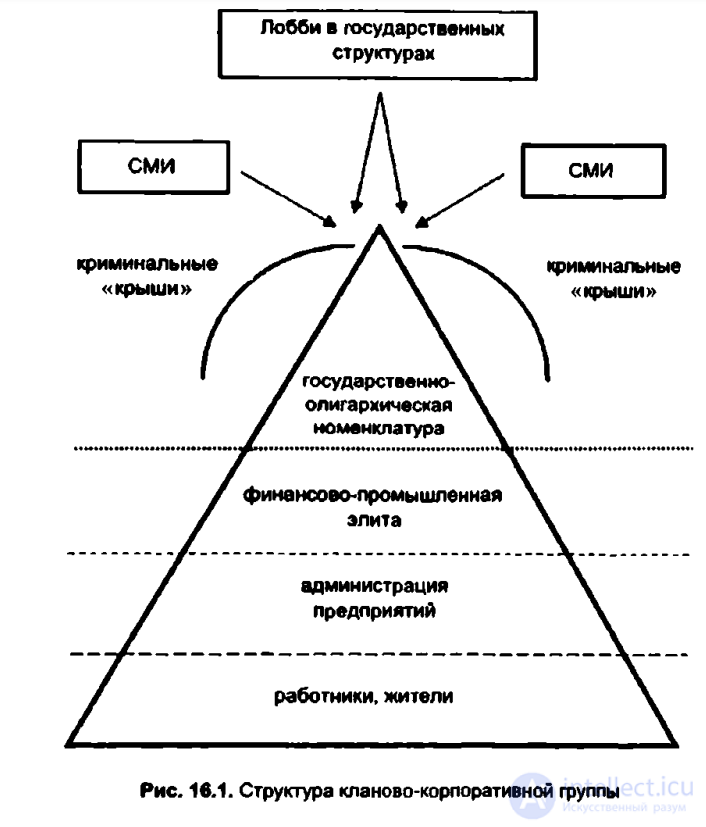
Fig. 16.1. Structure of a clan-corporate group
The principal property rights over this entire system are concentrated in the hands of a narrow circle of people concentrated in the enterprise administration, the management of banks and lobbying structures, and the real owners of subsidiary private firms. Let us emphasize: we are talking about real property rights, about economic power, and not simply about a share of stock (although the latter is also important). What, then, are the main channels of socio-economic power in these corporate structures? The most obvious, though not the most important, is share ownership. For real control over a group it is sometimes enough to own 10–15% of the shares of the firms belonging to it, provided that (1) the remaining shares are dispersed among numerous small owners incapable of coordinated action; (2) the owners of that 10–15%, by contrast, are united in their entrepreneurial activity (constitute a "clan"); (3) these owners hold in their hands other threads of economic power and control.
Who, then, holds such a consolidated block of shares in most former state enterprises today? According to expert estimates, the most typical picture in Russia is as follows. The state may hold on the order of 10–20% of shares (in the so-called "state corporations" this share is naturally higher — up to 51% or more, but real power over them, as in the case of private structures, still lies in the hands of private individuals — officials representing the state, top managers, and other insiders). The personnel of enterprises, who received about two-thirds of the share capital during the initial period of privatization, were left, by 1998, with less than 40% of the total number of shares. At present, employees hold, as a rule, no more than 10–20% of the shares, and, moreover (given Russian legislation), these are not consolidated. What is more, the workers of Russian enterprises for the most part remain passive, are not organized into associations (trade unions, as a rule, avoid dealing with issues of ownership), and are incapable of concerted action either as owners or, even more so, as entrepreneurs.
In the overwhelming majority of cases, they delegate their basic property rights to the senior administration of the enterprises where they work. By contrast, the largest shareholders and top managers (insiders) form a consolidated structure, bound by decades-old traditions of subordination and shared caste-like existence (a lower-level "nomenklatura"). At the end of the 1990s these individuals held up to 15% of the shares, whereas now, as a rule, they hold a controlling stake in their hands (usually much less than 51% suffices for this). The second most important channel of the elite's control over the clan is administrative power. In the conditions of Russia, with its centuries-old traditions of deference to superiors, the administrative power of top management plays one of the key roles in forming stable clan structures. This power is combined with such a specific phenomenon as the retention, in the hands of enterprise administrations, of control over housing stock, social infrastructure, and so on (departmental apartments, kindergartens, clinics, etc.). But this is only the power of the enterprise administration over the workers. There also exists administrative control by state structures (including regional ones, especially such as governors and their "teams") over enterprises.
The vestiges of the command economy ("planned deal," officials' paternalism, and so on), together with the present-day chaotic bureaucratic influence exerted by a mass of various agencies on the market and on the process of property redistribution, make the state official, if not a "father," then at least an influential "uncle" in relation to the enterprise director. Preferential loans and tax "concessions," the stance of the judiciary, the benevolent or, conversely, nitpicking attitude of various inspection bodies, at least a minimal state order (for the gigantic defense sector this is still extremely important), high export tariffs or, conversely, protective import duties, direct subsidies (for miners, for example), and so on — all of this makes administrative power (the government at the center and in the regions) extremely significant, despite the seeming collapse of the "administrative-command system."
The most significant channel of economic power is financial control. Most Russian enterprises were in a state of permanent and severe financial crisis throughout the 1990s, and many industrial enterprises remain so even now. There is no money to pay wages, to pay for raw materials, supplies, or energy, to say nothing of investment. A constant crisis of mutual non-payments and the need to beg the state and/or a bank for credit by any means possible — all this was the rule. But even the easing of this crisis in the 2000s changed little, because the main financial flows are diverted from enterprises by their owners "under the wing" of front companies. Under these conditions a chain of financial dependency comes into play. At the very bottom is the worker, who may or may not be paid his wages (this depends directly on the administration). Above him is the administration's dependence on the bank. Will the bank grant a loan or not, and if it does, on what terms? The administration may also use the bank's services in order (usually through front companies) to "spin" money intended for settling accounts with workers and counterparties for 2–3 months, and sometimes even half a year, significantly increasing the original sum through short-term currency, trading, and similar operations, most of them speculative. Part of these additional funds goes to the enterprise, but a considerable share passes through the bank to the clan's masters. Higher still are the state bodies — from a minor official in the regional administration up to the president and parliament. All of them distribute and redistribute various state resources and benefits. Let us add to this the highly active influence of the Ministry of State Property on the privatization process, of the foreign-economic agencies on the terms of export-import deals, of the presidential administration on tax benefits, and of parliament on the distribution of the budget, and we obtain an extremely complex system of financial interconnections among enterprises, banks, and various federal, republican, and regional state bodies.
Let us not forget such a channel of economic power as personal union. It crowns this entire pyramid of dependency, welding together (like wolves into a pack) the elite of enterprises, banks, commercial structures, and government bodies. This personal union is all the more solid because the overwhelming majority of clan elites emerged from one or another group of the former nomenklatura (the combination of such traits of clan-corporate groupings makes it possible to apply the English term "patronage machine" to designate them). Finally, particular strength — indeed, the truly clan-like form — is lent to these constructions by their proximity to shadow structures. It must be taken into account that the criminal economy of the past (and until the late 1980s almost all private business in the USSR was semi-legal and, owing to this, closely connected with criminal elements) was one of the main sources from which private business was born. Today, private firms are always attached to state and former-state enterprises for the convenience of siphoning corporate money into the pockets of their real owners. Given this, it must be admitted that most corporate structures are at least "obliquely" tied to the criminal economy. Moreover, lobbying itself, in a country with unstable legislation, a constantly changing government composition, and a high degree of corruption at the top, bears the character of semi- or outright illegal activity (often somewhat inaccurately called "mafia-like").
As a result, mutual "entanglement" of all structures in activity that is more or less questionable from a legal standpoint arises. This need not be racketeering, contract killings, blackmail, extortion, and bribery (although there is plenty of that in Russia too). It may be "merely" a delay in wage payments and their "cycling" through a commercial organization, a preferential loan in exchange for support during an election campaign, and other steps that bind clan elites together through mutual complicity. Finally, clan-corporate structures form the foundation not only of economic but also of political power. Only here the connection is not simple. Most clans support several blocs and parties at once, and most parties rely on several clans at once. This gives rise to a complex crisscrossing of interests, fairly distant (though not absolutely detached) from the ideological and programmatic platforms of particular parties. It is significant that the system of property relations described above rests on a corresponding system of relations of appropriation and alienation permeating practically every level of the economy.
Thus, the Russian economic system rests on the following counterpoint of relations, through which alienation from working people and appropriation by the corporate-bureaucratic nomenklatura of the greater part of social wealth is carried out. The first block of relations of appropriation and alienation is a system of pre-bourgeois forms based on personal dependence, built into the relations of late peripheral-type capitalism. They serve as the basis for extracting income typical of pre-bourgeois systems — a special kind of rent whose source is some form of extra-economic coercion. For the post-Soviet economy, the most typical forms of such relations are, first, administrative subordination and control (both at the macro level — "manual shadow management" — and within corporations), used to appropriate shadow privileges, benefits, and income (this phenomenon is partly reflected in the concept of "administrative rent"). Second, the post-Soviet economy widely practices the "enclosure" by private or pseudo-state structures of parts of natural resources, of the federal and local budgets, and of the country's scientific, educational, and cultural potential, and so on, which allows the subjects of this coercion to appropriate part of the natural and intellectual rent belonging to citizens. Third, this block is characterized by relations of direct extra-economic coercion in all the diversity of its subtypes (from so-called "vassalage" in the system of state and corporate governance to the semi-servile dependence of part of the workforce on corporations and smaller structures), which underlie the appropriation of what might be called "rent of violence," meaning by this the direct seizure of wealth in forms reminiscent of both feudal tribute and the plunder of a neighbor. The list could go on... These reversively arising relations are built into the appropriation system characteristic of late peripheral-type capitalism.
This is the second and dominant block of alienation/appropriation relations typical of the Russian economic system. The latter, in practically all its manifestations, is characterized by a complex interweaving of capitalist relation forms and transitional forms. First, the Russian economy is characterized by the widespread use of early-capitalist forms of alienation and appropriation based on manual labor and the extraction of absolute surplus value, obtained, as is well known, through lengthening the working day and intensifying labor. These relations are widespread mainly in trade and services, as well as in construction and agriculture. These spheres are typically marked by the fusion of such relations with relations of extra-economic coercion. Second, at the core of the Russian system of alienation/appropriation relations is the mass use of classical forms (typical of the developed countries of Europe and the US in the 19th century) of capitalist exploitation of hired workers engaged in labor that is industrial by its technological nature and therefore genuinely subordinated to capital. We emphasize that this exploitation is carried out not only in branches of material production but also in the service sector, where the worker is likewise fragmentary and acts as an appendage of one or another system of machines. This part of the Russian economy is characterized by minimal workers' rights, low social protection, and the absence of developed forms of self-organization, and so on.
Third, the specificity of the Russian model of late peripheral-type capitalism consists in the dominance of relations of corporate-bureaucratic alienation/appropriation. They are based on the appropriation by the corporate-state nomenklatura (the so-called "insiders") of the key ownership rights of Russia's dominant economic agents — state and private corporations (mostly resource-based) and leading financial institutions. In all three cases (private corporations, state corporations, financial institutions) this stratum redistributes in its own favor part of: (1) the rights and income of owners (trust management combined with understated dividends); (2) the wages of rank-and-file employees (the underpayment of workers' income is a well-known fact; to be convinced of this it suffices to look at the ratio between the average wage in a firm and the income of top managers, which differs by dozens of times from the corresponding gap in Europe, Japan, and even the US); (3) the state's income (tax evasion); (4) fixed capital (the portion of depreciation appropriated by "insiders") and other corporate resources (hence the low level of investment activity, the slow renewal of fixed assets, and contracts carried out by top managers to the detriment of "their own" corporation, and so on). The upshot of this system of alienation/appropriation relations is the appropriation by the corporate-bureaucratic nomenklatura of what R. Dzarasov called "insider rent." As is easy to understand, these relations turn out to be not only well compatible with forms of pre-capitalist (based on personal dependence), early-capitalist (based on the formal subordination of labor to capital), and classically capitalist exploitation, but regularly call them into being. In turn, it is equally obvious that these relations are extremely difficult to reconcile with the developed forms of socialization of late capitalism, which presuppose a high level of self-organization and broad economic rights for citizens and workers, developed corporate social responsibility, civil-society control over business and the state, transparency in the activity of both actors, and so on. The third block of alienation/appropriation relations typical of contemporary Russia consists of mutations of the diverse forms of socialization characteristic of the Soviet economy.
Let us emphasize: in Russia, most forms of economic socialization (education, healthcare, etc., partly free for the user) grew not out of the active socially creative activity of citizens and their organizations (trade unions, educational and human-rights movements, social-democratic and other left parties), but out of the Soviet paternalistic model. As a result, this block of appropriation relations is gradually degrading, sinking below a level typical even for semi-peripheral countries. Russia has no progressive income tax scale; the share of spending on education, culture, healthcare, and the like is lower than, say, in Brazil, and much lower than in European countries; and local self-government, trade unions, and other civil-society institutions are incomparably weaker with us than, say, in Latin America. All this makes further de-socialization of the Russian economy quite likely, along with its reversive involution toward models typical of capitalism a hundred years ago.
The foregoing allows us to look differently at the relationship between alienation/appropriation relations typical of Russia and of developed countries. Of course, comparing the far-from-flattering picture painted above with an American textbook describing the modern market economy will yield an unambiguous result: only some external features are shared. However, analysis of real socio-economic relations (in particular, intra-corporate relations in the US, relations in the use of outsourced labor and the labor of immigrants, carried out by a number of foreign and domestic researchers) and such sources (dubious from the standpoint of academia) as fiction and cinema, which depict real rather than nominally-decreed relations and the actual distribution of power, shows that there is nonetheless a similarity. Only this similarity is akin not to the relation between a portrait and its original, but between a real phenomenon and a caricature of it, for the latter grotesquely exaggerates and highlights all the vices of the original...
16.3. The reproduction process in Russia: causes and consequences
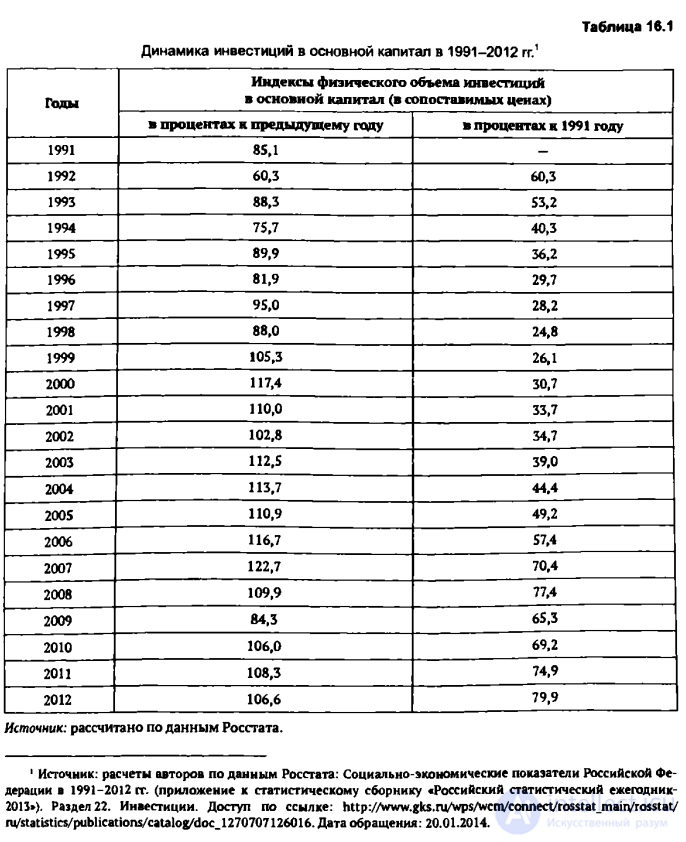
The problems of reproduction in the Russian economy of the early 21st century are, at the level of superficial characteristics, well known and not accidental: those who were critical, and remain critical, of the policy of "shock without therapy," based on large-scale privatization and the development of the so-called "free market," warned starting in the 1990s that (1) these "reforms" would lead to economic-political power for major oligarchs fused with bureaucratic and criminal structures, and that (2) such an economy would be characterized by an extensive, resource-dependent type of extensive growth, dependence on world markets, and crisis phenomena predicted by the authors of this text many years ago. 16.3.1. The extensive type of reproduction: causes and consequences. However, the general politico-economic framing of the question also requires some more concrete parameters pointing to the counterpoints of the pre- and post-crisis Russian economy. Among such specific questions we shall single out just one, but a fundamentally important one: the parasitic type of Russian capital. Let us recall what was said at the beginning of this part: the new century began for the Russian economy, and for 7-8 years remained, a period of economic growth, which was followed by a downturn during the years of the global economic crisis. The recovery growth that followed was slow, and in 2014-2015 the Russian economy entered a stage of new recession. Throughout all these years the Russian economic system has never managed to shed a number of negative qualitative components laid down in it back in the 1990s. First of all, there is the well-known problem of using one of the most obvious potential sources of development — natural resource rent. It, firstly, to a considerable extent becomes (through the channels described above) a source of income for the corporate-bureaucratic nomenklatura and as such is used not for investment in the Russian economy but for parasitic [over]consumption and/or is exported abroad. Secondly, the part of the resource rent that reaches the state budget is used inefficiently. The state freezes the portion of resource rent that falls to it in the Stabilization Fund, and only quite recently has an intention appeared to transfer some part of it to a Development Fund. The part of the rent that settles (without any grounds whatsoever) in the hands of extracting companies serves to a considerable extent as the foundation for their economic and technological complacency. And only a certain part of this rent flows through various channels into other sectors, providing a multiplier effect for economic growth. To this day the ratio between extracted and proven reserves of natural resources remains negative, which means that the Russian economy continues to be built on the depletion of natural resources. The renewal of fixed capital, even during the economic upswing of the early 2000s, left much to be desired: it is easy to calculate that on the eve of the economic crisis the volume of investment in fixed capital remained 20% below the 1991 level (when it was already regarded as wholly insufficient). In the post-crisis period the situation has not changed fundamentally (see Table 16.1). The possibilities for innovative development also run up against the distorted sectoral structure of the Russian economy.
Let us take as an example the best period (from the standpoint of economic dynamics) — the pre-crisis state of the Russian economy in the early 2000s. Thus, the branches on which the country's innovative potential largely depends — manufacturing industry, education, healthcare — grew during this period at rates of 2 to 4% a year, while financial activity, the hotel-and-restaurant business, and wholesale and retail trade grew at 9 to 11% a year. Investment in machine-building stood at a level of 2.2-2.3% of total investment in fixed capital, or 6-7 times less than investment in the extractive sector, and 3-4 times less than in raw-material industries; at present this investment structure, distorted in terms of distribution among types of economic activity, largely persists. The list of structural and infrastructural obstacles (the low extent and poor quality of the road network, the absence of modern high-speed rail transport, the deplorable state of housing and utilities infrastructure, and so on) complicating the path to innovative development could be continued. It is clear, however, that without overcoming these obstacles it is impossible to speak of a transition to an intensive type of reproduction. Among the most important problems of Russian reproduction are social ones. A significant improvement in the quality of the workforce — which is a necessary foundation for development, not merely growth, of the modern economy — is hindered by the low share of wages in Russia's GDP and the high level of income differentiation among the population. The spontaneous wage growth that took place in the 2000s (naturally, with a break for the 2008-2010 crisis) changed the share of wages in GDP only slightly. Mechanisms of state income policy that press wages downward continue to operate as before — setting the minimum wage below the subsistence minimum, and setting the wage scale in the budget sector in such a way that almost all pay grades are paid below the subsistence minimum. Widely publicized intentions to significantly raise wage levels in the budget sector lag sharply, in terms of actual implementation, behind the promises made. Although the share of the population living below the poverty line declined before the 2008-2009 crisis, it began to grow again after 2014. The overall differentiation of incomes, as we showed above, is not shrinking. The general asocial trend of reproduction in Russia also persists, where the ruling economic-political elite has still not taken any significant step toward exiting the utterly intolerable state of use of the nation's human potential that has taken shape in recent times, and which is one of the most powerful systemic barriers on the path to a transition toward intensive, eco-socio-humanitarian-oriented development.
What, then, is the cause of this situation? The authors have already given a politico-economic answer to this question: the system of production relations that has taken shape in Russia and, as a consequence, of economic-political power. Here the following stable reproduction trap operates. The starting point of this "trap," at the level of material-technical preconditions, is characterized by the fact that the key resources of development (relatively high-quality equipment and labor, expensive export goods, relatively modern and functional management institutions, and so on) are concentrated in the resource sectors and a narrow circle of production linked to them, plus production that feeds parasitically on the state budget (part of construction, prestige programs such as the Olympics or Skolkovo, and so on). The other spheres have fallen behind the world level by 2-3 generations of fixed assets or have simply collapsed (as, for example, civil aircraft manufacturing). Science, education, culture, and other spheres for forming creative resources of development are experiencing a monstrous financial famine and are caught in the grip of "institutional traps." At the level of production relations, the main mechanisms for regulating the economy are, as we wrote above, local corporate and shadow state regulation plus "business by understandings." The main channels for the appropriation/use of the surplus product and property rights are in the hands of the corporate-bureaucratic nomenklatura. Society exhibits an extremely high (for a country at Russia's level of development) degree of real social differentiation, while at the same time (contrary to neoclassical dogmas) the potential for socio-economic "passionarity" is low (to use a term actively employed by Gumilev, so beloved of our "elite" intelligentsia). What type of reproduction, then, can and must this system of productive forces and production relations generate? The economic-political stratum dominant in post-Soviet Russia, personifying its basic production relation — the corporate-bureaucratic nomenklatura — is objectively interested, above all, in reproducing (ideally, on an expanded basis) its own economic-political
продолжение следует...
Часть 1 Chapter 16. The System of Production Relations in Post-Soviet Russia: Mutations of Semi-Peripheral Late Capitalism
Часть 2 Self-check questions - Chapter 16. The System of Production Relations

Comments