
Lecture
An important concept used in singularity theory is the concept of the jet (a transliteration of the English word
«jet»). Jets exist for smooth functions and mappings. The latter case
reduces to the former, since a mapping of finite-dimensional spaces
is a collection of functions, and the jet of a mapping is a collection of
jets of the corresponding functions. Therefore in what follows we shall speak
of jets of functions, and we shall give their definition in two ways:
a coordinate-free one (algebraic) and a coordinate one (analytic). These two ways
are equivalent, and it is useful to know both.
3.3.1. Coordinate-free definition
Let A be the algebra of germs of smooth functions
f(x₁,…,xₙ): Rⁿ → R
at a fixed point x₀. For a given integer k ≥ 0 let us introduce in A
the following equivalence relation f ∼ g:
|f(x) — g(x)| = o(|x — x₀|ᵏ) as x → x₀. (3.4)
The corresponding equivalence classes are called k-jets.
Thus, a k-jet is a class of germs of functions whose graphs have, at the point x₀, contact of order k (Fig. 3.1).
x₀ x₀ x₀
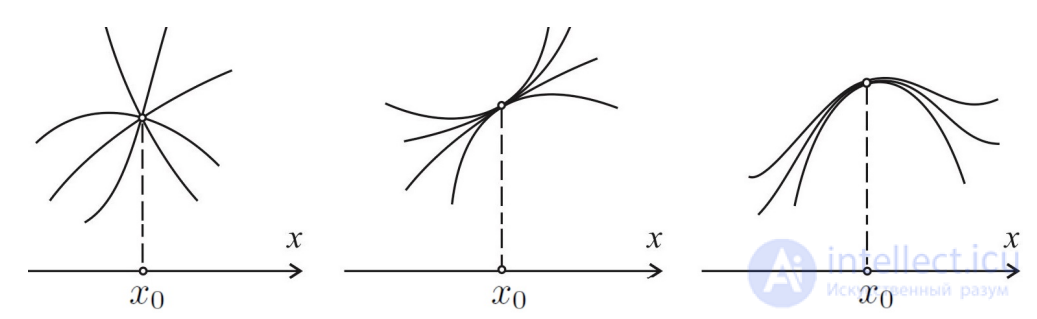
Fig. 3.1 Contacts of orders k = 0, 1, 2 (left to right)
The case k = ∞ is also considered, together with the corresponding notion of an ∞-jet. In this case f ∼ g if |f(x) — g(x)| = o(|x — x₀|ᵏ)
for all k ≥ 0, i.e. there is contact of infinite order.
REMARK 3.4. In this definition |x — x₀| can be understood
as the standard Euclidean norm (length) of a vector from the space
34
Rⁿ. But nothing changes if by |x — x₀| one understands any other
norm on the space Rⁿ. In a finite-dimensional vector space
all norms are equivalent, in the sense that convergence in one of them
implies convergence in any other norm. This statement is not difficult
to prove on one's own, or to find in the corresponding literature.
For a chosen k, each germ f ∈ A belongs to exactly one of the equivalence classes, which is called its k-jet
and is denoted jᵏ[f]. The set of k-jets at a given point — the quotient set A/∼ — is an algebra representing a finite-dimensional approximation of the infinite-dimensional algebra A, if one defines the sum and product of k-jets, as well as their multiplication by numbers,
according to the natural rules following from the equivalence definition we have adopted. Namely, for any germs fᵢ ∼ gᵢ and a number a
we have
jᵏ[f₁ + f₂] = jᵏ[f₁] + jᵏ[f₂],
jᵏ[f₁ · f₂] = jᵏ[f₁] · jᵏ[f₂], (3.5)
jᵏ[a·f] = a · jᵏ[f].
The zero element of the constructed quotient algebra A/∼ is
the class jᵏ[0] — this is the k-jet of the identically zero function. A function
f is called k-flat at the point x₀ if jᵏ[f] = jᵏ[0], i.e. the germ of f at
the point x₀ belongs to the class jᵏ[0]. Denote by mₖ the subset of the
algebra A consisting of germs of functions that are k-flat at x₀.
PROBLEM 3.5. Show that all the mₖ are ideals in the algebra
A and that there is a chain of inclusions
m⁰ ⊃ m¹ ⊃ … ⊃ m∞.
Prove that the ideal m⁰ is maximal. Prove that the ideal mₖ, for any finite k, is finitely generated; give an example of a set of its generators, and prove that any set of
generators of the ideal mₖ, k < ∞, is minimal.
PROBLEM 3.6. Show that the ideal m∞ is not finitely generated.
PROBLEM 3.7. Show that for any k, the quotient algebra A/∼
constructed by means of the corresponding equivalence relation
coincides with A/mₖ.
For example: Kolmogorov A.N., Fomin S.V. Elements of the Theory of Functions and Functional Analysis. Moscow: Nauka, 1989.
35
3.3.2. Coordinate definition
If, in a neighborhood of the point x₀ of the source space, some
coordinate system is chosen, then for any finite k the jet jᵏ[f]
can be identified with the Taylor polynomial of degree k of the function f at
the point in question. Here the polynomials are added and multiplied according to the rules given by formulas (3.5).
According to these rules, the addition of polynomials proceeds in the usual way (the coefficients of like monomials are added), while the multiplication of two elements f, g ∈ A/∼ proceeds as
follows. First f and g are multiplied as ordinary polynomials, and
then, in the resulting product, all monomials whose degree exceeds k are discarded. This is a generalization of the algebra of truncated
polynomials in one variable, which we have already encountered
earlier (see Problem 3.4), to the case of several variables.
From what has been said it follows that a function f is k-flat at the point x₀ if all its partial derivatives up to and including order k
(including also k = 0, i.e. the function itself) vanish at the point x₀. It is not hard to verify that this condition is invariant, i.e. does not depend
on the choice of coordinate system: if it holds for some one
coordinate system, it will hold for any other. It follows
that the definition of a k-jet via the Taylor polynomial
is equivalent to the coordinate-free definition given above.
PROBLEM 3.8. From the above discussion it is easy to see that the dimension of the algebra of k-jets of functions of one variable equals k+1. What is the dimension of the algebra of k-jets of functions of n variables?
The case k = ∞ is analogous to the preceding one. The only difference is that
to define an ∞-jet, instead of a Taylor polynomial of finite degree one must take
the entire Taylor series. For a smooth function such a series,
in general, may diverge at every point except x₀.
Power series about whose convergence nothing is known are called formal. One can operate on them (for example, add them, multiply them, substitute them into one another, etc.) purely formally, as
with polynomials in the corresponding variables. We shall discuss this in more detail
in Section 5.1.
Above we spoke of jets of functions at some fixed
point x₀ of the source space. However, one often has to deal with a space consisting of jets of functions at various points
of the source space. This leads to the following definition.
36
DEFINITION 3.3. The space of k-jets is the set Jᵏ of all possible pairs (x₀, jᵏ[f]), where x₀ ∈ Rⁿ and f ∈ A(x₀), A(x₀) is
the algebra of germs of smooth functions at the point x₀, which in this case
is called the source of the jet (English: base point).
We stress that Jᵏ is neither an algebra nor even a vector
space, since it makes no sense either to add or to multiply jets with different sources by one another. However, its points can be put into one-to-one correspondence with the points of a space Rᴹ of suitable
dimension M.
For example, consider functions of one variable f(x): R → R, and
write the Taylor polynomial of degree k at an arbitrary point x₀:
T_k(x) = f(x₀) + f'(x₀)(x — x₀) + … + f⁽ᵏ⁾(x₀)/k! · (x — x₀)ᵏ.
The set of k + 2 numbers
x₀, f(x₀), f'(x₀), …, f⁽ᵏ⁾(x₀),
uniquely determining the polynomial T_k, is a point of the real space Jᵏ of
dimension k + 2, which is the space of k-jets of functions of one variable. Thus, in the particular case k = 1
we obtain the three-dimensional space of 1-jets J¹.

Comments