
Lecture
Word order typology (in a sentence) — one of the methods of typological classification of languages used in linguistic typology, based on the notion of the basic order of constituents: the subject, the predicate (verb), and the direct object. The terms «subject» and «direct object» are used here loosely, to denote the agentive and patientive participants of a situation . The current state of basic word order typology is presented in the World Atlas of Language Structures, see WALS map 81A.
Modern study of the typology of basic constituent order across the world's languages began in the second half of the 20th century with the American linguist Joseph Greenberg . Greenberg identified six basic constituent orders in the sentence — SOV, SVO, VSO, VOS, OVS, OSV — and established certain implicational relations between this order and others; for example, with a probability greater than chance, one can expect that in languages with a dominant VSO order the dependent adjective follows the noun . However, in modern linguistics the basic order of constituents in a sentence is not considered sufficient for the typological classification of word order across the world's languages, nor does it determine all the specific orders, such as the order of adpositions and noun phrases, etc.
Defining the basic order of constituents requires answering several questions. First, one must understand which order of constituents should be considered basic for a given language. Thus, Matthew Dryer, one of the leading specialists in word order typology and editor of the World Atlas of Language Structures, uses two criteria to determine basic order: pragmatic (as well as phonetic, morphological, and syntactic) neutrality and frequency in text corpora . Moreover, far from all languages allow only one, fixed, word-order variant — in many languages several orders can be grammatical, though not always neutral, as for example in Russian (Russian belongs to the SVO languages ):
| (1) | Кошка пьёт молоко. (SVO) — 'the cat drinks milk' |
| Кошка молоко пьёт. (SOV) — 'the cat drinks milk' | |
| Пьёт молоко кошка. (VOS) — 'the cat drinks milk' | |
| Пьёт кошка молоко. (VSO) — 'the cat drinks milk' | |
| Молоко пьёт кошка. (OVS) — 'the cat drinks milk' | |
| Молоко кошка пьёт. (OSV) — 'the cat drinks milk' |
Second, the basic order of constituents must be determined from a corpus of specially selected sentences. These sentences must be syntactically independent (not subordinate clauses), declarative (not, say, interrogative), and must contain full argument noun phrases (rather than pronouns, with which the order may differ). Preference is also given to non-analytic verb forms (that is, forms not made up of a main verb plus an auxiliary, such as the compound future-tense forms in Russian — «будет делать» ('will do')); when this is not possible, the position is determined by the main verb (see the case of German ). Dryer gives an example of such a sentence :
| (2) | [The dog] | chased | [the cat]. |
| Собака | преследовала | кошку. | |
| S | V | O |
The sentence in (2) is declarative rather than, say, interrogative, and it is syntactically independent, since there is no clause it depends on; it also contains the full argument noun phrases the dog (Russian «собака», 'dog') and the cat (Russian «кошка», 'cat'). It is on the basis of such sentences that the basic order of constituents is determined (the basic order in English is SVO ). When no clear preference is found under the above conditions, the language is regarded as having free constituent order. This methodology is often called into question, since determining a language's basic order of constituents on the basis of a single clause type out of all the syntactic means available in that language seems highly unreliable .
Among natural languages, SOV is the most common type: according to WALS data, 565 of the 1,377 languages surveyed belong to this type, i.e. more than 40% of languages . SOV languages are attested in every area of the globe; the lowest concentration is observed in Europe, where, according to the map, they are represented by the Sorbian languages, Turkish, Basque, Karachay-Balkar, Bashkir, Tatar, Crimean Tatar, Karaim, Krymchak, Kumyk, and Urum. SOV languages also include Ainu (Japan), Archi (Dagestan), Itelmen (Kamchatka Krai), Korean (Korea), Somali (Greater Somalia), Tibetan (Tibet), Hindi (India), Hopi (USA), Japanese (Japan), and many others.
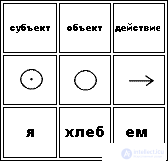
For example, in Japanese:
| (3) | 私は | 箱を | 開けました。 |
| watashi wa | hako o | akemashita | |
| I | box | open | |
| S | O | V | |
| 'I opened the box'. |
Of the 1,377 languages currently included in World Atlas of Language Structures map 81A, SVO order is observed in 488 languages. Altogether, languages with the subject in first position account for more than 75% of the total (1,053 of 1,377). According to WALS data, SVO languages dominate in Europe, with the lowest concentration found in North America and northern Asia. SVO languages include Russian, English, Ukrainian, Bulgarian, Izhorian, Vietnamese, Guarani (South America), Indonesian, Yoruba (Nigeria), Latvian, Rotuman (Fiji), Swahili (Africa), Finnish, Hausa, Javanese, and others.
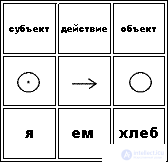
For example, in Mandarin Chinese:
| (4) | 张 | 收到了 | 一封 | 信。 |
| Zhāng | shōudào-le | yi-fēng | xìn. | |
| Zhang | received | one | letter | |
| S | V | O | ||
| 'Zhang received a letter'. |
SVO is the most common word order in creole languages, which may point to its «naturalness» in human psychology. Its popularity may also owe something to a «physical metaphor»: for example, when throwing an object, attention naturally shifts from the thrower (the subject) to the path of the flying object (the verb) and then to the target (the object)
VSO order is observed in 95 languages; VSO and VOS languages form a minority in this sample compared with SVO and SOV languages. According to the atlas, VSO languages are found everywhere except continental Eurasia and Australia.
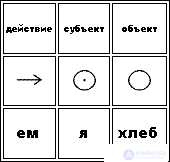
Among European languages, VSO order occurs only in the Celtic languages (Irish, Welsh, Scottish Gaelic). Other examples of such languages include Kabyle (North Africa), Maasai (East Africa), Shompen (Malay Archipelago), Hawaiian (Oceania), Chatino (Mesoamerica), and others. For example, in Literary Arabic:
| (5) | yaqraʼu | l-mudarrisu | l-kitāba |
| reads | teacher | book | |
| V | S | O | |
| 'The teacher reads the book'. |
The sample for WALS map 81A includes 25 languages with basic VOS order, found in Oceania and the Americas, as well as in Madagascar and the Malay Archipelago.
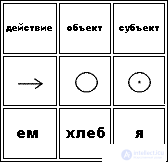
Examples of VOS languages include Wari (South America), Toba (Sumatra), and Kiribati (Micronesia). For example, in the Nias language (Indonesia, Nias island):
| (6) | man-uri | zawi | Vasui |
| hold IPFV | cattle | Fasui | |
| V | O | S | |
| 'Fasui keeps cattle'. |
The World Atlas of Language Structures lists only 15 languages with object-initial order, of which 11 have basic OVS order. These include Hixkaryana (Brazil), Xingu Asuriní (Brazil), Cubeo (Colombia), Mangarayi (Australia), and others.
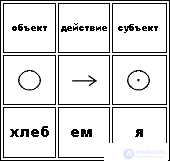
For example, in Hixkaryana:
| (7) | toto | yahosɨye | kamara |
| man | grabbed | jaguar | |
| O | V | S | |
| 'The jaguar grabbed the man'. |
Although languages with basic OVS order are typologically rare, this sentence order does occur in languages with free word order, such as Russian — see the example above. Interestingly, this type (being one of the rarest) was chosen for Klingon, the language of the fictional alien race from the «Star Trek» series, which makes that language's syntax unfamiliar to the average American or European viewer.
WALS lists four languages belonging to the OSV type: Kxoe (South Africa), Nadëb (Brazil), Tobati (Indonesia), and Wik Ngathan (Australia). M. Dryer gives the following example from Nadëb:
| (8) | awad | kalapéé | hapʉ́h |
| jaguar | child | sees | |
| O | S | V | |
| 'The child sees the jaguar'. |
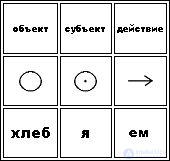
It should be understood that the sample of 1,377 languages is not absolutely complete or representative of every language on the planet; moreover, many languages within the sample itself are insufficiently described, so their classification into one type or another can often be mistaken. Furthermore, OSV order is used in many languages with other basic orders for specific syntactic purposes — for example, in English, usually in the future tense or with the conjunction but, for example, in the sentences «To Rome I shall go!» (Russian: «В Рим я отправлюсь!»), «I hate oranges, but apples I’ll eat!» (Russian: «Я ненавижу апельсины, но яблоки я съем!»), and in relative clauses where the direct or indirect object is a relative pronoun (cf. «What I do is my own business»).
This word order occurs in some constructed languages, for example in Teonaht, and is often chosen by language creators for its unusual sound: this order of constituents is used by the character Master Yoda from the «Star Wars» film saga.
For some languages, determining the basic order of constituents using the methodology described above is not possible, so the World Atlas of Language Structures has a separate map for languages in which two dominant orders can be identified. Five combinations are distinguished: SOV or SVO (29 languages), VSO or VOS (14 languages), SVO or VSO (13 languages), SVO or VOS (8 languages), and SOV or OVS (three languages). This should not, however, be taken to mean that other combinations are impossible: the absence of an OVS-or-OSV combination merely means that no language whose constituent order could be described that way happened to be included in the research sample.
It should be noted that the grounds for postulating two equally weighted orders in a language are even more blurred than in the case of a single basic order, and the resulting typology has less predictive power, since it does not take into account the relationship between the supposedly equal orders within the language. The resulting groups turn out to be quite heterogeneous, since in different languages the conditions governing the variation of orders can differ and may be controlled either by the semantics and pragmatics of the sentence or by the formal syntactic context, as in German (classified as an SOV/SVO language) — see Dryer's example:
| (9) | a) | [Der | Lehrer] | trink-t | [das | Wasser]. | |
| DEF | teacher | drink-3SG | DEF | water | |||
| 'The teacher drinks water'. | |||||||
| b) | [Der | Lehrer] | ha-t | [das | Wasser] | getrunken. | |
| DEF | teacher | have-3SG | DEF | water | drink. PAST.PTCPL | ||
| 'The teacher drank the water'. (lit. 'The teacher has the water drunk') |
The verb that carries person marking (the main verb, as in (9a), or the auxiliary, as in (9b)) is placed in second position; therefore, as Dryer notes, at the level of grammar German belongs to the V2 type (verb-second), where the verb always occupies second position, yet the fact that the participle of the main verb comes after the object requires classifying German as an SOV/SVO language .
Under this basic order, the second element of a declarative, independent, neutral sentence is always the predicate. V2 word order occurs in the Germanic languages and some Rhaeto-Romance languages; V2-type syntax was also widespread in Middle Welsh, as well as in French (at a certain stage of its development).
There are two kinds of V2 languages:
The labels CP and IP come from generative grammar theory, according to which there is a special part of speech — the complementizer (C), which in traditional linguistics roughly corresponds to a subordinating conjunction. In CP-V2 languages, the predicate moves into that position. If it is already occupied by the conjunction «that» (in a subordinate clause), the word-order alternation is blocked. In IP languages there is a position I, located right after the complementizer, which is never occupied (except after V2-type movement), and so the word-order alternation is allowed in subordinate clauses as well. Kashmiri represents a third, intermediate type, in which the word-order alternation is allowed in main clauses and object-complement clauses, but not in relative clauses.
In its earlier stages, English was a V2-type language, and it has retained some vestiges of that former structure. This can be found:
It has been shown that word order in English used to correspond to an IP-V2 type of SVO, and also that such an order could, after minor changes, have developed into the plain SVO type to which English belongs today
In a 1992 publication, M. Dryer shows, using a sample of 625 languages distributed across macro-areas, that there are quite a few specific orders for which a statistically significant correlation with VO/OV is observed (for example, adposition and noun phrase, article and noun, and others, although the order of noun and dependent adjective, among a few others, does not correlate with VO/OV ). To explain these facts, Dryer proposed the «branching direction theory» (Branching Direction Theory), according to which non-branching (non-phrasal) categories behave like V with respect to order, while branching (phrasal) categories behave like O; all languages tend toward a state in which all correlating orders are built the same way, following either the VO or the OV model. Such a syntactic structure is more predictable and, as Dryer suggests, is therefore processed more efficiently and easily. However, it is known that a language's basic word order can change (see the example below), and such changes can also occur through language contact; if all languages were striving toward a natural simplification of syntactic structure, they should, then, have achieved it long ago, whereas there is a large number of languages that do not correspond to the ideal types. The classification principle proposed by Greenberg turned out not to be universal, since in some languages one of the elements S, V, or O can be placed freely in the sentence, in speech one of the elements is often omitted, and there is no way to account for intransitive sentences. The American linguist Winfred Lehmann was the first to turn to an alternative classification based on the VO/OV parameter. According to his theory, this order is the primary one among all other specific orders and determines their behavior: dependents related to the noun align with the noun, while those related to the verb align with the verb. However, this approach offered no explanation for why the order of noun-dependents should be determined specifically in relation to the object (rather than the subject).
Welsh can be cited as an example of a language in which the basic order of constituents has changed. It is known, for instance, that in Old Welsh both VSO order (the more frequent one) and SVO order were possible in neutral context . In the Middle Welsh period the basic order was V2, but V2 order was later lost, and in modern Welsh the basic order is VSO, with V2 surviving only in certain marked constructions[10], for example:
| (10) | Ci | a | welodd | [y | ffermwr]. |
| dog | PART | saw | DEF | farmer | |
| O | V | S | |||
| 'The farmer saw the dog'. (not the cat) |

Comments