
Lecture
Virus ecology – a branch of bioecology that studies the role of viruses in the environment and their interrelationships with it. Viral ecology defines and explains the ecology of viruses by examining their interactions with their host species, including the types of transmission cycles that have arisen, including primary and alternative hosts, carriers, and vectors. It explores virology from the standpoint of organismal biology, focusing on the concept that viral infections represent points of intersection in the ecology of viruses, their hosts, and their vectors.
Viruses are the most abundant biological entities in the biosphere and are therefore most strongly affected by changes in environmental factors.
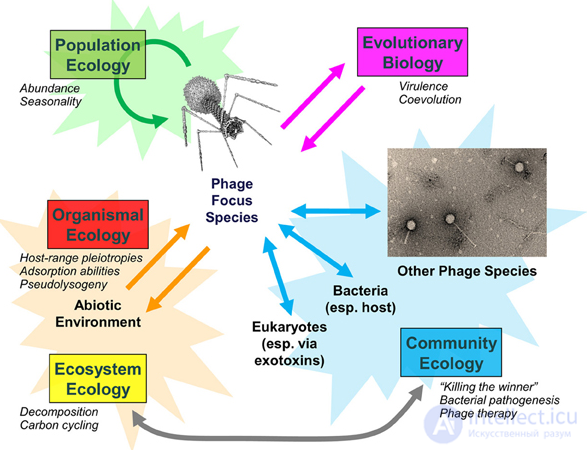
Figure 1. Effects of bacteriophages on population, community, and ecosystem. Examples of phage-related changes are shown in italics.
The study of the complex chain of events arising from the interaction of viruses with a constantly changing external environment must be conducted using an ecological approach. Its fundamental feature is treating a species as a collection of individuals within populations and comprehensively studying the population-level relationships between pathogens and hosts under changing conditions of existence. Particular attention is paid to studying the evolution of viruses and their hosts .
With regard to pathogenic and potentially pathogenic viruses of humans and animals, virus ecology studies the natural reservoirs of viruses . Changes in the quantity and quality of microorganism viruses in the environment can serve as an indicator of changes in that environment . Plant viruses also remain poorly studied, since throughout the 20th century the main focus was on viruses pathogenic to cultivated plants. At the same time, there is a large group of mutualistic plant viruses that persist within the plant organism. Interactions among plants, herbivorous insects, and viruses may determine the course of coevolution of these ecological groups.
The ecological niche of viruses, in a general sense, is the place they occupy in the biosphere. An ecological niche is a broad concept that includes the territory occupied by particular virus populations, their relationships with other organisms, and their role in biocenoses.
Although not organisms themselves, viruses are nonetheless a distinctive form of life with all its characteristic manifestations. Viruses are capable of adapting to changing environmental conditions and evolving. Lacking their own protein-synthesis systems, they are autonomous genetic structures that are permanently bound to the internal environment of an organism – from the simplest prokaryotic cell to the highest multicellular organism. These organisms constitute the ecological niche of viruses .
Viruses parasitize bacteria, protozoa, fungi, and various species of plants and animals. The range of natural hosts (in other words, the pathogenicity spectrum) varies among different viruses. There are viruses with a broad spectrum of pathogenic activity, such as the rabies virus, foot-and-mouth disease virus, influenza A virus, Aujeszky's disease virus, and Newcastle disease virus. Many viruses are capable of parasitizing organisms of only a single species, in particular the measles virus, rubella virus, and the viruses of European and African swine fever, Teschen disease, and duckling hepatitis. There are viruses with a two-phase pattern of distribution in nature, in which hosts change sequentially or another living organism serves as a mechanical vector. For example, insects, along with an animal or plant organism, can serve as a site of virus reproduction. This is a typical two-phase system in which the virus successively passes through two hosts, forming a stable biocenosis and ensuring the preservation and spread of the virus in nature. Animal viruses transmitted through the bites of blood-sucking arthropods (ticks, mosquitoes, sandflies, midges) make up the ecological group of arboviruses (from the English arthropod-borne viruses)
Viruses can simultaneously respond to changes in their environment and be a source of them:
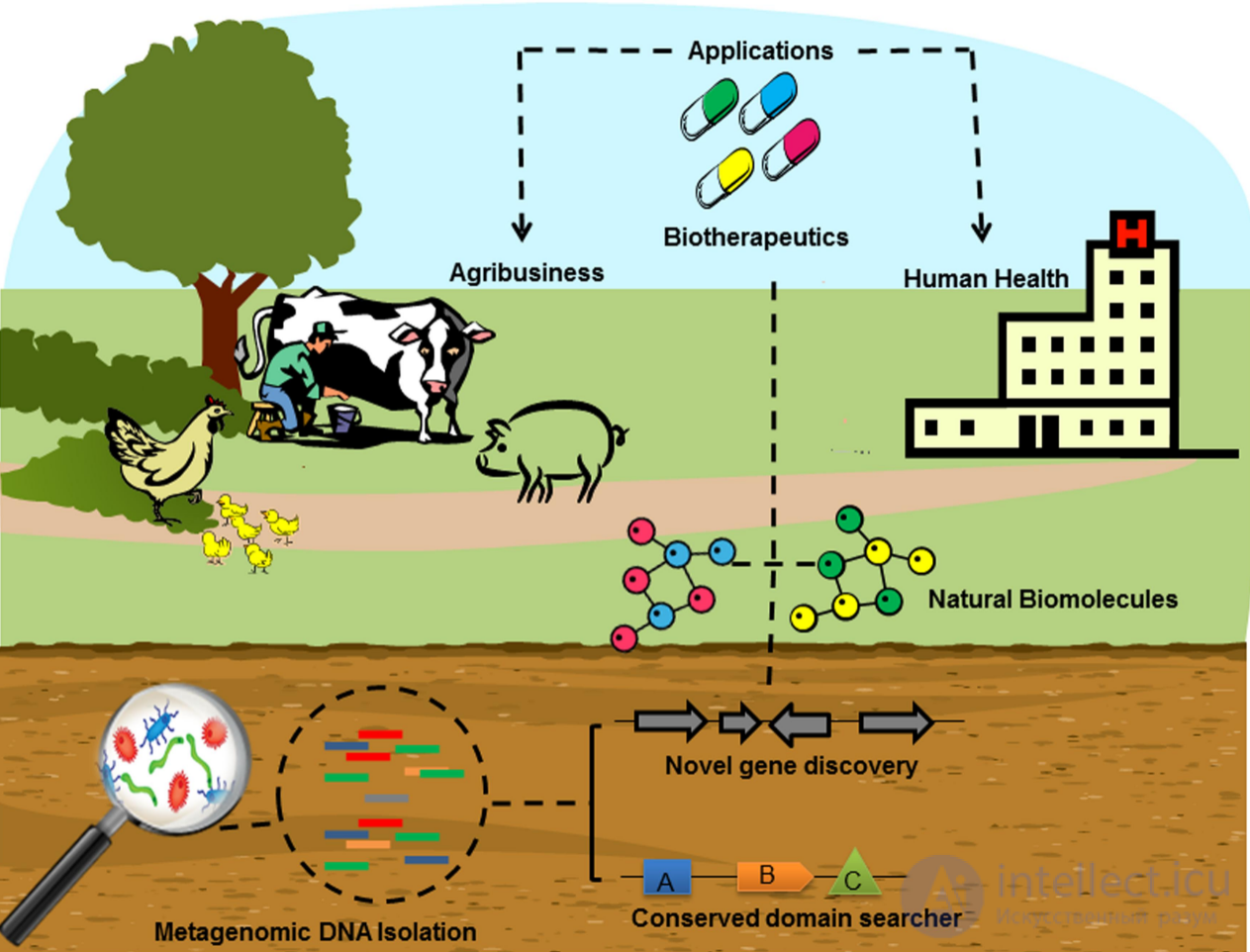
an example of the effect of human-used antibiotics on viruses

Comments