
Lecture
Humidity is a measure of the water vapor content in the air. Relative humidity is the amount of water in the air at a given temperature compared to the maximum amount of water that can be present in the air at the same temperature in vapor form.
Thus, relative humidity shows how much moisture is still needed for condensation to begin under the given environmental conditions. This value characterizes the degree of saturation of the air with water vapor. When calculating the optimal air humidity in a room, it is relative humidity that is being discussed.
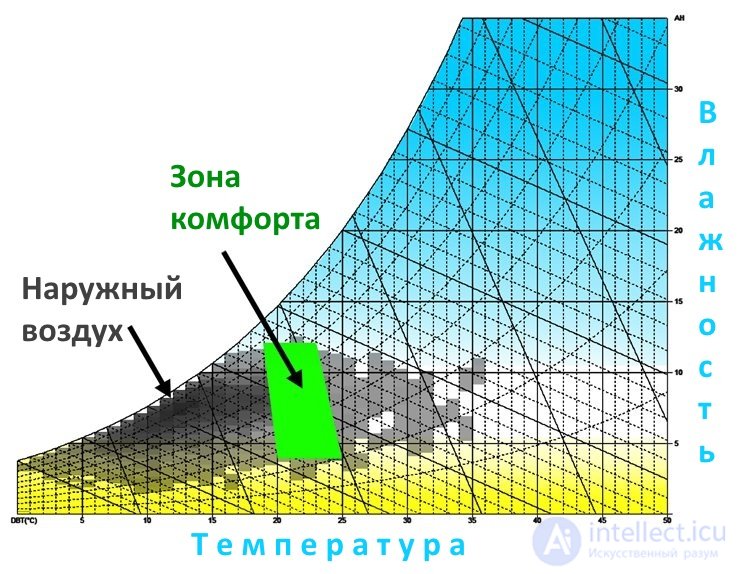
For example, at a temperature of 20 ° C, one kilogram of dry air can contain up to 15.7 g of moisture. If 1 kg of dry air contains 15.7 g of water, the relative humidity is considered to be 100%. If the same amount of air contains 7.8 g of water at the same temperature, then compared to the maximum possible amount of moisture, the ratio will be: 7.8 / 15.7 = 0.49 (49%). Consequently, the relative humidity of such air will be 49%.
Humidity can be measured using a mechanical, digital electronic, or aspiration psychrometer.
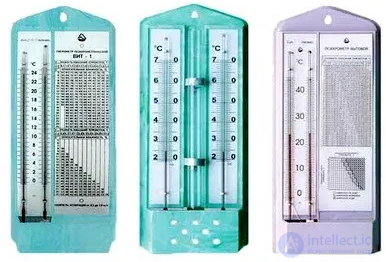
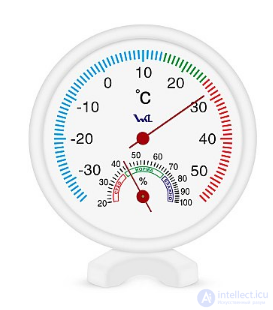
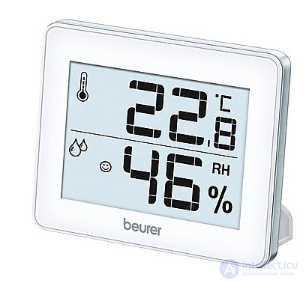
The ideal relative humidity in a living space is 40-60%. In the summer months, the air is sufficiently humid (especially in rainy weather, relative humidity can reach 80-90%), so there is no need for additional humidification methods. This can be noticed by drying laundry - in rainy weather or in a poorly ventilated bathroom, it takes a very long time to dry and may even develop a musty smell.
However, in winter, central heating systems and other heating devices dry out the air. This is because strong heating raises the temperature but does not increase the amount of water vapor. This causes increased evaporation of moisture everywhere: from the skin and body, from houseplants, and even from furniture. Relative humidity in apartments in winter usually does not exceed 16%. This is even less than in a desert! There, the relative humidity is 23%.
Table of optimal relative humidity
| Humans | 45-65% |
| Computer equipment and household appliances | 45-65% |
| Furniture and musical instruments | 40-60% |
| Libraries, exhibits in art galleries and museums | 40-60% |
| For most houseplants (Mesophytes ) | 65-70% |
| tropical plant species with thin, delicate leaves - Hygrophytes - (fittonia, marantas, selaginellas, ferns) | up to 80-95% |
| Xerophytes | 10-20% |
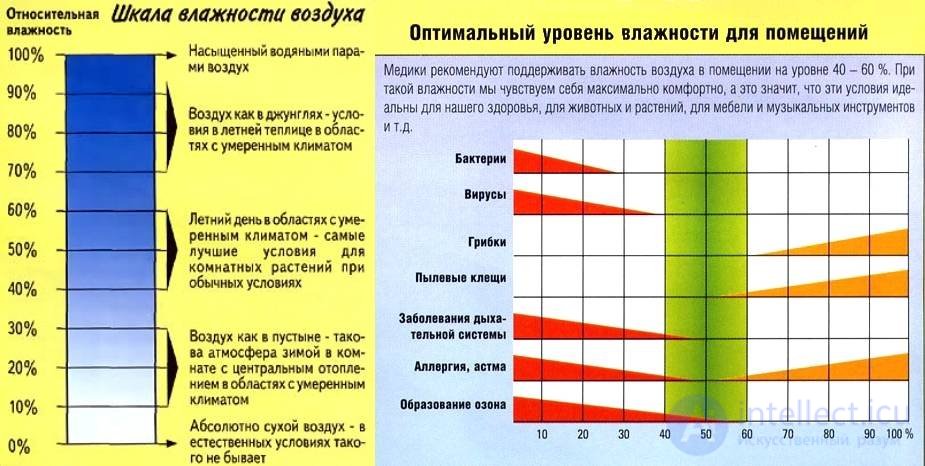
If there is not enough humidity in a room, damage to furniture, books, plants, musical instruments, and paintings is possible. It can also adversely affect health, for example the lungs or the cornea of the eye - aggravating problems with asthma or dry eye syndrome. Frequent respiratory viral illnesses.
Conversely, if there is excess humidity, mold and fungi may appear, and particleboard or fiberboard furniture and similar items may be damaged.
Before you start solving the problem, you need to measure the humidity using the previously described digital and mechanical hygrometers, psychrometers, and humidity sensors. Then you need to analyze the cause of the deviation, the possible consequences, and what goals need to be achieved.
How to humidify a room?
There are passive and active humidification methods.
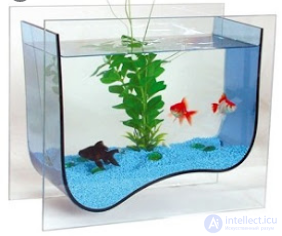
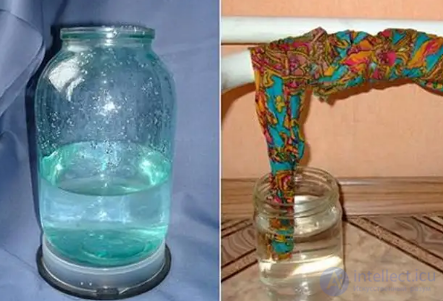
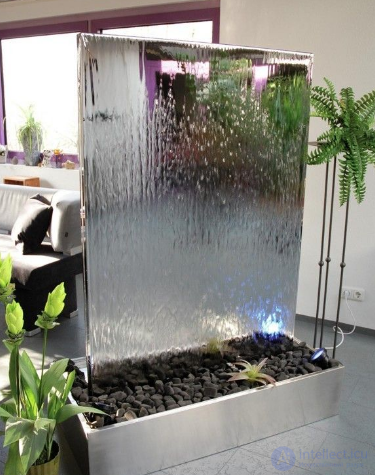
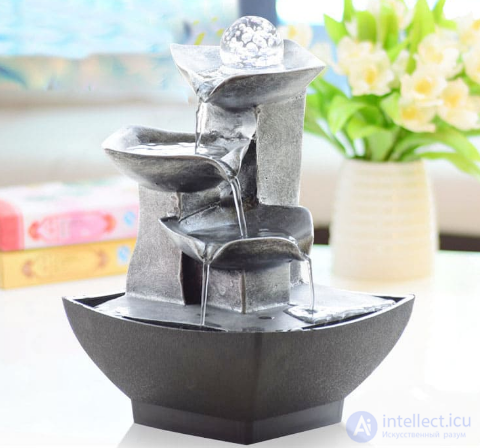
Passive methods include installing an aquarium or an indoor fountain, or using wet towels or even simply jars of water. Placing a container of water on or near a heater. Evaporation of the water will lead to an increase in air humidity. .
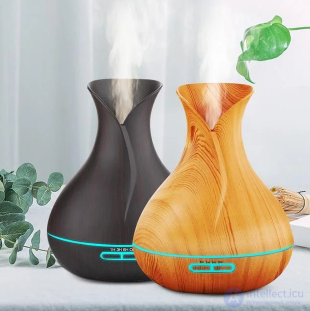
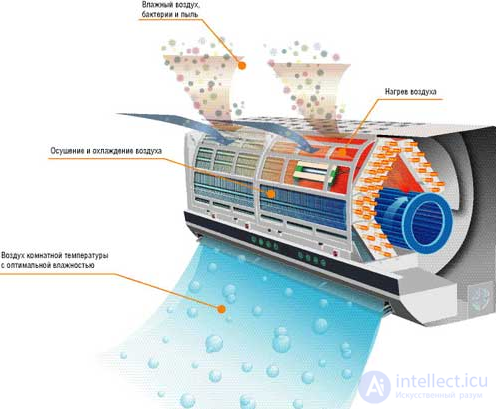
Active methods include installing a small device - an air humidifier, or purchasing an air conditioner with a humidification function. It is also possible to use manual humidifiers by spraying. They are able to maintain a set humidity level.
If the increased humidity in a room is seasonal - in a living space - or constant, for example in a basement - then the air humidity needs to be reduced.
How to reduce humidity in a room?
natural, passive methods - ventilating rooms, installing high-quality waterproofing,
active - installing and cleaning exhaust ventilation, using heat recovery units, using air conditioners with a dehumidification function, purchasing a device - condensation or adsorption dehumidifiers, dehumidifiers with Peltier elements, heating the room in winter

Comments