
Lecture
In modern society, human health is a determining, system-forming factor of state economic and social policy, and a priority direction of all environmental and preventive measures.
Public health depends on many factors, primarily socioeconomic conditions, genetic predisposition, and the state of the environment. Based on numerous studies, it is believed that the contribution of a factor such as the state of the environment to public health is about 20%. According to the World Health Organization, it accounts for 80% of diseases.
Why is the role of environmental quality so great? The human body is a complex, ideally organized, multicomponent, open biosystem. Human existence without the environment is impossible: water, chemical elements, nutrients, and exposure to physical factors are needed to build and replenish the constantly deteriorating elements of the body and to create the necessary reserves. Changes occurring in the environment require the human body to adapt, to respond adequately, since without this condition it is unable to survive, reproduce healthy offspring, and preserve and develop the health of present and future generations of people.
Man lives in conditions of a constantly changing environment. All manifestations of life are conditioned by the conflict between the forces of his organism and the influence of the environment. It is on the basis of these opposing processes that adaptive, adjustive reactions are formed in the course of evolution, ensuring a harmonious connection between the organism and its surrounding environment, i.e., human health.
In recent years, the intensification of human activity has led to an increasingly negative impact on the natural environment. This includes: an increase in the concentration of pollutants in the air, surface and groundwater, soils, and food products; the destruction of forests; the emergence of new (artificially created) substances completely alien to nature (xenobiotics) that it is unable to assimilate; and the strengthening of the influence of radiation and other physical, chemical, and physicochemical processes leading to changes in the environment. At the same time, there is also a reverse interaction between nature and man. The deterioration of the quality of the habitat leads to the situation where adaptive protective mechanisms are unable to shield the body from new types and scales of impact. It can be said that human health is a sensitive barometer of the ecological situation.
The purpose of this study was an attempt to identify, using the example of the child population of the Vologda Region, the relationship between various diseases and atmospheric air pollution, using medical-geographic and medical-ecological zoning and the method of correlation analysis. The main task of medical-geographic zoning was to study, on the basis of statistical data and special research, the differ-
entiation of the health status of the population as a whole and of its individual indicators in different territories. The tasks of medical-ecological zoning included analyzing the health status and morbidity of residents of the studied districts, and identifying and assessing environmental factors and their influence on health. This made it possible to rank the pollutants of the habitat across the districts of the region, to identify cause-and-effect relationships between the state of the habitat and the state of health, and also to perform a comparative analysis and ranking of the districts of the region by degree of epidemiological risk of human morbidity.
According to the study data, depending on the level of industrialization of settlements, the greatest influence on the quality of atmospheric air is exerted either by individual large enterprises or by motor vehicles. In the districts of the Vologda Region, with the exception of Totemsky, Nyuksensky, Gryazovetsky, Sheksninsky, and Babayevsky, insignificant levels of pollutant emissions are recorded. These districts are an exception, which is due to significant emissions from the compressor stations of the Ukhta-Torzhok main gas pipeline. The construction and commissioning of the North European gas pipeline will lead to an increase in emission volumes. In the remaining districts, the main sources of air pollution are heating boiler houses.
Figure 1 shows the long-term average levels of atmospheric air pollution in the districts and cities of the Vologda Region and their gradation depending on their share in the total regional emissions into the atmosphere from stationary sources.
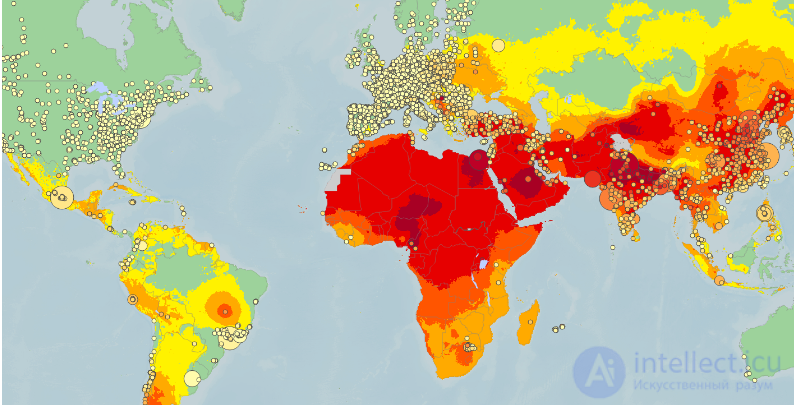
Figure 1. Air quality according to WHO data
The model is built on information obtained from satellites and from more than 3000 ground-based monitoring stations located in both rural and urban areas.
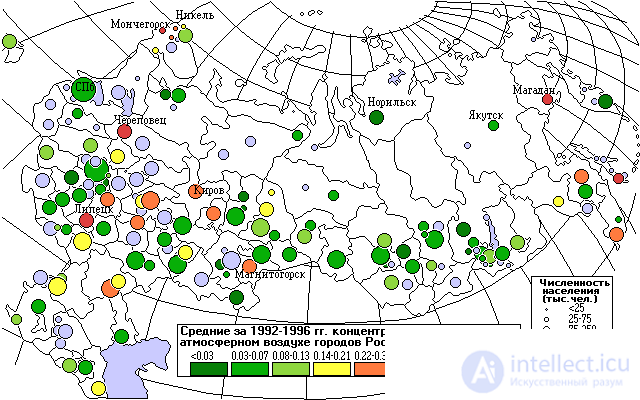
Fig. Average concentrations (µg/m3) of metals in Russian cities. Manganese
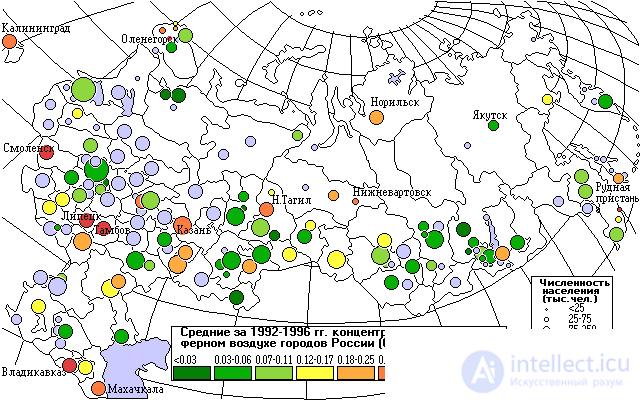
Fig. Average concentrations (µg/m3) of metals in Russian cities. Copper
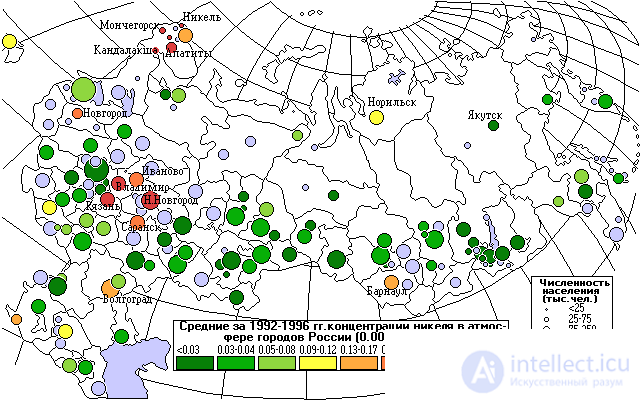
Fig. Average concentrations (µg/m3) of metals in Russian cities. Nickel
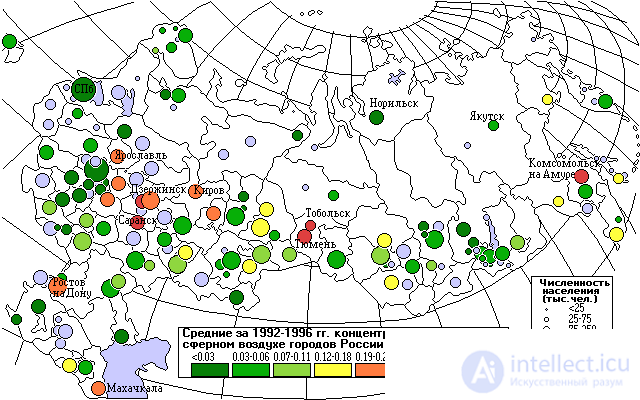
Fig. Average concentrations (µg/m3) of metals in Russian cities. Lead
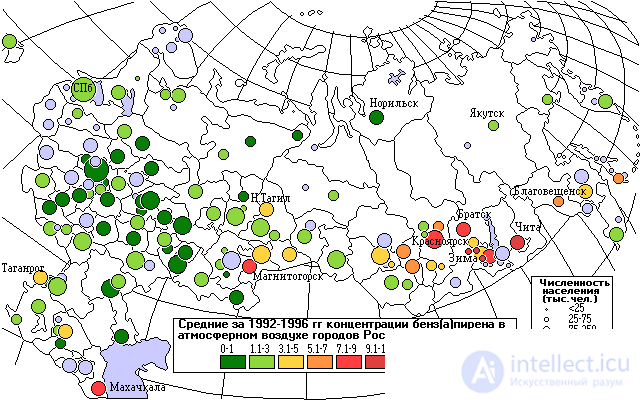
Fig. Average concentrations (µg/m3) of metals in Russian cities. Benzopyrene
The main polluters of atmospheric air in the region are stationary sources: ferrous metallurgy enterprises (56.3% - the industry's contribution to the total pollutant emissions), power engineering (4.6%), chemical industry (2%), woodworking, forestry and forest-chemical industry (1.9%), metalworking and machine building (0.6%), the construction industry, and furniture produc-
tion. Motor transport makes a significant contribution to atmospheric air pollution - 19%.
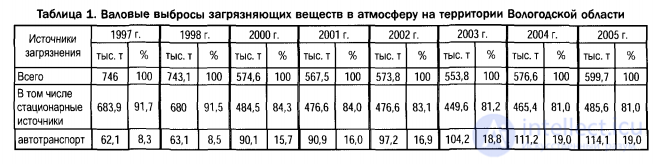
In recent years, there has been a trend of a gradual decrease in the share of pollutant emissions from stationary sources (over five years - from 84.3 to 81%), but an increase in the share of emissions from motor vehicles (from 15.7 to 19%), which is due to a significant increase in the vehicle fleet (Table 1) [1; 4].
In the structure of atmospheric emissions, about 10% consists of solid substances (more than 43 names) and 90% - gaseous and liquid substances (more than 59 names). The main solid pollutants are coal and wood ash, soot, inorganic and wood dust, fertilizer dust (ammophos and ammonium nitrate), bone meal and feed dust, apatite concentrate and cinder dust, fiberglass dust, as well as rosin flux and others. The main gaseous and liquid pollutants are carbon monoxide (CO), hydrocarbons, sulfur dioxide, nitrogen oxides, and volatile organic compounds (Fig. 2). Specific pollutants entering the atmosphere include: gasoline, xylene, toluene, acetone, butyl acetate, mineral oil, ethyl acetate, acetic acid, diethyl ether, formaldehyde, benzo(a)pyrene, styrene, hydrogen chloride, vanadium pentoxide, manganese and its compounds, sulfuric acid, phenol, methyl mercaptan, chlorine, isopropyl alcohol, nitric acid, dichloroethane, trivalent chromium, copper oxides, nickel, hydrogen cyanide, lead, hydrogen sulfide, cyclohexanone, acrylonitrile, carbon disulfide, ozone, and other substances, many of which are classified as hazardous and highly hazardous.
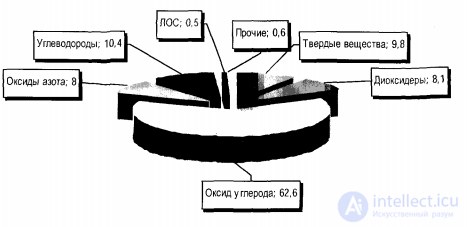
Figure 2. Structure of pollutant emissions into the atmosphere of the Vologda Region (2005; %)
Composition of pollutants in atmospheric air samples in the territory of urban and rural settlements of the Russian Federation exceeding the maximum single (one-time) permissible concentration in 2017, %
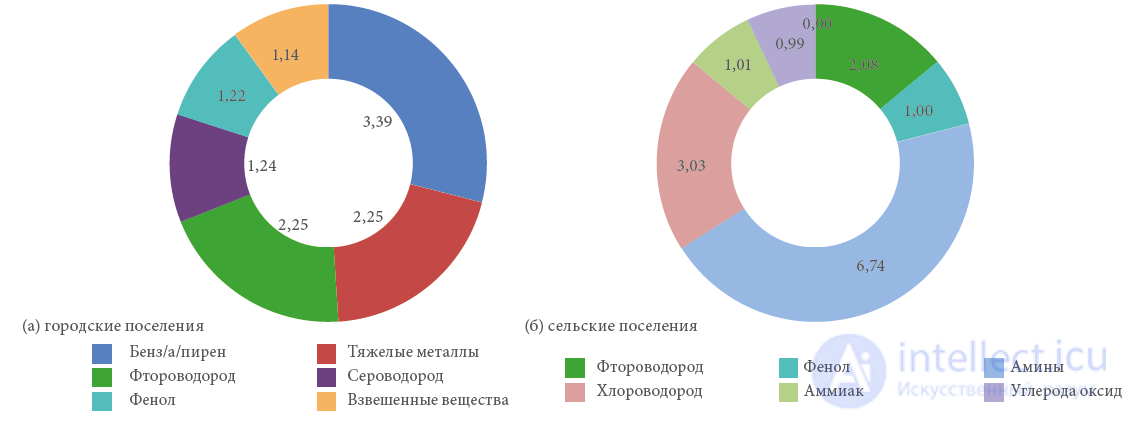
Figure 2a. Source: State Report "On the State of Sanitary and Epidemiological Welfare of the Population in the Russian Federation in 2017" / Federal Service for Supervision of Consumer Rights Protection and Human Welfare. 2018.
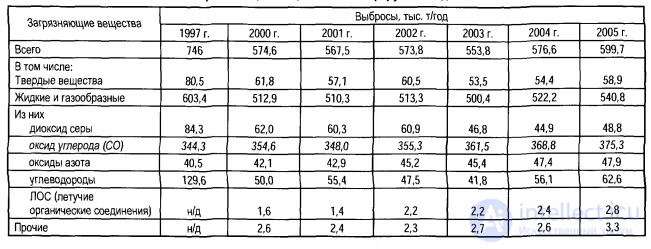
The dynamics of emissions of the main pollutants in recent years are presented in Table 2.
In the Vologda Region, there is a gradual increase in emission volumes of a number of pollutants, primarily carbon monoxide (by 6%), nitrogen oxide (14%), hydrocarbons (excluding VOCs; 25%), and VOCs (by 75%). The increase in emissions of compounds belonging to the last two groups causes the greatest concern, despite their not being the largest in volume. This is explained by the fact that they include such dangerous carcinogens as benzo(a)pyrene, benzene, and formaldehyde.
Table 2. Quantitative and qualitative characteristics of emissions of the main pollutants into the atmosphere of the Vologda Region
Dynamics of change in the share of atmospheric air samples with pollutant content exceeding the maximum single (one-time) permissible concentration, 2011-2017, %
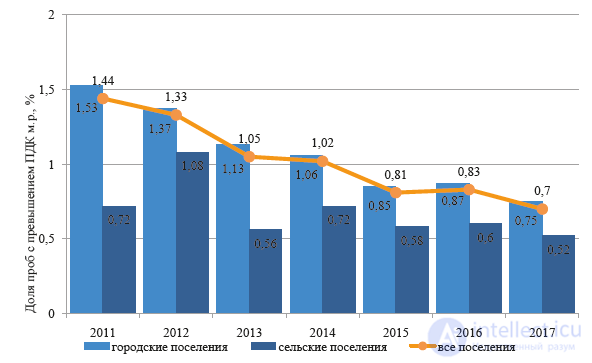
Figure 2b. Source: State Report "On the State of Sanitary and Epidemiological Welfare of the Population in the Russian Federation in 2017" / Federal Service for Supervision of Consumer Rights Protection and Human Welfare. 2018.
Many of the substances listed above pose a significant danger to human health, as they have general toxic, allergenic, and carcinogenic effects.
The presence of pollutants in atmospheric air affects the overall resistance of the body, and a decrease in this resistance can result in increased morbidity or other changes in health status.
It is generally recognized that children's health is one of the most sensitive indicators reflecting the state of environmental quality, since the adaptive capabilities of a child's body are significantly lower than those of an adult. In children, protective mechanisms are
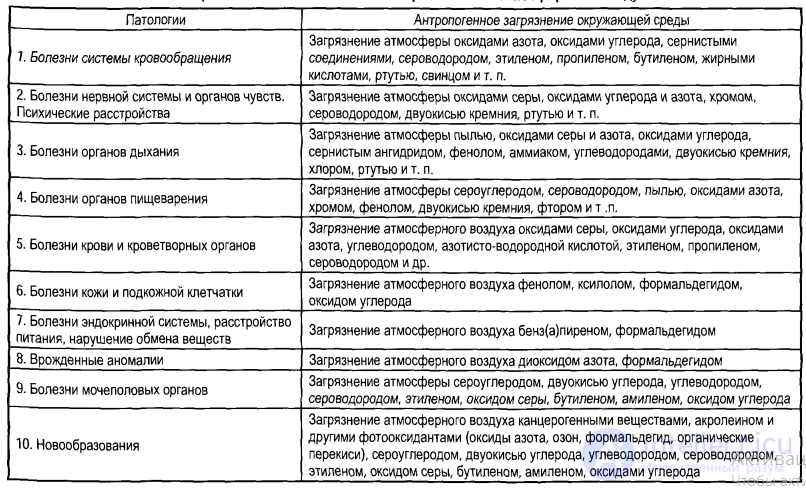
not fully formed, and the maturation process of the immune, endocrine, and other systems takes many years. Under the influence of unfavorable ecological factors, significant strain arises in adaptive-compensatory processes, which reduces the body's reserve capabilities. An ecologically conditioned "pre-illness" state arises. With an intensification of unfavorable factors or their prolonged exposure, the development of "toxicogenic disease" is possible, the markers of which are certain types of pathology (Table 3) [5, 6].
Table 3. Relationship between diseases and atmospheric air pollution
The high sensitivity of the child's body, which is in the process of development, not only determines the child's current state of health, but also affects their further development.
Diseases directly or indirectly caused by ecological factors, and the associated additional cases of mortality,
aggravate the already unfavorable demographic situation in the region.
Particular concern is caused by the state of children's health, whose morbidity shows negative growth trends (Fig. 3).
In the structure of the overall morbidity of children in the Vologda Region, first place is occupied by diseases of the
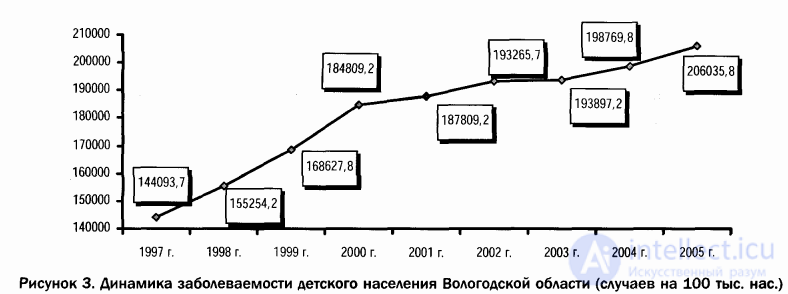
Figure 3. Dynamics of morbidity of the child population of the Vologda Region (cases per 100 thousand population)
respiratory organs (69.3%), second place is occupied by infectious and parasitic diseases (6.3%), followed by diseases of the skin and subcutaneous tissue (4.8%), of the ear (4.2%), and of the digestive organs (4%). Neoplasms, diseases of the blood and blood-forming organs, of the endocrine system, mental disorders, diseases of the nervous system, of the eye, of the circulatory system, of the genitourinary system, and congenital anomalies account for 11%.
For each district, the long-term average morbidity level was calculated (the sum of cases of the occur-
rence of diseases over the period from 1997 to 2005, divided by the number of years). The same indicator was determined for the region as a whole, and relative to it a gradation of districts was carried out, i.e., their division into districts with low long-term average morbidity, below average, above average, and significantly above average. On this basis, a map of the long-term average morbidity levels of the region's child population was constructed (the average level is omitted, since there are no values close to it in the districts; Fig. 4).
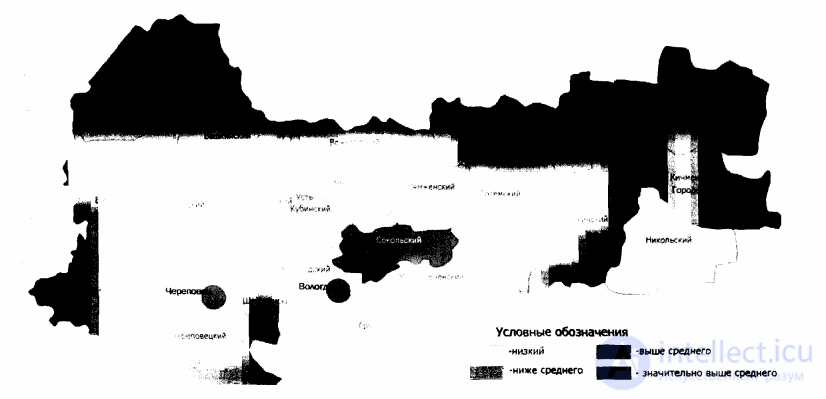
Figure 4. Long-term average morbidity levels of the child population of the Vologda Region
As can be seen, the highest levels of morbidity concentration are observed in the cities (Vologda, Cherepovets) and in the Sokolsky district, which is due to the concentration here of industrial facilities and motor transport. It can be concluded that the morbidity level is higher in the western districts than in the eastern ones. One of the reasons explaining this may be the higher levels of air pollution (see Fig. 1) and transboundary transfer from the Leningrad Region and St. Petersburg.
Correlation analysis of atmospheric air pollution levels and the prevalence of diseases in children made it possible to identify a reliable direct relationship between motor vehicle emissions and the overall morbidity and sickness rate of the child population. It can be assumed that specific pollutants contained in vehicle emissions play a role in this case. In addition, since morbidity is the most characteristic response to harmful environmental impact, reflecting both prolonged and chronic exposure to a pollutant, correlation coefficients were calculated for this indicator broken down by disease groups (Table 4).
Table 4. Relationship of individual disease groups with atmospheric emissions (from motor transport)
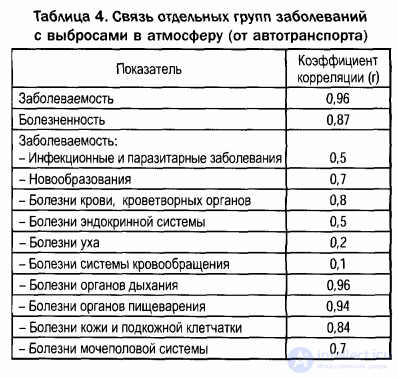
The confidence probability was taken as 0.99; for this sample size, the reliable values of the correlation coefficient were equal to 0.8.
Given the accepted reliability, one can speak of an established relationship between atmospheric emissions and the following diseases (by significance): respiratory organs, digestive organs, skin and subcutaneous tissue, blood and blood-forming organs, as well as demographic indicators - sickness rate and overall morbidity across the region.
The problem of harmful substance emissions into the atmosphere from motor transport is becoming increasingly relevant due to the significant increase in the vehicle fleet, especially in large cities. Thus, in Vologda and Cherepovets, the share of vehicles in citywide emissions is 86 and 10%, respectively. In the total emissions of the Sokolsky district, the share of motor transport in Sokol accounts for about 40%. In Velikiy Ustyug, this indicator is 50%.
The share of these four cities in the region's motor transport emissions is 66.2%.
Table 5 presents the correlation coefficients obtained between atmospheric emissions (from motor transport) and morbidity and sickness rate indicators of the child population.
Table 5. Relationship of morbidity and sickness rate with atmospheric emissions (from motor transport)
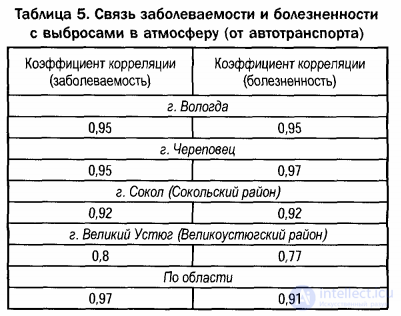
The data in the table show that there are strong, reliable correlational relationships between the amount of atmospheric emissions from motor transport and demographic indicators in the cities of Vologda, Cherepovets, Sokol, and Velikiy Ustyug.
As a result of the research conducted, cause-and-effect relationships between children's health status and atmospheric air pollution were established. It can be concluded that emissions from industrial enterprises and motor transport are dangerous for the health of the child population of the Vologda Region. Further study is needed to obtain a more complete picture of how environmental quality and health are related.
Health as an object of study is a complex phenomenon and is considered as the result of the influence of all factors affecting the life of individuals and the population as a whole. To ensure optimization of the management system and a well-founded distribution of forces and resources in the field of protecting and strengthening children's health, it is important to identify the leading factors affecting health status and to determine the degree of their influence.
Studies of the factors causing deterioration of the health of the child population, conducted by the Vologda Scientific Coordination Center of the Central Economic-Mathematical Institute of the Russian Academy of Sciences, are mainly aimed at studying socioeconomic characteristics (family income, nutrition) and lifestyle, but almost do not address such a factor as the state of the environment. The current situation is characterized by persistent pollution and deterioration of the quality of nature, and no improvements are foreseen in the near future. Therefore, it is necessary to place new emphasis, seek new approaches, and determine other ways in the development and implementation of policy in the field of protecting and strengthening children's health.
An elevated content of pollutants with non-carcinogenic and carcinogenic effects in atmospheric air can cause the development of toxic effects on such "target organs" as the respiratory organs, the immune, nervous, genitourinary, and musculoskeletal systems, the circulatory system, blood, blood-forming organs, the mucous membrane of the eyes, as well as the development of malignant neoplasms, among others. Across the Russian Federation as a whole in 2017, 2.8% of population deaths from respiratory diseases and 0.4% from malignant neoplasms were noted to be associated with exposure to chemical pollution of atmospheric air.

Comments