
Lecture
-
Civil defense or civil protection is an attempt to protect the citizens of a state (generally non-combatants) from military attacks and natural disasters. It uses the principles of emergency operations: prevention, mitigation, preparedness, response or emergency evacuation, and recovery. Such programs were first discussed at least as early as the 1920s and were implemented in some countries during the 1930s as the threat of war and aerial bombardment grew. It became widespread after awareness of the threat of nuclear weapons.
Civil defense — a system of measures to prepare for the protection of, and to protect, the population, material and cultural assets on the territory of the Russian Federation from dangers arising from military conflicts or as a result of such conflicts, as well as from natural and man-made emergencies
After the end of the Cold War, the emphasis of civil defense largely shifted from military attack to emergencies and disasters in general. The new concept is described by a number of terms, each of which carries its own specific shade of meaning, for example crisis management, emergency management, emergency preparedness, emergency planning, civil contingency, civil aid, and civil protection.
In some countries civil defense is regarded as a key part of defense as a whole. For example, in Swedish the word totalförsvar («total defense») means the allocation of a wide range of national resources to its defense, including the protection of all aspects of civilian life. Some countries have organized civil defense along paramilitary lines or have included it within their armed forces, such as the Soviet Civil Defense Forces (Civil Defense Troops).
The most important functions of civil defense in ensuring the defense capability and vital functioning of the state
1. The organization and conduct of civil defense is one of the most important functions of the state, a constituent part of defense development and of ensuring the security of the state.
2. Preparation of the state for conducting civil defense is carried out in advance during peacetime, taking into account the development of weapons, military equipment, and means of protecting the population from dangers arising from the conduct of military operations or as a result of such operations.
3. The conduct of civil defense on the territory of the Russian Federation, or in individual areas thereof, begins from the moment a state of war is declared, the actual commencement of military operations, or the introduction by the President of the Russian Federation of martial law on the territory of the Russian Federation or in individual areas thereof.
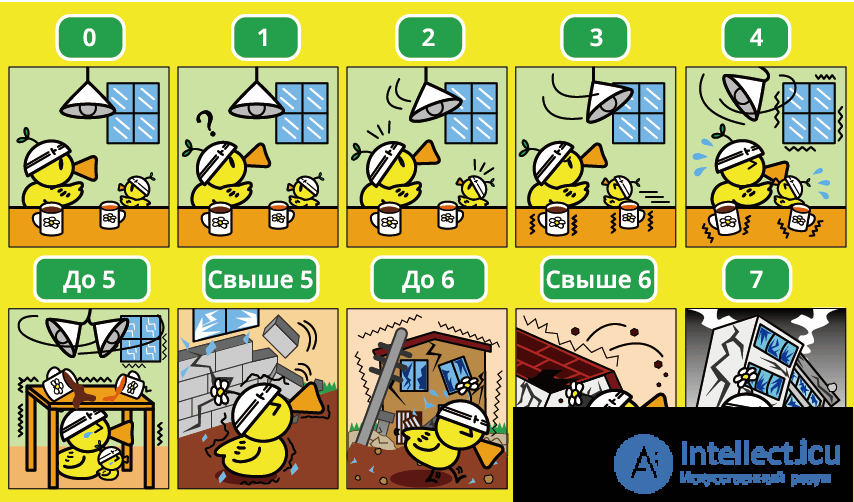
To describe the intensity of underground tremors at a specific location, Japan uses a ten-level scale. The figures below show the Japanese earthquake intensity scale, from 0 (no tremors at all) to 7 (widespread destruction).

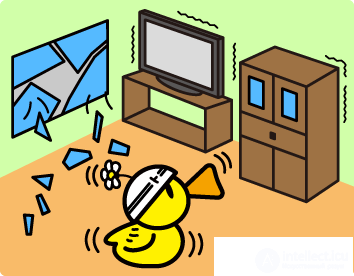
Stay away from windows and things that could fall.
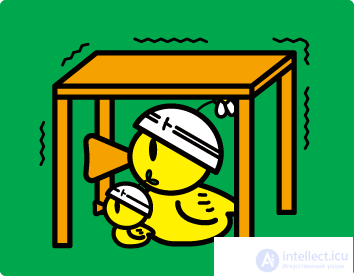
Take cover under a table or heavy furniture.
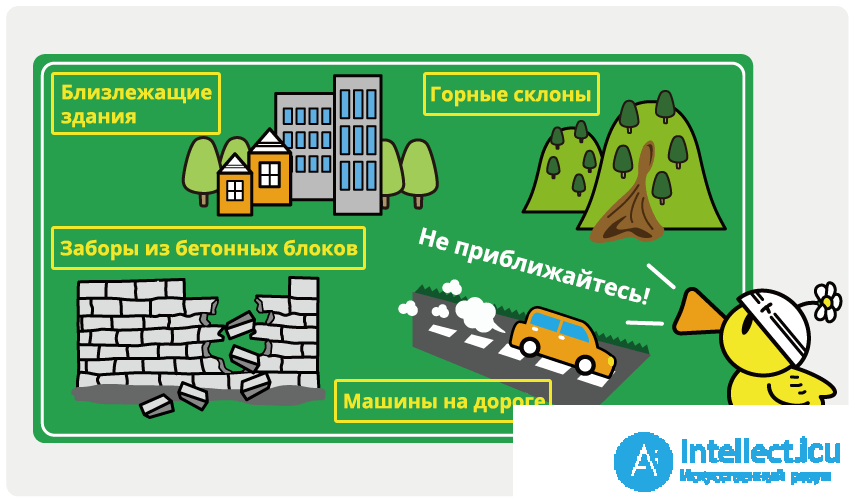
An earthquake can cause objects to fall, glass to shatter, and walls and slopes to collapse, so cover your head and stay away from buildings and dangerous areas.
It is too dangerous to evacuate a high-rise building immediately. It is safer to stay inside and cover your head to protect yourself from falling objects. Stay away from windows and heavy furniture.
Do not use elevators, as they may lose power in an outage. Stay calm and do not panic — this is the key to your safety during an earthquake.
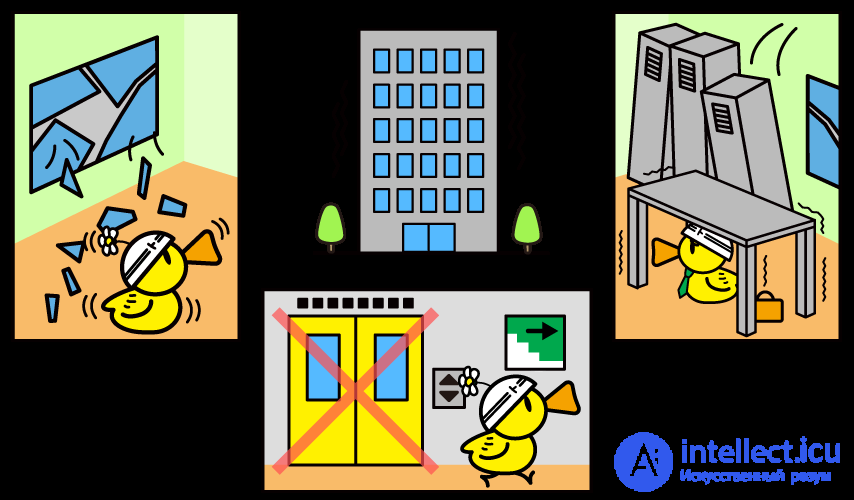

If you are in an elevator, press the buttons for all floors and get out as soon as you can. (Some elevator systems are designed to stop automatically at the nearest floor when tremors begin.) In the worst case, if the elevator gets stuck or is in a dangerous position, use the emergency call function to contact the help line and wait for rescuers.

Volcanic Explosivity Index (also VEI, from English Volcanic Explosivity Index) — an indicator of the power of a volcanic eruption, based on an assessment of the volume of erupted products (tephra) and the height of the ash column. Proposed by C. A. Newhall and S. Self in 1982 to assess the impact of eruptions on the Earth's atmosphere .
| VEI | Volume of ejected material |
Classification | Description of eruption character |
Height of eruptive column |
Frequency | Emissions into the troposphere |
Emissions into the stratosphere |
Possibility of pyroclastic flows |
|---|---|---|---|---|---|---|---|---|
| Examples | ||||||||
| 0 | up to 10,000 m³ | Hawaiian | Non-explosive | Less than 100 m | Constant | Negligible | No | No |
| Kīlauea, Piton de la Fournaise, Erebus | ||||||||
| 1 | > 10,000 m³ | Hawaiian / Strombolian | Gentle | Up to one kilometer | Every day | Small | No | No |
| Nyiragongo (2002), Raoul Island (2006), Stromboli (erupting continuously for more than two thousand years) | ||||||||
| 2 | > 0.001 km³ | Strombolian | Explosive | 1-5 km | Twice a month | Moderate | No | Rare |
| Unzen (1792), Cumbre Vieja (1949), Galeras (1993), Sinabung (2010) | ||||||||
| 3 | > 0.01 km³ | Strombolian/Peléan | Severe | 3-10 km | Once every three months | Significant | Possible | Rare |
| Nevado del Ruiz (1985), Lassen Peak (1915), Soufrière Hills (1995), Nabro (2011) | ||||||||
| 4 | > 0.1 km³ | Peléan/Sub-Plinian | Catastrophic | More than 10 km | 18 months | Significant | Certain | Possible |
| Mayon (1814), Montagne Pelée (1902), Galunggung (1982), Eyjafjallajökull (2010), Merapi (2010) | ||||||||
| 5 | > 1 km³ | Plinian | Paroxysmal | More than 10 km | 12 years | Significant | Serious | Definite |
| Vesuvius (79), Fuji (1707), Tarawera (1886), St. Helens (1980), Puyehue (2011), Cerro Hudson (1991) | ||||||||
| 6 | > 10 km³ | Plinian / Ultra-Plinian | Colossal | More than 20 km | 50—100 years | Significant | Significant | Definite |
| Laach (c. 12,900 BC), Veniaminof (c. 1750 BC), Ilopango (535), Huaynaputina (1600), Krakatoa (1883), Novarupta (1912), Pinatubo (1991) | ||||||||
| 7 | > 100 km³ | Ultra-Plinian | Super-colossal | More than 20 km | 500 to 1000 years | Significant | Significant | Devastating |
| Campi Flegrei (c. 40,000 BC), Santorini (c. 1620 BC), Taupo (180), Baekdu (946), Rinjani (1257), Tambora (1815) | ||||||||
| 8 | > 1000 km³ | Ultra-Plinian/Mega-eruption | Mega-colossal | More than 20 km | More than 50,000 years | Extensive | Extensive | Devastating |
| Cerro Galán (c. 2,500,000 BC), Yellowstone (Lava Creek) (630,000 BC), Toba (74,000 BC), Taupo (25,360 BC), Taupo (c. 250,000 BC), La Garita (c. 27,000,000 BC) |
A total of 47 VEI 8 eruptions have been counted, from the Ordovician to the Pleistocene, 42 of which occurred within the last 36 million years. The most recent of these was the Oruanui eruption. There have been no VEI 8 eruptions during the Holocene, but there have been at least five VEI 7 eruptions. There have also been at least 58 Plinian eruptions of lower intensity.
Mass riots.
The growth in the number of social emergencies largely depends on the following factors: instability of the socio-political situation; deepening destructive processes in the economy and a declining standard of living; deformation in the public consciousness of a certain part of the population; a decline in the level of general culture and spiritual impoverishment; a diminishing role of the state (primarily education and the media) in raising the younger generation.
Panic.
Most definitions of panic are associated with a manifestation of mass fear in the face of a real or imagined threat, a state of periodic fright or horror that intensifies through mutual contagion. Panic is considered to be one of the forms of crowd behavior. However, panic can also arise at the individual level. Panic can be classified by scale, depth of coverage, duration, and destructive consequences.
The following characteristic features of panic are noted:
The problem is rather that they do not look for alternative solutions and do not see the consequences of their decision. All of the above indicates that only the strongest emotional brake — or a miracle — can stop a crowd. It can indeed be considered a miracle when a strong, willful person who is trusted by those gathered manages to prevent a dramatic turn of events. Other means include categorical commands, ardent assurance that there is no danger, and even the threat of shooting those who panic. Many specialized manuals firmly recommend the physical suppression of the instigator of panic, because it is immeasurably easier to extinguish a psychological fire at its start (as, indeed, with any other fire) than to later stop a crowd that has been set in motion. This, of course, is not easy, especially since the leader is subject to two stresses at once: awareness of both the danger of the situation itself and their own responsibility for people's lives. The leader must immediately find helpers to cut through the crowd, sometimes literally — joining hands and chanting
. Mass pogroms
Besides street unrest, there are other forms of mass rioting — mass pogroms. Recently, groups of so-called skinheads (shaven-headed youths) have appeared in our country. The first «skinheads» appeared in England in the late 1960s. At first, demobilized soldiers and young men from working-class neighborhoods had no clearly expressed Nazi aspirations. Far-right ideology entered these groups through football. Hatred toward victorious foreign teams, following clashes with their accompanying fans, was projected onto the entire nation. In the 1980s, the ranks of skinheads were swelled by former punks and simply unemployed young people, dissatisfied with economic immigration from Asia, the reunification of Germany, and government policy. In Russia, the first skinheads appeared in 1991. In St. Petersburg there are several hundred «skinheads», mostly aged between 13 and 30. They do not consider themselves fascists. They say of themselves that they like going to museums, giving lectures on Russian culture, and that they simply dislike the genocide of the Russian people. But the fact is that any organization, especially a youth one, is often simply unmanageable, or is manageable in whatever direction someone else finds convenient. The emergence of criminal youth organizations is fostered by the absence of extracurricular educational work in schools, the absence of free sports clubs, neglect of young people, and their inability to occupy themselves with anything useful. Criminal organizations, in turn, are characterized by careful planning of criminal actions, a clearly expressed hierarchical structure with roles distributed among accomplices, strict internal discipline with unquestioning obedience to authority figures, and a well-thought-out system of material support with tools and means for committing crimes.
Mass spectacles and festivities.
Mass spectacles always harbor explosive danger. This applies above all to rock concerts, where the ecstasy of listeners, often high on drugs, leads to sorry consequences. In August 1969, in Woodstock (USA), as part of the hippie movement under the slogan «Love, peace, and brotherhood», an arts and music festival took place. The town of White Lake, where the open-air concerts were held, became a place of pilgrimage for hundreds of thousands of people. On the second day of the festival, three people were trampled to death in the crowd. The same number died on December 6, 1969 at the festival in Altamont, held under the slogan «Let's shed blood for the angels», during a concert by the Rolling Stones. Another 700 people were injured. The high degree of public danger of participants in mass spectacles stems primarily from the very fact of the existence of a large crowd of people that is difficult to control, from instances of damage to property and harm to the health of citizens (and sometimes death), and from the disorganization of the activities of authorities and administration. A fairly large number of fans die at stadiums, despite the safety measures taken. For example, on April 1, 1989, at the Wemb[ley] stadium
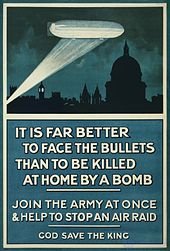
The emergence of civil defense was spurred by the experience of the bombing of civilian areas during the First World War. The bombing of the United Kingdom began on January 19, 1915, when German airships dropped bombs on the Great Yarmouth area, killing six people. German bombing in the First World War proved surprisingly effective, especially once Gotha bombers superseded the Zeppelins. In the most destructive raids, there were 121 casualties per ton of bombs dropped; this figure was later used as the basis for forecasts.
After the war, attention turned to civil defense in the event of war, and in 1924 the Air Raid Precautions Committee (ARP) was established to investigate ways of protecting the civilian population from the danger of air raids.
The Committee presented data according to which London would suffer 9,000 casualties in the first two days, followed by 17,500 casualties per week. These estimates were considered conservative. It was believed that «complete chaos, panic» and hysterical neurosis would occur as Londoners tried to flee the city. Harsh measures were proposed to control the population: placing London almost under military control and physically cordoning off the city with 120,000 soldiers to force people back to work. Another government department proposed setting up refugee camps for a few days before sending people back to London.
In 1935 the Home Office established a special government department — the Civil Defence Service. It absorbed the pre-existing ARP, as well as wardens, firefighters (initially the Auxiliary Fire Service (AFS), and later the National Fire Service (NFS)), rescue workers, first-aid posts, stretcher parties, and industry. More than 1.9 million people served in the CD; nearly 2,400 died as a result of enemy action.
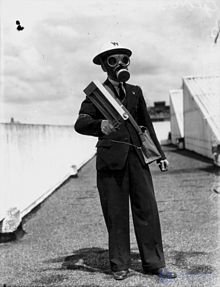
The organization of civil defense was the responsibility of local authorities. Volunteers were assigned to different units depending on their experience or training. Each local civil defense service was divided into several sections. Wardens were responsible for local reconnaissance and reporting, as well as for guiding, organizing, directing, and controlling the population. Wardens also informed survivors of the location of rest and feeding centers and other social facilities.
Rescue squads were required to inspect bombed buildings, then gain access to them and pull out the injured or dead. In addition, they shut off gas, electricity, and water, and repaired or demolished unstable buildings. Medical services, including first aid, were provided on the spot.
The expected flow of information generated during an attack was handled by «Report and Control» teams. At the local headquarters there would be an ARP controller who would direct rescue, first-aid, and decontamination teams to the locations of reported explosions. If local services were deemed insufficient to deal with an incident, the controller could request assistance from neighboring areas.
The fire guard was responsible for a designated area/building and was required to watch for the fall of incendiary bombs and pass news of any fires to the NFS. They could deal with an individual magnesium-electron incendiary bomb by covering it with buckets of sand or water or smothering it. In addition, «gas decontamination squads», equipped with gas-proof and waterproof protective clothing, were to deal with any gas attacks. They were trained to decontaminate buildings, roads, railways, and other materials contaminated by liquid or gel-like gases.
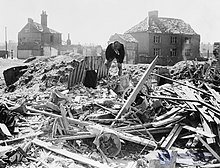
On the question of bomb shelters, little progress was made because of an apparently irreconcilable conflict between the need to send people underground for shelter and the need to keep them above ground for protection against gas attacks. In February 1936, the Home Secretary appointed a technical committee on structural precautions against air attack. During the Munich crisis, local authorities dug trenches for shelter. After the crisis, the British government decided to make these a permanent feature, with a standard design of trench lining made of precast reinforced concrete. They also decided to provide Anderson shelters free of charge to poor families and to supply steel props to create shelters in suitable basements.
During the Second World War, the ARP was responsible for issuing gas masks, prefabricated bomb shelters (such as Anderson shelters, as well as Morrison shelters), maintaining local public shelters, and enforcing blackout regulations. The ARP also helped rescue people after air raids and other attacks, and some women became ARP first-aid workers, whose job was to provide first aid to the injured, search for survivors, and, in many grim cases, help bring back bodies, sometimes those of their own colleagues.
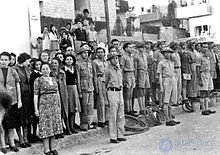
As the war progressed, the military effectiveness of Germany's aerial bombardment proved to be very limited. Thanks to the Luftwaffe's shifting targets, the strength of British air defenses, the use of early-warning radar, and the saving actions of local civil defense units, the aerial «Blitz» during the Battle of Britain failed to break the morale of the British people, destroy the Royal Air Force, or substantially impede British industrial production. Despite significant investment in civil and military defense, British civilian casualties during the Blitz were higher than in most strategic bombing campaigns throughout the war. For example, during the Battle of Britain, between 14,000 and 20,000 civilians died in the United Kingdom . — a relatively large number given that the Luftwaffe dropped only about 30,000 tons of ordnance during the battle. By comparison, the Allied strategic bombing of Germany during the war was less deadly: about 400,000–600,000 German civilians died as a result of approximately 1.35 million tons of bombs dropped on Germany.
In the United States, the Office of Civilian Defense was established in May 1941 to coordinate civil defense efforts. It coordinated its activities with the Department of the Army and created groups similar to the British ARP. One of these groups, which still exists today, is the Civil Air Patrol, which was originally created as an auxiliary civilian unit of the Army. The CAP was established on December 1, 1941, with the primary civil defense task of search and rescue operations. The CAP also sank two Axis submarines and conducted aerial reconnaissance of Allied and neutral merchant shipping. In 1946, the Civil Air Patrol was prohibited from participating in combat operations under Public Law 79-476. The CAP was then given its current mission: search and rescue for downed aircraft. When the Air Force was established in 1947, the Civil Air Patrol became an auxiliary of the Air Force.
The Coast Guard Auxiliary performs a similar role in support of the U.S. Coast Guard. Like the Civil Air Patrol, the Coast Guard Auxiliary was created in the run-up to the Second World War. Auxiliarists were sometimes armed during the war and actively participated in port security operations. After the war, the Auxiliary shifted its focus to promoting boating safety and assisting the Coast Guard with search and rescue operations, as well as maritime safety and environmental protection.
In the United States, a federal civil defense program existed under Public Law 920 of the 81st Congress [10] as amended from 1951–1994. This statutory scheme was transformed into the so-called all-hazards protection system under Public Law 103-160 in 1993 and was largely repealed by Public Law 103-337 in 1994. [11] Parts now appear in Title VI of the Robert T. Stafford Disaster Relief and Emergency Assistance Act, Public Law 100-107 [1988, as amended]. [12] The term «EMERGENCY PREPAREDNESS» was largely codified by this repeal and amendment. See 42 U.S.C. 5101 et seq. [12]
In most member states of the North Atlantic Treaty Organization, such as the USA, the United Kingdom, and West Germany, as well as in the Soviet bloc, and especially in neutral countries such as Switzerland and Sweden, in the 1950s and 1960s, many civil defense practices were undertaken to prepare for the consequences of a nuclear war, which at the time seemed highly likely. [13]
In the United Kingdom, the Civil Defence Service was disbanded in 1945, followed by the ARP in 1946. With the onset of growing tension between East and West, the service was reestablished in 1949 as the Civil Defence Corps. As a civilian volunteer organization, it was tasked with taking control of the aftermath of a serious national emergency, which was mainly envisioned as a Cold War–era nuclear attack. Although the corps was under the authority of the Home Office with a centralized administrative agency, it was run by local authorities. In general, every county was a Corps authority, as were most district areas in England and Wales and large burghs in Scotland.
Each unit was divided into several sections, including headquarters, intelligence and operations, scientific and reconnaissance, wardens and rescue, ambulance and first aid, and welfare.
In 1954, the Coventry City Council caused international controversy when it announced plans to dissolve its civil defense committee, as councillors decided that hydrogen bombs meant that recovery from a nuclear attack was impossible. The British government opposed such a move and held provocative civil defense exercises on the streets of Coventry, which members of the Labour council opposed. [14] The government also decided to set up its own committee at the city's expense until the council reinstated its own committee.
In the United States, the manifest power of nuclear weapons and the perceived likelihood of such an attack provoked a greater response than civil defense had previously required. Civil defense, once considered an important, common-sense step, became a source of division and controversy in the tense atmosphere of the Cold War. In 1950, the National Security Resources Board produced a 162-page document describing a model structure for U.S. civil defense, known among civil defense professionals as the «Blue Book» after its solid blue cover; it served as a template for legislation and organization for the next 40 years. [15]
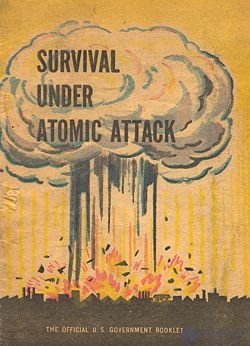
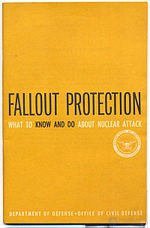
Perhaps the most memorable aspect of Cold War civil defense efforts was the educational campaigns undertaken or promoted by the government. [16] In Duck and Cover, Bert the Turtle demonstrates that children should «duck and cover» when they «see the flash.» Booklets such as «Survival Under Atomic Attack», «Fallout Protection», and «Nuclear War Survival Skills» were also common. In the transcribed radio program «Stars for Defense», hit music was combined with civil defense advice. Government institutions created public service announcements, including children's songs, and distributed them to radio stations to inform the public in the event of a nuclear attack.
U.S. President Kennedy (1961–63) undertook an ambitious effort to install fallout shelters across the United States. These shelters would not protect against the blast and thermal effects of nuclear weapons, but would provide some protection against radiation effects, which would last for weeks and even affect areas far from a nuclear explosion. For most of these preparations to be effective, some degree of warning was necessary. In 1951, CONELRAD (Control of Electromagnetic Radiation) was established. Under this system, several primary stations would be alerted to an emergency and would broadcast a warning. All broadcasting stations across the country would continuously listen to an upstream station and repeat the message, thereby relaying it from station to station.
According to a once-classified analysis of U.S. war games examining various levels of war escalation, warnings, and preemptive strikes in the late 1950s and early 1960s, it was estimated that approximately 27 million U.S. citizens would have been saved through civil defense education. [18] At the time, however, the cost of a full-scale civil defense program was considered less cost-effective by cost-benefit analysis than a missile defense system (Nike Zeus), and as the Soviet adversary expanded its nuclear arsenal, the effectiveness of both would follow a trend of diminishing returns. [18]
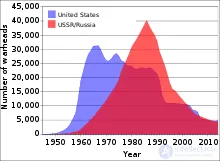
In contrast to the largely evasive approach adopted by NATO, with its stop-and-start civil defense efforts dependent on the whims of each newly elected government, military strategy in the comparatively more ideologically consistent USSR asserted, among other things, that a nuclear war could be won. [19] [20] [21] To this end, the Soviets planned to minimize, as far as possible, the consequences of nuclear strikes on their territory, and therefore devoted considerably more attention to civil defense preparation than the United States did, with defense plans assessed as much more effective than those in the United States. [22] [23] [24] [25]
The USSR's Civil Defense Troops played a major role in the large-scale operation to eliminate the consequences of the 1986 accident at the Chernobyl nuclear power plant. Reservists of the defense troops were officially mobilized (as in the case of war) from across the USSR to join the Chernobyl task force and were formed on the basis of the Kyiv Civil Defense Brigade. The task force carried out several high-risk tasks, including, in cases where their robotic equipment failed, manually removing highly radioactive debris. Many of their personnel were subsequently awarded medals for their work in containing the release of radiation into the environment, with [QUANTIFY] a number of 56 of those killed in the accident being Civil Defense servicemen. [26]
In Western countries, a strong civil defense policy was never properly implemented, because it fundamentally contradicted the doctrine of «mutually assured destruction» (MAD), which presupposed the survival of survivors. It was also believed that a full total-defense program would not be worth the very high cost. For whatever reason, the public regarded civil defense efforts as fundamentally ineffective against the powerful destructive forces of nuclear weapons, and therefore a waste of time and money, even though detailed scientific research programs did in fact underlie the often-mocked government civil defense pamphlets of the 1950s and 1960s. [28]
The Civil Defence Corps was disbanded in the United Kingdom in 1968 due to the financial crisis of the mid-1960s. [29] However, its neighbors remained committed to civil defense, namely the Isle of Man Civil Defence Corps and Civil Defence Ireland (Ireland).
In the United States, various civil defense agencies were replaced by the Federal Emergency Management Agency (FEMA) in 1979. In 2002, it became part of the Department of Homeland Security. The emphasis shifted from nuclear war to an «all-hazards» approach within comprehensive emergency management. Natural disasters and the emergence of new threats, such as terrorism, shifted the focus from traditional civil defense to new forms of civil protection, such as emergency management and national security.
Many countries still have national civil defense corps, which typically have broad authority to assist in large-scale civilian emergencies such as floods, earthquakes, invasion, or civil unrest.
After the September 11, 2001 attacks in the United States, the concept of civil defense was revised under the general term «homeland security and emergency management».
In Europe, the triangular CD logo continues to be widely used. The old U.S. civil defense logo was used in the FEMA logo until 2006 and is referenced in the logo of the U.S. Civil Air Patrol. [30] Created in 1939 by Charles Coiner of the NW Ayer advertising agency, it was used during the Second World War and the Cold War era. In 2006, the National Emergency Management Association — a U.S. organization of state emergency managers — «officially» abandoned the triangular civil defense logo, replacing it with a stylized EM (standing for «Emergency Management»). [31] The name and logo, however, continue to be used by Hawaii State Civil Defense [32] and Guam Homeland Security/Office of Civil Defense.[33]
The term «civil protection» is now widely used in the European Union to refer to government-approved systems and resources tasked with protecting the non-combatant population, primarily in the event of natural disasters and man-made catastrophes. In recent years, particular attention has been paid to preparedness for man-made disasters resulting from terrorist attacks. In EU countries, the term «crisis management» places emphasis on the political and security dimension rather than on measures to meet the population's immediate needs.
In Australia, civil defense is the responsibility of the volunteer State Emergency Service.
In most former Soviet republics, responsibility for civil defense is assigned to government ministries, such as Russia's Ministry of Emergency Situations.
Civil defense services include:
- the communications and warning service — for warning the population of the threat of natural disaster, accidents, catastrophes, and other emergencies, and for maintaining communication with civil defense leadership and units;
- the public order protection service (POPS) — for maintaining order and protecting public property and citizens' personal property in peacetime and wartime;
- the fire service — for the prevention, containment, and extinguishing of fires;
- the medical service — for providing medical care to those affected and carrying out sanitary-hygienic and preventive measures;
- the engineering service — for ensuring the construction of protective structures;
- the utilities-technical service — for eliminating accidents at municipal utility facilities;
- the technical service — for organizing and carrying out the technically correct servicing, operation, and repair of equipment and instruments;
- the transport service — for providing all types of transportation in the interests of civil defense;
- the power supply and blackout service — for ensuring the supply of electricity to facilities and transport, eliminating accidents on power lines, and maintaining blackout conditions;
- the sanitary treatment service — for carrying out sanitary treatment of the population and decontamination of territories, facilities, equipment, and transport;
- the food supply service — for providing the population with food, essential items, and protecting stocks of food, raw materials, and industrial goods;
- the material and technical supply service — for supplying facilities of the national economy and non-militarized units with all types of material resources;
- the storage and shelter service for maintaining storage facilities and keeping them in constant readiness
Relatively small investments in preparedness can accelerate recovery by months or years and thereby prevent millions of deaths from hunger, cold, and disease. [34] According to human capital theory in economics, a country's population is more valuable than all the land, factories, and other assets it possesses. People rebuild a country after its destruction, and therefore it is important for a country's economic security that it protect its people. According to psychology, it is important for people to feel that they control their own destiny, and preparation for uncertainty through civil protection can help achieve that.
In the United States, the federal civil defense program was established by law and was in effect from 1951 to 1994. Originally established by Public Law 920 of the 81st Congress, it was repealed by Public Law 93-337 in 1994. Its provisions were incorporated into the Robert T. Stafford Disaster Relief and Emergency Assistance Act (Public Law 100-707), which partially replaced, partially amended, and partially supplemented the Disaster Relief Act of 1974 (Public Law 93-288). In the parts of the civil defense law incorporated into the Stafford Act, the main change was the use of the term «emergency preparedness» where the term «civil defense» had previously appeared in official language.
An important concept initiated by President Jimmy Carter was the so-called «Crisis Relocation Program», implemented as part of the federal civil defense program. These efforts largely failed under President Ronald Reagan, who terminated Carter's initiative due to opposition from areas that would potentially receive relocated people. [35]
Threats to the civilian population and civilian life include NBC (nuclear, biological, and chemical warfare) and others, such as the more modern term CBRN (chemical, biological, radiological, and nuclear). Threat assessment involves studying each threat so that preventive measures can be built into civilian life.
Conventional
Refers to conventional explosives. Housing designed to protect only against radiation and fallout will be much more vulnerable to conventional explosives. See also fallout shelter.
Nuclear
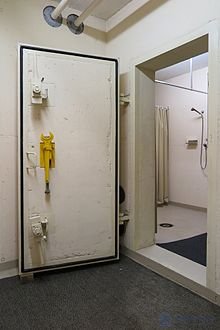
A shelter designed to protect against nuclear explosions would include thick concrete and other robust elements resistant to conventional explosives. The greatest threat from a nuclear attack is the effects of the blast, fires, and radiation. One of the countries best prepared for a nuclear attack is Switzerland. Almost every building in Switzerland has a shelter against the initial nuclear blast and explosion, followed by fallout. [36] [37] Because of this, many people use it as a safe to protect valuables, photographs, financial information, and so on. Switzerland also has air-raid and nuclear-attack sirens in every village.
Dirty bomb
A «radiologically enhanced weapon» or «dirty bomb» uses explosives to spread radioactive material. This is a theoretical risk, and such a weapon has not been used by terrorists. Depending on the amount of radioactive material, the danger may be largely psychological. Toxic effects can be controlled using standard hazmat methods.
Biological
The threat here comes primarily from disease-causing microorganisms such as bacteria and viruses.
Chemical
The threat is posed by various chemicals, such as nerve agents (VX, sarin, etc.).
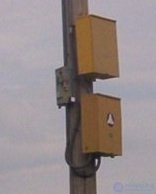
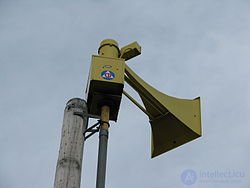
Mitigation is the process of actively preventing war or the use of nuclear weapons. It includes policy analysis, diplomacy, political measures, nuclear disarmament, and other military measures such as national missile defense and anti-aircraft artillery. In the case of counterterrorism, mitigation measures would include diplomacy, intelligence gathering, and direct action against terrorist groups. Mitigation can also be reflected in long-term planning, such as the design of the interstate highway system and the placement of military bases away from populated areas.
Preparedness consists of building blast shelters and pre-positioning information, materials, and emergency infrastructure. For example, most major U.S. cities now have underground emergency operations centers that can coordinate civil defense actions. FEMA also has many underground facilities for the same purposes, located near major railway stations, for example in Denton, Texas, and Mount Weather, Virginia.
Other measures include maintaining permanent state inventories of grain elevators, the strategic national stockpile, the opening of the strategic petroleum reserve, dispersal of truck-mounted bridges, water purification, mobile oil refineries, mobile decontamination equipment, general- and special-purpose mobile emergency morgue facilities such as the Disaster Mortuary Operational Response Team (DMORT) and DMORT-WMD, as well as other support means, such as temporary housing, to speed civilian recovery.
On an individual scale, one means of preparing for the effects of nuclear fallout is obtaining potassium iodide (KI) tablets as a safety measure to protect the human thyroid from absorbing dangerous radioactive iodine. Another measure is to cover the nose, mouth, and eyes with a piece of cloth and sunglasses for protection against alpha particles, which pose only an internal hazard.
To support and complement efforts at the national, regional, and local levels regarding the prevention of natural disasters, the readiness of those responsible for civil protection, and intervention in the event of natural disasters.
Preparedness also includes information exchange:
Response consists primarily of warning civilians so that they can enter fallout shelters and protect assets.
Staffing the response is always fraught with problems in a civil defense emergency. After an attack, the regular full-time emergency services are severely overwhelmed, and response times for ordinary firefighting often exceed several days. Some capabilities are maintained by local and state agencies, while an emergency reserve is provided by specialized military units, in particular civil affairs, military police, judge advocates, and combat engineers.
However, the traditional response to massed attacks on civilian population centers is maintaining a massively trained force of volunteer rescuers. Studies conducted during the Second World War showed that minimally trained (40 hours or less) civilians in organized groups can carry out up to 95% of emergency actions if they are trained, kept in communication, and supported by local authorities. In this way, the population rescues itself from most situations and provides information to a central office to help set priorities for professional emergency services.
In the 1990s, this concept was revived by the Los Angeles Fire Department to deal with civilian emergencies such as earthquakes. The program became widespread, providing a standard framework for the organization. In the U.S. this is now official federal policy, and it is implemented by local Community Emergency Response Teams under the Department of Homeland Security, which certifies local government training programs and registers «certified disaster service workers» who complete such training.
Recovery consists of restoring damaged infrastructure, buildings, and production. The recovery phase is the longest and, ultimately, the most expensive phase. Once the immediate «crisis» has passed, cooperation fades, and recovery efforts are often politicized or treated as economic opportunities.
Preparing for recovery can be very useful. If mitigation resources are dispersed before an attack, cascades of social failures can be prevented. One form of insurance against bridge damage in coastal cities is subsidizing a «tourist ferry» that runs cruises along the river. When a bridge collapses, the ferry takes on the cargo.

Civil defense is also the name of a number of organizations around the world engaged in protecting the civilian population from military attacks, as well as providing rescue services after natural disasters and man-made catastrophes.
Worldwide protection is coordinated by the United Nations Office for the Coordination of Humanitarian Affairs (OCHA).
In some countries, such as Jordan and Singapore (see Singapore Civil Defence Force), civil defense is essentially the same organization [clarification needed] as the fire brigade. In most countries, however, civil defense is a state-run organization staffed by volunteers and separate from the fire brigade and ambulance service.
As the Cold War threat receded, a number of such civil defense organizations were disbanded or mothballed (as in the case of the Royal Observer Corps in the United Kingdom and Civil Defense in the United States), while others shifted their focus to providing rescue services after natural disasters (as with the State Emergency Service in Australia). Nevertheless, the ideals of civil defense [clarification needed] were revived in the United States within FEMA's Civil Corps and Community Emergency Response Team (CERT).
In the United Kingdom, civil defense work is carried out by emergency response forces under the Civil Contingencies Act 2004, supported by volunteer groups such as RAYNET, search and rescue teams, and 4x4 Response. In Ireland, civil defense is still a very active organization and sometimes calls on the services of the Auxiliary Fire Service and ambulance/rescue services during emergencies, such as flash floods, that require additional manpower. The organization has units of trained firefighters and medics based in key areas of the country.

продолжение следует...
Часть 1 Civil Defense: Concept, Functions, Principles, and Objectives
Часть 2 - Civil Defense: Concept, Functions, Principles, and Objectives

Comments