
Lecture 26 min.
Biological weapons are pathogenic microorganisms or their spores, viruses and bacterial toxins that infect people and animals and are intended for the mass destruction of enemy personnel and population, farm animals and crops, for contaminating food and water sources, and for spoiling certain types of military equipment and materiel. Biological weapons also include the means of delivering pathogenic microorganisms and animal vectors. They are weapons of mass destruction and are prohibited under the Geneva Protocol of 1925 .
The damaging effect of biological weapons is based primarily on the disease-causing properties of pathogenic microorganisms and the toxic products of their vital activity .
Biological weapons are employed in the form of various munitions; they are loaded with certain kinds of bacteria and viruses that cause infectious diseases which take the form of epidemics. They are intended to harm people, agricultural plants and animals, and to contaminate food and water sources.
Varieties of biological weapons include entomological weapons, which use insects to attack the enemy, and genetic weapons, designed for the selective targeting of a population on the basis of race, ethnicity, sex or another genetically determined characteristic.
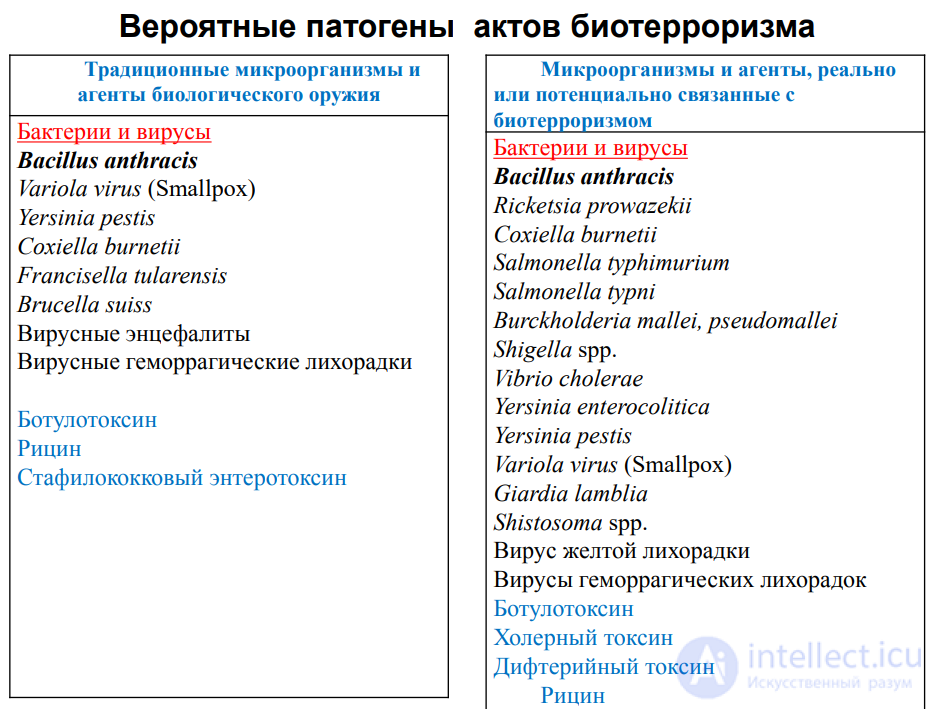
Bioterrorism is a form of terrorism consisting in the use of biological weapons against a population by a government, an organization or an individual . In this case the weapons are microorganisms or poisonous compounds produced by microbes .Terrorism (from Latin terror – "fear", "horror")One of the modern varieties of global terrorism is biological terrorism, which involves making a threat, directed at one target or another, of the deliberate, conscious and purposeful use of pathogenic microorganisms and the products of their vital activity – instead of explosives and other means of destruction used in "traditional" terrorist acts. Acts of bioterrorism are directed against individuals or groups of people and pursue, mainly, the aims of intimidation and blackmail, not only of the infected persons and groups themselves but also of those around them who did not become the direct object of the attack. The acts of bioterrorism actually carried out or prevented in recent decades involved the same pathogens that were considered the most promising for creating combat formulations for waging a full-scale biological war.
Agroterrorism is the use of chemical or biological weapons against agricultural or food industry enterprises [13]. Naturally, destroying fields and farms is considerably easier than destroying army units and military bases. Practically any branch of agriculture can become an object of agroterrorism.
Zooterrorism - the destruction of the livestock of farm animals in enemy territory.
. Entomological weapons - insects , responsible for transmitting from person to person the causative agents of many dangerous diseases (malaria, typhus, plague, etc.), which are sent in large numbers to the enemy to cause epidemics.In the United States in the 1950s, bombs were developed (the E14 and E23 munitions) in which fleas (Xenopsylla cheopsis) or mosquitoes (Aedes aegypti) carrying the yellow fever virus were placed. They were considered a highly promising weapon in the event of war with
the USSR, since yellow fever was not a common disease in the Union, and no immunization against it was carried out
Genomic weapons -The arsenal of these weapons includes: genes, i.e. DNA molecules that penetrate the body and encode harmful proteins, such as protein toxins, repressor proteins that suppress vital human functions, regulators of functions, activators of malignization, and inhibitors of immunity; small regulatory RNAs (siRNA and miRNA) that penetrate the body and selectively switch off the synthesis of functionally important proteins in the organism; and prions – infectious proteins that disrupt the formation of the spatial structure of functionally important proteins . Such varieties of biological weapons pose a considerably greater danger than traditional pathogens
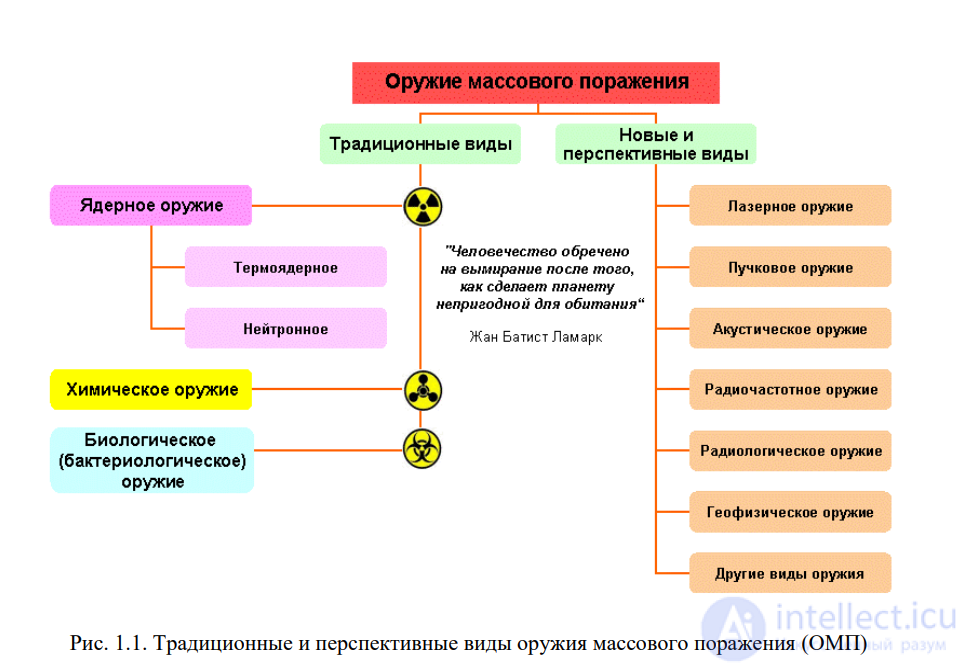
Biological weapons are used to cause disease or death among people and to destroy livestock and crops. Like any other form of terrorism, bioterrorism is usually aimed at sowing chaos or achieving political goals
The threat of bioterrorism remains relevant, which is in turn fostered by the still widespread notion that using pathogens for terrorist purposes is comparatively accessible and cheap and can produce an effect no less than that of "traditional" means of destruction
A biological terrorist act - the use of biological agents for the deliberate covert contamination of the human environment, or the creation of conditions for accidents at biotechnological industry facilities that work with microorganisms pathogenic to humans, with the release of the latter into the external environment beyond the boundaries of these facilities (laboratories)
Bioterrorism
Acts of bioterrorism may be carried out for the purposes of
Characteristic features of the crime – an act of bioterrorism
Objects of the crime in a biological terrorist act
1. An individual person
2. A specific (limited) group of persons, i.e. a group in relation to each member of which, according to the terrorists' intent, a lethal or otherwise health-damaging action of the bacterial agent is to be carried out. A group of persons is understood as a number of people not exceeding 50-100
3. A random (unlimited) group of persons or a flow of people
exceeding 100
The means of delivery and methods of using biological weapons are, as a rule:
In some cases, in order to spread infectious diseases, the enemy may leave behind contaminated household items when withdrawing: clothing, food, cigarettes, etc. In this case disease may result from direct contact with the contaminated items. It is also possible for the enemy to deliberately leave infectious patients behind when withdrawing so that they become a source of infection among troops and the population. When munitions loaded with a bacterial formulation burst, a bacterial cloud forms, consisting of tiny droplets of liquid or solid particles suspended in the air. The cloud, spreading with the wind, disperses and settles on the ground, forming a contaminated area whose size depends on the amount of formulation, its properties and the wind speed.
The problem is that outside its natural habitat focus and without the transmission mechanisms corresponding to its ecological setting, the causative agent of a disease will not be transmitted to people .
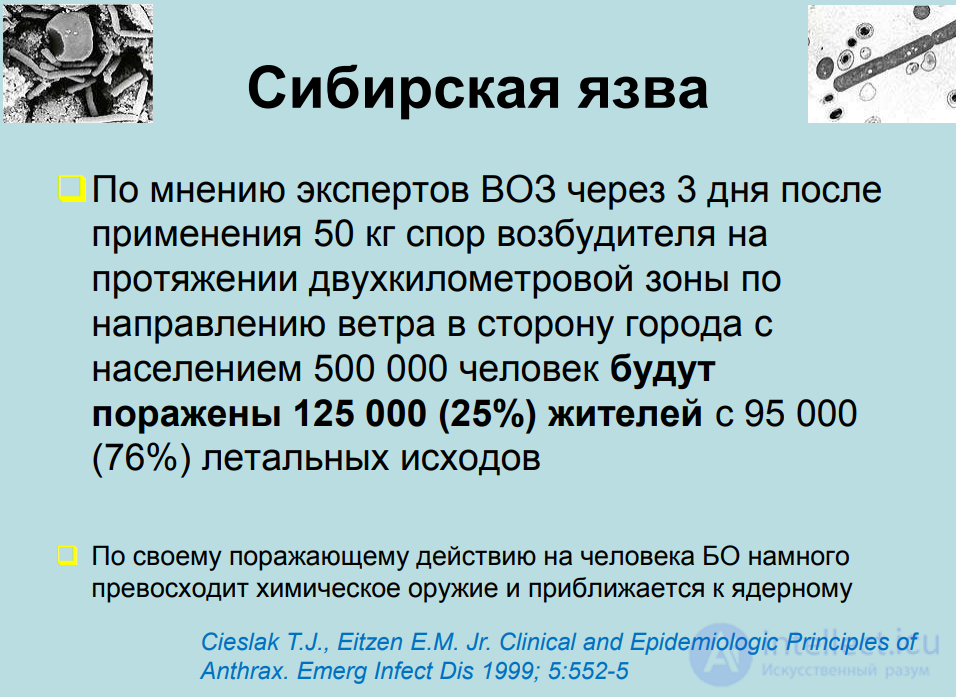
As a result of the use of biological weapons, mass outbreaks of especially dangerous infectious diseases are possible among people (plague, cholera, smallpox, anthrax, avian influenza) and animals (rinderpest, foot-and-mouth disease, glanders, anthrax, avian influenza, etc.), as well as damage to agricultural crops over large areas. To prevent the spread of biological contamination and to eliminate the resulting focus of infection, a set of isolation and restrictive measures is carried out.
Causative agents of infections
The causative agents of infectious diseases are disease-causing microorganisms (bacteria, rickettsiae, viruses, fungi) and the poisons (toxins) produced by some of them. They can enter the human body when handling infected animals or contaminated objects — through wounds and cracks in the hands, by eating contaminated food and water that has not been sufficiently heat-treated, and by the airborne droplet route through inhalation.
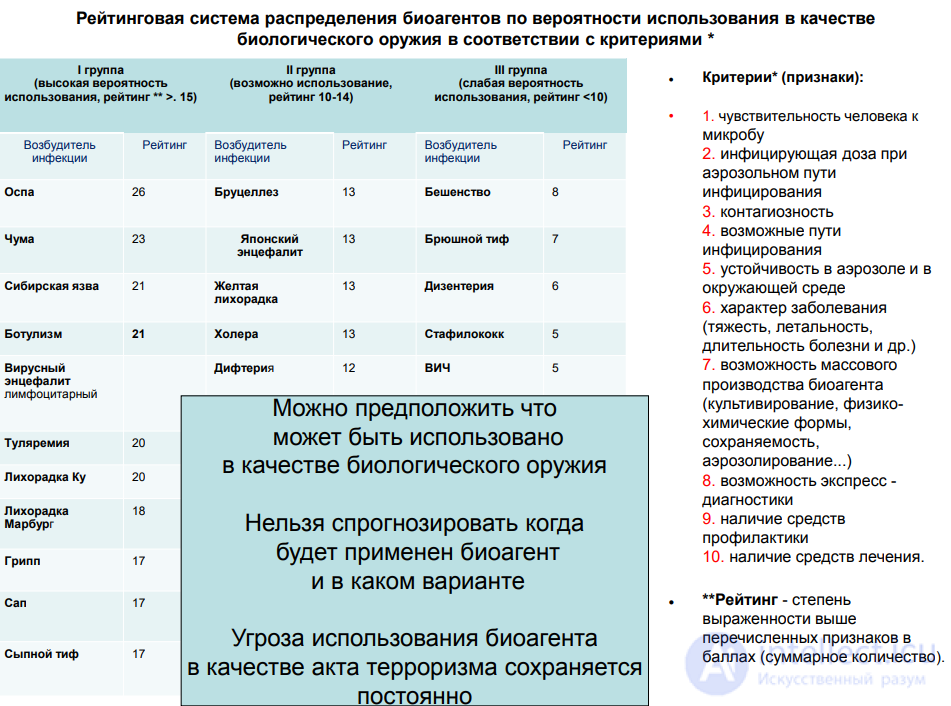
The criteria for selecting such pathogens, based on 10–15 main indicators, coincide in terms of the likelihood of their use depending on the degree of the expected effect. In compiling such lists, the
method of rating (point) assessment was widely used, based on assigning a quantitative expression in the form of conventional points to a given indicator.
To date, the list of pathogens of viral nature whose use in acts of bioterrorism is likely has been reduced to 20, whereas previously their number reached 40–50
• The range of pathogens of bacterial nature is still small – the main ones remain the causative agents of anthrax, plague and tularemia. The final assessments of the likelihood of using a particular pathogen for
acts of bioterrorism are currently expressed in the following formulations:
The use of a peculiar kind of biological weapon was known as early as ancient Rome, when, during sieges of cities, the bodies of those who had died of plague were thrown over the fortress walls in order to cause an epidemic among the defenders. Such measures were relatively effective, since in enclosed spaces, with high population density and a marked shortage of hygiene facilities, such epidemics developed very quickly.
The use of biological weapons in modern history.
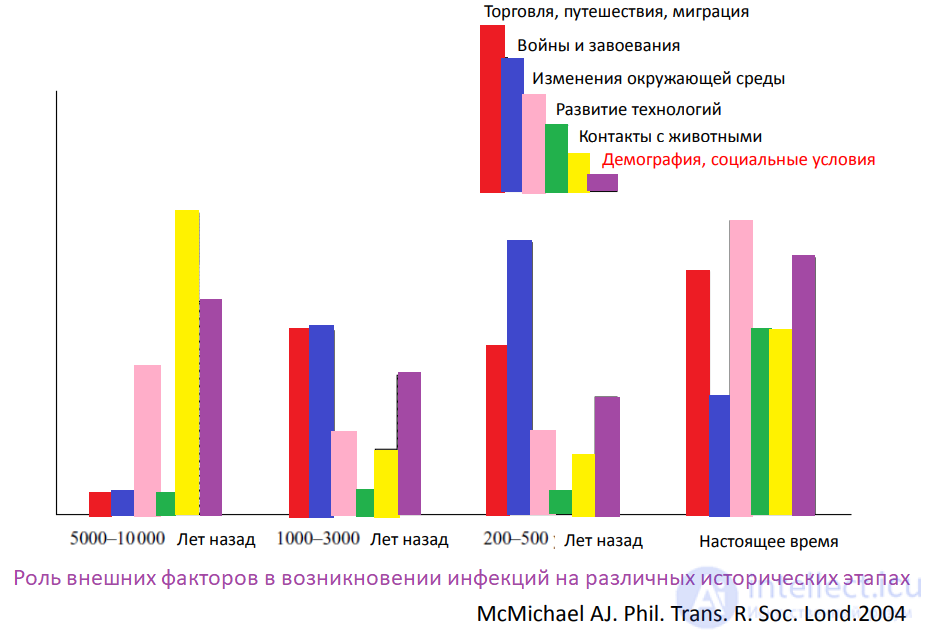
Characteristics of the current stage: factors and conditions influencing infectious disease incidence
When people are affected by bacterial or viral agents, the disease does not appear immediately. There is almost always a latent (incubation) period during which the disease shows no outward signs and the affected person does not lose fighting capacity. Some diseases (plague, cholera, anthrax) can be passed from a sick person to a healthy one and, spreading rapidly, cause epidemics. It is quite difficult to establish that bacterial agents have been used and to identify the type of pathogen, since neither microbes nor toxins have any color, smell or taste, and the effects of their action may appear only after a long interval. Bacteria and viruses can be detected only through special laboratory tests, which take considerable time, making it harder to carry out timely measures to prevent epidemic diseases.
Signs of the use of biological weapons also include spent munitions (designed for such weapons) and other delivery devices lying on the ground[18]. In some cases another sign is the sudden appearance or sharp increase in the numbers of certain insects or rodents (for example, fleas on snow[19]).
Modern strategic biological weapons use mixtures of viruses and bacterial spores to increase the likelihood of lethal outcomes. As a rule, however, strains that are not transmitted from person to person are used, in order to keep their effect geographically localized and thereby avoid the attacker's own losses.
Consequences of bioterrorism attacks
The following pathogens and toxins have at some time been used as weapons by one country or another. Where applicable, NATO designations are included.
| Disease | Biological agent (NATO designation) | Class of biological agent | Contagiousness |
|---|---|---|---|
| Anthrax | anthrax bacillus (N or TR) | Lethal | Low |
| Brucellosis | Brucella abortus | Temporarily incapacitating and intended to affect farm animals | Low |
| Brucellosis | Brucella (caprine) (AM or BX) | Temporarily incapacitating and intended to affect farm animals | Low |
| Brucellosis | Brucella (porcine) (US, AB or NX) | Temporarily incapacitating and intended to affect farm animals | Low |
| Cholera | Vibrio cholerae(HO) | Temporarily incapacitating | High |
| Diphtheria | Corynebacterium diphtheriae (DK) | Temporarily incapacitating | High |
| Dysentery | Shigella dysenteriae, Escherichia coli (Y) | Lethal | High |
| Glanders | Burkholderia mallei (LA) | Mortality 70% without treatment | Low |
| Plague | Yersinia pestis (LE) | Lethal | High |
| Tularemia | Francisella tularensis (SR or JT) | 50% | Low |
In 2002, the first synthetic poliovirus was created at a New York university.
In 2018, the Canadian virologist David Evans gained notoriety after an experiment in which he reconstructed horsepox virus, which is harmless to humans. His team needed only a few years, publicly available genetic sequences and commercial DNA synthesis kits. Evans wanted to find out whether an ordinary biohacker could put together a dangerous virus "in a garage". The answer was discouraging: given the will, a person with lab technician skills could bring back to life, in a simple laboratory, any virus considered extinct, such as smallpox. It would not be easy, but it is possible.
The research also formed the basis for the development of a new vaccine. Like smallpox, horsepox had been completely eradicated, and the only sample is unavailable for research. So, in order to begin the experiments, Evans and his colleagues had to synthesize the virus from scratch. The result was the smallpox vaccine TNX-801, which has already been successfully tested on mice.
After the horsepox reconstruction experiment, governments began to pay far more attention to the problem of biohackers capable of synthesizing biological weapons. Concrete proposals for strengthening biosecurity also appeared.
For example, the company Ginkgo Bioworks helped develop a special algorithm that is installed on DNA synthesis devices. If someone tries to create the genome of a virus or bacterium from a prohibited list, the program raises an alarm. Even so, even the strictest measures may not be enough. Many experts are convinced that the revival of smallpox is only a matter of time. And to meet the old enemy fully prepared, we need to start preparing now.
• Biological "attacks" of natural origin
- The preparedness and resilience of the health care system in the face of sudden threats
The "mosquito attack" (August–September 1999). West Nile fever virus, carried by infected mosquitoes. 62 people fell ill and 7 died (New York City population)
Over the following 5 years the virus was introduced into 40 US states, Canada, Mexico and Latin America. By 2007, 16,706 cases of the disease had been recorded in the USA, of which 7,096 were the neuroinvasive form
Accidents and other emergencies in handling biological materials in scientific research and in the production of biological preparations – the human factor
An outbreak of Venezuelan equine encephalomyelitis (22 cases) in 1956 at the Ivanovsky Research Institute of Virology
An outbreak of hemorrhagic fever with renal syndrome (113 cases) in 1961 at the Gamaleya Research Institute of Epidemiology and Microbiology
Outbreaks of smallpox in 1971 in Aralsk (10 cases, 3 deaths) [25], of acute brucellosis in 1976 in Moscow (304 or even 465 cases) and of anthrax in 1979 in Sverdlovsk (65 deaths)
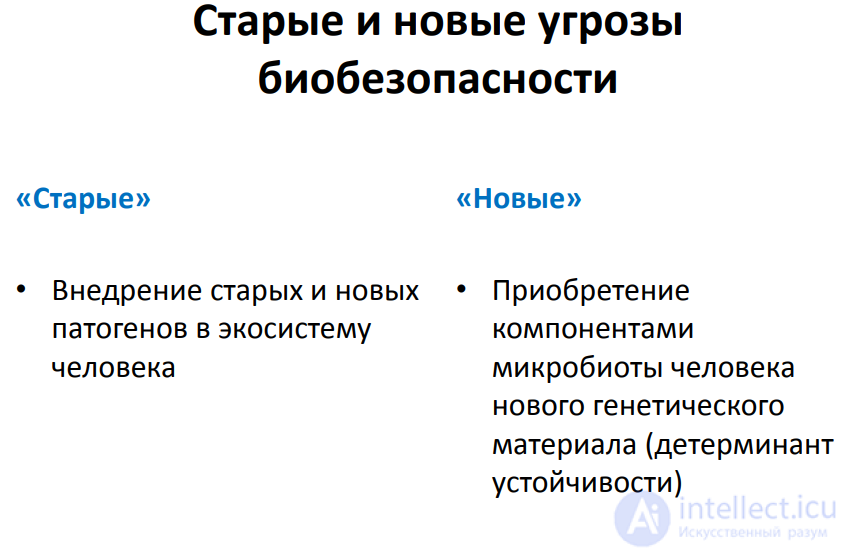
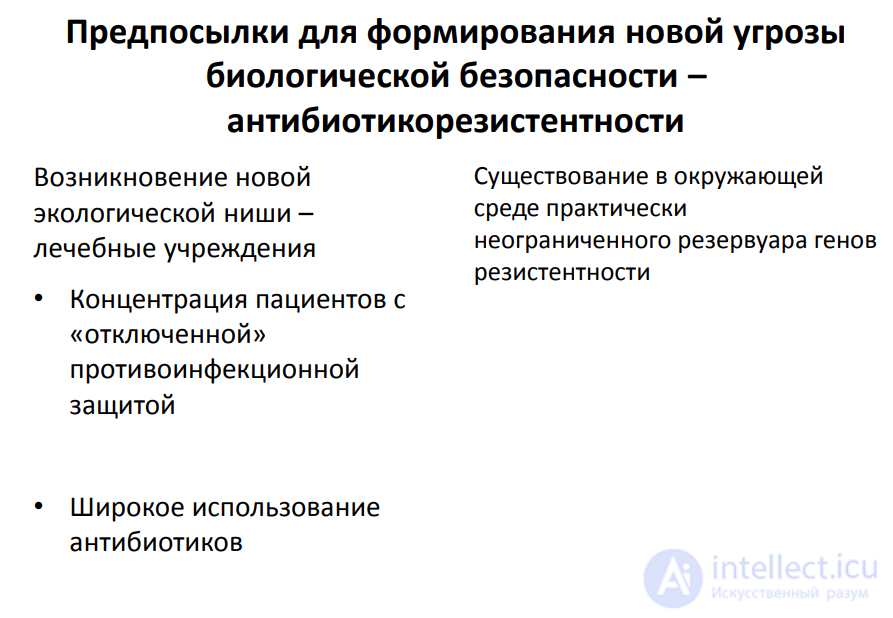
Nosocomial infections
The danger is permanent and will persist as long as infectious diseases and humans themselves exist
A mistaken diagnosis in the first patient leads to more and more new patients, forming chains of from a few to dozens and even hundreds of cases
The smallpox outbreak in 1960 in Moscow reached 45 cases, in 1970 in West Germany, 20 cases, and in 1972 in Yugoslavia, 175 cases.
During the Ebola outbreaks in 1976, 34 people fell ill in southern Sudan and 213 in Maridi
Health care-associated infections (HAIs, hospital-acquired)
Principle of competence: the system must cover all kinds of possible biological threats and emergencies of natural and man-made origin, as well as acts of bioterrorism and bioaggression
Principle of responsiveness and flexibility: the system must be in constant readiness to counter biological threats and have a high degree of controllability and rapid response
Principle of prevention: the system must reduce the likelihood of emergencies through a set of anticipatory measures.
Principle of unity: coordinated activity of ministries, agencies and services under programs and plans for ensuring biological security
Principle of openness: the system must be open to international cooperation in joint efforts to strengthen biological security and combat bioterrorism, and invulnerable to forces
seeking to circumvent the measures taken in the event of terrorist acts
Traditional "medical" directions
Protection against bioterrorism is a complex process. Traditional methods of identifying microorganisms are based on detecting microbial growth. Among the more modern technologies and protection strategies, genetic technologies stand out: they identify microbes by the sequence of their genetic material and can do so within minutes. In 2002 these technologies were available only to the most advanced research units .
New technologies include the use of robots with sensors or of insects fitted with microchips, which make it possible to obtain real-time information about potential biological threats. Research is also under way to find genetic similarities among microbes, which is expected to help produce a vaccine that would protect against any bacteria of a particular group .
Protection from biological weapons is provided by shelters and radiation shelters equipped with filtration and ventilation units, personal respiratory and skin protective equipment, and special anti-epidemic means: preventive vaccinations, sera and antibiotics.
Rules of conduct when biological weapons are used

Comments